High Temperature Coatings for Process Equipment
High temperature coatings protect process equipment by maintaining a protective barrier under the heat and environmental conditions specified for the system. Successful protection depends on matching the coating to the actual operating conditions , then controlling preparation, application, and curing.
A hot pipe exposed to coastal air needs a different specification than an insulated vessel or a tank lining contacting heated liquids. Heat resistance alone doesn't establish suitability for moisture, chemicals, or immersion.
Start with the equipment's service conditions before comparing coating products or contractor proposals.
Key takeaways
- Define surface temperatures, startup and shutdown conditions, moisture, and chemical exposure before selecting a system.
- Specify the complete coating system, including preparation, coat sequence, thickness, and return-to-service requirements.
- Base application decisions on measured surface conditions rather than ambient temperature or a dry-looking surface.
- Include inspection records and maintenance access in the project scope.
How high temperature coatings protect equipment
Maintain a barrier against the surrounding environment
Protective coatings separate equipment surfaces from damaging exposure. On exterior carbon steel, that usually means limiting contact with moisture and contaminants that support corrosion. The system must also remain suitable for the equipment's thermal conditions.
For outdoor process piping, exposure can include rain, salt deposits, and recurring condensation. Meanwhile, chemical splash or washdown may create another set of requirements.
A heat-resistant label addresses only part of this duty. Selection must account for the combined exposure, including periods when equipment sits idle.
Keep protection within the coating's intended role
An exterior coating protects a different surface than an internal lining. A coating suitable for a hot vessel exterior doesn't automatically suit continuous contact with heated process liquids.
Likewise, a protective finish doesn't restore metal lost to corrosion. Deep pitting, leakage, or suspected wall thinning requires qualified equipment assessment before coating work.
Coatings also shouldn't be assumed to provide thermal insulation or safe-touch protection. Those objectives need their own engineered requirements.
Define the equipment's heat and environmental exposure
Describe the metal temperature and operating pattern
The process fluid temperature and the outside metal temperature aren't necessarily the same. Insulation, equipment construction, and operating conditions affect the surface receiving the coating.
The specification should describe normal operation, temperature excursions, startup, shutdown, and idle periods. Include how frequently those conditions change, rather than recording only one operating temperature.
For existing equipment, operating records and appropriate surface-temperature measurements help establish the exposure. A contractor also needs to know whether crews will coat cooled equipment or work around active systems. Application temperature limits are separate from service conditions.
Include water, chemicals, and insulation
Insulated equipment requires attention to how water enters and remains within the assembly. Damaged jacketing, failed seals, and repeated washdown can keep moisture against concealed metal.
Our guidance on identifying corrosion under insulation describes warning signs and conditions that warrant further assessment.
For chemical exposure, identify the substance, concentration, contact duration, and temperature. Occasional splash creates a different duty than continuous immersion.
Also record outdoor exposure, cleaning methods, and abrasion. A coating specification should describe the complete environment rather than classify the asset simply as "hot equipment."
Match the coating scope to each equipment area
Different parts of a process installation can require separate coating specifications, even when they belong to the same production system.
These equipment examples show how the selection priorities change.
| Equipment or area | Exposure to describe | Scope priority |
|---|---|---|
| Uninsulated steam piping | Surface heat, condensation during downtime, outdoor moisture | Match exterior protection to operating and idle conditions |
| Insulated vessel or pipe | Concealed moisture, damaged jacketing, restricted access | Address water entry and the condition beneath insulation |
| Heated storage tank exterior | Uneven surface temperatures, sunlight, rain, chemical splash | Define coating areas and local exposure differences |
| Exhaust duct or equipment housing | Hot surfaces, deposits, vibration, access restrictions | Separate exterior coating duty from internal exposure |
The main distinction is where the coating sits and what reaches it. Equipment names alone don't establish an appropriate system.
For tanks, separate the exterior coating scope from any internal lining work. Similarly, nearby supports, brackets, and connected piping may experience different conditions than the main vessel.
Identify exclusions clearly. Insulation removal, mechanical repairs, interior entry, and restoration of jacketing shouldn't disappear inside a general painting allowance.
Prepare the substrate before applying the coating
Remove contamination and establish the specified profile
Coatings need a suitable surface for adhesion. Oil, soluble salts, rust, loose mill scale, and deteriorated finishes can interfere with the applied system.
The preparation method must address the actual contamination and create the surface condition required by the specification. For steel, SSPC-SP 10/NACE No. 2 defines near-white blast cleaning. It isn't an automatic requirement for every high-temperature coating project.
A useful proposal names the preparation standard, required surface profile, and assessment methods. "Remove rust and paint" leaves too much undefined.
Resolve repairs and existing-coating compatibility
Preparation also exposes defects that paint cannot repair. Significant pitting, damaged welds, or other evidence of equipment deterioration requires evaluation before application continues.
Where an existing coating will remain, compatibility and adhesion need a defined assessment. The scope should explain which areas require removal and how crews will prepare transitions.
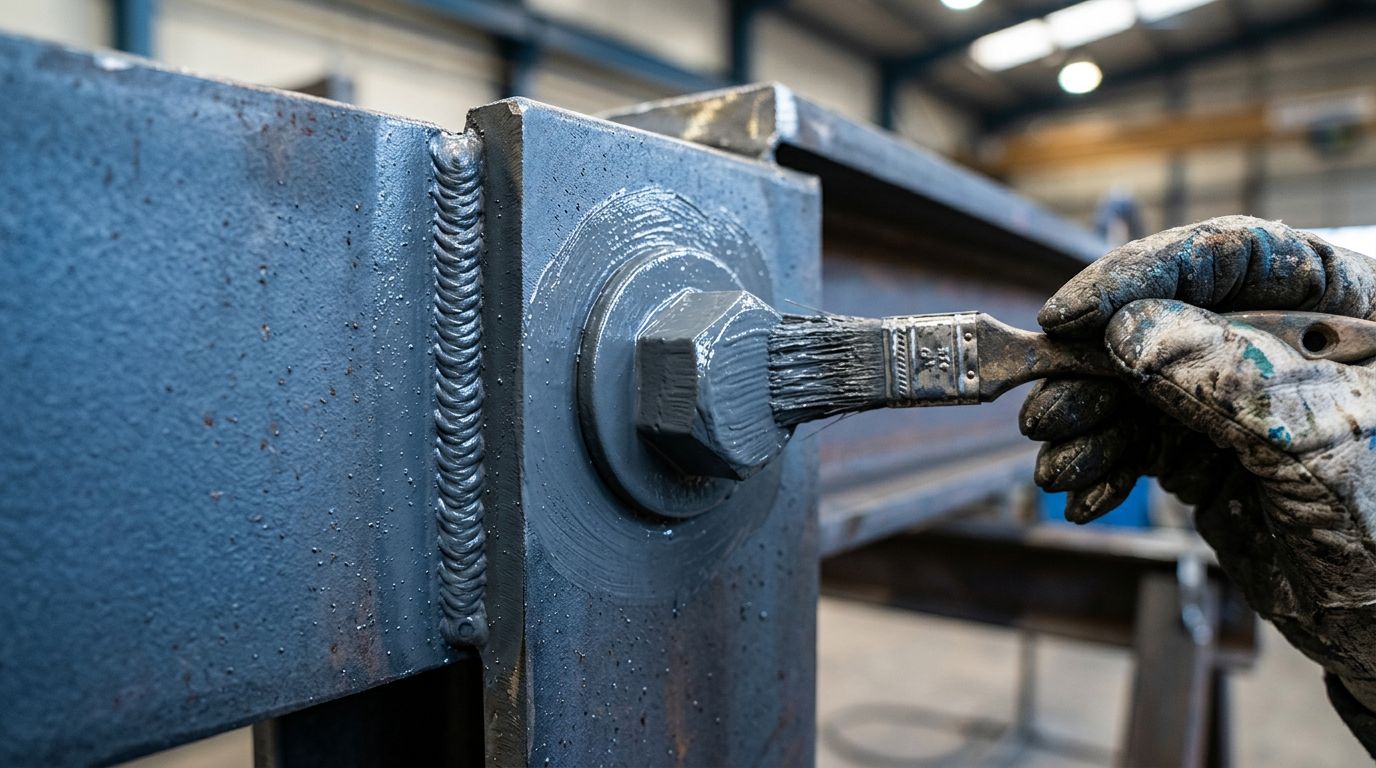
Edges, welds, bolts, and difficult geometry deserve attention because coverage can be uneven. Include stripe coating where the selected system requires it.
Document these decisions before application so unexpected substrate conditions don't become undocumented changes.
Control application conditions and the shutdown window
Measure conditions at the surface
Ambient weather doesn't describe every coating surface. Sunlight can heat exposed steel above air temperature, while shaded areas may remain cooler.
Crews should measure air temperature, substrate temperature, relative humidity, and dew point as the specification requires. A 5°F surface-to-dew-point margin is common guidance, but product requirements and project specifications govern the work.
Our explanation of dew point requirements for coating application covers this distinction.
Readings must represent conditions during application. A suitable morning reading doesn't cover later changes in sunshine, cloud cover, or plant operation.
Schedule the complete work sequence
A shutdown must accommodate access, containment, cleaning, preparation, repairs, application, and the required curing period. Comparing products by a general claim of fast drying leaves out much of the work.
The selected system determines mixing, induction time where required, pot life, recoat windows, and return-to-service criteria. Missing a recoat window may require additional preparation.
Also plan ventilation, overspray control, and protection against rain or contamination. Any environmental controls must preserve the work area's safety requirements.
Dry-to-touch, ready-to-recoat, and ready-for-service are separate milestones. A surface that feels dry may still be unready for heat or process exposure.
Inspect the work and plan for maintenance
Inspection connects the specification to measurable results. Before application, records should cover substrate condition, completed repairs, cleanliness, profile, and required environmental readings.
During application, wet-film measurements help crews control film build. After application, dry-film thickness measurement establishes whether the coating meets the specified thickness. Both insufficient film and excessive buildup can create product-specific problems.
Where the specification requires discontinuity testing, select a method appropriate to the coating, substrate, and thickness. Our explanation of holiday testing for tank linings describes how that inspection identifies gaps in suitable lining systems. It doesn't establish adhesion or equipment integrity.
Closeout records should identify products, batch numbers, application dates, environmental readings, thickness results, repairs, and acceptance findings.
For ongoing maintenance, photograph and map coating damage around supports, insulation terminations, fittings, and access points. Our industrial coating inspection checklist helps organize those observations.
Service life depends on the combined effects of exposure, preparation, application, mechanical damage, and maintenance. A universal replacement interval doesn't describe all these conditions. Instead, use documented inspections to identify deterioration and plan repairs before damage spreads.
Compare contractor proposals by the complete scope
A useful high temperature coatings proposal connects each equipment area to a defined system and application process. It should name the products, preparation requirements, coat sequence, individual film thicknesses, cure criteria, and inspection responsibilities.
Compare access and protection provisions as carefully as materials. Scaffolding, containment, insulation removal, waste handling, and coordination around production can materially change the project scope.
The price should also distinguish coating work from equipment repairs. A lower bid that excludes preparation records or final inspection doesn't describe the same work as a complete coating package.
For owners, the practical comparison is the installed system and its maintenance requirements, rather than material price per gallon. Our industrial coating and inspection services in Southwest Florida help facilities address these project requirements.
Frequently asked questions
Can equipment be coated while it's operating?
Only a system and work plan suited to the actual surface conditions can support that approach. A coating's service-temperature suitability doesn't establish that crews can apply it to operating equipment. Access, process hazards, ventilation, and application limits remain separate requirements.
Can a high-temperature coating go over existing paint?
That depends on the retained coating's condition and compatibility with the proposed system. Unknown, poorly bonded, or deteriorated paint needs a defined assessment and removal plan. Adding another coat doesn't correct weak adhesion underneath.
Can high humidity prevent application?
Humidity is one factor, but there isn't a single cutoff for every industrial coating. Substrate temperature, dew point, surface moisture, ventilation, and the product's curing requirements determine acceptable conditions. A dry-looking surface alone isn't sufficient evidence.
Build protection around the equipment's actual service
Reliable protection starts with an accurate description of heat, moisture, chemicals, and operating conditions. Preparation and application controls then give the specified coating system a suitable foundation.
Compare proposals by their complete protection scope , including inspection and return-to-service requirements. The strongest plan makes every major requirement measurable and leaves a useful record for future maintenance.
More featured articles...