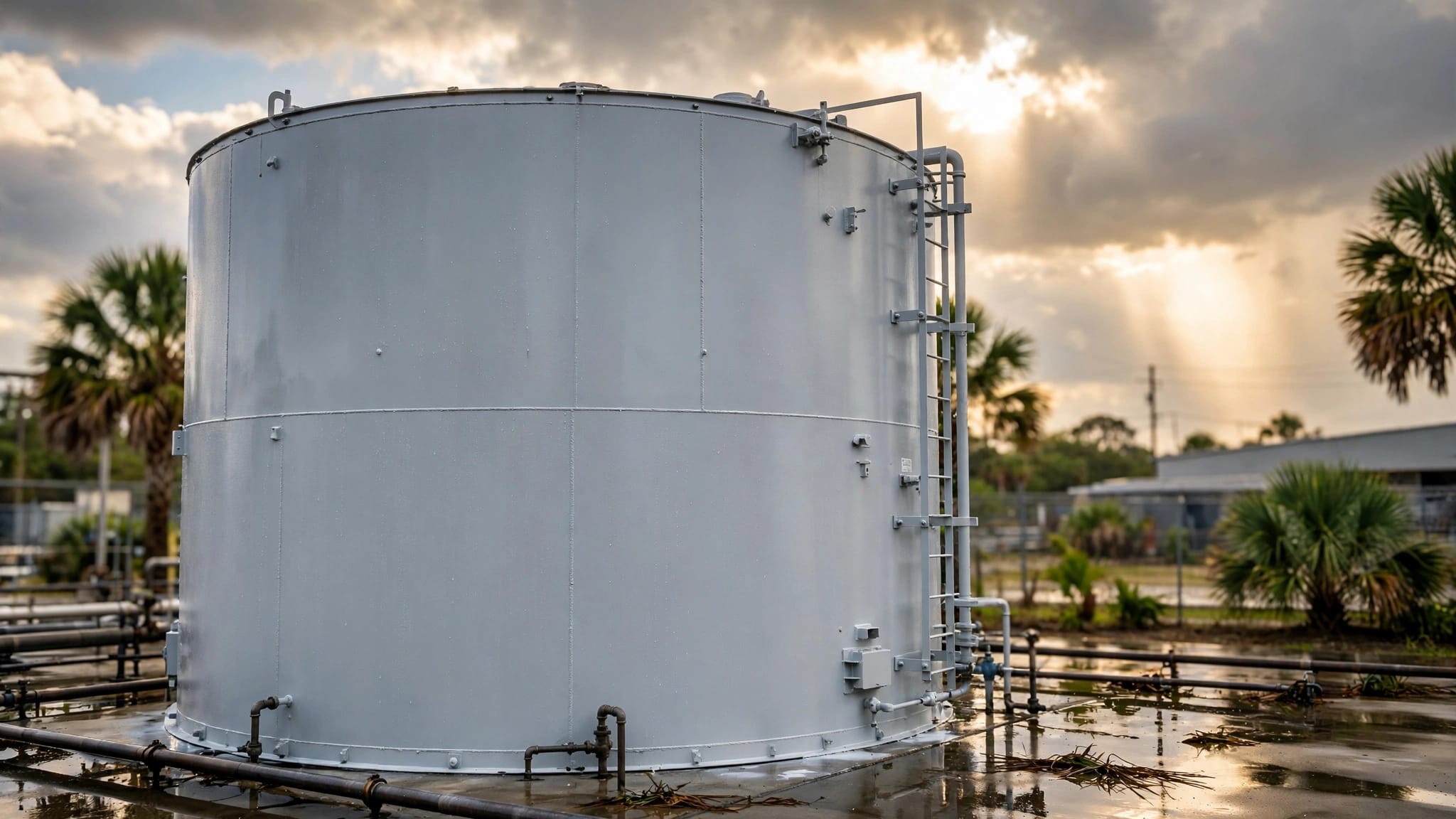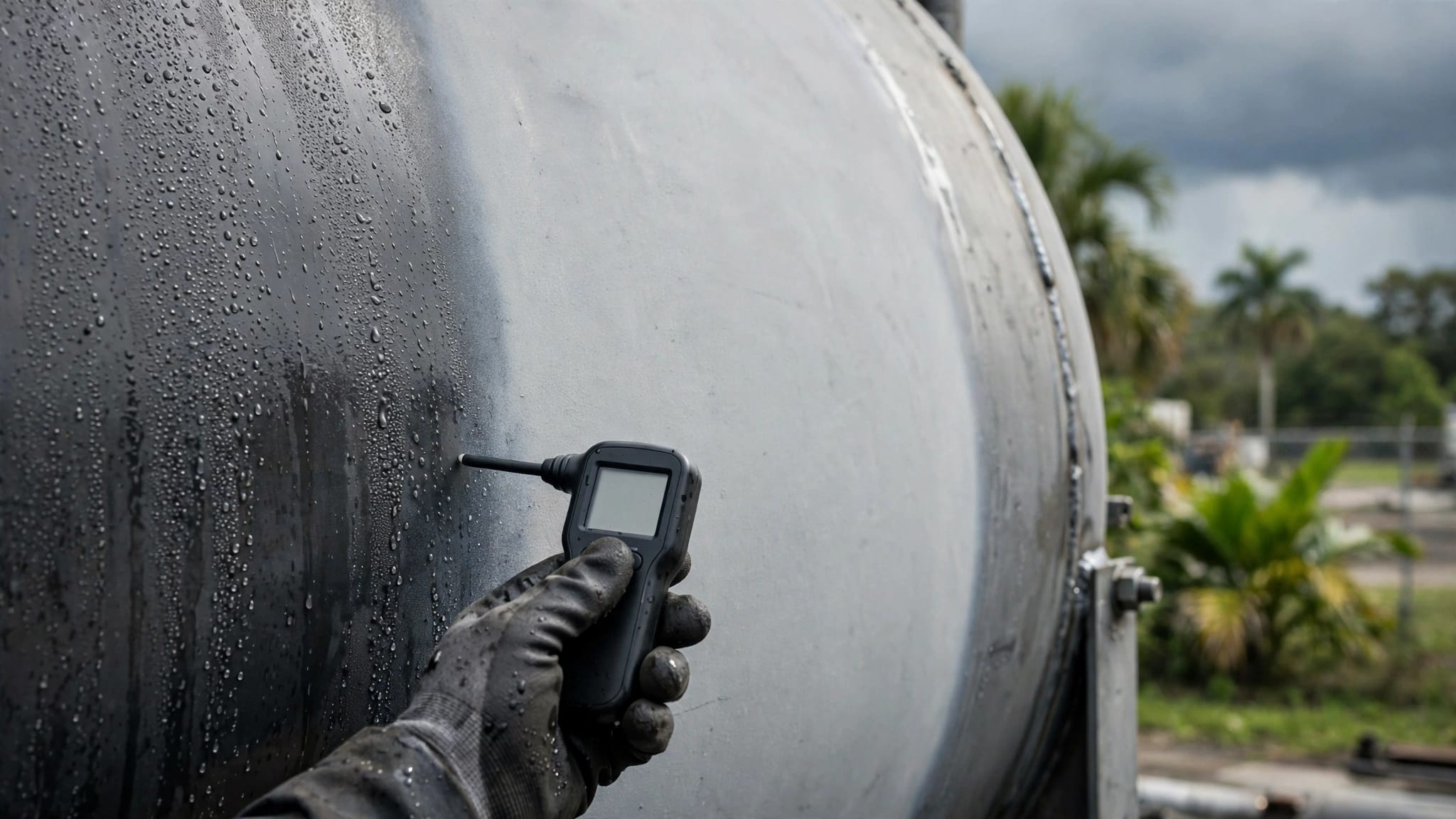
Holiday Testing: Finding Pinholes in Tank Linings
Holiday testing locates pinholes and other discontinuities in suitable industrial tank linings, including openings that visual inspection can miss. For tank owners, its value is identifying gaps in the protective barrier before those gaps become service problems.
A smooth finish alone doesn't establish lining integrity , and a holiday test doesn't establish every aspect of coating quality. The inspection must match the lining system and sit alongside other measurements.
Understanding those boundaries helps you evaluate the inspection scope included in a tank coating proposal.
Key Takeaways
- Holiday testing targets pinholes and other discontinuities, rather than every possible coating defect.
- The lining material, thickness, substrate, and applicable procedure determine the appropriate inspection approach.
- A suitable, clean, dry surface and qualified operators are important to reliable inspection.
- Thickness, adhesion, environmental readings, and documented findings provide evidence that a continuity test alone cannot supply.
What Holiday Testing Finds in Tank Linings
Pinholes and other discontinuities
A pinhole is a small opening through the coating film. Other discontinuities include breaks or uncovered areas that interrupt the lining's protective barrier. These openings matter because a tank lining separates its contents from the underlying substrate.
The term "holiday" describes a discontinuity in that barrier. However, every surface irregularity isn't necessarily a holiday. A shallow surface depression and an opening through the lining are different conditions.
Inspection records should distinguish these findings instead of grouping every mark, pore, or rough patch under one label. Clear descriptions help owners understand what the inspection actually established.
Why appearance doesn't tell the whole story
Tank interiors include welds, seams, penetrations, and changes in geometry. These areas deserve attention during coating inspection because a broad view of the finished surface can hide localized problems.
Lighting, access, and surface texture also affect what someone can see. Meanwhile, an attractive finish can still have uneven thickness or weak adhesion.
Holiday testing adds information about discontinuities, while visual examination records other visible conditions. Together, they give owners a more useful picture than photographs of a freshly coated tank alone.
Match Holiday Testing to the Lining System
Material, thickness, and substrate affect selection
A proposal shouldn't present one test method or voltage as suitable for every tank lining. Lining material, measured thickness, and the applicable procedure govern that selection. Substrate and intended service also matter.
An inspection plan for a steel tank cannot automatically transfer to a different substrate or an unfamiliar coating system. Likewise, a product intended for exterior exposure isn't interchangeable with a lining intended for immersion or chemical contact.
The specification should identify the actual coating system and exposure conditions. That gives the contractor and inspector a defined basis for selecting an appropriate inspection approach.
The written scope should connect coating and inspection
A useful scope identifies surface preparation, coating products, application requirements, environmental limits, curing expectations, and inspection responsibilities. Testing belongs within that scope rather than appearing as an undefined extra at project completion.
Our industrial facility painting services include helping owners determine appropriate coatings and finishes for their projects. That selection should reflect the substrate and operating environment.
For owners comparing proposals, a clearly defined inspection scope makes differences easier to understand. A price that omits preparation records or final inspection documentation doesn't describe the same work as one that includes them.
What a Holiday Test Cannot Establish
Adhesion and hidden corrosion need separate evaluation
A lining can have poor adhesion without an obvious opening through its surface. Likewise, corrosion beneath a sound-looking coating may require a broader investigation.
Holiday testing doesn't establish how firmly the lining bonds to the substrate. When adhesion is in question, a qualified inspector may use pull-off or cross-cut testing, depending on the coating, substrate, and applicable requirements.
Blistering also needs careful interpretation. Moisture, contamination, soluble salts, trapped solvent, and heat can contribute to blister formation. A continuity finding alone doesn't identify which condition caused the blister or establish the extent of damage underneath.
Thickness and service suitability are different questions
A dry film thickness measurement answers a different question than a discontinuity inspection. It helps identify thin areas and inconsistent application across a coated surface.
Similarly, a continuity result doesn't establish that the selected coating will tolerate a tank's contents, temperature, or cleaning process. Those requirements belong in the lining specification.
A lining can have no reported discontinuities and still need investigation for poor adhesion, inadequate thickness, or unsuitable service exposure.
This distinction matters when reviewing a contractor's completion report. Each result should identify what was measured, where it was measured, and what that measurement establishes.
Suitable Surface Conditions and Safe Access Matter
A clean, dry surface supports meaningful inspection
The test surface must be suitable for the selected procedure. Dirt, contamination, residual moisture, and an unsuitable coating condition can complicate inspection and interpretation.
A dry test surface matters, particularly in humid tank interiors where condensation can develop. Surface temperature, air temperature, relative humidity, and dew point provide useful environmental context.
These conditions also matter earlier, during coating application. Condensation can form when the substrate temperature approaches the dew point, so a finished coating's history includes more than its appearance on inspection day.
Qualified operators need to understand both the lining system and the limits of the selected procedure. Instrument familiarity alone doesn't replace coating knowledge.
Tank entry requires its own safety planning
An inspection doesn't justify entering an unsafe tank. Confined spaces may require atmospheric testing, entry permits, an attendant, and a trained entry team.
Facility isolation and lockout/tagout requirements also apply where pumps, mixers, or connected equipment create hazards. Elevated work needs suitable access and fall protection.
These arrangements belong in the project schedule and scope. They affect access to the lining and the ability to complete a thorough inspection.
Unknown existing coatings can introduce additional hazards during disturbance or removal. Their condition and potential hazardous-material content require evaluation before scraping, sanding, or other surface preparation begins.
Combine Continuity Findings With Other Measurements
Holiday testing is one part of a coating inspection program. The surrounding measurements help explain whether the lining received suitable preparation and application.
A dry film thickness gauge records coating thickness at identified locations. A surface profile measurement documents the texture of prepared steel before coating application. Meanwhile, a dew point meter records environmental conditions that influence condensation risk.
Adhesion testing addresses bonding concerns when appropriate. Visual inspection documents rust staining, blistering, peeling, cracking, exposed substrate, and other visible changes.
These measurements answer different questions:
| Inspection evidence | What it helps establish |
|---|---|
| Holiday testing | Presence of pinholes or other discontinuities |
| Dry film thickness readings | Film thickness and application consistency |
| Surface profile measurements | Texture of prepared steel |
| Environmental readings | Conditions during preparation, application, or inspection |
| Adhesion testing | Coating bond performance under the selected test |
The strongest inspection record keeps these results separate but connected to the same tank and coating system. A single "passed inspection" statement loses that detail.
Keep Tank Lining Findings Traceable
A finding has limited maintenance value if the next person cannot locate it. Tank identification, inspection date, accessible areas, and location references should connect the report to the actual asset.
Photographs should include an overall view and a closer image of the condition. Consistent location references, such as a nozzle number, weld reference, or mapped tank section, make later comparisons easier.
Measurement records should identify the instrument type, calibration status, test location, and result. Conditions outside the project specification need documentation before cleaning, sanding, or recoating changes the evidence.
Keep product data sheets, earlier inspection reports, and contractor proposals in the same asset record. When coating repairs occur, record preparation methods, environmental readings, products, batch numbers, application dates, and final inspection results.
Our industrial coating inspection checklist covers this broader approach to condition tracking and maintenance documentation.
For the project itself, the contract should assign responsibility for inspection records and closeout documents. Clear industrial coating contract requirements help prevent those responsibilities from disappearing between the application crew, inspector, and facility team.
A useful handover preserves the inspection evidence rather than reducing it to a completion date. Future maintenance decisions depend on knowing both what was found and what work followed.
Frequently Asked Questions About Holiday Testing
Is a pinhole the same as a blister?
A pinhole is an opening through the coating film. A blister is a raised area that can result from several underlying conditions, including moisture or contamination. A blister doesn't automatically establish a through-film opening. Its cause and the condition beneath it may require separate evaluation by a qualified coating professional.
Does holiday testing replace a visual inspection?
Holiday testing complements visual inspection. A visual survey records conditions such as rust staining, cracking, peeling, and blistering, along with their location and extent. Continuity findings add a different type of information. Neither inspection alone establishes every aspect of lining quality or explains every possible cause of coating failure.
When does a tank lining need broader professional evaluation?
Widespread blistering, poor adhesion, recurring corrosion, or corrosion beneath an apparently sound coating justify broader evaluation. Structural damage requires attention beyond coating condition alone. A qualified coating professional can assess lining concerns, while structural loss or deep pitting may also require engineering review before a recoating project proceeds.
Make Lining Integrity Part of the Whole Inspection
Holiday testing helps identify discontinuities that a visual survey can miss. Its strongest contribution comes within a documented inspection program that also addresses thickness, adhesion, surface conditions, and service requirements.
For your tank project, the scope should connect coating selection, qualified inspection, and traceable records. A freshly coated tank needs more than a clean appearance; it needs evidence showing what was inspected and what the findings mean.
More featured articles...