Choosing Cooling Tower Coatings for Florida Facilities
Choose cooling tower coatings by matching each area's substrate, water exposure, chemical contact, and operating temperature to a documented coating system. Then build the project around surface preparation , application conditions, and curing requirements.
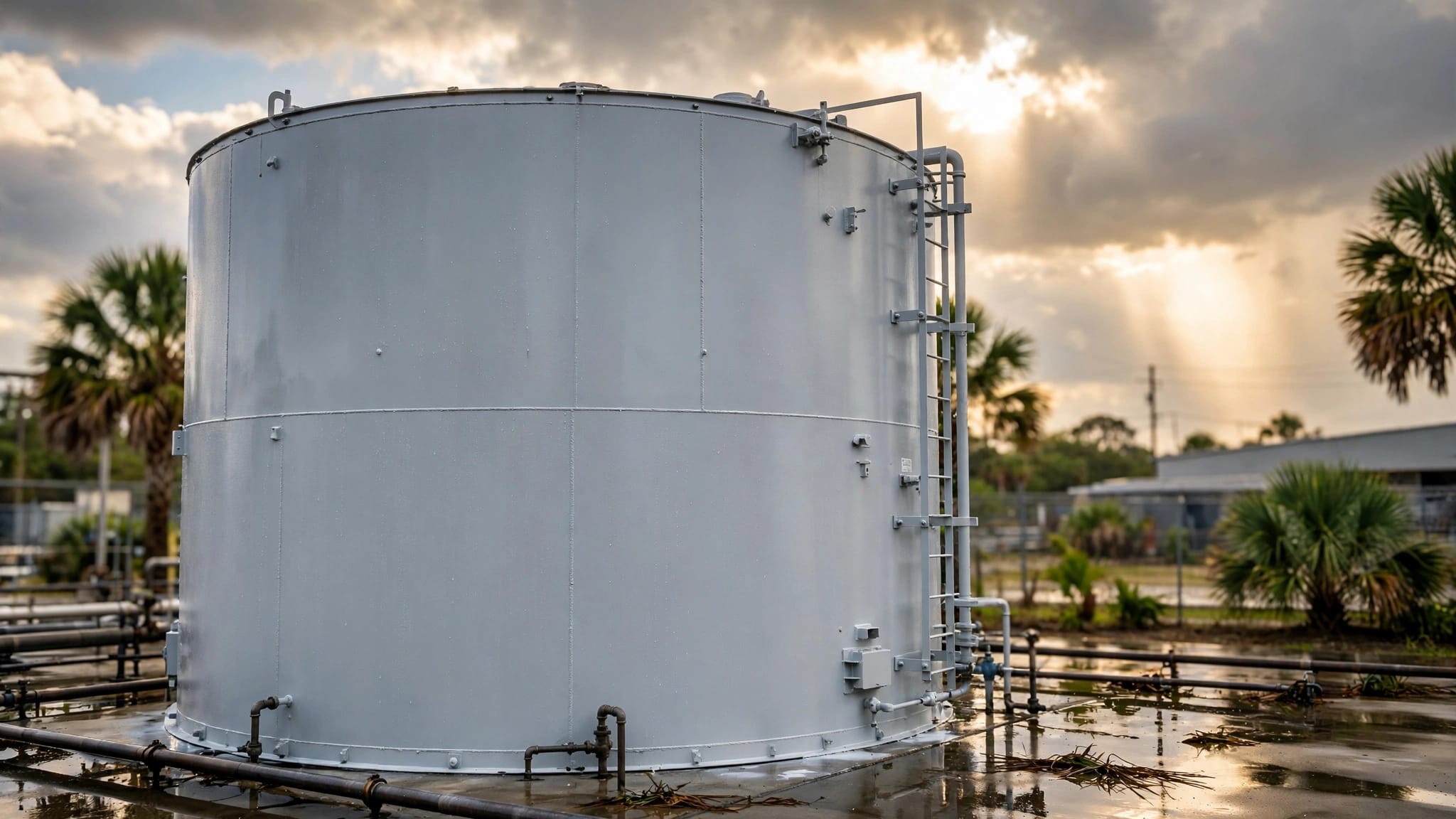
In Florida, coastal salt, persistent humidity, sunlight, and sudden rain complicate both selection and installation. A basin lining and an exterior finish face different demands, even on the same tower. Start by separating those service conditions before comparing products or contractor proposals.
Key Takeaways
- Specify submerged basins separately from splash zones and exterior surfaces.
- Match the complete coating system to the substrate, treatment chemicals, operating temperature, and existing finish.
- Include preparation standards, cure requirements, thickness measurements, and acceptance testing in the contractor's scope.
Map the Tower's Exposure Before Choosing a Coating
A single tower can contain several distinct coating environments. Your scope should identify where each system starts and stops, including transitions around drains, fasteners, and penetrations.
Separate immersion from splash exposure
The cold-water basin may remain submerged during operation. Nearby walls and distribution areas can experience repeated wetting, drying, and concentrated deposits.
Record normal and maximum water temperatures, operating pH, treatment chemicals, and cleaning procedures. Include biocide dosing conditions because compatibility during routine circulation doesn't establish resistance to concentrated chemical contact.
Water-treatment records give the coating specification a stronger basis than a general request for "waterproof paint." Also identify areas that stay wet after shutdown, since those conditions affect preparation and scheduling.
Distinguish exterior steel from operating components
Exterior supports and panels face sunlight, rain, coastal deposits, and occasional chemical splash. They may need a different finish than submerged surfaces.
Define exclusions clearly. Fill, drift eliminators, heat-transfer surfaces, moving components, and equipment identification shouldn't receive an ordinary field-applied coating without an equipment-specific requirement.
Coating work must also preserve drainage and access. Covering a drain opening or obscuring a connection creates a maintenance problem regardless of the finish's appearance.
Match Cooling Tower Coatings to the Substrate
The coating chemistry alone doesn't establish suitability. Primers, repair materials, retained finishes, and the substrate must work together under the intended exposure.
Steel and galvanized components need different preparation
Carbon steel may need corrosion removal, abrasive blasting, and treatment of welds and edges. Meanwhile, galvanized steel has a zinc surface that requires a compatible preparation method and coating system.
AMPP's SSPC-SP 16 addresses brush-off blast cleaning of nonferrous metals, including galvanized steel. It isn't interchangeable with a carbon-steel blasting specification.
Retaining an existing coating also changes the selection. Weak adhesion, unknown chemistry, or widespread underfilm corrosion can make broader removal more appropriate than spot repair.
Concrete and fiberglass require substrate-specific systems
Concrete basins need assessment for cracks, spalls, weak material, dampness, and previous sealers. Repairs and joint details belong in the lining design because a coating can't correct every source of movement or leakage.
Fiberglass components require attention to the condition of the resin and laminate. A coating can't restore damaged reinforcement or establish structural capacity.
For either substrate, specify a complete assembly. That may include a primer, repair compound, reinforcement, lining, and joint sealant rather than one product applied everywhere.
Compare Documented Products Without Generalizing
Named products provide useful starting points when their stated applications match the work. However, coat count, thickness, and cure time remain product-specific.
These examples show why generic descriptions such as "heavy-duty epoxy" aren't enough.
| Product | Documented cooling-tower use | Selection detail |
|---|---|---|
| Belzona 5811 (Immersion Grade) | Cooling-tower basins appear among listed applications | Its data sheet describes two coats totaling 20 mils for maximum protection under arduous conditions. |
| CIM 1000 | A case history describes application to galvanized cooling-tower basins | That project used 60 mils, which is a project detail rather than a universal thickness requirement. |
The thicker example isn't automatically the better choice. These are different systems with different application and service requirements.
For CIM 1000, the product sheet allows service within 24 hours for non-aggressive conditions, while severe service may require 72 hours or longer. Those distinctions matter when comparing shutdown options.
Neither example establishes compatibility with every cooling-water program. Selection must account for actual chemicals, concentrations, temperatures, and exposure duration.
Specify Surface Preparation as Measurable Work
Even a suitable lining can fail over salt, weak concrete, corrosion, or incompatible old coating. A proposal that promises only to "clean and coat" leaves too much undefined.
Remove contamination before creating the profile
Cleaning and profiling solve different problems. Remove oils, treatment residues, deposits, and other contaminants using methods suited to the surface and specified system.
Abrasive blasting doesn't substitute for contamination removal. Where soluble salts are a concern, the scope should identify the testing method and acceptance limits.
Also address persistent leaks and drainage problems. Otherwise, contamination or moisture can return before coating begins or remain active beneath the finished work.
Name the preparation standard and repair details
For carbon steel, SSPC-SP 10/NACE No. 2 defines near-white blast cleaning. It is one preparation option, not an automatic requirement for every tower surface.
Specify the required cleanliness and surface profile for the selected product. Include dust removal, treatment of edges, and preparation around welds and bolts.
Concrete requires its own preparation and repair criteria. Deep pitting, wall thinning, damaged supports, or structural cracking need qualified assessment before coating work proceeds.
Plan Application Around Florida Weather and Downtime
Florida conditions affect the installation window as much as the finished coating. The schedule must allow preparation, repairs, application, inspection, and curing.
Use surface measurements, not a weather forecast
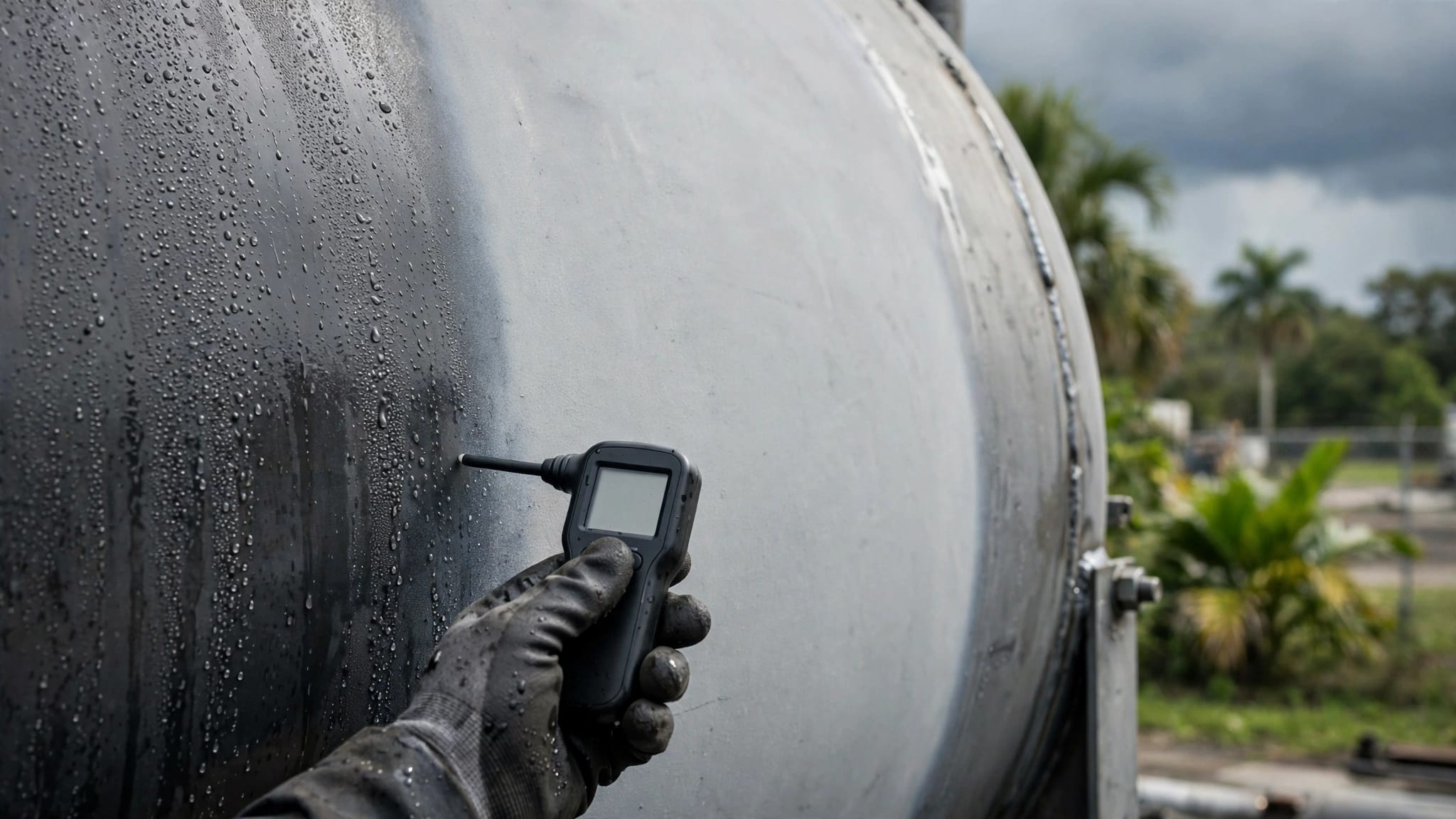
Crews need air temperature, relative humidity, substrate temperature, and dew-point measurements. A dry-looking surface doesn't establish that condensation won't interfere with adhesion.
A common guideline keeps the substrate at least 5°F above the dew point , but the selected product and project specification govern acceptable conditions.
Readings also need to reflect changing conditions. Shaded steel, sunlit panels, and damp basin surfaces can behave differently during the same shift. Our guidance on dew point and coating application explains these measurements.
Separate application time from return to service
Rain protection must last through the coating's vulnerable curing period. Likewise, evening cooling can create condensation after an otherwise acceptable afternoon application.
The schedule should distinguish recoat time, handling time, and readiness for immersion or chemical exposure. A surface that feels dry may still be unready for service.
Build weather interruptions into the shutdown plan. Shortening cure time to recover a delayed schedule can invalidate the basis for selecting the system.
Compare Contractor Proposals by Scope and Inspection
A coating proposal should explain what the contractor will deliver and how the finished work will be evaluated. Comparing bids by gallons or total thickness alone misses major differences.
Define the boundaries of the work
Identify coated areas, exclusions, preparation methods, repairs, product names, coat sequence, and required thickness. Include access equipment, containment, debris control, waste handling, and protection of adjacent equipment.
The scope should also address isolation, lockout/tagout, and any applicable confined-space procedures through the facility's safety plan.
Access and preparation can change project costs substantially. A basin with failed lining and difficult access involves different work than accessible exterior steel with sound retained coating. Compare equivalent scopes before comparing totals.
Connect acceptance criteria to inspection records
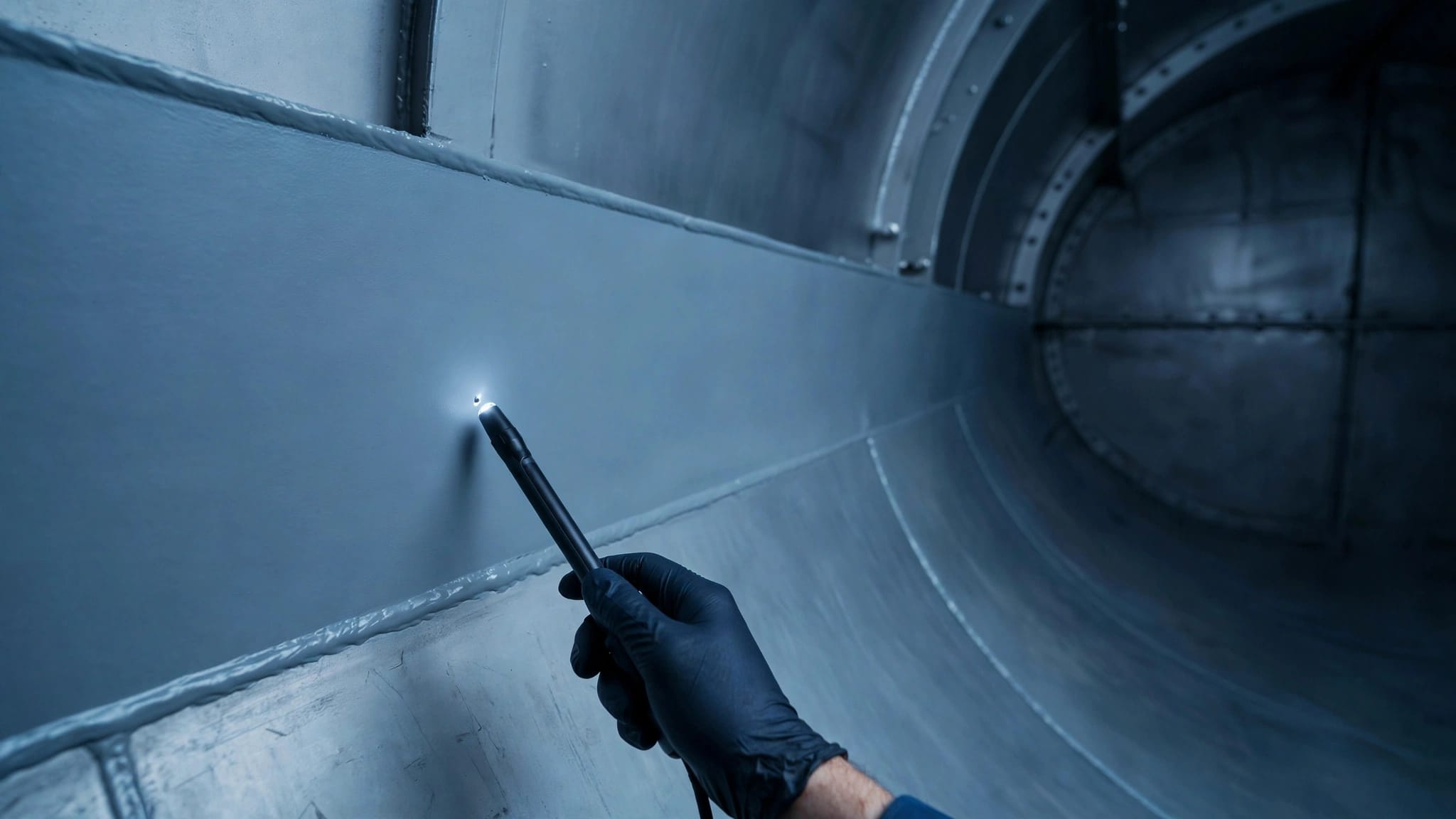
Inspection should document preparation results, environmental readings, product batches, application dates, and completed repairs. Our industrial coating inspection checklist helps organize the condition assessment.
For applicable metal surfaces, SSPC-PA 2 provides procedures for determining conformance to dry-film-thickness requirements. It doesn't choose the required thickness.
Our guidance on dry-film-thickness measurement explains why readings matter beyond appearance.
Where specified and suitable for the lining and substrate, holiday testing can locate discontinuities missed visually. Define the test method, repair procedure, and retesting requirements before application.
Keep the Coating Plan Connected to Maintenance
Coating selection should include how the system will be inspected and repaired after startup. A protective lining doesn't replace water treatment, tower cleaning, or disinfection.
Keep the coating records with the tower's maintenance documents. Future repair work benefits from knowing the original system, preparation standard, thickness requirements, and service conditions.
Inspections should pay attention to seams, drains, penetrations, fasteners, and the waterline. Record blistering, peeling, rust staining, exposed substrate, and damage caused during maintenance.
Baltimore Aircoil Company's VTL-E manual recommends inspecting coating continuity quarterly or at least every six months. That interval belongs to the equipment covered by that manual, rather than a universal tower schedule.
For your tower, incorporate coating observations into its established maintenance plan. Repeated failure in one location deserves investigation of the moisture, contamination, movement, or damage causing it before another repair.
Frequently Asked Questions
Can one coating cover the entire cooling tower?
Only when its documented suitability covers every included substrate and exposure. Many projects need separate specifications for submerged basins, splash areas, and sun-exposed exterior components. The transitions between systems also need clear details.
Will a basin coating stop an existing leak?
Some lining systems can form a watertight barrier when installed over suitable repairs. However, failed joints, moving cracks, deteriorated metal, and structural damage require their own assessment and repair strategy. Coating alone doesn't restore lost material.
Does a thicker coating last longer?
Thickness must remain within the selected system's requirements. Too little material can leave inadequate coverage, while excessive buildup can create product-specific curing or performance problems. Coat sequence, preparation, continuity, and cure all affect the finished result.
Choose a Complete Protection System
The strongest selection starts with actual service conditions and a sound substrate. Preparation, coating compatibility, curing, and documented inspection must support the same specification.
We provide industrial coatings and coating inspections across Southwest Florida. For your cooling-tower project, start with a clearly defined scope that separates coating maintenance from repairs and ties acceptance to measurable requirements.
More featured articles...