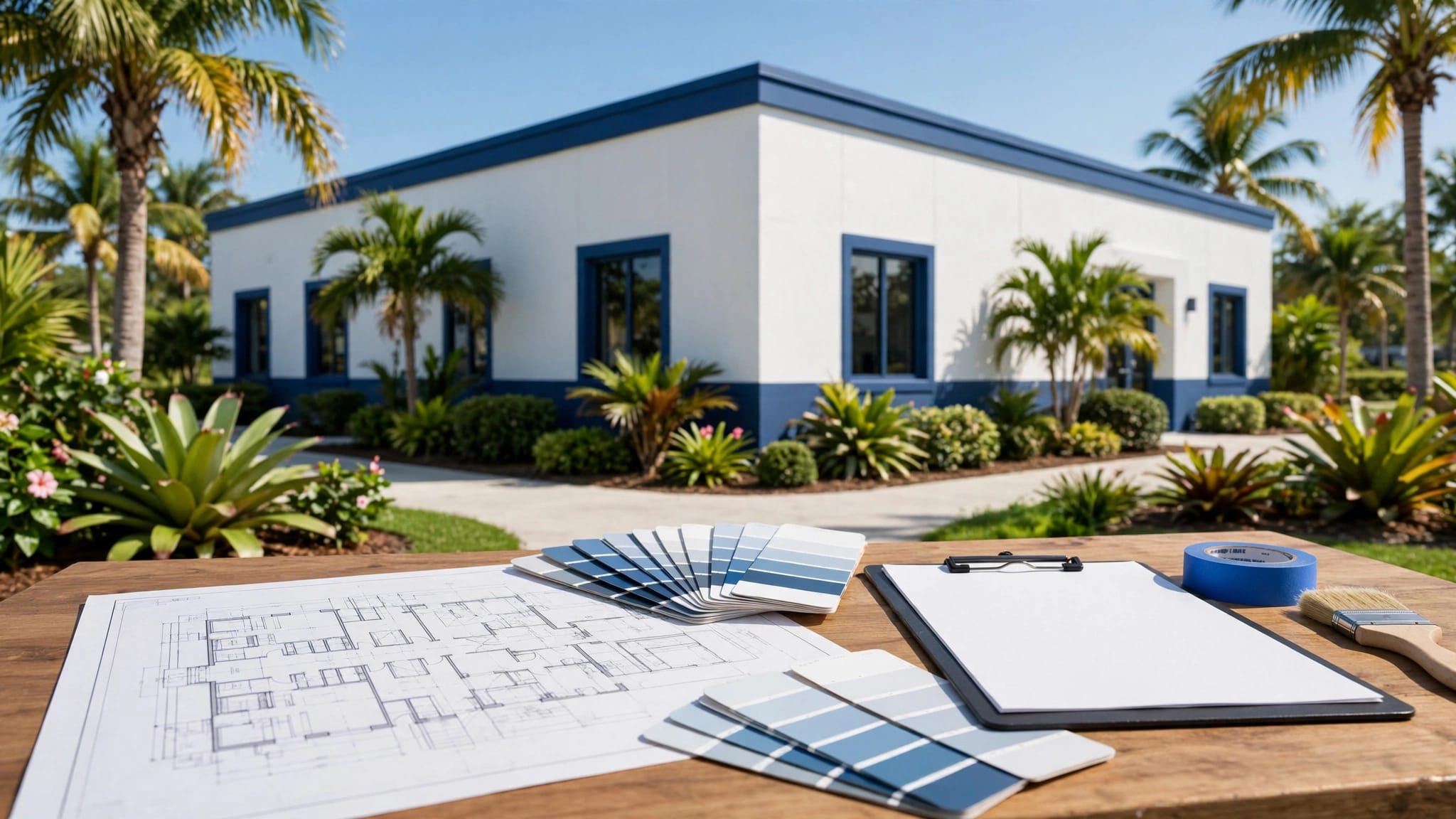
Create a Paint Color Record for Florida Home Touch-Ups
A leftover can labeled "living room beige" won't help much when a repair dries a different shade. A useful paint color record captures the exact coating, where it went, and how the surface was prepared.
For Florida homeowners, matching the finish also means accounting for sunlight, humidity, and coastal exposure. Even the original paint can look different beside a weathered wall.
Start with the product details, then add the information your next painter will need to make a sound repair.
Key Takeaways
- Record the brand, product line, color name and code, sheen, location, and application date.
- Include preparation, primer, surface texture, and application method because these affect the finished appearance.
- Keep a shared record and clearly labeled leftover paint, but follow the manufacturer's storage instructions.
- Test every touch-up before repairing a visible area, especially on sun-exposed Florida exteriors.
What to Include in Your Paint Color Record
A spreadsheet, document, or printed worksheet works well. Google Sheets and Microsoft Excel are practical choices because you can add entries without replacing the entire record.
Create one entry for each distinct combination of product, color, sheen, and surface. One room may need separate entries for walls, ceilings, doors, and trim.
Use these suggested fields as your starting template.
| Detail | What to record |
|---|---|
| Location | Room, wall, exterior elevation, or individual feature |
| Surface | Drywall, stucco, wood, metal, masonry, or another material |
| Brand and product | Manufacturer and complete product-line name |
| Color | Color name, code, and whether it was custom-matched |
| Mixing details | Paint base and tint formula from the store label |
| Sheen | Exact finish wording printed on the can |
| Application date | Completion date and dates of later repairs |
| Preparation | Cleaning, sanding, patching, caulking, and primer used |
| Application | Coat count, tools, roller nap, and texture notes |
| Supplier and contractor | Store location, receipt reference, and painter's contact information |
Product-line names matter. Sherwin-Williams Duration Home and SuperPaint are separate products, even when a store mixes them to the same color.
Similarly, Benjamin Moore White Dove OC-17 identifies a color, not the complete coating. You still need the product and sheen.
For custom colors, preserve the full mixing label or transcribe it exactly. Keep receipts and product technical data sheets with the record when available. Don't rely on a color name remembered years later.
Map Each Finish to Its Actual Location
Separate walls, ceilings, and trim
Avoid broad entries such as "whole house white." Walls and trim may share a color but use different products or finishes. Those differences can make a repair conspicuous.
Identify connected spaces clearly, especially in open-concept homes. Note whether the kitchen, dining area, hallway, and living room share one coating. Also record where an accent color begins and ends.
Copy the manufacturer's sheen wording rather than substituting a general description such as "slightly shiny." Finish names and gloss levels aren't interchangeable across every brand. EFC's interior paint sheen guide helps explain how different finishes behave in bright Florida rooms.
Identify exterior sections by exposure
For exterior records, use directions and recognizable features. "West-facing garage surround" is more useful than "front trim," particularly when someone unfamiliar with the property handles maintenance.
Separate stucco walls, fascia, soffits, doors, shutters, and porch columns. They may require different preparation and coatings even when their colors coordinate.
Record whether each area receives afternoon sun, stays shaded, collects sprinkler spray, or faces coastal winds. This gives a future contractor context when one section fades or peels faster than another.
For rental properties, include the unit number and keep shared-area finishes separate from finishes inside individual units.
Preserve Preparation and Application Details
Record what happened beneath the paint
A color match can't correct a poorly prepared repair. Write down the work completed before painting, including washing, removing loose coating, sanding glossy surfaces, repairing drywall, and replacing failed caulk.
Name the primer and identify where the contractor used it. Stain-blocking primer on a water-marked ceiling and bonding primer over a glossy finish address different problems.
Also note repaired stucco, patched cracks, or areas with previous moisture damage. Record whether someone corrected the underlying water source.
For exteriors, paint compatibility for Florida surfaces provides useful context for matching coatings and preparation to the material. Preserve those decisions alongside the finish details.
Save texture and tool information
Record whether the painter brushed, rolled, sprayed, or sprayed and back-rolled the surface. Include roller nap and the number of coats when that information is available.
Texture affects how light reflects from a repair. A smooth brush patch can stand out against a rolled wall, even when both use identical paint.
Likewise, a stucco repair needs a compatible texture before color matching begins. Note the patch material and texture method used during the original project.
Ask your contractor for these details before the final walkthrough. Collecting them then is easier than reconstructing the process after materials, crews, and receipts have moved on.
Add Notes About Florida Weather and Exposure
Track humidity and drying conditions
Florida humidity can slow drying and curing. A coating that feels dry may still be vulnerable to cleaning, contact, or moisture.
Record the application date and any relevant weather delays. For exterior work, note interruptions caused by rain, morning dew, or slow drying after washing. Shaded walls and covered porches deserve particular attention because they can remain damp longer.
Indoors, include recurring condensation, poor ventilation, or moisture problems in bathrooms and laundry rooms. These notes help distinguish an ordinary scuff from a problem that needs investigation.
Follow the product label and technical data sheet for drying, recoating, and curing guidance. A paint record should preserve those instructions rather than replace them with a universal waiting period.
Track sunlight and coastal contamination
Strong ultraviolet exposure can fade pigments and weaken the paint film. Therefore, record south- and west-facing surfaces separately from protected elevations when their exposure differs.
Near the Gulf, salt residue can interfere with adhesion if it remains on the surface before painting. Include the cleaning method and any recurring salt buildup around doors, railings, fascia, and other exposed features.
Also document chalking, the powdery residue that aging paint can leave behind. A fresh coating may match the original formula while looking different beside the weathered finish.
The original formula identifies what went on the house. It doesn't guarantee a visual match to the coating after years of sun, salt, and moisture.
Store the Record and Leftover Paint Together
Keep the main record in a shared folder labeled with the property address. A printed copy belongs with your home maintenance documents. Give contractors or property managers access when they need it.
Preserve previous entries when repainting. Mark them as superseded and add the new completion date. This prevents an old receipt or forgotten can from becoming the mistaken reference.
Label leftover paint with its room or surface, product, color, sheen, and application date. If you transfer paint into another suitable container, copy the identifying information rather than relying on the original lid.
Follow the manufacturer's storage instructions. Avoid leaving paint in a hot Florida garage when conditions exceed the recommended storage range. Keep containers tightly sealed, upright, and away from children and pets.
Don't assign every leftover can the same expiration date. Product, contamination, container condition, and storage all affect usability. Check manufacturer guidance before using old material.
For managed properties, EFC's apartment turnover painting checklist recommends retaining a labeled touch-up quart for small repairs. Connect each container to its corresponding record so maintenance staff can identify it without guessing.
Use the Record Before Making a Touch-Up
A complete paint color record reduces guesswork, but the wall still needs inspection. Small scuffs and isolated chips on a sound coating offer a different repair opportunity than peeling, blistering, or widespread chalking.
Use this sequence before covering a visible area.
- Confirm the location, product, color, and sheen against the record.
- Check the existing coating and address dirt, damage, or moisture before painting.
- Prepare and prime the repair as the surface and product require.
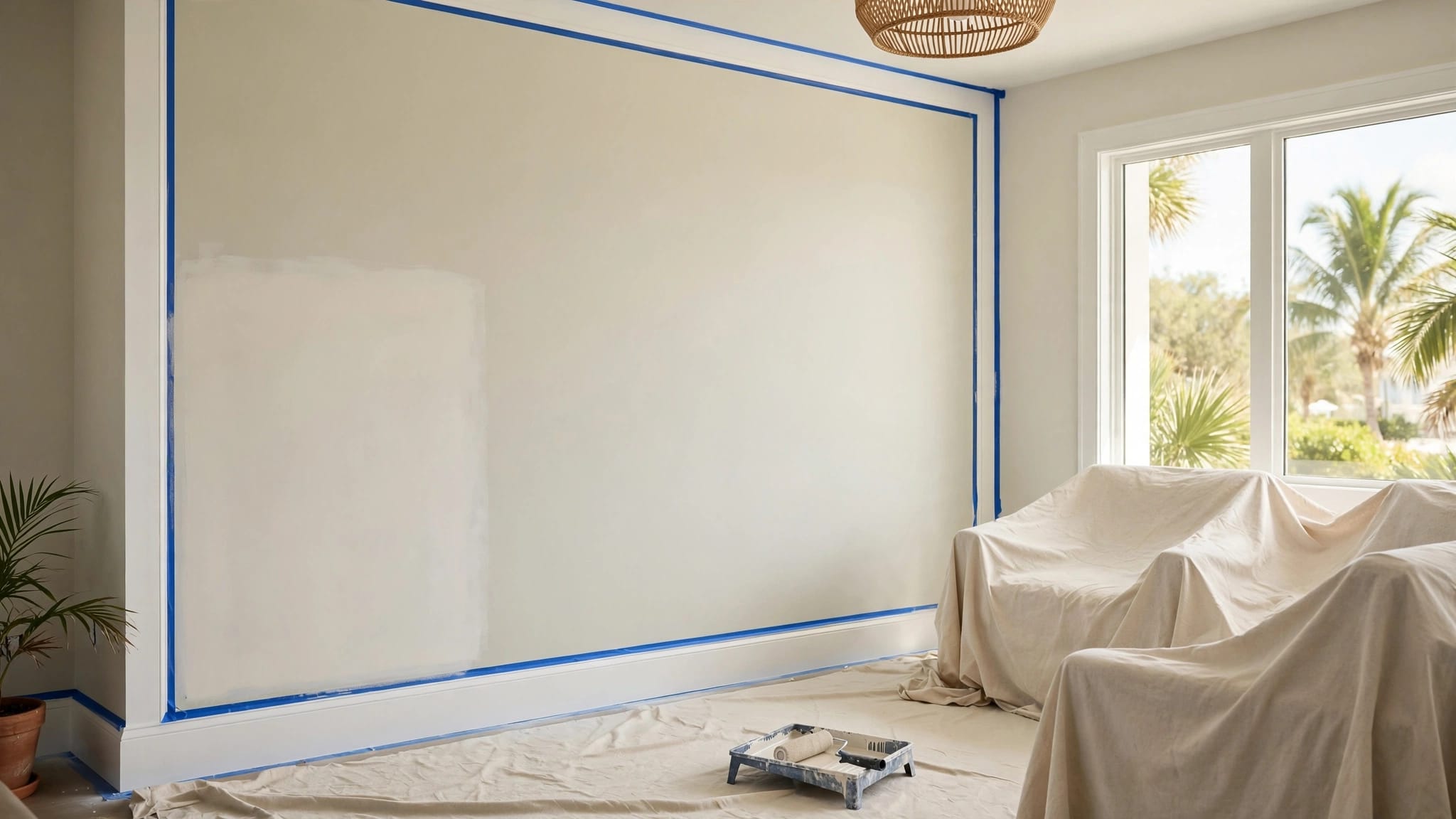
- Apply a small test using a tool that matches the original texture.
- Let the test dry according to product guidance, then compare it under different lighting conditions.
Don't judge the match while the paint is wet. Check it in daylight and under the room's usual lighting. On exteriors, compare it in sun and shade when possible.
If the patch remains obvious, painting the full wall or a trim section between natural breaks may give a more consistent result. Review the choice between a paint touch-up or full repaint before repeatedly enlarging an unsuccessful patch.
For a contractor-assisted repair, share the record when requesting an estimate. EFC's residential painting services cover interior and exterior work in Fort Myers, Naples, and surrounding communities.
Frequently Asked Questions
Is the color code enough for a touch-up?
No. Keep the brand, product line, sheen, and surface details too. The same color can look different when the coating, gloss, or application texture changes.
What if the original paint records are missing?
Ask the previous owner, contractor, or paint supplier first. Receipts and store purchase histories may help. A supplier can scan a suitable sample, but treat the resulting match as a starting point and test it. Avoid disturbing potentially lead-painted surfaces without appropriate precautions.
Can leftover paint guarantee an invisible repair?
Leftover paint can help, but aging, fading, surface wear, and application differences can leave a visible patch. Test the material and match first. A full wall or defined section may need repainting when blending doesn't work.
Make the Next Repair Easier
A reliable record connects the exact coating to its location, preparation, and application history. Keep it current whenever you repaint or repair a surface.
Florida weather will continue to change the finish, so pair those records with inspection and a dried test patch. When the next scuff or chip appears, you'll have more to work with than "living room beige."
More featured articles...