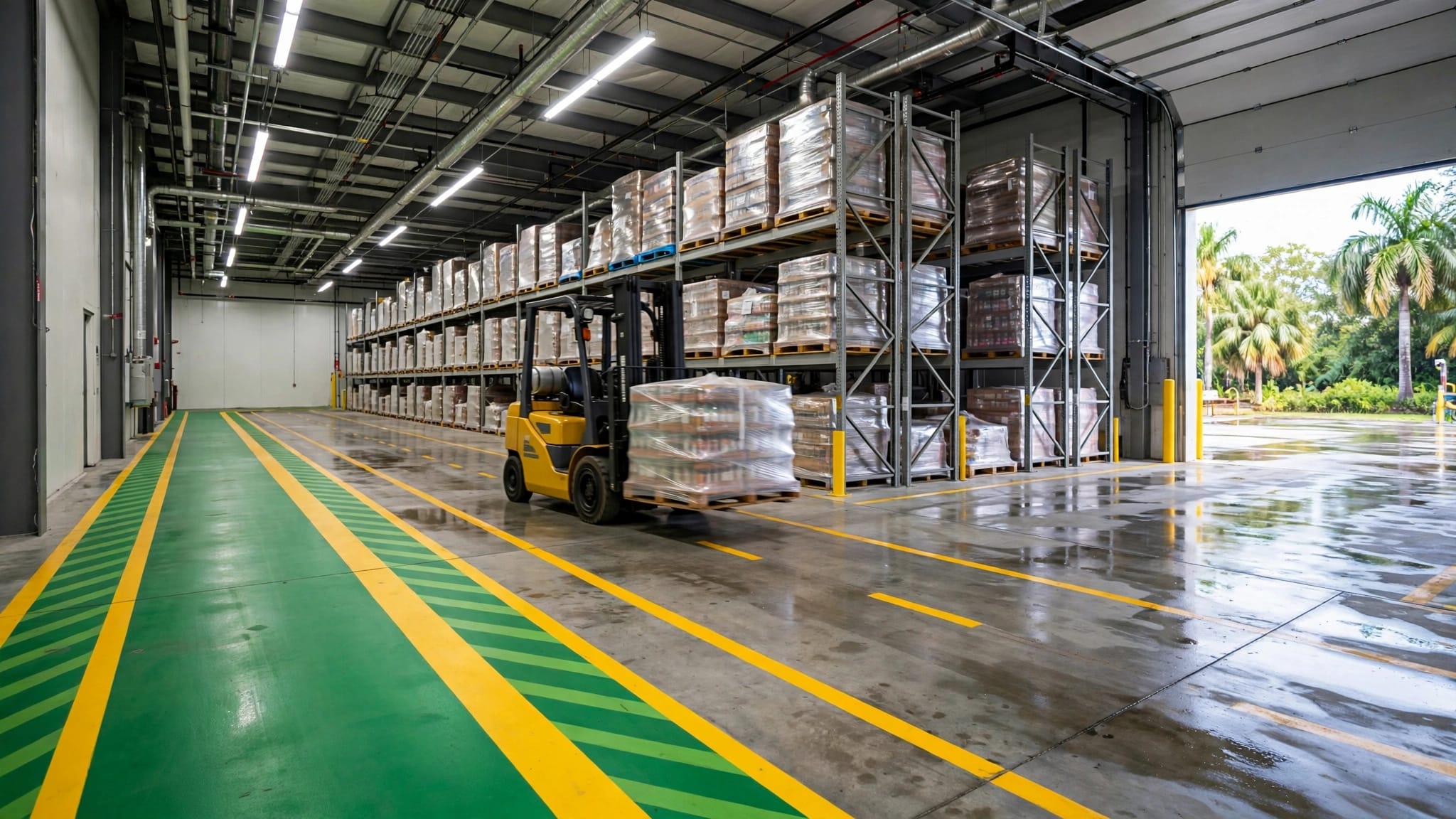
Concrete Floor Protection for Florida Auto Service Bays
A service-bay floor can look clean while oil, moisture, and worn concrete threaten the next coating's bond. Reliable concrete floor protection starts with slab preparation , followed by a coating system matched to your shop's traffic and chemicals.
In Florida, heat and humidity also affect installation timing, especially when bay doors stay open. Start by identifying what reaches the floor each day, then build the protection plan around those conditions.
Plan Concrete Floor Protection Around Bay Conditions
Automotive service bays face more demanding use than residential garages. Vehicles turn repeatedly in the same locations, while rolling tool cabinets and floor jacks concentrate wear. Meanwhile, leaks and spills expose the surface to motor oil, coolant, brake fluid, fuel, and cleaners.
Map those conditions before requesting a quote. Tire paths, lift areas, fluid-service stations, and entry thresholds may need different treatment. Include washdown practices and any standing water near drains.
Florida adds exposure that varies by location. Open doors admit humid air and wind-driven rain. Direct sunlight can heat entrance areas, while coastal shops may receive salt residue and sand.
A coating reduces contact between contaminants and concrete, but it won't correct poor drainage or structural damage. Penetrating sealers can reduce absorption, yet they don't provide the same continuous wear layer as a film-forming coating.
Also, floor coatings don't increase a slab's load capacity. Have lift anchorage concerns and significant concrete damage evaluated separately.
Test Slab Moisture Before Selecting the System
Humidity in the air and moisture inside concrete are separate measurements. Both affect coating work, but an air-humidity reading doesn't establish whether the slab is ready.
Use the Test Method the Manufacturer Accepts
ASTM F2170 measures relative humidity inside concrete through installed probes. ASTM F1869 measures moisture vapor emission at the surface using calcium chloride. These methods report different conditions, so their results and acceptance limits aren't interchangeable.
A handheld meter helps locate suspect areas near doors, joints, or plumbing. However, treat it as a screening tool unless the coating manufacturer accepts it for installation decisions.
Your contractor should follow the selected product's testing requirements under the conditions required by the test method. EFC's guidance on testing concrete slab moisture explains why surface appearance alone isn't enough.
Resolve Moisture Problems Before Coating
Ask for documented readings, test locations, and the manufacturer's acceptance limits. Include pH testing when the specified system requires it.
If results exceed those limits, discuss a compatible moisture-mitigation system before installation. A standard primer and a dedicated moisture-control layer aren't automatically interchangeable.
Also, investigate rain intrusion, plumbing leaks, and drainage problems. A vapor-control product doesn't replace repairs to an active water source.
Faster-curing coatings still require slab moisture evaluation. A shorter installation window doesn't make concrete moisture disappear.
Prepare Oil-Stained Concrete for a Reliable Bond
The coating needs clean, sound concrete with the surface profile its manufacturer specifies. Covering contamination or weak material leaves the bond dependent on something that may detach.
Remove Contamination, Then Mechanically Profile
Start with oil removal using cleaners and procedures compatible with the coating system. Deep contamination may require repeated treatment or removal of affected concrete.
Dark staining doesn't always prove that oil remains. However, an oily feel, sheen, or persistent residue requires further investigation. EFC's advice on removing oil before coating addresses these preparation concerns.
Next, diamond grinding or shot blasting creates the required surface profile and removes unsuitable surface material. Pressure washing alone doesn't provide that profile, and acid etching isn't a substitute when the specification calls for mechanical preparation.
Ask how the crew will control grinding dust and remove residue before coating.
Repair Damage Without Locking Moving Joints
Repair spalls, damaged edges, and suitable cracks with materials compatible with the floor system. Allow repairs to reach the required condition before applying subsequent layers.
Active cracks, uneven slabs, or recurring movement need evaluation before cosmetic filling. Otherwise, movement can reopen the repair and split the coating.
Control joints and expansion joints also require separate decisions. Some need flexible treatment or must remain functional. Don't accept a plan that fills every joint identically.
Finally, preserve drainage slopes. Leveling a low spot without considering nearby drains can leave wash water trapped in a working bay.
Choose a Coating System for Automotive Use
Compare the complete assembly, including primer, build coats, aggregate, and topcoat. The name on the finish coat doesn't establish the performance of every layer beneath it.
Compare Epoxy and Polyaspartic Roles
Epoxy can provide a substantial build layer and support broadcast aggregate or decorative flakes. However, many epoxy formulations can yellow under sunlight, which matters near open service doors.
Polyaspartic coatings often offer faster curing and better UV color stability. Their shorter working time also requires careful mixing and application planning in Florida heat.
Neither category guarantees identical performance across products. Review the specific formulation and complete system. EFC's epoxy and polyaspartic comparison outlines the Florida-related differences, although commercial bays require their own specification.
An epoxy base with a compatible UV-stable topcoat may suit some projects. Others require a different assembly based on slab conditions and use.
Verify Resistance to Your Actual Shop Chemicals
Ask for the manufacturer's written chemical-resistance information covering your shop's fluids. Include brake fluid, battery electrolyte, gasoline, coolant, degreasers, and the brake-cleaning products technicians use.
Check exposure duration and concentration, too. Resistance to a promptly removed splash doesn't establish suitability for liquid left overnight.
Discuss rolling loads, floor-jack contact, tire turning, and concentrated wear at lifts. The contractor should explain the specified film thickness and why the system suits those conditions.
Ordinary floor paint deserves scrutiny here. A residential garage designation alone doesn't establish suitability for a busy automotive service operation.
Specify Slip Resistance Without Sacrificing Cleanability
Rainwater, oil, and coolant can make a smooth coated floor hazardous. Texture helps manage traction, but it must suit the bay's cleaning routine and expected contamination.
Ask the installer about compatible aggregate, its application method, and how the topcoat affects the finished texture. Decorative flakes alone don't establish slip resistance. The final surface and any relevant test data matter more than appearance.
A textured sample gives your team something practical to inspect. Evaluate it with the footwear technicians normally wear and the cleaning equipment the shop uses.
More texture isn't always better. A rougher surface can retain grime and make mopping difficult. Meanwhile, an overly smooth finish may become slippery when wet.
Pair the floor specification with prompt spill cleanup and suitable drainage. No finish removes the hazard of pooled oil.
For coastal shops, also account for salt residue and sand near entrances. Frequent removal limits abrasive grit under tires and shoes.
Schedule Installation and Curing Around Florida Weather
Hot air doesn't automatically mean favorable coating conditions. The crew should measure air temperature, slab temperature, humidity, and dew point, then compare them with the product's requirements.
A cool slab can collect condensation when humid air enters through an open door. Meanwhile, high temperatures can shorten a product's working time. Both conditions affect application planning.
Ask how the contractor will protect fresh coatings from rain, wash water, dust, and debris. Ventilation must also follow the product's safety requirements without introducing unsuitable moisture or contaminants.
Most importantly, get separate return-to-service times for foot traffic, vehicle traffic, and chemical exposure. Dry-to-touch doesn't mean ready for turning tires or solvent spills.
EFC's guidance on preventing hot tire pickup connects product selection, preparation, and curing to adhesion.
If the shop must stay open, discuss phased work and access routes. However, phase boundaries shouldn't create untreated gaps in wet areas. Don't promise customers a reopening date until the installer confirms the schedule for actual site conditions.
Maintain the Floor as Part of Daily Shop Operations
A coated floor still needs routine care. Grit wears the finish under tires and rolling equipment, while delayed spill cleanup increases chemical exposure.
Remove sand and debris frequently, especially around open doors. Then clean with manufacturer-approved products and equipment. Aggressive solvents, abrasive pads, or unsuitable scrubber brushes can damage the finish.
Avoid cleaners that leave a slippery residue. If using a degreaser, follow the approved dilution and rinse procedure. Also, manage cleanup liquids according to the shop's waste-handling requirements.
Inspect high-wear areas regularly. Look for exposed concrete, peeling edges, blisters, soft spots, and damage around joints. Check beneath approved mats as well, because trapped moisture or debris can hide problems.
Address small defects before traffic enlarges them. However, investigate recurring blistering or peeling rather than covering it with another coat.
Keep records of repairs, cleaning products, and coating details. Those records help a contractor determine whether localized repair or a prepared recoat is appropriate. A worn appearance and a failed bond require different responses.
Ask for an Estimate That Defines the Work
For a Fort Myers or Naples service bay, a useful estimate explains more than color and square footage. It should identify the preparation process, moisture testing, repairs, coating layers, texture, and curing restrictions.
Use these questions when comparing contractors:
- What moisture results must the slab meet, and what happens if it fails?
- Which complete coating system is proposed, and what supports its suitability for our chemicals and traffic?
- How will the crew handle joints, drains, ventilation, cleanup, and return-to-service scheduling?
Compare equivalent scopes. A lower price may exclude oil treatment, damaged-concrete repairs, moisture mitigation, or a wear-resistant topcoat. Likewise, residential garage pricing doesn't establish the cost of a commercial service bay.
Request warranty terms in writing, including exclusions and maintenance responsibilities. Also, clarify who moves equipment and protects adjacent work areas.
EFC Painting Contractors provides concrete floor coating services in Southwest Florida. Request a free onsite estimate so the recommendation reflects your slab, shop operations, and available downtime.
Protect the Slab Before Problems Reach the Surface
Reliable concrete floor protection begins with verified slab conditions and preparation that supports the coating bond. Florida heat, humidity, and coastal exposure make that groundwork especially important.
Choose the complete system around your shop's chemicals, traffic, and cleaning practices. Then respect the curing schedule and repair damage before daily use enlarges it.
The floor that looks clean should also have documented preparation, a suitable specification, and a maintenance plan behind it.
More featured articles...