Paint Compatibility Chart for Florida Exterior Surfaces
Exterior paint can fail within months when the coating, surface, and preparation don't match. Florida's intense sun, heavy rain, humidity, salt air, and mildew make that mismatch more noticeable.
This paint compatibility chart gives property owners a practical starting point for common surfaces in Fort Myers, Naples, and nearby areas. However, compatibility depends on the substrate, its condition, the existing coating, and the product label, not only on the paint type.
A contractor should inspect those factors before recommending a complete exterior system.
How to Read a Paint Compatibility Chart
Paint compatibility isn't a simple matter of choosing "masonry paint" for every wall or "exterior acrylic" for every surface. The same paint may bond well to clean, sound stucco but fail over chalk, efflorescence, or a glossy old coating.
Start with the substrate
The substrate is the material beneath the paint. Stucco, concrete block, wood, fiber cement, aluminum, galvanized steel, and ferrous metal all absorb, expand, corrode, or release moisture in different ways.
Porous masonry often needs a coating that can tolerate alkalinity and allow vapor movement. Wood requires attention to moisture, end grain, tannins, and movement. Metal needs corrosion control and the right primer for its surface chemistry.
Then check the surface
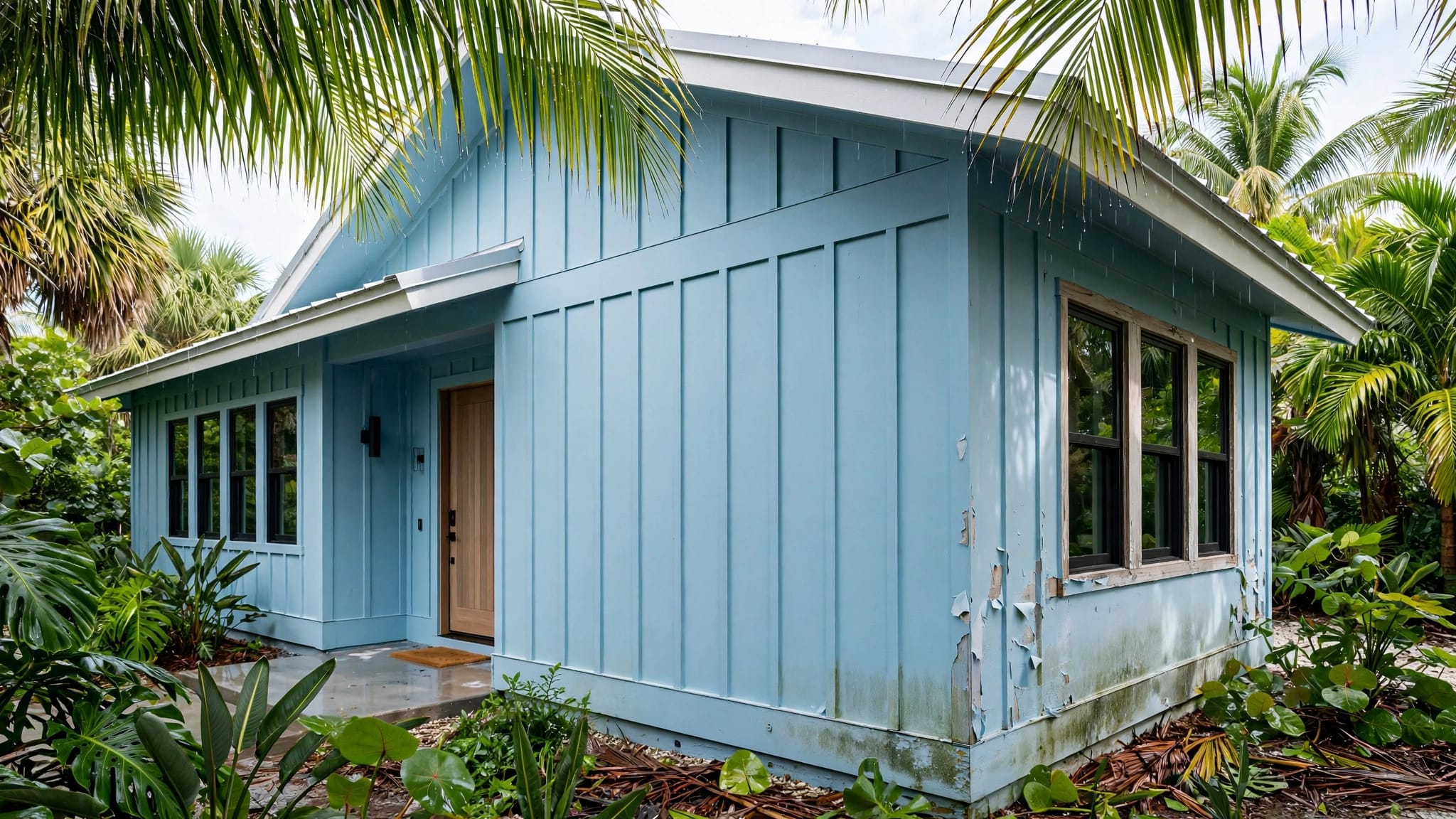
A compatible paint can still peel if the wall has mildew, dust, chalk, oil, salt, rust, or loose paint. Existing coatings also matter. A new water-based finish may not bond to a glossy or poorly adhered old coating without cleaning, scuffing, or priming.
The product label is the final authority. Always confirm that the label allows the paint or primer over the exact substrate and existing coating.
Paint Compatibility Chart for Common Florida Surfaces
Use this chart to narrow the options. A test patch and proper preparation should come before full application.
| Florida exterior surface | Common starting coating | Primer or preparation layer | Main compatibility check |
|---|---|---|---|
| Stucco | Exterior acrylic masonry paint; elastomeric coating on sound, dry stucco when approved | Masonry primer, block filler, or problem-specific primer | Check moisture, cracks, chalk, mildew, and efflorescence |
| Concrete block | Acrylic masonry coating or compatible elastomeric system | Block filler or masonry primer for porous areas | Confirm the wall is clean, dry, and free of salts |
| Wood siding and trim | Exterior acrylic paint over a compatible wood primer | Stain-blocking or bonding primer when required | Check moisture, soft wood, tannin bleed, and peeling |
| Pressure-treated wood | Exterior wood coating after the lumber dries | Compatible exterior wood primer if the label requires it | Do not coat wet lumber or rely on paint to seal trapped moisture |
| Fiber-cement siding | Exterior acrylic paint approved for fiber cement | Manufacturer-approved primer for bare or repaired areas | Follow the siding and coating instructions |
| Previously painted surfaces | A compatible exterior topcoat after adhesion testing | Bonding or chalk-binding primer when needed | Identify loose, glossy, chalky, or incompatible old paint |
| Galvanized steel | Metal coating approved for galvanized surfaces | Galvanized-metal bonding or etching primer | Remove grease, oxidation, and white rust |
| Ferrous metal and steel | Exterior metal topcoat approved for the primer | Corrosion-control metal primer | Remove loose rust and address rust at fasteners and joints |
| Aluminum or vinyl siding | Acrylic exterior coating approved for the siding | Bonding primer only when the label calls for it | Check heat gain, color restrictions, oxidation, and adhesion |
Stucco and concrete block are common in Southwest Florida because they handle the climate well, but both are porous. They absorb rain, hold dirt, and can release moisture through the coating. A long-lasting coating approach for Florida block homes starts with cleaning and moisture control rather than a finish coat alone.
The chart also shows why one paint system cannot cover every exterior detail. Fascia, doors, railings, soffits, and metal fixtures may need different primers or sheens than the main wall.
Conditions That Change Paint Compatibility
Surface problems often determine the coating system more than the original construction material. A contractor should document these conditions before selecting paint.
Moisture and efflorescence
Moisture is one of the most common causes of exterior coating failure in Florida. Stucco and masonry may look dry while retaining water after rain, irrigation, plumbing leaks, or poor drainage.
Painting over damp material can trap water under the film. Bubbling, peeling, mildew growth, and premature cracking may follow. Before coating stucco, inspect downspouts, hose bibs, roof edges, window joints, and other areas where water enters.
Efflorescence appears as a white, powdery deposit on masonry. Those salts travel to the surface with moisture. Clean the deposits and correct the water source before painting. A primer can help with remaining staining, but it won't fix active moisture behind the wall.
For stucco homes, testing moisture before painting can prevent a coating from sealing in water that has nowhere to go.
Chalking and mildew
Chalking is the powder left behind when an old coating breaks down under sunlight. Rub a clean hand over the wall. If powder transfers to your skin, the surface needs washing and another adhesion check.
A chalk-binding or penetrating primer may be appropriate when washing doesn't remove the residue. The primer must match the substrate and the existing coating. Applying new paint directly over heavy chalk usually creates a weak layer between the old finish and the new one.
Mildew needs separate attention. Clean it with a product approved for the surface, protect nearby plants, rinse as directed, and allow the wall to dry. Paint won't reliably adhere to active biological growth.
Corrosion, salt, and old coatings
Coastal properties may collect salt on stucco, concrete, wood, and metal. Salt residue can interfere with adhesion and may draw moisture into the coating. A gentle wash and thorough rinse are safer for stucco than aggressive pressure that forces water into cracks.
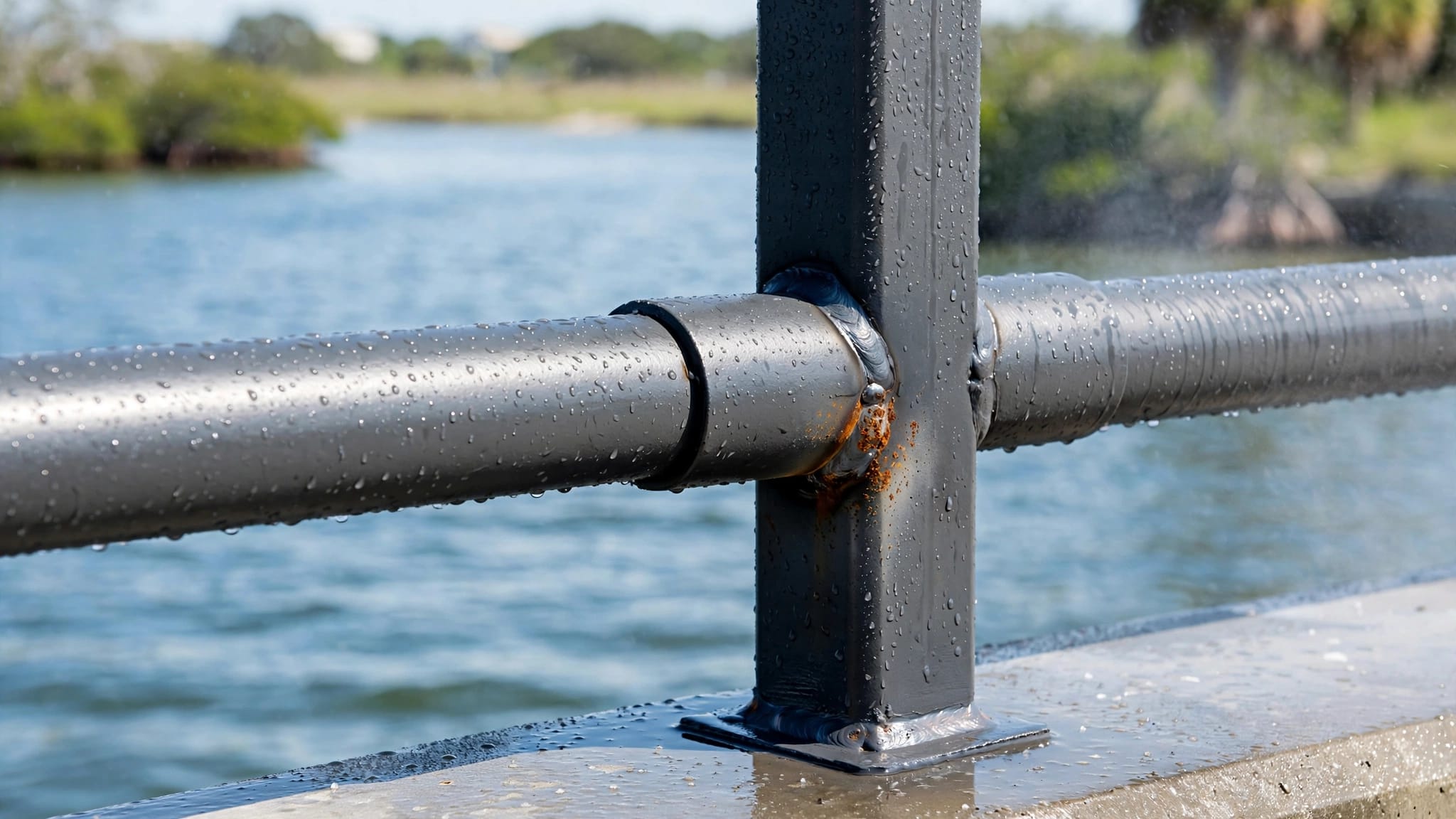
Rust requires more than covering the orange stain with fresh paint. Remove loose corrosion, clean the metal, and apply a compatible corrosion-control primer. Rust at screws, railings, flashing, and metal trim can bleed through nearby surfaces. Use these rust-bleed preparation steps when stains have already appeared.
Old paint can hide additional problems. Peeling edges, glossy areas, and multiple coating layers require separate adhesion checks.
Florida Exterior Preparation Before Painting
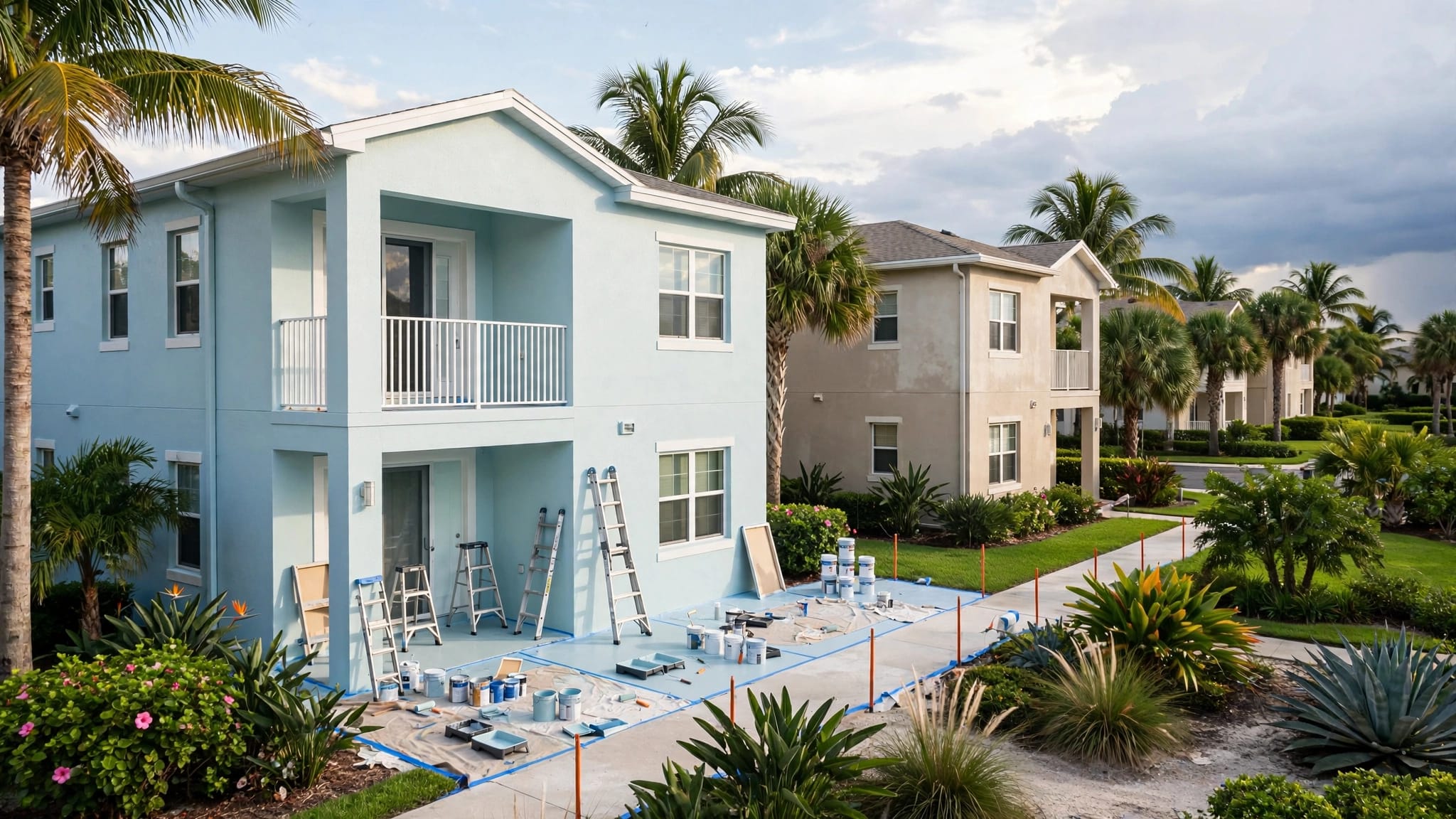
Good preparation creates the surface that the coating label assumes. In Southwest Florida, that preparation must account for heat, rain, humidity, salt, and long drying times in shaded areas.
Wash, repair, and let surfaces dry
Start by removing dirt, chalk, salt, mildew, loose paint, and other contaminants. Use a cleaning method that suits the substrate. Stucco and older masonry often need lower pressure and softer brushing than a sound concrete slab.
Repair cracks, failed caulk, damaged wood, open joints, and loose stucco before applying paint. Hairline cracks may accept an approved flexible repair material, but larger or recurring cracks can point to movement or water intrusion.
Drying time matters after washing and repairs. Shaded walls, covered lanais, and porous masonry may stay damp longer than they appear. A coating contractor should check the surface rather than relying only on warm weather. This Southwest Florida exterior preparation guide covers the steps that affect adhesion before the first coat goes on.
Prime according to the problem
Primer isn't an automatic substitute for cleaning. It is a layer selected for a defined purpose, such as sealing porosity, binding chalk, blocking stains, improving adhesion, or slowing corrosion.
Bare stucco and block may need masonry primer or block filler. Bare wood can require a wood primer, while tannin-prone areas may need a stain-blocking product. Galvanized metal, aluminum, and glossy old paint often need a bonding primer approved for that surface.
A primer should also be compatible with the finish coat. Follow the label for recoat time, temperature, moisture limits, thinning, and recommended topcoats. This guide to choosing primers for Florida exteriors can help property owners compare primer needs by material and surface condition.
Lead-based paint needs extra caution. If a home or building dates from before 1978, don't dry-sand or aggressively scrape old paint until the coating has been evaluated. Lead-safe containment, cleanup, and work practices may be required.
Pressure-treated wood also needs patience. Fresh lumber often contains too much moisture for paint. Wait until the wood meets the coating manufacturer's requirements, then clean and prime as directed. Painting damp treated wood can trap moisture and lead to peeling or decay.
Test a Small Area Before Full Application
A test patch can expose a compatibility problem before it affects an entire building. Choose an inconspicuous area that includes the same substrate, old coating, exposure, and surface condition as the larger project.
Use this process:
- Clean and prepare the test area exactly as planned for the full job.
- Apply the proposed primer and topcoat at the labeled spread rate.
- Allow the coating to cure for the time stated on the product label.
- Check for wrinkling, bubbling, soft film, color bleed, uneven sheen, or poor adhesion.
- Use a careful tape or scrape check only after the coating has cured, and repair the test area if needed.
A test patch doesn't replace moisture testing or repairs. It checks how the proposed system behaves on that particular surface. If the patch fails, change the preparation or coating system before proceeding.
When to Hire a Florida Painting Contractor
A contractor is especially useful when a property combines several exterior materials or shows repeated coating failure. A home may have stucco walls, wood trim, aluminum soffits, steel railings, and pressure-treated structures, each with different preparation needs.
For a commercial property, the evaluation may also include concrete floors, loading areas, industrial metal, high-traffic surfaces, or coatings that must withstand cleaning. The right system depends on exposure and use, not only color.
Questions that reveal a sound plan
Ask the contractor:
- What substrate and existing coating did you identify?
- How will you check for moisture, chalk, mildew, and efflorescence?
- Which areas need repairs or primer?
- How will you handle possible lead-based paint?
- What does the product label allow over this surface?
- Will you apply a test patch before the full project?
- How will rain, shade, and humidity affect the schedule?
A detailed answer should connect each recommendation to a visible condition. A quote that lists only a paint color and number of coats leaves out the part that controls adhesion.
Conclusion
A paint compatibility chart helps narrow the choices, but it can't replace a surface inspection. The reliable decision comes from matching the coating to the substrate, correcting moisture and contamination, preparing the existing finish, and following the product label.
Florida exteriors need more than a fresh color. They need a coating system that fits the material and the conditions around it. When those details are handled before painting begins, the finished surface has a much better chance of staying clean, bonded, and intact.
More featured articles...