What to Do When Rain Hits Exterior Painting in Florida
Florida weather can turn a clear morning into a soaking afternoon without much warning. When rain hits during exterior painting, the next move matters more than panic.
A fresh coat can still recover, but only if you handle the surface the right way. The goal is simple: stop damage, let everything dry the right way, and spot trouble before it turns into peeling or blistering.
Pause the Job and Protect the Area
The first step is to stop painting as soon as rain starts. Wet paint and wet surfaces do not mix well, and brushing through them usually makes the finish worse.
If a crew is on site, they should close open cans, cover tools, and move ladders and drop cloths to a dry spot. Homeowners should also keep clear of slick walkways, porch steps, and any area near wet equipment. A rainy day can make a job site feel calm, but it can hide slip hazards fast.
After that, let the wall dry naturally. Do not hose it off, wipe it hard, or try to speed things up with a fan on the exterior. Fresh coating can smear easily, and rough handling can leave marks that show later.
Use this simple order:
- Stop painting right away.
- Protect tools, trim, and nearby surfaces.
- Keep people and pets away from wet areas.
- Wait for the wall to dry before touching up anything.
Fresh paint can recover from a storm, but only if the surface gets time to dry before the next coat goes on.
If lightning is nearby, the crew should leave ladders and metal tools alone until the storm passes. Safety comes first, even on a short delay.
How Long Exterior Paint Needs After Rain
Dry time and cure time are not the same thing. Many exterior paints feel dry in a few hours, but they still need much longer to harden fully. In Florida, heat, humidity, and afternoon showers can stretch that window.
A wall may look fine from the street and still be soft underneath. That is why the timing of the rain matters. If the shower hit before the paint set, the risk of streaks, dull spots, or weak adhesion goes up. If the coating had more time to dry, the damage may be minor or none at all.
The safest move is to ask the painter what product was used and how long it needs before rain. The label or product sheet usually gives a rain-free window, recoat time, and cure guidance. Those numbers matter more than guesswork.
Sun and shade can also create uneven drying. A wall that faces the afternoon sun may be ready sooner than a shaded side. Wind helps, but high humidity slows everything down.
If the surface was painted recently and rain hit it hard, wait until it dries all the way before inspecting closely. A rushed touch-up can trap moisture under the finish, and that causes more trouble later.
Signs the Finish May Need Repair
Once the weather clears, look for visible changes. Some issues are easy to spot, and some show up only after the wall dries.
Watch for these signs:
- streaks or run lines in the finish
- tiny blisters or bubbles
- soft spots that feel tacky after the surface should be dry
- dull patches or uneven sheen
- peeling around trim, edges, or seams
A light shower after the coating has set may leave little damage. However, if rain landed early, these signs point to a weak bond. That does not always mean the whole wall needs repainting. Sometimes a painter can sand the damaged spots, prime them again, and blend the area with a careful touch-up.
If the color looks blotchy across a wide section, the whole surface may need another coat. The key is to wait until everything is dry before making that call. Painting over moisture only hides the problem for a short time.
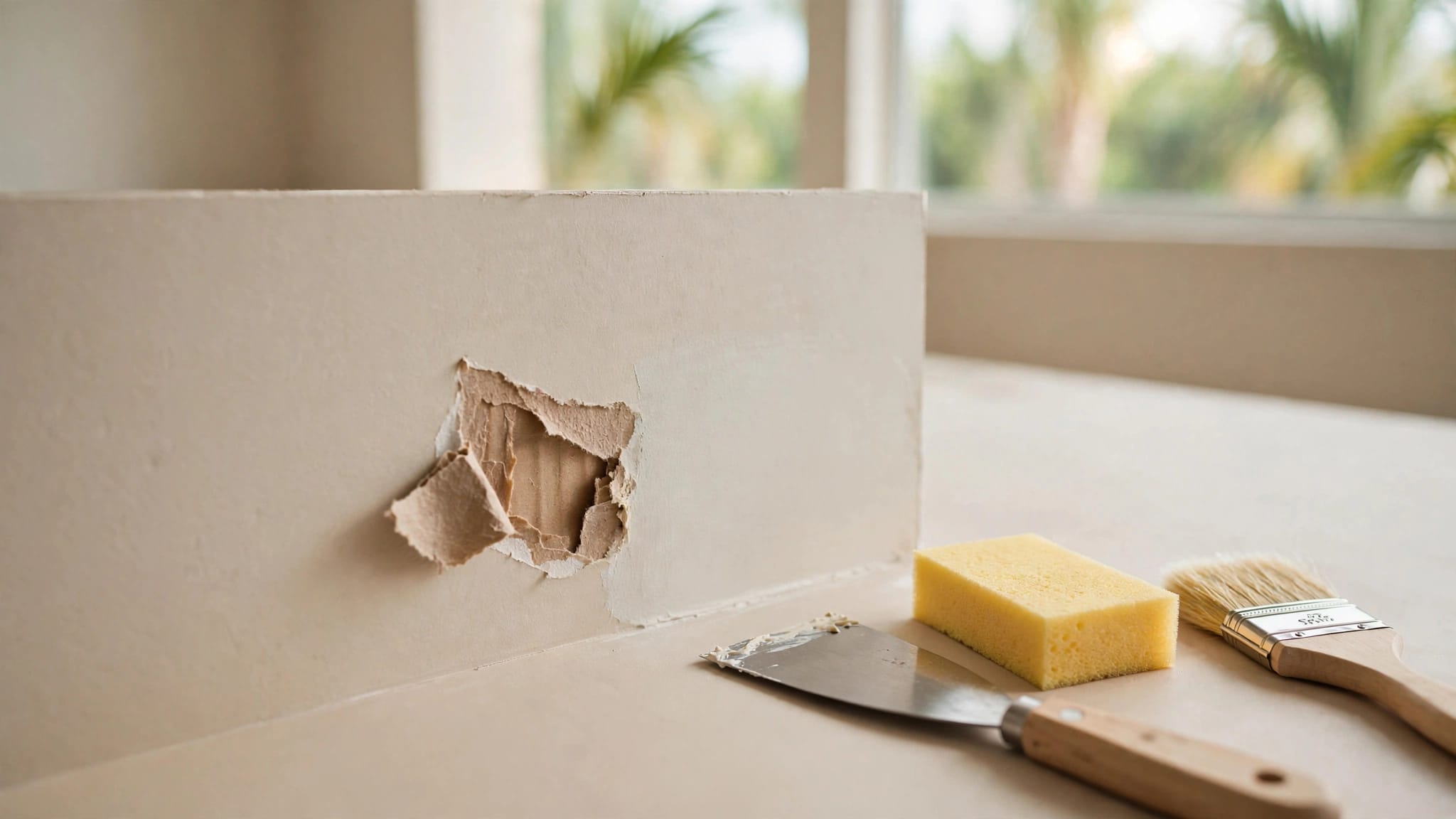
If you see bubbling near stucco cracks or around old repairs, the surface may already have been holding moisture. In that case, stucco repair before painting can make a bigger difference than another coat of paint.
How to Prevent Rain Trouble on the Next Project
The best way to deal with rain is to plan for it before the first gallon opens. In Florida, that means building weather into the schedule, not treating it as a surprise.
A good exterior paint project timeline should include drying windows, weather checks, and room for delays. If a contractor promises a rigid schedule with no weather cushion, that is a red flag.
A smart plan usually includes these steps:
- start early in the day when storms are less likely
- avoid painting right before an expected shower
- allow time for primer, caulk, and patch work to dry
- use products made for humid, coastal conditions
- repair cracks and problem spots before finish painting
Surface prep matters just as much as the topcoat. Paint cannot seal over loose material, chalky residue, or damp stucco and keep looking good. If a wall already has cracks, soft patches, or past water damage, those issues should be fixed first.
For homeowners in Fort Myers, Naples, and nearby Gulf Coast areas, this planning is not extra caution. It is part of getting a clean, long-lasting finish. Rain will happen. A well-run project leaves room for it.
Final Takeaway
Rain during exterior painting can be frustrating, but it does not have to ruin the job. Stop the work, protect the area, and give the surface time to dry before deciding on the next step.
Most problems show up as streaks, bubbles, or peeling after the wall dries. If that happens, address the damage early instead of painting over it.
A little patience on a rainy Florida day often saves a lot of time later.
More featured articles...