How Long Garage Floor Coatings Last in Southwest Florida
A garage floor coating in Southwest Florida can look great for years, but the local climate does not make it easy. Heat, humidity, UV exposure, and salt air all push the finish harder than most homeowners expect.
That is why lifespan questions do not have one clean answer. A coating that lasts a decade in a shaded garage may show wear much sooner in a bright, busy one.
The good news is that you can get a realistic range if you look at the right factors. southwest florida garage floor coatings last longest when the product, prep, and maintenance all fit the space.
What "lasting" means on a garage floor
A coating can stop looking perfect before it stops protecting the concrete. That distinction matters. Some floors lose gloss first. Others show chips at the edges or hot-tire marks near the parking spot.
For most Southwest Florida homes, these are the practical ranges:
| Coating type | Realistic lifespan in Southwest Florida | Common wear pattern | Best fit |
|---|---|---|---|
| Epoxy | About 5 to 10 years | Yellowing, dull spots, chips in traffic lanes | Value-focused garages with less sun exposure |
| Polyaspartic | About 10 to 15 years | Light gloss loss over time, usually good color retention | Garages with strong UV exposure and fast return to service |
| Polyurea | About 10 to 15 years, sometimes longer with a strong top system | Wear in high-traffic areas, may need a refresh later | Heavy-use garages and flexible coating systems |
Those ranges assume a proper installation. Poor prep can cut them down fast. Good prep can stretch them out.
If you are comparing materials, a side-by-side look at epoxy vs polyaspartic garage floors can help you match the coating to your garage, not just your budget.
A simple rule helps here. Epoxy often gives you strong value. Polyaspartic and polyurea usually hold up better when sunlight and heat are part of daily life.
A floor can still protect the slab after it starts looking tired.
That is why a coating with a few cosmetic flaws may still have useful life left. On the other hand, peeling, bubbling, or soft spots mean the system is failing, not just aging.
Why Southwest Florida shortens coating life
Local weather changes the clock. Garages in Fort Myers, Naples, Cape Coral, and nearby areas deal with conditions that most northern homes never see. Moisture in the air stays high for long stretches. Concrete slabs can hold that moisture too.
Humidity and slab moisture
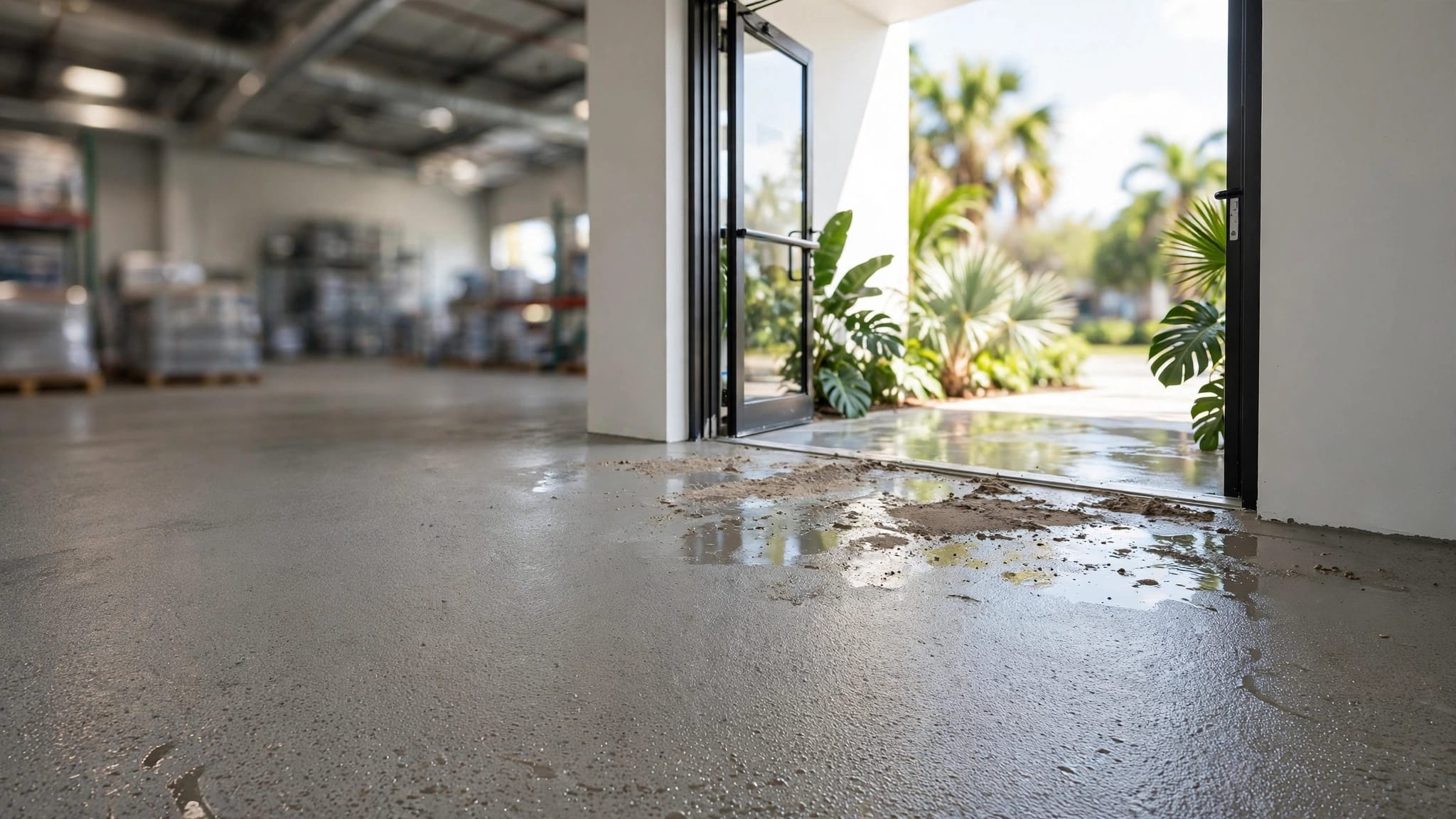
Humidity does more than make the garage feel sticky. It can affect how well a coating bonds to concrete. If moisture rises through the slab, the coating may blister, lift, or peel earlier than expected.
This is one reason surface testing matters before installation. A floor can look dry and still have moisture moving underneath. The coating only lasts as long as its bond to the slab.
If moisture is trapped below the coating, the finish starts with a disadvantage that no topcoat can fully erase.
Heat, UV, and hot tires
Southwest Florida heat keeps garage surfaces under stress for long periods. UV exposure adds another layer of trouble, especially in garages with open doors or lots of daylight. Epoxy often shows yellowing and fading first. Polyaspartic and polyurea resist UV better.
Hot tires also matter. Tires warm up fast on Florida roads, then press that heat into the coating. Over time, that can lead to softening, tire pickup, or dull tracks where the car parks every day.
Salt air and tracked-in grit
Homes closer to the coast deal with salt in the air and on surfaces. That salt can settle on the floor and stick to moisture. Sand and grit act like sandpaper under shoes and tires.
A floor that gets swept and rinsed regularly lasts longer because the surface takes less abrasion. That part sounds small, but it adds up over the years.
A coating in Southwest Florida is a bit like a roof in a storm zone. The product matters, but the environment sets the pace.
Which coating type usually lasts longest
The best material depends on how you use the garage. A single-car garage with partial shade is a different job from a wide-open two-car garage that gets afternoon sun. The coating choice should match that use.
Epoxy still has a place. It offers a solid, attractive finish at a lower price point. With good prep and limited UV exposure, it can last a long time. Still, it usually shows age sooner than UV-stable systems.
Polyaspartic often fits homes that want better color retention and quicker return to service. It handles sunlight well and stands up to daily use. That is why many homeowners consider it for bright garages.
Polyurea brings strong flexibility and toughness. It is often used in high-performance systems, especially where durability and fast cure time matter. In some jobs, it works as part of a larger system rather than a stand-alone answer.
If you are weighing cost against lifespan, the upfront number matters. So does how long the floor will keep looking clean and even. A garage floor coating cost guide for Fort Myers and Naples can help you compare the price of a coating with the years of use you can expect.
A lot of homeowners ask for the toughest product, but the better question is this: Which system fits the slab, the sun exposure, and the way the garage gets used?
Installation quality and maintenance make the biggest difference
Even a strong coating will fail early if the installation is rushed. Surface prep is the biggest factor most homeowners never see. Concrete needs to be cleaned, profiled, repaired, and tested before the coating goes down.
That profile gives the coating something to grip. Without it, adhesion suffers. Moisture testing matters too, especially in Southwest Florida. If the slab holds too much moisture, the installer may need a primer, barrier step, or a different system.
Cure time matters as well. Putting weight on the floor too early can leave dents, marks, or weak spots that show up later. If you want a practical guide for that stage, this garage floor coating cure time in Florida guide explains when parking is usually safe.
Maintenance helps the finish last longer once the floor is in service. Keep it simple:
- Sweep or blow out grit often, especially after windy days.
- Clean oil, brake fluid, and fertilizer spills as soon as you see them.
- Use mild soap and water for routine washing.
- Avoid harsh cleaners that can dull the surface.
- Put mats under bikes, storage gear, or anything that drips.
Small habits protect the finish. They also protect the look of the garage, which is often the first place dirt and wear show up.
Regular upkeep does not need to be fussy. It just needs to be consistent.
How to tell a coating is wearing out
Most floors give warning signs before they fail completely. The finish may look cloudy in the parking lane. Chips may appear near the door. The surface may start to feel rough or powdery in spots.
Color change is another clue. Yellowing on epoxy is common in sunny garages. A patchy look after cleaning can point to thinning topcoat or worn texture. If water no longer beads and spreads out fast, the surface may be losing its protective layer.
When those changes are small, a maintenance coat or repair may help. When peeling starts, the system likely needs more than touch-up work.
The key is to catch problems early. A floor that gets repaired on time usually costs less to recover than one that peels across the whole bay.
Conclusion
In Southwest Florida, garage floor coatings do not age in a gentle climate. Heat, humidity, UV exposure, and salt air all push them harder than many homeowners expect. That is why realistic lifespan ranges matter more than sales promises.
Epoxy can last well when conditions are kind and the prep is strong. Polyaspartic and polyurea usually hold up better in bright, hot garages, especially when the installation is done right. Above all, prep and maintenance decide whether a coating reaches the top of its range or falls short.
If you are planning a new floor, look at the slab first, then the sun exposure, then the way you use the garage. The right system will give you years of clean, durable service.
More featured articles...