How to Protect Landscaping During Exterior Painting in Florida
Protecting landscaping during exterior painting takes more than a few drop cloths. In Florida, heat, humidity, sudden rain, and wind can turn a small mistake into burned leaves, stained mulch, or paint chips in the pool.
If you live in Fort Myers, Naples, or anywhere else in Southwest Florida, the yard needs the same attention as the siding. Plastic left on shrubs can cook plants, overspray can drift farther than you expect, and runoff from pressure washing can spread grime across beds and pavers.
The safest jobs start with a plan, a good crew, and a clear line between the work zone and the landscape.
Walk the yard before the first coat
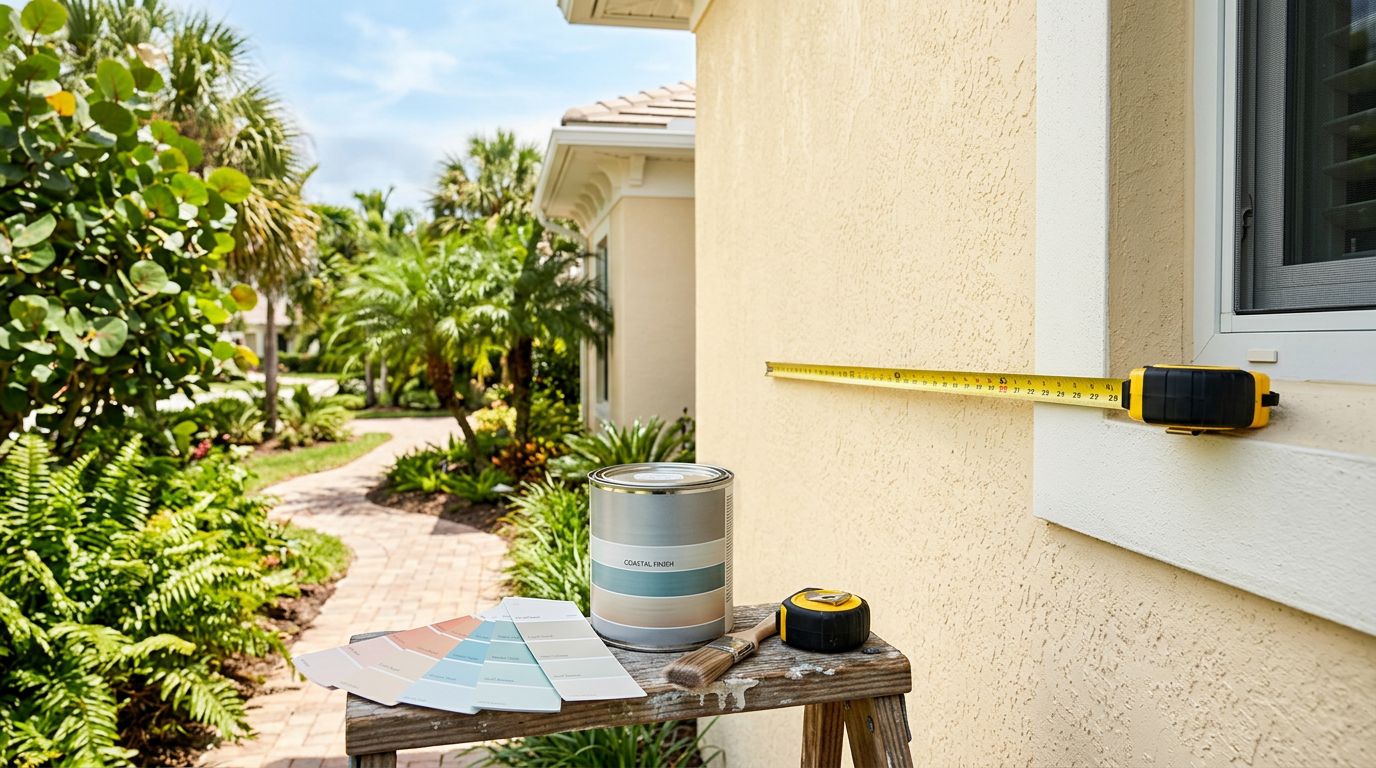
Start with a full walk-around in daylight. Note shrubs, palms, flower beds, turf edges, pavers, irrigation heads, screens, pool decks, and the lanai. Take photos before anything is moved, then mark fragile spots with tape or small flags. Note hose bibs, low-voltage lights, and the paths the crew will need for tools, because tight corners lead to accidental steps on beds.
If you want a crew that plans for this kind of prep, start with trusted Florida painting contractors who treat the yard as part of the project.
A quick map of the yard keeps small problems from becoming expensive ones.
| Area | Main Risk | Better Protection |
|---|---|---|
| Shrubs and palms | Heat buildup under plastic, broken fronds | Breathable covers, short masking periods, daily removal |
| Flower beds | Drips, chips, and foot traffic | Light cover, clear paths, mulch boards |
| Grass | Ladder dents, paint drops, runoff streaks | Walk boards, limited access, quick cleanup |
| Mulch | Paint chips and muddy wash water | Edge barriers, prompt chip pickup |
| Irrigation heads | Breakage from ladders or feet | Flags, caps, and a marked no-step zone |
| Pavers | Overspray, stains, slippery plastic | Canvas or paper protection, clean walk paths |
| Screens, pools, and lanais | Overspray and trapped heat | Careful masking, closed doors, and daily cleanup |
Once those points are marked, the crew can move without guessing.
Keep shrubs, palms, and flower beds alive under the covers
Florida plants handle heat poorly when wrapped the wrong way. Plastic traps hot air, and that trapped heat can burn leaves by midafternoon. Use breathable cloth covers when possible. If plastic must be used for a short spray window, take it off as soon as the coat is dry enough.
Palms need special care because fronds catch masking tape and shift in the wind. Secure covers to stakes or frames, not directly around new growth. Keep wet paint, caulk, and trim debris out of the root zone. Avoid stacking ladders beside beds, because the feet and weight can crush shallow roots. That matters even more around mature shrubs, where roots spread wider than the canopy.
Plastic that sits in Florida sun for hours can damage a plant faster than a paint mist ever will.
If branches touch the house, trim only enough to create space, since heavy pruning can stress the plant more than the paint ever will. Water the beds the evening before work if the painter agrees, and move potted plants away from the wall. A little space gives roots room to breathe and gives the crew room to work cleanly.
Guard grass, mulch, irrigation heads, and pavers
Grass takes damage fast when ladders, hoses, and buckets stay in one place. Use boards or pads to spread weight across soft turf and root zones. That matters after rain, when the ground gives way under pressure. It also helps around drip lines, where soil stays softer for longer.
Mulch can trap paint chips like a rug catches crumbs. Before spraying begins, rake back a narrow strip along the house or cover the edge with clean paper or canvas. When the job is done, pick up chips before they sink into the beds. Pressure washing runoff should go where it can be cleaned, not through the flower beds or across the driveway.
Irrigation heads are easy to forget until a ladder breaks one. Flag every head near the walls, and tell the crew where valves and timers sit. Pavers deserve the same respect. Avoid slick plastic on walk paths, because people slip on it, especially when humidity turns everything damp. Use protection that stays flat and can be removed the same day.
Protect screens, pools, and lanais
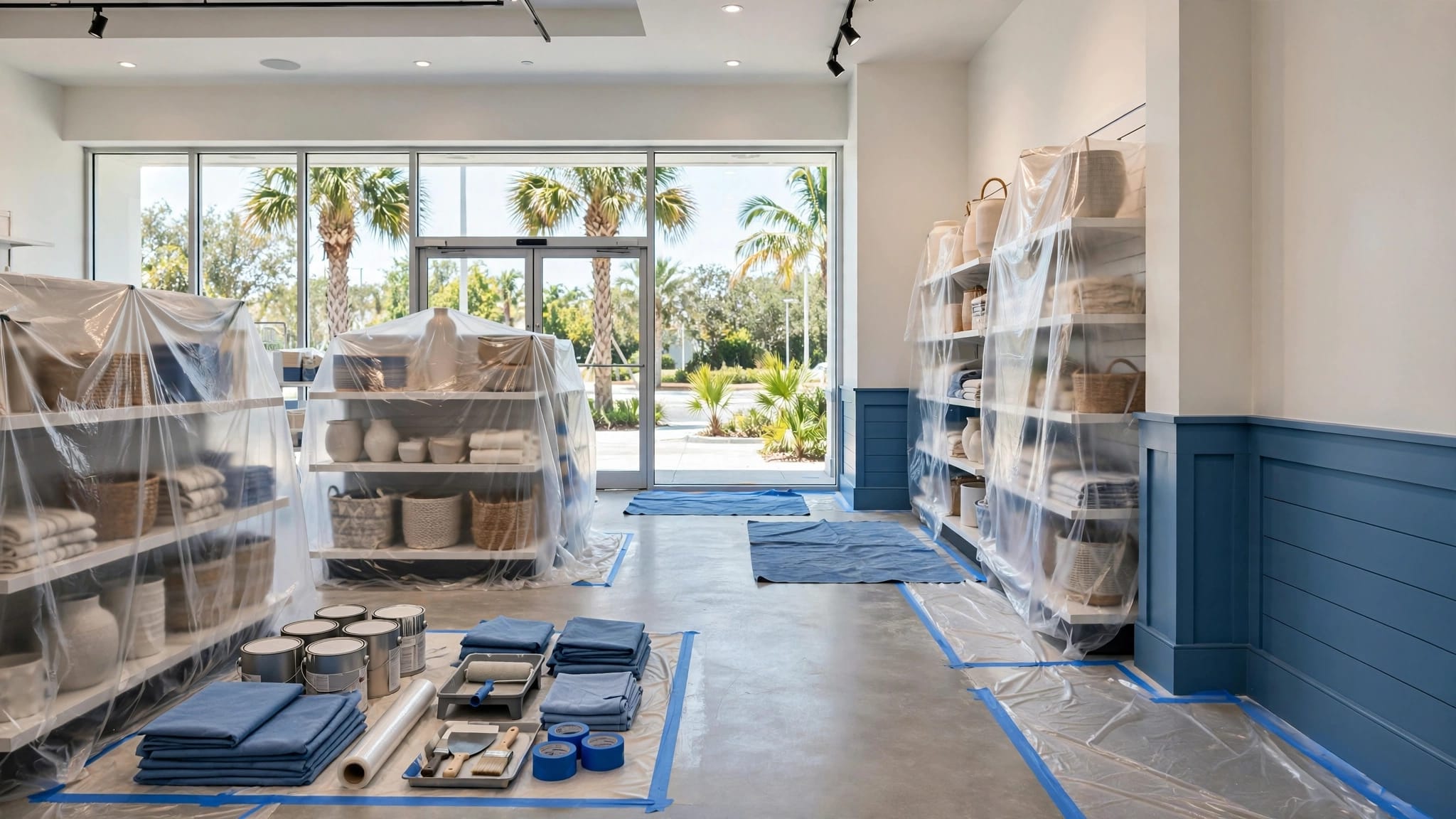
A screened lanai adds another layer of protection because overspray can settle on mesh, frames, furniture, and the pool deck. Close doors, move cushions, and cover anything that collects dust or mist. Mask the frame carefully, but don't leave plastic tight against the screen all day.
Pools need special attention during exterior painting. Chips, sanding dust, and wash water can all end up in the water if the area isn't controlled. Keep the deck clean each day, skim out debris, and make sure no spray drifts over the waterline. If the house has a pool cage, ask how the crew plans to shield both the cage and the deck below it. Cover outdoor speakers, lounge chairs, and pool equipment if they sit near the work zone.
Lanais often sit close to doors and sliders, so one missed drip can become a floor stain. Lay down clean protection, keep foot traffic organized, and check corners where wind curls around the structure. The goal is simple: the lanai should look ready to use when the painters leave.
Watch overspray, humidity, and pressure washing runoff
Florida weather changes the rules. Wind can shift in minutes, and humidity can keep paint tacky longer than expected. That means overspray travels farther, masking stays sticky, and dust clings to anything nearby. Spraying early in the day often gives better control than spraying late, when heat and wind pick up.
If the wind picks up, spraying should stop and the masking should be checked again. Rushing through that moment is how fresh paint ends up on hedges, cage frames, and deck furniture. A careful crew will pause, adjust, and protect the yard before continuing.
Pressure washing before painting is helpful, but the runoff needs a plan. Dirty water can carry loose paint, grit, and cleaner residue into beds and across pavers. A careful crew directs that water away from landscaping and rinses areas that catch splashback. If the yard has slopes or drains, those routes should be checked before the wash starts.
A clean exterior paint job depends on what happens between coats, not just on the final finish. Chips need to be swept, cans need to stay closed, and ladders should move on schedule instead of sitting in one place all afternoon. That kind of discipline keeps the yard from becoming part of the mess.
Check the yard before cleanup is done
Walk the property while the crew is still there. Look for paint freckles on leaves, chips in mulch, footprints in soft turf, and tape residue on screens or trim. Check irrigation heads to make sure they still rise and spray correctly. If a plant looks bent, loosen the support and water it lightly.
Don't leave plastic in the sun after the painters finish. Pull it back the same day, because trapped heat can keep stressing plants even when the work is over. Re-set pavers, put furniture back on clean ground, and inspect the pool deck and lanai for fine dust or overspray. A good painter will welcome that last look because it catches small issues before they harden into problems.
Simple checklist for Florida homeowners
- Mark shrubs, palms, flower beds, irrigation heads, pavers, screens, pool edges, and lanai corners before work starts.
- Move pots, cushions, and lightweight decor away from walls.
- Ask how the crew will handle pressure washing runoff and paint chips.
- Use breathable covers or short-term masking, and remove plastic quickly in Florida heat.
- Keep ladders off root zones and soft turf.
- Sweep, rinse, and inspect the yard before the crew leaves.
Conclusion
Florida exterior painting should improve the house without beating up the yard. When the plan includes plants, pavers, screens, pools, and lanai spaces, the whole property looks better when the job is done.
The biggest risks are easy to name, heat trapped under plastic, overspray in wind, runoff after pressure washing, and ladders placed where roots are shallow. Handle those carefully, and protecting landscaping during exterior painting becomes a normal part of the job, not a repair project after it.
A clean finish should leave your shrubs, palms, and hardscape looking cared for, not worked over.
More featured articles...