Soluble Salt Testing for Industrial Steel Before Coating
Soluble salt testing measures contamination on steel that can remain after the surface looks clean. A common field method uses a Bresle patch to extract salts with water, then measures the solution's conductivity.
For facility owners, the important decision is whether the result meets the project's coating specification before primer goes on. A reliable test starts with representative locations and ends with a record of the reading, its units, and any required cleaning.
Why Test for Salts Before Coating Steel?
Soluble salts can remain on steel after abrasive blasting, washing, or removal of an old coating. Coastal air, contaminated wash water, and previous service conditions can all leave deposits behind. Because many salts aren't visible, a clean-looking surface alone can't establish whether the steel is ready for coating.
Once trapped beneath a coating, salts can attract moisture. That moisture can contribute to blistering and corrosion under the film. The risk matters for exterior equipment in Southwest Florida and for tanks or other assets exposed to immersion or chemical service.
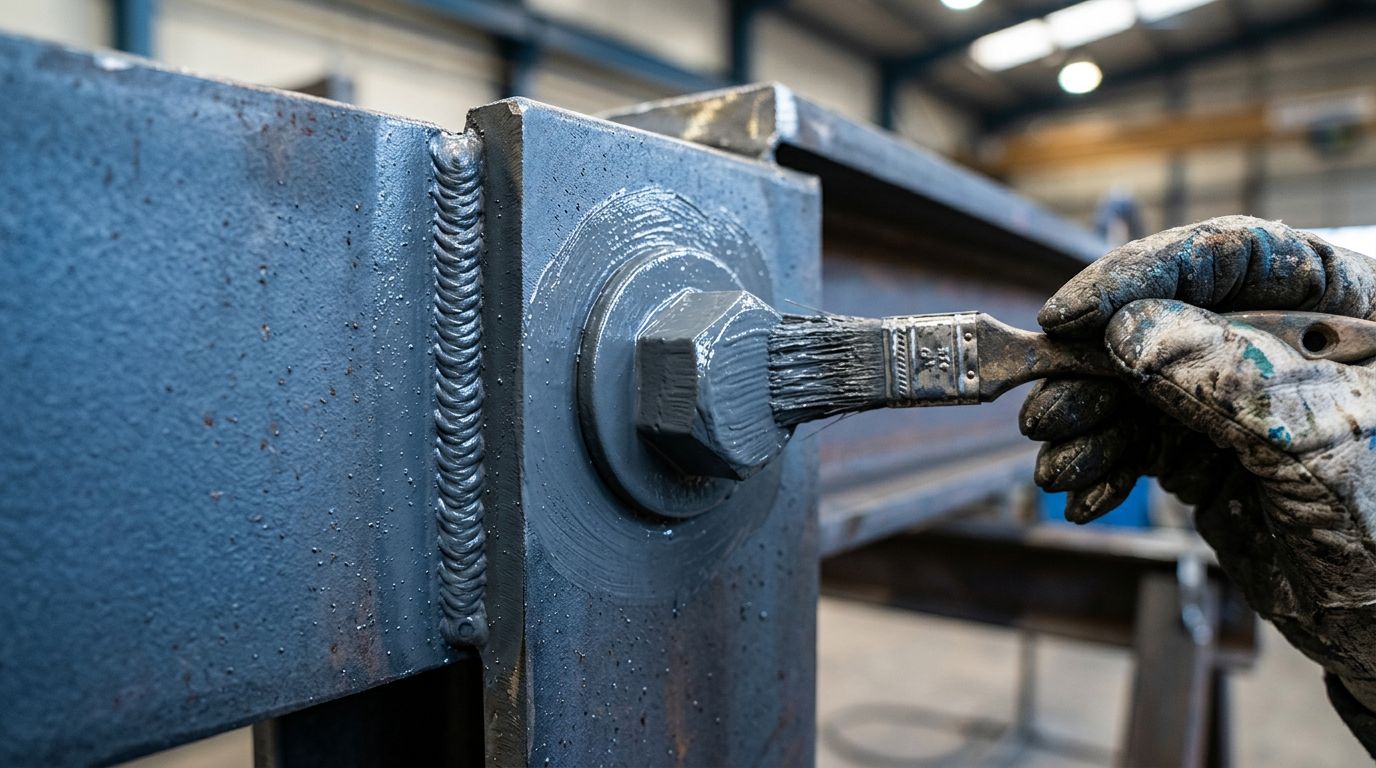
Testing is one part of surface preparation, alongside removing oil, rust, and loose material and achieving the required surface profile. Our guide to above-ground tank recoating covers how those preparation decisions fit into an exterior tank project.
What a Bresle Test Measures
The Bresle method separates salt testing into two tasks: extracting contaminants from a measured area of steel and measuring the recovered solution. The distinction matters when reviewing a contractor's report.
Extraction brings salts into a water sample
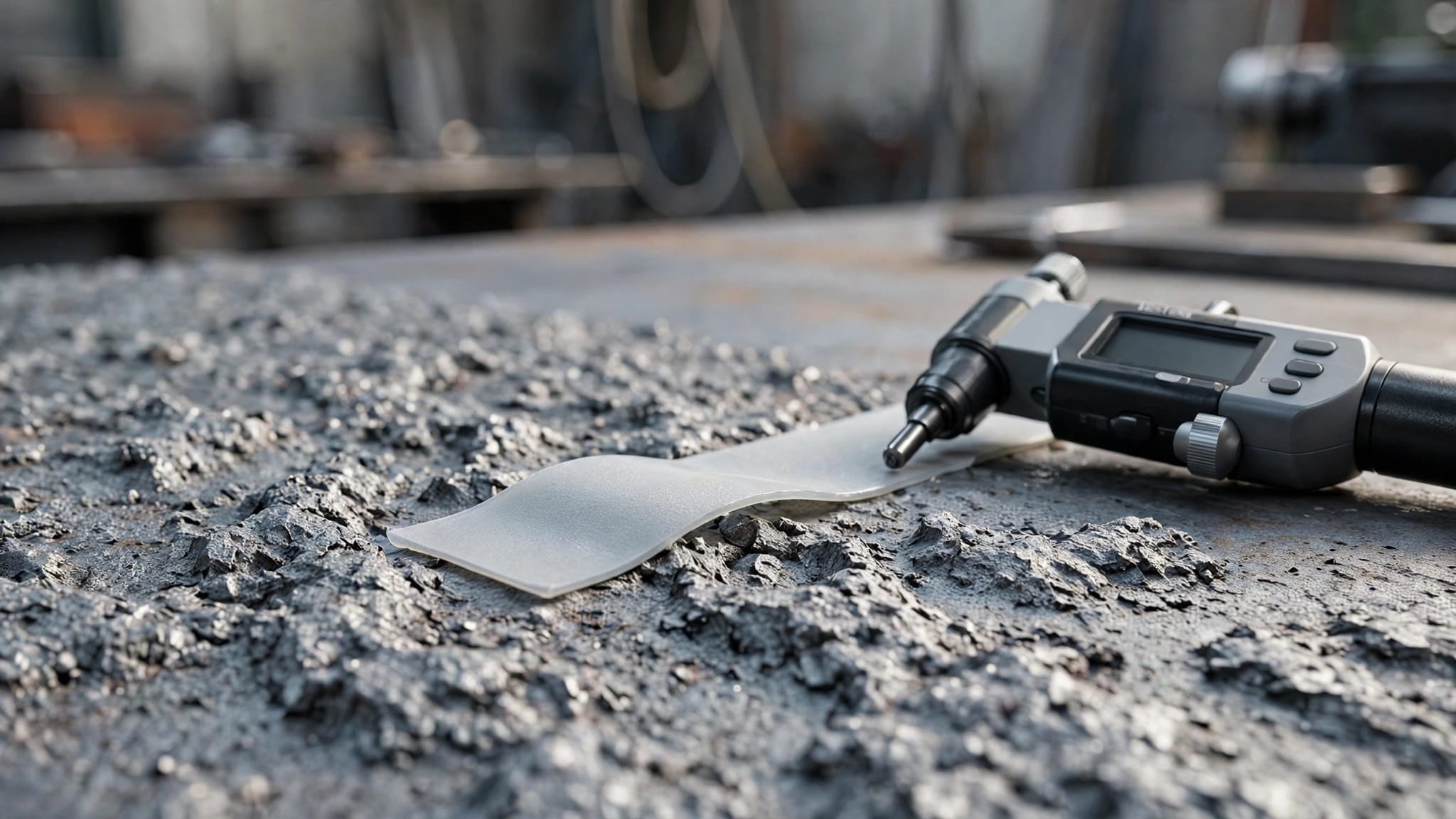
ISO 8502-6:2020 describes an extraction method using a flexible cell, such as an adhesive patch. The patch seals against the steel while extraction water dissolves accessible, water-soluble contaminants.
The inspector then recovers the liquid for analysis. The area inside the patch and the volume of water used are part of the calculation, so both belong in the test record.
Conductivity measures the combined ionic contamination
ISO 8502-9:2020 addresses conductivity measurement of the extract. Dissolved ions conduct electricity, and the measured conductivity supports a calculation of surface contamination expressed as sodium chloride equivalent.
A conductivity result does not identify individual salts . It can't tell an owner how much of the contamination is chloride rather than sulfate or another soluble ion. If the project calls for a particular ion, the inspection plan needs a suitable ion-specific method and acceptance criterion.
Choose Test Locations Before Work Begins
A good sampling plan covers both typical steel and locations more likely to retain contamination. The specification should define the required number of tests, their distribution, and any required hold points before coating.
Cover representative areas
Divide the work into identifiable zones, such as tank walls, a pipe run, structural steel, or separate building elevations. Select locations that reflect the surfaces and exposures within each zone.
On a large asset, a single result can't describe every surface. A north-facing tank wall, for example, may have a different exposure history than a sheltered underside. The inspection plan should account for meaningful differences without substituting a preferred sampling pattern for the project's requirements.
Include areas with a contamination history
Pay particular attention to locations exposed to salt spray, washdown, standing water, or process chemicals. Welds, seams, supports, and areas with previous corrosion can also warrant attention when accessible.
Mark each location on a drawing or asset record. A nozzle number, weld reference, or measured distance from a fixed feature helps another inspector find the area after cleaning. Follow site access rules for elevated work, active equipment, and confined spaces.
How to Perform a Bresle Patch Test
The inspector should use the specified extraction and measurement procedures with equipment suited to the selected patch. Patch designs vary, so the procedure's water volume, contact time, and extraction sequence shouldn't be assumed to be identical for every kit.
Prepare the equipment and surface
Gather the patch, syringe or other extraction equipment, suitable water, a conductivity meter, and clean sample containers. ISO 8502-6 calls for water meeting at least grade 3 purity under ISO 3696. Keep equipment clean so residue doesn't add contamination to the sample.
Calibrate the conductivity meter before each test sequence or at least daily, as required by ISO 8502-9. The extraction procedure also calls for a blank for each batch of cells, using a cell applied to clean glass and the same type of water. This helps account for contamination associated with the test materials.
Test the prepared steel at the stage required by the project. Oil, grease, corrosion layers, or other films can prevent the water from reaching contaminants underneath.
Extract the sample
Apply the patch to the selected location and seal it against the steel. Record the actual cell area: ISO 8502-6 lists several sizes, so a report shouldn't assume every patch covers the same area.
Introduce the specified volume of extraction water. Draw the liquid back and repeat the operation as directed by the procedure, allowing the required contact time for soluble material to dissolve. Recover the liquid without losing sample volume or introducing dirt from tools or gloves.
A leaking or poorly sealed patch can compromise the test. Record the issue and repeat the test at a nearby suitable location rather than treating a questionable sample as a valid pass.
Measure the recovered liquid
Measure the solution with the conductivity meter using the applicable procedure. Apply the required blank correction and calculation method, then report the result with its units and sampled area.
Some instruments perform the conversion; others require a separate calculation. Either way, retain the raw conductivity and the calculated surface contamination as distinct values. Remove patch residue according to the approved preparation procedure before the area is coated.
Interpret Results Against the Project Specification
A number only becomes a pass or fail when it's compared with the correct requirement. ISO 8502-6 and ISO 8502-9 describe testing methods; they don't set a universal acceptable salt level for every coating project.
Match the result, units, and acceptance rule
The project documents may state a maximum surface density in milligrams per square meter, written as mg/m², or micrograms per square centimeter, written as µg/cm². These units express the same kind of quantity on different scales: 50 mg/m² equals 5 µg/cm².
Raw conductivity, often displayed in microsiemens per centimeter, isn't the same measurement as salt surface density. Don't compare a conductivity reading directly with a surface-density limit.
Apply the specified rule for individual locations, samples, or averages. A passing average doesn't automatically accept an individual result when the specification sets a limit for each test.
Resolve conflicting requirements before coating
The owner, coating specification, and product documentation may give different instructions. When the governing documents conflict or the required test isn't clear, document the issue and obtain a decision from the responsible project authority before accepting the surface.
For an owner comparing contractor proposals, the scope should identify who tests, what limit applies, and who authorizes the prepared steel for coating. Those details affect scheduling as well as the inspection record.
Clean and Retest Areas That Don't Pass
An out-of-limit result means the affected steel needs corrective action before it can be accepted under the specified criterion. Record the original reading and location before cleaning changes the evidence.
Remove contamination without creating a new problem
Use the cleaning method approved for the project. Depending on the surface and specification, the work may involve washing with suitable clean water and repeating preparation where needed. Contaminated rinse water, cleaning residues, or dirty tools can put soluble material back onto the steel.
Abrasive blasting may remove rust and create the required profile, but it doesn't automatically remove soluble salts. After cleaning, the surface still needs to meet the project's cleanliness, profile, and coating requirements.
Retest after the surface is ready
Let the cleaned surface drain or dry enough that remaining wash water won't dilute the extraction sample. Retest the affected area using the agreed procedure and document the new location and result. If readings still exceed the limit, repeat corrective work and testing until the project requirements are met.
Salt can become accessible as corrosion or old coating is removed. Additional testing may therefore be needed after later preparation stages, after renewed exposure, or whenever the specification requires it. Protect accepted steel from recontamination until primer application.
Document Findings for the Coating Record
A useful report lets the owner trace each result to a particular asset, surface, and stage of work. Record findings as testing proceeds, rather than relying on a single "passed inspection" statement at the end.
Keep the test details together
Identify the asset and test location, date, preparation stage, applicable method, patch area, extraction volume, and meter. Include the instrument's calibration status, blank information, raw conductivity, calculated result, units, and the acceptance limit.
Record unusual conditions, such as a damaged patch or a surface that was difficult to seal. Keep the original result alongside any repeat measurement, with a reason for the repeat.
Connect failures to corrective work
For an area that exceeds the limit, document the cleaning method, retest location, retest result, and acceptance decision. A marked drawing and photographs can help future maintenance teams locate the same steel.
Keep these records with the coating specification, product details, and preparation history. Our industrial coating inspection checklist offers a way to organize findings across a facility.
Keep Salt Testing Separate From Other Inspections
A passing salt result doesn't establish that the steel has the correct blast profile or that conditions are suitable for primer. Those checks answer different questions and should have their own records.
Before application, measure environmental conditions as required by the specification. Air temperature, steel temperature, relative humidity, and dew point help assess condensation risk. Our guide to dew point and industrial coatings explains why those readings matter in Florida.
After application, dry film thickness and, where specified, holiday testing provide different evidence about the coating. Keep each result linked to the same asset and coating system so the owner can review the full preparation and application history.
Make the Result Part of the Project Scope
Soluble salt testing gives coating contractors and owners measurable evidence about contamination that visual inspection can miss. Its value depends on sound sampling, a valid extraction, and comparison with the project's actual limit.
At EFC, our industrial coating inspection services support Southwest Florida facilities with preparation and coating decisions. A written scope that includes testing, corrective work, and documentation gives everyone a clearer basis for accepting the surface before coating begins.
More featured articles...