Above-Ground Tank Recoating: A Florida Exterior Guide
Successful above-ground tank recoating in Florida starts with inspection, contamination removal, and a coating system matched to the tank's service conditions. Humidity, coastal salt, intense sunlight, heat, and sudden rain make surface preparation and application timing especially important.
For facility owners, a fresh-looking exterior is only part of the job: the coating must protect sound material without hiding damage. Start by separating coating maintenance from repairs that require a tank inspector or engineer.
Key Takeaways
- Exterior recoating protects the outside surface; it doesn't repair structural damage or replace an interior lining.
- Florida projects need controls for salt contamination, changing weather, worker exposure, and contaminated runoff.
- A complete scope identifies preparation standards, compatible coatings, application limits, inspection requirements, and curing restrictions.
Inspect the Tank Before Planning Exterior Recoating
Document coating failure and exposure
Begin with the tank's asset records, previous coating specifications, inspection reports, and repair history. Identify the tank material and existing finish before deciding how much coating can remain.
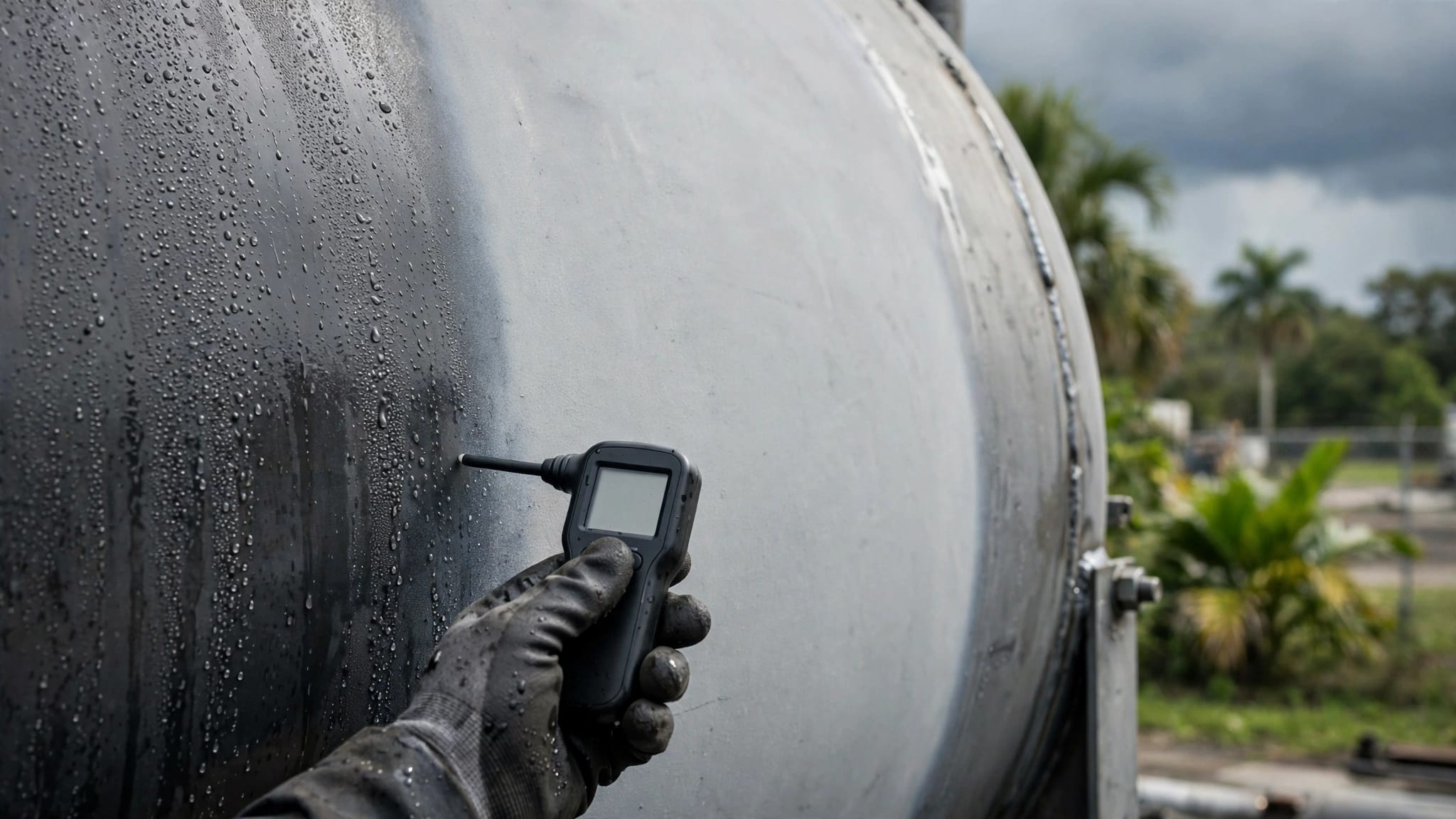
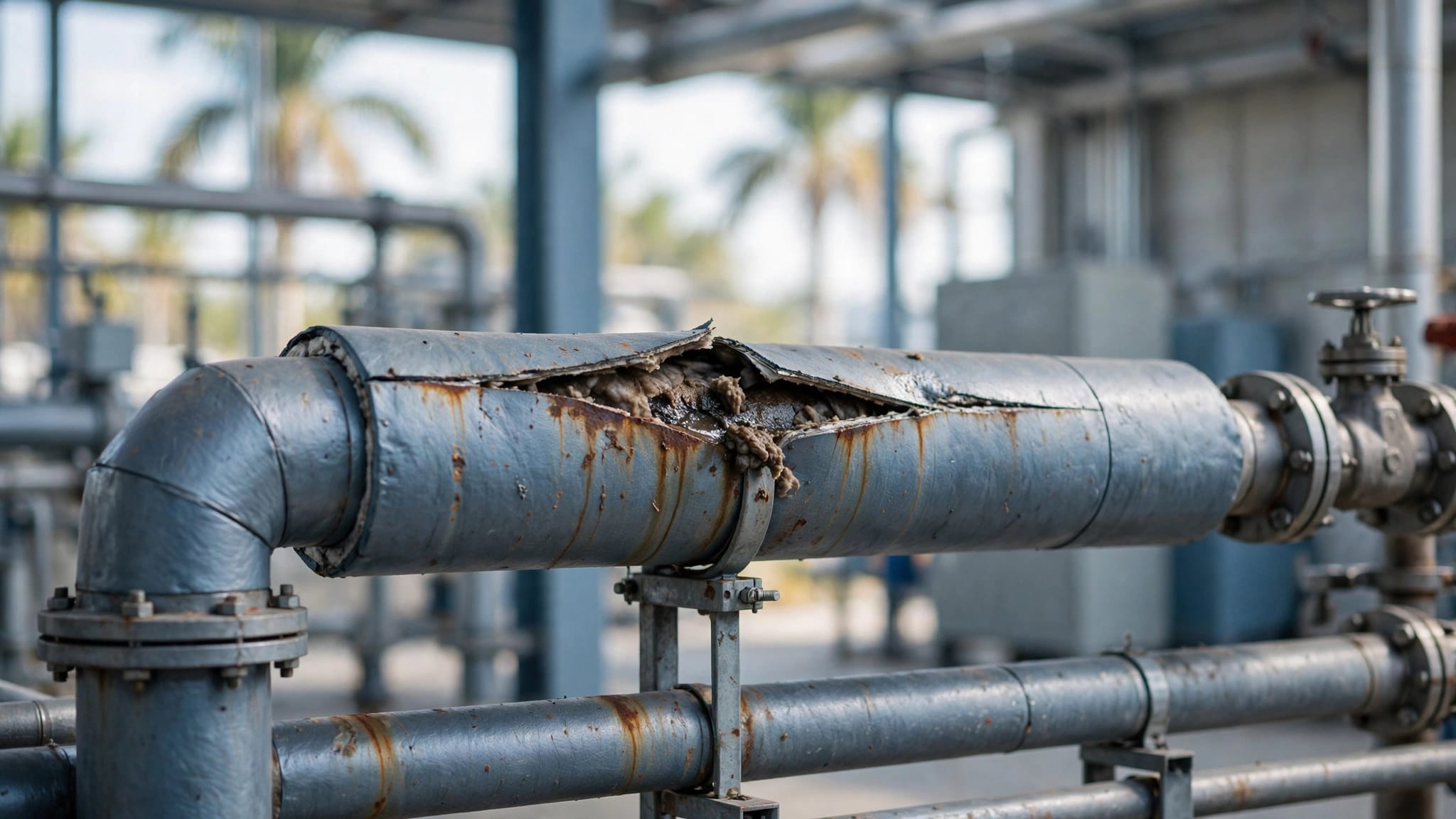
During the exterior walk-around, document peeling, blistering, cracking, chalking, rust staining, and exposed substrate. Pay particular attention to welds, seams, fasteners, supports, penetrations, and areas that collect water.
Photograph each defect and mark its location on the tank record. Also note sprinkler overspray, washdown, nearby chemical exposure, drainage problems, and storm damage. Our industrial coating inspection checklist provides a framework for organizing those observations.
Separate coating work from tank repairs
Rust beneath peeling paint may require coating removal and localized preparation. However, deep pitting, leakage, distortion, damaged supports, or suspected wall thinning require qualified tank assessment.
Complete necessary repairs before coating begins. Paint cannot restore lost metal thickness or establish structural integrity.
Interior inspection, cleaning, lining, and entry are separate activities with separate hazards and specifications. An exterior recoating proposal shouldn't imply that the tank's interior or structural condition has been accepted.
Plan Worker Safety and Environmental Controls
Account for operations, access, and exposure
The work plan must address the tank's operating status, contents-related hazards, nearby equipment, and safe access. Exterior work can still involve vapor outlets, ignition sources, elevated platforms, and restricted areas.
Scaffolds and lifts need appropriate access controls and fall protection. Crews also need task-specific eye, hearing, skin, and respiratory protection, plus heat-stress precautions suited to Florida conditions.
Older industrial coatings may contain lead. For covered work, OSHA's construction lead standard requires exposure assessment and applicable protective measures. Containment alone doesn't replace worker protection.
Tank entry isn't part of ordinary exterior recoating. Any required entry needs its own confined-space evaluation and controls.
Contain debris, overspray, and wash water
Plan containment before pressure washing, blasting, sanding, or spraying. Protect nearby vehicles, equipment, occupied areas, soil, and storm drains.
Collect paint chips, spent abrasive, dust, and contaminated wash water. Each generated waste material needs a hazardous-waste determination; lead-containing debris isn't automatically classified the same way in every project.
Florida industrial stormwater permitting depends on the facility's category and discharge conditions. Recoating alone doesn't establish a permit requirement, but the work must fit applicable site stormwater controls.
Wind and rain also affect containment. A system that allows dust or dirty water to escape needs correction before work continues.
Prepare the Exterior for Above-Ground Tank Recoating
Remove contamination before mechanical preparation
Salt deposits can remain on a surface that looks clean. Coastal tanks therefore need deliberate cleaning rather than a quick rinse followed by paint.
Remove oil, grease, dirt, chalk, biological growth, and soluble contamination using methods compatible with the substrate and coating specification. Follow with the required rinsing and drying.
Where the specification requires soluble-salt testing, record the results against its acceptance limits. Blasting doesn't replace contamination removal.
Drainage problems also deserve attention. Standing water, persistent leaks, and debris trapped around supports can undermine a new coating even when the initial preparation is sound.
Establish a sound, measurable surface
Remove failed coating and corrosion to the specified preparation standard. Feather the edges of retained coating so the transition doesn't leave an abrupt ridge.
The decision between localized preparation and broader removal depends on adhesion, corrosion distribution, existing coating condition, and compatibility. Painting over weak material simply leaves a weak layer underneath.
For abrasive-blasted steel, document cleanliness and the required surface profile before priming. Remove dust and debris, and prevent prepared surfaces from becoming contaminated again.
For example, SSPC-SP 6/NACE No. 3 commercial blast cleaning and SSPC-SP 10/NACE No. 2 near-white blast cleaning are different requirements. A proposal should identify the applicable standard rather than promise only "rust removal."
Select a Compatible Exterior Coating System
Match the system to the actual tank
Coating compatibility and project specifications must be established before application. Selection depends on the substrate, retained coating, operating temperature, exterior chemical exposure, and environmental conditions.
Florida sunlight makes UV resistance important for exposed finishes. Meanwhile, salt and recurring moisture increase the need for corrosion protection and sound film continuity.
For tanks covered by Florida Rules 62-762.501 and 62-762.502, exterior tank surfaces and integral piping require protection against external corrosion. These requirements don't prescribe one universal coating system or blasting method.
A light-colored finish may reduce solar heat absorption, but color alone doesn't establish suitability.
Treat manufacturer examples as project-specific
Highland Tank's saline-exposure example pairs SSPC-SP 10/NACE No. 2 preparation with a three-coat system.
Its example specifies these dry film thicknesses:
| Coating layer | Example dry film thickness |
|---|---|
| Zinc-rich primer | 2 to 3 mils |
| Epoxy intermediate | 4 to 8 mils |
| White gloss polyurethane | 2 to 3 mils |
These values describe that example, not a statewide recoating prescription. Other tank materials, existing finishes, temperatures, and exposures may require different products or thicknesses.
The approved specification must identify the actual products, preparation requirements, individual coat thicknesses, and compatible repair materials.
Schedule Application Around Florida Weather
Florida weather changes both the available work window and the condition of the tank surface. Morning dew can delay application, while direct sunlight can heat steel well above the surrounding air temperature.
Crews should record air temperature, surface temperature, relative humidity, and dew point throughout the work. The approved coating data and project specification determine acceptable conditions.
Rain protection must cover the coating's vulnerable period, not merely the time needed to spray or roll it. Likewise, wind affects overspray control and may make spraying unsuitable near operating equipment or neighboring property.
During application, maintain the specified mixing ratio, induction time where required, pot life, and application method. Apply stripe coats to welds, edges, bolts, and other difficult geometry when specified.
Wet-film measurements help crews control application thickness before the coating dries. However, they don't replace final dry-film inspection.
Missing a specified recoat window can require additional surface preparation before the next coat.
A realistic schedule allows weather interruptions without pressuring the crew to coat damp, contaminated, or overheated surfaces.
Allow Proper Curing and Inspect the Finished Work
Curing requirements depend on the selected products and actual conditions. A finish that feels dry may still lack the properties needed for handling, cleaning, or exposure to its intended service.
Keep unnecessary contact and maintenance activity away from fresh coating. Also protect the work from contamination between coats and during the required curing period.
Final inspection should assess coverage, film continuity, runs, sags, pinholes, missed areas, and damage around fittings or access points. Measure dry film thickness using the specified procedure and calibrated equipment.
Thickness matters in both directions. Too little material can leave inadequate protection, while excessive buildup can create product-specific curing or performance problems.
Where required, complete adhesion testing using the specified method and repair test locations. Resolve deficient areas before acceptance rather than covering them with an undocumented extra coat.
The closeout record should include preparation results, environmental readings, coating products, batch numbers, application dates, thickness measurements, repairs, and final acceptance findings. Keep these with the tank's inspection history.
That record also helps future maintenance crews distinguish new damage from previously repaired areas and select compatible touch-up materials.
FAQ About Florida Tank Exterior Recoating
Can the tank remain in operation during recoating?
Some exterior projects can proceed while a tank remains operational. That decision depends on its contents, operating conditions, access, preparation method, and site safety requirements.
The approved work plan must address vapor outlets, ignition risks, equipment protection, and operational restrictions. Exterior access alone doesn't establish that live-service work is safe.
How often should a tank exterior be recoated?
There isn't one suitable interval for every Florida tank. Highland Tank identifies geographic environmental conditions as a factor in repainting frequency.
Use documented inspections to track coating deterioration, corrosion, storm damage, and recurring moisture. Increasing failure or widespread adhesion loss can justify broader recoating rather than repeated spot repairs.
What should a contractor's proposal include?
A useful proposal defines coated surfaces, exclusions, preparation standards, containment, coating products, application requirements, curing restrictions, and acceptance testing.
It should also distinguish structural repairs and interior work from exterior coating maintenance. Access equipment, cleanup, waste handling, and weather-related scheduling provisions belong in the scope.
Protect the Tank With a Complete Recoating Scope
A durable exterior starts with a sound tank, controlled preparation, and a compatible coating system. In Florida, documented quality checks help turn those requirements into measurable work.
Our industrial tank coating and painting services support facilities in Southwest Florida. For your next project, build the scope around inspection, preparation, safety, and acceptance criteria so the new finish provides protection beyond its appearance.
More featured articles...