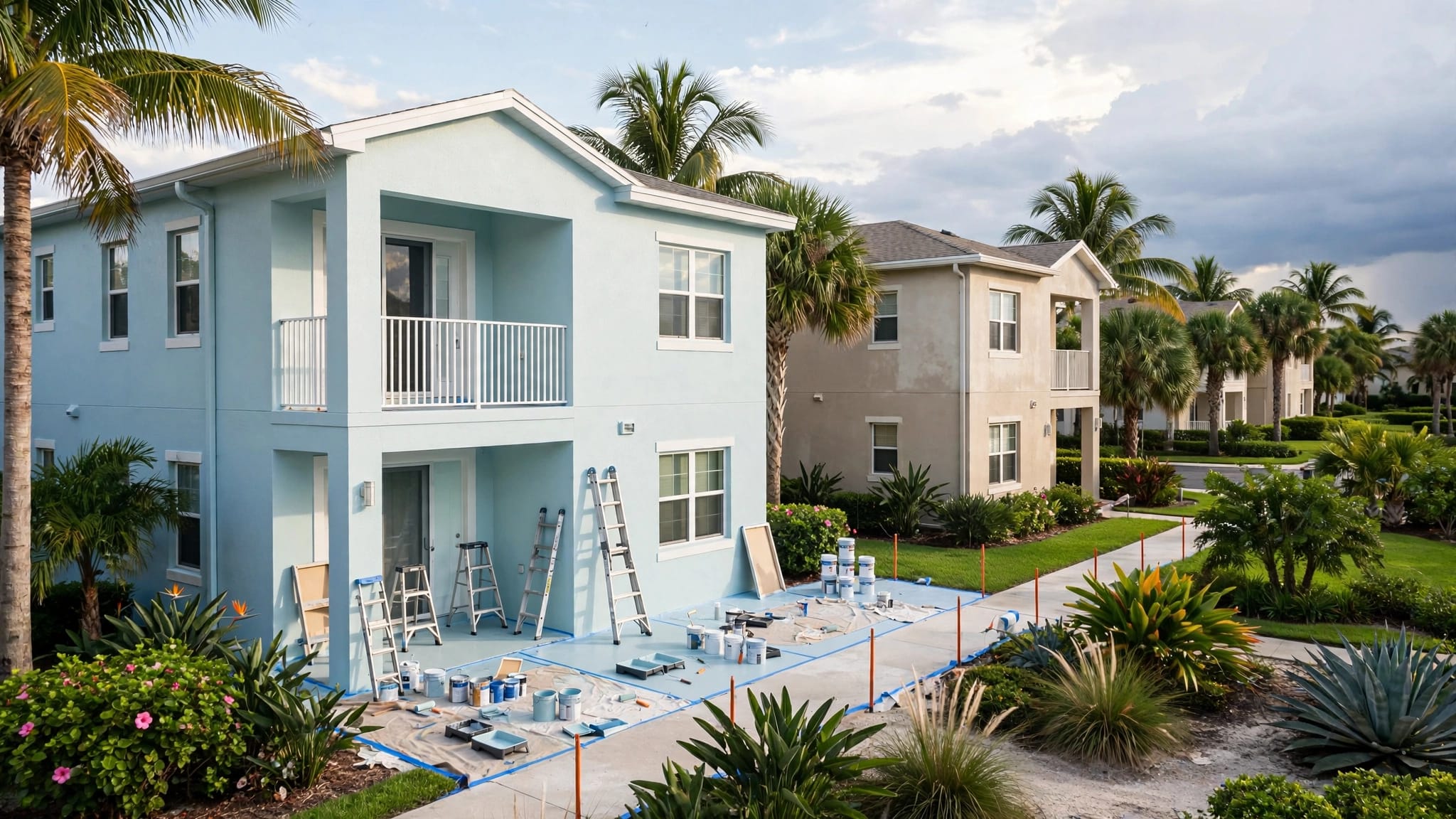
Repainting a Florida Vacation Home After Seasonal Closure
Your vacation home may look ready for guests while damp walls, mildew, or peeling trim tell a different story. Florida vacation home repainting should begin with an inspection, especially when nobody has watched the property through months of heat and rain.
Fresh paint needs a clean, stable surface and moisture problems resolved before work starts. Otherwise, stains and peeling can return beneath the new finish. Start by checking what changed during the closure, then match cleaning, repairs, and coatings to those conditions.
Key Takeaways
- Investigate leaks, persistent dampness, and mildew before approving cosmetic painting.
- Remove salt residue, chalking, and loose paint, then repair damaged surfaces and let them dry fully.
- Choose compatible exterior coatings for Florida sun and humidity, and follow their application, recoat, and cure requirements.
Inspect the Home Before Choosing Paint
Walk through the interior and around every exterior wall. Take photos so your contractor can distinguish isolated repairs from widespread coating failure.
Check for moisture and mildew
Inside, examine ceilings, window surrounds, baseboards, and walls behind furniture. Water stains, blistered paint, swollen trim, or a persistent musty smell warrant investigation.
Check plumbing leaks, air-conditioning condensate drainage, roof leaks, and poorly sealed openings as possible sources. Painting over a stain won't correct the water entry that caused it.
Outside, inspect shaded walls, soffits, and areas near dense landscaping. These surfaces can stay damp longer than sunny elevations. Also note sprinklers that repeatedly wet siding or stucco.
If you find extensive growth, flood damage, or suspected contamination inside wall cavities, get a qualified assessment before painting preparation begins.
Look for sun, salt, and coating damage
Pay attention to south- and west-facing walls, where strong sunlight can accelerate fading and chalking. Rub a dry painted area gently; powder on your hand suggests a deteriorating surface coating.
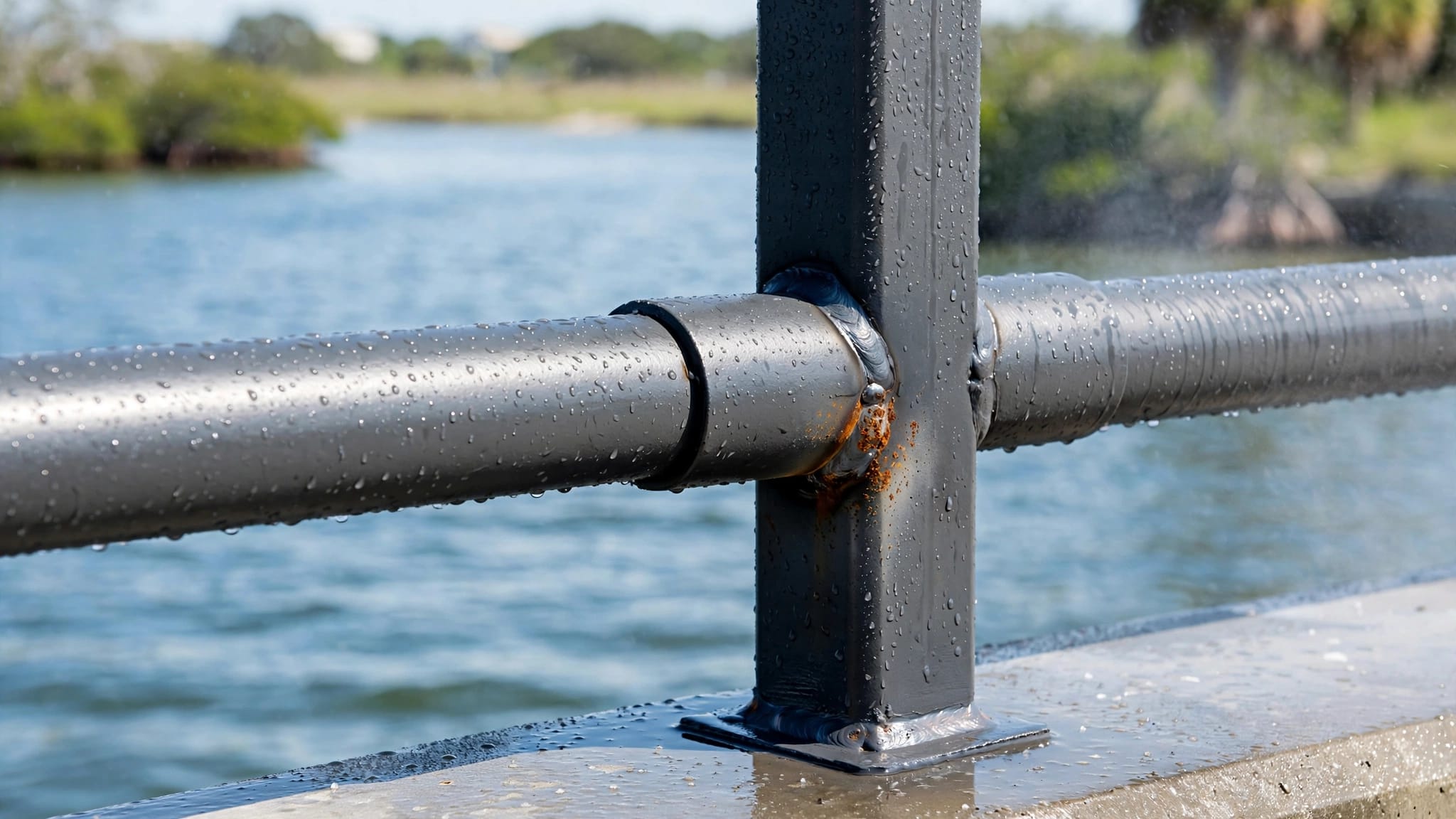
Near Naples beaches and other Gulf-facing locations, inspect metal fixtures, railings, fascia, and trim for corrosion or accumulated residue.
Also record peeling edges, hairline stucco cracks, failed caulk, and soft wood. These defects call for different repairs. A color change alone won't address them.
Clean Away Contaminants Before Surface Preparation
Cleaning gives the contractor a clearer view of the existing finish. It also removes material that would otherwise interfere with adhesion.
Remove mildew, salt, and chalk
Use cleaners and washing methods suitable for the surface, following label directions. Treat mildew rather than painting directly over dark patches.
Coastal exteriors need thorough washing and fresh-water rinsing to remove salt deposits. A quick spray may leave residue around joints, beneath overhangs, and on textured stucco.
Chalky paint also needs attention. After washing and drying, check whether loose powder remains. The surface may need further preparation before primer can bond properly.
EFC's guide to exterior paint prep for Florida homes covers these Southwest Florida preparation concerns.
Protect vulnerable materials and nearby areas
Excessive pressure can damage wood, loosen weak paint, or force water through openings. Your contractor should adjust the cleaning method to each material.
Protect landscaping, electrical fixtures, windows, and neighboring finishes. Indoors, remove dust and grease with appropriate cleaners, then rinse where the product requires it.
Finally, allow washed surfaces to dry before evaluating adhesion or starting repairs that require a dry substrate.
Repair Peeling Paint and Damaged Areas
Once surfaces are clean, the crew can determine which coatings remain sound. Repairs should address the cause of failure as well as the visible damage.
Stabilize the existing surface
Scrape loose paint and sand rough transitions so new coatings don't leave obvious ridges. Glossy surfaces may need deglossing or sanding, depending on the coating system.
Replace rotten wood rather than covering it with filler. Repair stucco cracks with compatible materials, and match the surrounding texture before painting.
Wide, recurring, or displaced cracks need evaluation beyond routine patching. Likewise, rusted metal requires corrosion preparation and a suitable primer, not a coat over loose rust.
For homes built before 1978, discuss lead-safe practices before disturbing old paint.
Restore joints and prime exposed areas
Remove failed sealant where needed and use an exterior-grade replacement suited to the joint. Keep drainage openings and weep paths clear.
Bare wood, repaired masonry, exposed metal, and stained interior areas may need different primers. A stain-blocking primer belongs over a resolved, dry stain; it doesn't repair a leak.
EFC's guidance on choosing primer for Florida surfaces explains why substrate and exposure matter.
Confirm that patching materials and sealants have reached their specified paint-ready condition before coating them.
Plan Florida Vacation Home Repainting Around Dry Conditions
A wall can feel dry while stucco or masonry still holds moisture below the surface. That makes touch alone an unreliable readiness check.
After washing, rain, or repairs, give each surface the drying conditions it needs. Your contractor should use appropriate moisture checks and follow the coating manufacturer's substrate requirements.
There isn't one dependable waiting period for every Florida home. Material, shade, airflow, recent rainfall, and humidity all affect dry-out.
A sunny wall being ready for paint doesn't mean a shaded wall on the same house is ready.
Keep sprinklers from wetting the work area. Where landscaping restricts airflow, address that before coating the wall.
Indoors, maintain suitable temperature, humidity control, and ventilation during painting. Opening windows on a humid day may add moisture rather than help.
Outside, check surface temperature as well as air temperature. Direct sun can heat a wall beyond a product's application limits.
Schedule work around the manufacturer's temperature, humidity, and rain-exposure requirements. A reopening deadline shouldn't override those limits.
Choose Coatings for Florida Sun and Humidity
The paint system should fit the material, existing coating, and exposure. A single product rarely suits walls, doors, railings, and floors equally well.
Match exterior coatings to the substrate
Premium 100 percent acrylic exterior paint is a common choice for sound stucco, masonry, and many siding surfaces. Look for compatible products with good color retention and a mildew-resistant finish.
Masonry also needs an appropriate balance of rain resistance and vapor permeability. Elastomeric coatings can address certain small-crack conditions, but they don't solve hidden moisture or structural movement.
Doors and trim may benefit from exterior acrylic or urethane-modified enamel. Metal components need a metal-rated system with suitable corrosion protection.
For vinyl or PVC, confirm manufacturer approval and color restrictions. Excessive heat absorption can create problems on heat-sensitive materials.
Select a practical sheen and color
Low-luster or satin often works well on exterior walls. These finishes balance cleanability with the appearance of textured surfaces.
Semi-gloss can suit doors and trim where frequent handling and cleaning matter. However, greater shine also makes surface imperfections easier to see.
EFC's guide to exterior finishes for Florida weather compares finish choices for local exposure.
Lighter colors generally absorb less solar heat than darker ones. Still, test samples on the actual home, and obtain HOA approval before purchasing paint if required.
Apply Paint With Drying and Curing in Mind
Ask the contractor to follow the specified spreading rate, film thickness, and number of coats. Heavy application won't compensate for inadequate preparation.
Allow each coat to reach its required recoat condition before applying the next. Humidity can extend drying, so the schedule printed under ideal conditions may not match the jobsite.
Dry time and cure time are different. Paint can feel dry before it develops its intended hardness and resistance to handling or cleaning.
That distinction matters on doors, window trim, and other surfaces that contact weatherstripping or adjoining finishes. Closing them too soon can cause sticking or damage.
Likewise, protect fresh coatings from rain for the product's required period. Don't assume a rain-resistant interval applies to every paint line.
For interiors, coordinate furniture replacement and cleaning with the manufacturer's cure guidance. For exterior work, keep ladders, hoses, and landscaping equipment away from newly coated areas.
Before handover, inspect coverage, repaired areas, trim edges, and cleanup with the crew.
Review the Contractor's Scope Before Booking
For an absentee owner, Florida vacation home repainting needs a clear written scope. It should identify surfaces, repairs, cleaning methods, primers, topcoats, and any exclusions.
Ask for exact product lines rather than a promise of "premium paint." Also confirm how the crew will handle newly discovered rot, moisture damage, or additional failing coatings.
Compare preparation and repair allowances alongside the price. House size alone doesn't explain differences between estimates; access, existing damage, and surface types also affect the work.
If you won't be onsite, arrange progress photos and a contact for repair approvals. Confirm property access and community work restrictions before scheduling.
EFC's explanation of the Southwest Florida exterior painting process can help you discuss preparation, weather delays, and project expectations before committing.
Frequently Asked Questions
Does every seasonally closed home need repainting?
No. Seasonal closure is a reason to inspect, not an automatic repainting deadline. If the finish remains well-adhered and damage is limited, cleaning or targeted repairs may be appropriate.
Widespread peeling, chalking, or fading can justify a broader repaint. Let surface condition guide the scope.
Can mildew-resistant paint cover existing mildew?
Existing mildew needs treatment and removal before painting. A mildew-resistant finish helps resist growth on the coating, but it doesn't remove contamination or correct damp conditions.
If dark patches keep returning, investigate moisture sources and restricted airflow before choosing another paint.
Reopen With Repairs Complete and Paint Ready
A successful repaint starts with finding what happened while the home was closed. Clean surfaces, sound repairs, and complete dry-out give compatible coatings a better foundation.
If you're preparing a Fort Myers or Naples property for its next season, request a free onsite estimate through EFC's professional residential painting services.
Set the project schedule around the home's condition and the coating requirements. That gives you a finished property ready for use, rather than fresh paint hiding unresolved damage.
More featured articles...