What Causes Mud Cracking in Industrial Coatings?
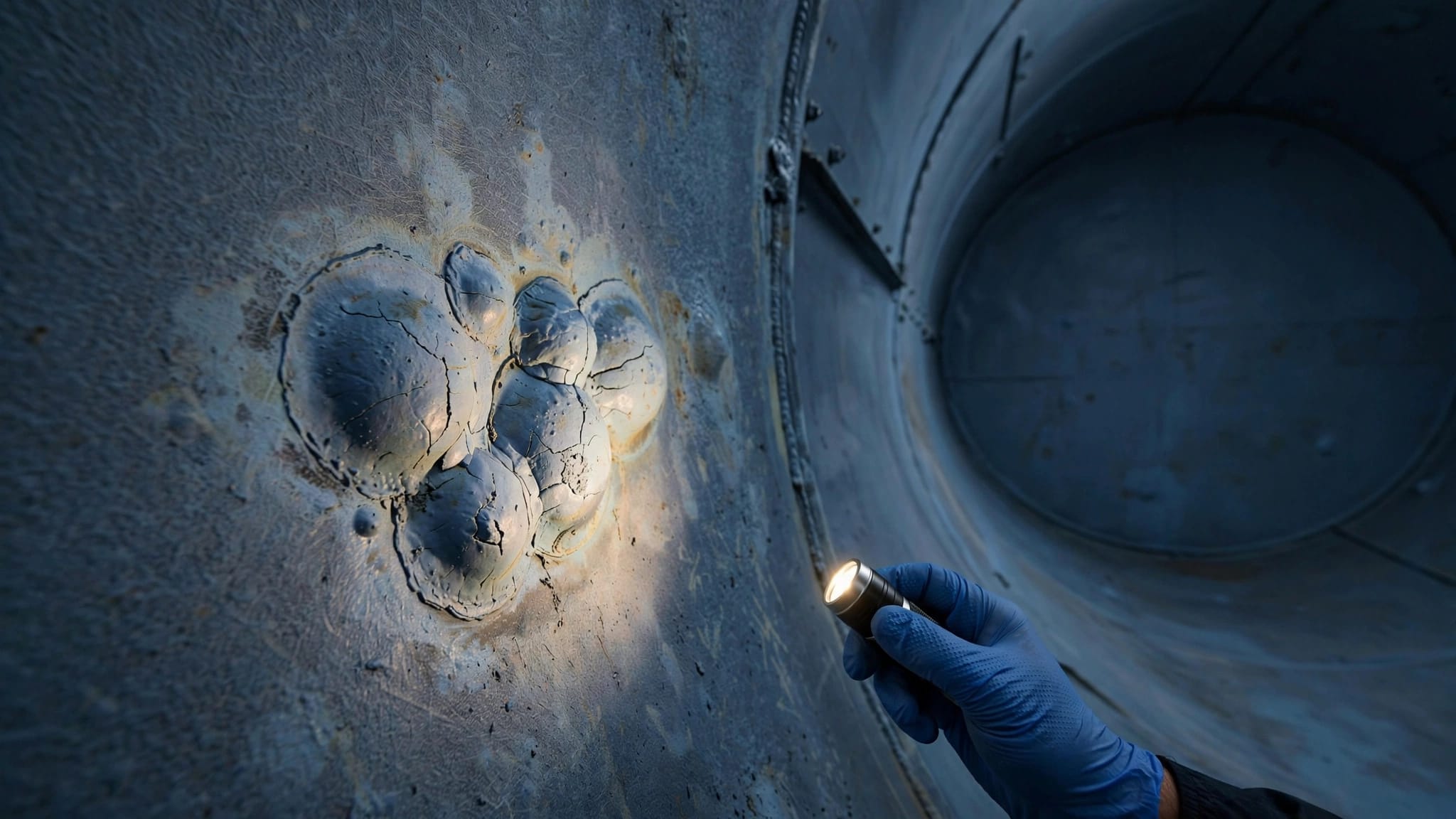
Mud cracking in industrial coatings appears as a network of irregular cracks that resembles dried mud. The pattern can reveal that a coating has failed, but appearance alone doesn't establish the cause . An inspection needs to consider the coating, the surface beneath it, and the conditions documented during application and service.
For facility owners, the immediate concern is whether the cracks are confined to a small area or affect a protective system across a larger surface. Here's how to recognize the defect and get the information needed for a repair decision.
Key Takeaways for Facility Owners
Mud cracking can resemble other coating defects, including checking and alligatoring. The crack pattern, its location, and the depth of the damage all help an inspector describe the condition.
Film thickness measurements and application records provide useful evidence, but neither should be considered in isolation. Surface condition, environmental readings, exposure history, and the condition of surrounding coating also belong in the assessment.
A repair scope should address the extent of the failed coating and any underlying damage. Painting over visible cracks without understanding their depth can leave the original problem in place.
What Mud Cracking Looks Like
Mud cracking usually appears as an interconnected pattern of splits across a coating film. The cracks divide the finish into irregular sections, much like the surface of dried mud. Some areas may have pronounced edges, while others show a finer pattern.
On a high-build industrial coating, the defect can appear on a tank, equipment, concrete, or another coated surface. It may be limited to one area or visible across a larger section. The pattern can also be easier to see under side lighting, which makes changes in the surface stand out.
Look Beyond the Crack Pattern
Note whether the coating around the cracks appears intact, loose, discolored, or visibly damaged. Also look for exposed metal or concrete and signs of corrosion or moisture nearby.
The depth matters as much as the appearance. A crack may be confined to the visible coat, extend through several coating layers, or continue into the substrate. Those conditions call for different assessments, so a photo alone may not provide enough information to define the work.
Record Where the Defect Appears
Mark the affected locations on a drawing or asset record. Photos taken from a consistent distance can show the overall pattern, while close-ups capture the individual cracks.
Include a reference point, such as a fitting, joint, or equipment label, so the same location can be found again. If the pattern changes over time, dated photographs give the facility a more useful comparison than a general note that the coating is cracked.
How Mud Cracking Differs From Similar Defects
Several coating problems can look alike during a quick walk-through. Describing what you see is helpful, but assigning a cause requires more than a visual label.
Checking and Alligatoring
Checking generally describes finer cracks in a coating. Alligatoring has a more pronounced, irregular pattern and can involve older paint layers that have lost flexibility.
These terms describe appearance and condition rather than proving why a particular coating failed. Our guide to identifying cracking, blistering, and peeling paint covers other signs that can appear alongside cracking.
Cracks in the Substrate
A crack in concrete or another substrate is different from a crack confined to the coating. A line that continues through the surface below the coating may indicate a condition that needs its own assessment.
On concrete, a recurring or moving crack shouldn't be treated as a cosmetic coating issue alone. Our guide to preparing concrete cracks for a floor coating explains why movement and slab condition matter before coating work.
Blisters and peeling are separate clues. They can point to moisture, contamination, poor preparation, or incompatibility, but their appearance doesn't establish which condition is present.
Inspect the Coating and the Surrounding Area
Start with the full affected asset, not only the most visible crack. A localized pattern near one fitting tells a different story than cracking across a tank wall or a large section of flooring.
Look at neighboring surfaces and note whether they have the same coating, exposure, and visible condition. Also document damage near joints, corners, drains, welds, and areas subject to equipment contact. These observations help define where further inspection may be needed.
Pay Attention to Moisture and Exposure
Record water stains, standing water, leaks, washdown areas, and nearby chemical exposure. Moisture or chemical residue may be relevant to the condition of the coating or substrate, even when they don't explain the crack pattern by themselves.
For secondary containment, inspection also includes the surrounding floor, berm, drains, joints, and penetrations. Our guide to inspecting coatings on containment berms discusses the condition of those connected areas.
Separate Coating Damage From Structural Concerns
Exposed steel with deep pitting, suspected wall thinning, or damage near a structural connection needs qualified assessment. A coating inspection can document those findings, but paint cannot restore lost metal thickness or establish structural integrity.
The same distinction applies to concrete that shows movement or displacement. The coating scope should reflect those conditions rather than assuming that the surface below is sound.
Use Film Thickness and Project Records as Evidence
Dry film thickness is one measurement a coating inspector can document when evaluating a cracked area. Readings help describe the coating present at selected locations and can be compared with the project specification.
Measurements from both affected and unaffected areas can also help show whether the coating is consistent across the asset. The inspection record should identify where readings were taken and the method and equipment used. A number without its location or context is less useful when the facility reviews the findings.
Thickness readings alone won't identify the cause of cracking. They also don't establish adhesion, coating continuity, or suitability for chemical exposure. Each of those questions may require a separate assessment under the project specification.
Gather the Coating History
Existing project records may identify the products, batch numbers, application dates, coat sequence, and inspection results. Earlier reports can show whether a repair was made in the same area or whether similar damage was recorded elsewhere.
Product data sheets and photographs can help a contractor understand the system before proposing work. If the existing coating is unknown, that uncertainty belongs in the scope discussion because it can affect decisions about compatibility and the extent of removal.
Keep New Findings Together
A useful record connects observations to the asset and location. Include photographs, thickness readings, environmental measurements, and any adhesion results obtained under the inspection plan.
Our industrial coating inspection checklist offers a framework for keeping those details with maintenance and repair records.
Review Application and Service Conditions
Conditions during coating work are part of the project history. Ambient temperature, humidity, surface temperature, and ventilation can affect application and curing, so those readings may be relevant to an investigation.
Surface temperature deserves its own record because it can differ from the surrounding air temperature. For outdoor equipment, document the exposed location as well. Sun, rain, salt, and washdown can affect coating condition during service.
The manufacturer's technical data sheet and the project specification provide the requirements for the selected system. An inspector can compare available records with those requirements without assuming that one environmental reading explains the visible defect.
Dry to the Touch Doesn't Mean Ready for Service
A finish can feel dry while it hasn't yet developed the properties needed for handling, cleaning, or its intended exposure. The project record should distinguish application dates from the documented return-to-service requirements.
For a facility planning future coating work, that distinction matters when scheduling access, cleaning, or operation around a coated asset. It also gives the contractor and facility a common basis for discussing downtime.
Account for the Asset's Exposure
A coating on the exterior of a tank may face different conditions than a lining inside it. Likewise, a floor subject to traffic and washdown has different demands than a protected wall.
Record the conditions the affected area encounters, including recurring moisture, chemical contact, abrasion, or impact. These observations help the contractor assess the existing condition and define a suitable scope.
Decide Whether the Repair Scope Is Local or Broad
A small, isolated area may be a candidate for a localized repair when the surrounding coating and substrate are sound. Broader cracking, loose material, corrosion, or repeated failure can justify a larger scope.
The visible size of the cracked patch isn't the only consideration. An inspector also needs to understand how far the damage extends through the coating system and whether adjacent material remains sound. A repair proposal should state the affected area and the basis for the recommended scope.
For an exterior tank, the coating work should also be distinguished from any structural tank assessment. Our guide to above-ground tank recoating in Florida explains why exterior coating maintenance and tank repairs are separate items.
Before accepting a proposal, look for a description of the surface preparation, coating products, access, containment, inspection, and acceptance requirements. The scope should also identify any exclusions, including work that needs another qualified trade.
What to Ask an Industrial Painting Contractor
A useful contractor conversation starts with the condition of the asset and the facility's operating needs. Share the inspection record, coating history, known exposures, and any restrictions on access or downtime.
Ask how the proposed inspection will document the extent of the cracking and the condition of the surrounding coating. The contractor should also describe how measurements and findings will be recorded, including film thickness and other checks required by the project.
A clear proposal identifies the coating system and the intended service conditions. For example, exterior exposure, immersion, chemical contact, and washdown aren't interchangeable descriptions. The scope should address the conditions the coated surface will face.
For facilities in Southwest Florida, we provide industrial coating and inspection services. We can discuss the condition of the affected area and the information needed to develop an appropriate scope.
Frequently Asked Questions
Does a mud-cracked coating always need complete replacement?
Not always. A localized repair may be appropriate when the damage is confined and the surrounding coating and substrate are sound. Widespread cracking, poor adhesion, or damage beneath the coating can support a broader repair scope.
Can you identify the cause from a photograph?
A photograph can document the pattern and location, but it can't establish the condition of every coating layer or the substrate. Measurements, project records, and an on-site assessment provide additional evidence for the diagnosis.
Is dry film thickness the same as coating continuity?
No. Dry film thickness measurements describe the coating build at measured locations. A continuity assessment addresses discontinuities in a suitable coating or lining. One result doesn't establish the other, and neither alone proves that a coating is suitable for its intended exposure.
Can a new coat cover mud cracking?
A new coat may conceal visible cracks without resolving failed material beneath it. The repair decision should account for the depth and extent of the damage, the condition of adjacent coating, and the requirements of the selected system.
When should a facility seek further assessment?
Arrange a qualified assessment when cracking is widespread or recurring, adhesion appears poor, or the substrate shows corrosion or movement. Deep pitting, suspected wall thinning, and damage near structural connections also warrant attention beyond a routine coating review.
Make the Repair Decision Based on Evidence
Mud cracking gives you a visible reason to inspect an industrial coating, but the pattern alone doesn't explain the failure. The most useful assessment connects what you can see with measurements, project records, and the condition of the surface below.
A well-defined scope gives your facility a better basis for deciding between a localized repair and broader coating work. It also makes inspection and acceptance requirements clear before the work begins.
More featured articles...