How to Calculate Exterior Paint Quantity for a Florida Home
A gallon estimate can look right on paper and still leave you short halfway through a stucco wall. To calculate exterior paint quantity , you need the area you'll paint, the number of coats, and the coverage printed on your chosen product's label. Texture and surface condition can change how far that paint goes.
Florida's heat and humidity don't change the arithmetic. They do make it important to inspect and prepare the surface before treating a gallon estimate as a shopping list. Start by measuring what the project includes.
Measure the exterior walls, not the home's floor plan
Your home's listed square footage measures interior floor area. It doesn't tell you how much exterior wall you have. A one-story home with a long, irregular footprint may have more paintable wall area than a compact two-story home with similar floor space.
Measure each wall section
Use a tape measure or reliable building plans to record each exterior wall's length and height in feet. Multiply length by height to get square feet, then add the wall sections together. Measure height to the top of the surface you're painting, rather than automatically measuring to the roof peak.
For a rectangular house, you can first add the four wall lengths to find the perimeter. Multiply that perimeter by the wall height if all four walls share the same height. Measure stepped walls, recessed entries, and raised sections separately.
Add shapes the basic rectangle misses
A gable is a triangle, so calculate its area as base × height ÷ 2 . Add each painted gable to the wall total. If the walls beneath it are different heights, calculate those sections on their own.
Also look beyond the street-facing walls. A covered lanai may have exterior walls that need paint, while an attached garage can add wall area that isn't obvious from a quick walk around the house. Count only surfaces included in your painting plan.
Subtract openings that won't receive wall paint
Windows and doors take up space in your wall measurements. Subtract their areas before calculating wall paint. For each opening, multiply its width by its height, then add the opening areas together.
Count large openings carefully
Garage doors deserve their own measurement because they can account for a substantial section of one elevation. The same goes for wide sliders and grouped windows. Don't rely on a single "average window" measurement if the house has several sizes.
Use the dimensions of the opening as a practical estimate. Decorative surrounds, deep returns, or shutters may need separate paint, even though the glass or door panel doesn't receive the wall color.
Keep painted features in the plan
If you're repainting a garage door, subtract it from the wall calculation and estimate its paint separately. Apply the same approach to entry doors, shutters, and trim. They may use a different color, finish, or product.
This separation prevents double-counting. It also keeps a small trim-paint purchase from getting buried in a large wall-paint estimate. Note surfaces that won't be painted at all, such as stone accents or exposed brick.
Turn paintable area into exterior paint quantity
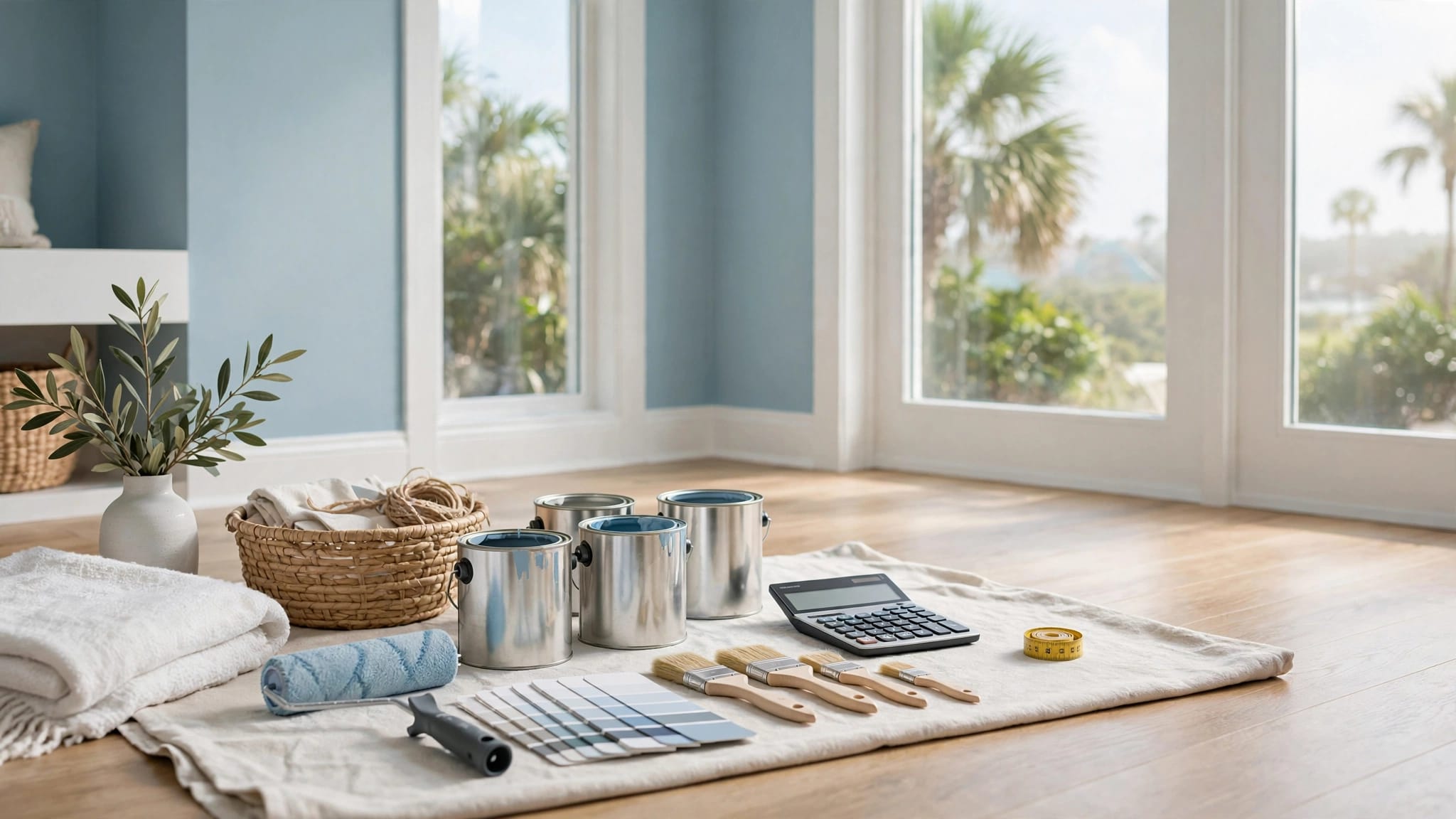
Once you have the paintable wall area, multiply it by the planned number of finish coats. Divide that result by the selected paint's stated coverage in square feet per gallon.
Gallons of finish paint = paintable square feet × finish coats ÷ label coverage per gallon
Round up to a container size you can buy. Keep the calculation for primer separate.
Confirm the coat plan
Don't assume one coat will hide the old color or cover repairs evenly. Check the manufacturer's directions for the product you select, then decide whether the job calls for one or more finish coats. A major color change or uneven patches may affect that decision.
Multiply by the coats you expect to apply across the full surface. If a small repaired area needs an extra coat, estimate that spot separately instead of multiplying the entire house by another coat.
Read the label as a starting point
Coverage figures describe how much area a product can cover under stated conditions. Check the container or manufacturer's product information for coverage, suitable surfaces, and application instructions. Don't substitute a coverage figure from a different paint.
A gallon calculation is only as reliable as its coverage assumption. Rough stucco may use more paint than a smooth test surface, even when both walls measure the same.
Worked example: measuring a rectangular stucco home
Suppose a one-story house measures 40 feet by 30 feet, with walls 10 feet high. For this example, the painting scope includes the four stucco walls but no gables, lanai walls, or trim. It excludes two entry doors, eight windows, and one garage door.
The measurements produce this wall-paint calculation:
| Item | Calculation | Area |
|---|---|---|
| Wall perimeter | 40 + 30 + 40 + 30 feet | 140 linear feet |
| Gross wall area | 140 × 10 feet | 1,400 sq. ft. |
| Two entry doors | 2 × (3 × 7 feet) | 42 sq. ft. |
| Eight windows | 8 × (3 × 4 feet) | 96 sq. ft. |
| One garage door | 16 × 7 feet | 112 sq. ft. |
| Total openings | 42 + 96 + 112 | 250 sq. ft. |
| Paintable stucco walls | 1,400 − 250 | 1,150 sq. ft. |
For two finish coats, multiply 1,150 by 2. You need 2,300 square feet of finish-coat coverage before accounting for texture, application loss, or touch-ups. Divide 2,300 by the coverage per gallon printed on your chosen paint's label.
For example, if that division gives you 7.2 gallons, round up to at least 8 gallons in available container sizes. That gallon figure is conditional on the coverage of the product you select. It isn't a standard allowance for this house or for stucco generally.
Adjust for stucco texture and surface condition
Textured stucco is common in Fort Myers, Naples, and surrounding communities. Its ridges and recesses can take more paint than a smooth wall with the same measured area. Porous areas may absorb a first coat unevenly.
Check the surface before adding a margin
Inspect each elevation for coarse texture, unpainted patches, chalking, and previous repairs. A small test area with the intended product can help you compare actual use with the label's coverage. If the paint runs short of the stated coverage, revise your estimate using what you observed.
Avoid adding a universal percentage for "Florida stucco." Texture depth, existing coatings, and application method vary too much for one allowance to fit every home. Record why you adjusted the estimate so you can discuss it with a contractor or paint supplier.
Repair and clean before estimating the final coat
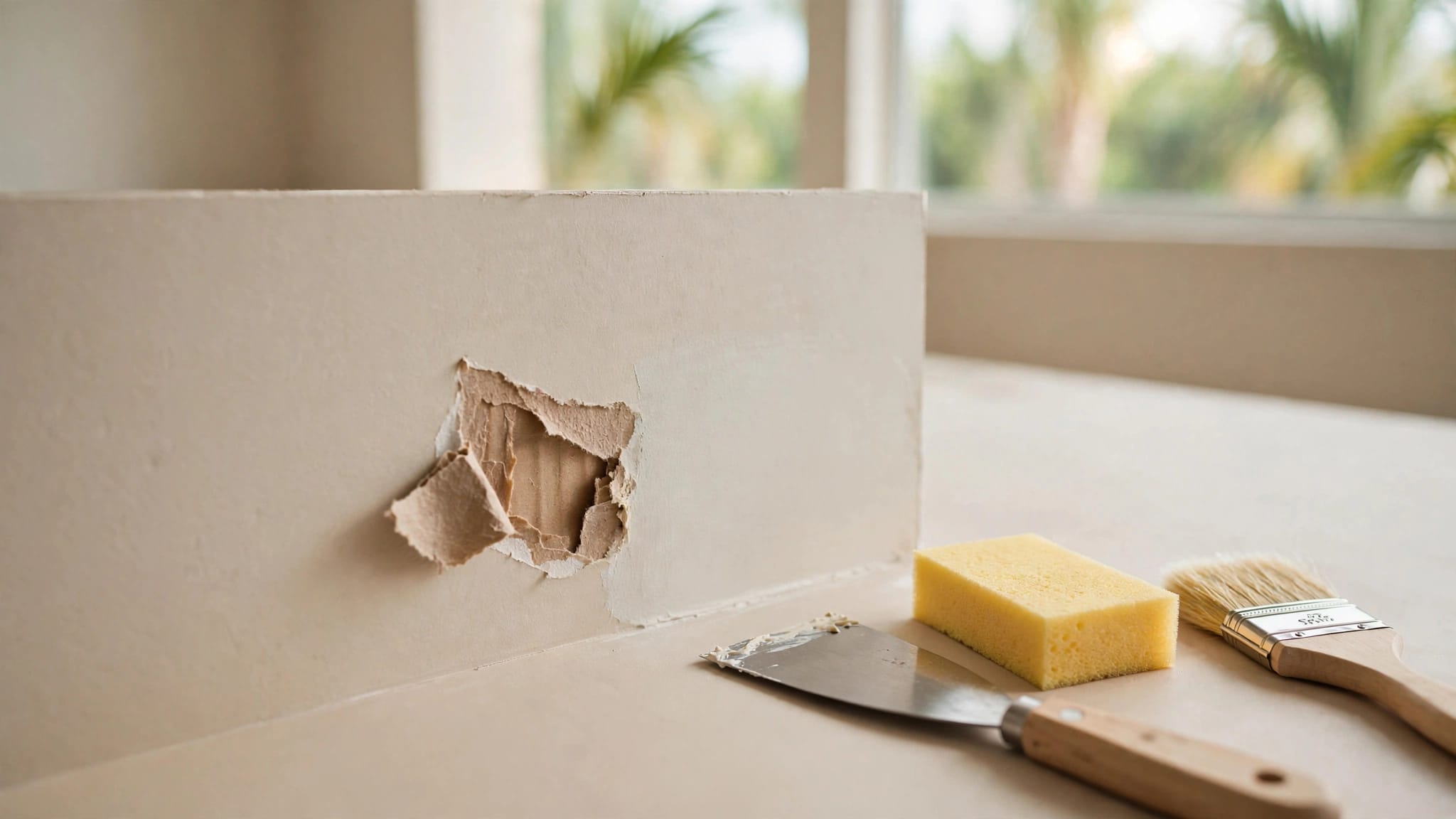
Salt residue, mildew, and sun-baked chalking can interfere with adhesion. Cracks and damaged stucco need attention before painting. Repairs can also leave patches that absorb coatings differently or require texture matching.
Cleaning, drying, and repairs belong in the scope before the finish-coat estimate is final. The steps in Southwest Florida exterior paint preparation offer a closer look at those surface issues. Paint over damp or unsound material can fail regardless of how accurately you calculated the gallons.
Calculate primer and trim paint separately
Wall paint is only one part of the material list. A house with wood fascia, metal features, doors, and stucco may need different preparation and products for each surface.
Estimate primer by the area it will cover
Measure bare patches or other areas that need primer, then use the primer's own coverage information. Don't divide primer area by the finish paint's label coverage. If the coating plan calls for full-wall priming, use the full paintable wall area for that calculation.
Primer choice depends on the substrate and the problem you're addressing. Chalky stucco, stained wood, and rust-prone metal don't necessarily call for the same product. See how to choose an exterior primer for Florida surfaces before adding a primer line to your materials list.
Measure details by color and product
Calculate trim boards by multiplying their painted width by their total length. For doors or shutters, measure the faces you'll coat. If both sides of a door are in scope, count both sides.
Keep separate totals for each color and coating. That makes your order more accurate than combining every painted feature into one wall-area number, especially when the products have different coverage instructions.
Leave room for touch-ups, not an unexplained surplus
Corners, edges, rough spots, and application equipment can use paint that a simple wall-area calculation doesn't capture. You'll also want some of the same paint for later touch-ups. Add a modest allowance based on the home's texture and the actual work, rather than treating any fixed percentage as a rule.
Container sizes matter here. If your calculation falls between sizes, compare the available options and keep enough paint to finish all coats consistently. Store any leftover paint according to the label and mark the container with its color and location.
Before ordering extra paint for scattered defects, check whether a touch-up will blend with the weathered finish. In some cases, painting the full wall section produces a more even appearance. That choice changes both the area and the amount you'll need.
Use the calculation to check a painting estimate
A homeowner's measurements are a useful starting point, but an onsite estimate should identify the surfaces and repairs behind the number. Ask whether the proposed scope includes lanai walls, garage doors, fascia, shutters, primer, and the planned finish coats.
Also ask how the contractor accounted for textured stucco and whether major repairs are included or priced separately. What to expect during a Southwest Florida exterior paint project describes the inspection and written scope that can help settle those details.
Paint quantity and painting price answer different questions. EFC's Southwest Florida exterior painting cost guide discusses project pricing by paintable area and prep work. A price per square foot isn't a paint coverage rate, and gallons alone won't tell you what labor or repairs will cost.
Key Takeaways
- Measure exterior walls directly, then add gables and other painted areas that a basic rectangle misses.
- Subtract unpainted doors and windows. Estimate painted doors, trim, and shutters on separate lines.
- Multiply paintable area by the planned finish coats, then divide by the selected paint's label coverage .
- Check textured stucco and surface condition before deciding how much extra paint to keep.
Common Questions About Exterior Paint Estimates
Does Florida humidity change the gallon formula?
No. The area, coats, and label-coverage calculation stays the same. Humidity and rain affect when surfaces are ready for preparation and painting. Texture and surface condition affect how closely actual paint use matches the label estimate.
Should I subtract every window and door?
Subtract openings that won't receive wall paint. Then count any doors, shutters, surrounds, or other features you plan to paint under their own product and color. Large openings are especially worth measuring rather than guessing.
Can I use my home's listed square footage?
No reliable conversion turns interior floor area into exterior wall area. The home's shape, wall height, gables, and openings determine the paintable area. Measuring those surfaces gives you a usable quantity estimate.
A Better Starting Number for Your Paint Job
An exterior paint estimate starts with measured walls , not the home's floor-plan square footage. Subtract unpainted openings, account for the planned coats, and use the coverage on the product you'll apply.
For a textured or weathered Florida home, confirm the surface condition before buying by the calculation alone. A clear onsite scope can then turn your measurements into a paint order that fits the work.
More featured articles...