Retail Store Painting Checklist for Southwest Florida Businesses
Fresh paint can improve a storefront, but a rushed job can leave you with blocked aisles, exposed merchandise, or a finish that fails early. For Southwest Florida businesses, planning the work around store operations matters as much as choosing a color.
A useful retail store painting checklist starts with the surfaces and the way customers use the space. Then it accounts for Florida weather, safe access, and a clear handoff before the store returns to normal.
Key Takeaways
- Map customer routes, deliveries, and work zones before setting painting dates.
- Identify damaged surfaces before comparing coating options or bids.
- Match each finish to its surface, cleaning needs, and exposure to sun or moisture.
- Put access, protection, weather delays, and final cleanup in writing.
Define the painting scope before choosing colors
A store rarely needs the same treatment everywhere. Walk the property with your contractor and separate the sales floor, fitting rooms, stockroom, entrance, and exterior into distinct areas.
Mark the surfaces and repairs
Record which walls, ceilings, doors, frames, trim, and exterior surfaces are included. Note stains, peeling paint, cracks, rust, failed caulk, and water damage. These conditions can change preparation time and may point to a problem that needs repair before painting.
Also identify fixtures that stay in place. Wall-mounted displays, signs, security devices, and shelving can leave unpainted outlines if nobody agrees when they'll be moved. Ask whether the crew will remove, mask, or paint around each item.
Map how the store operates
Mark peak shopping hours, delivery windows, staff entrances, and areas that must stay accessible. A fitting room may close for a shift; the only customer entrance usually cannot. If several businesses share a property, coordinate common walkways and loading areas with the property manager.
Bring those details to an onsite discussion with commercial painting services for businesses. EFC Painting Contractors serves businesses in Fort Myers, Naples, and Cape Coral, and can discuss work around the store's schedule.
Check preparation by surface, not by square footage
A bid that says "prep and paint" leaves too much open to interpretation. The preparation should reflect what the contractor finds on each surface.
Inspect the storefront and exterior metal
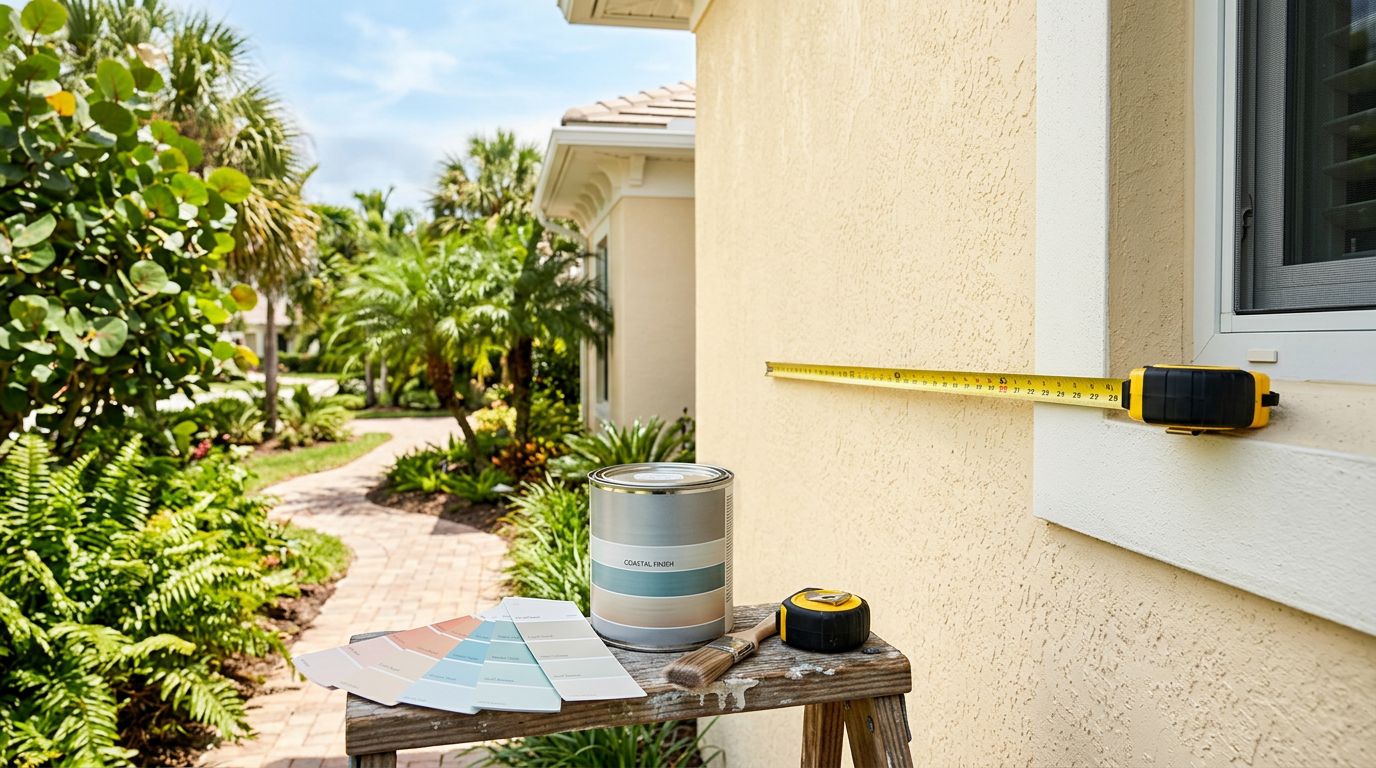
Stucco and concrete masonry units (CMU) need an assessment for cracks, loose paint, chalking, and moisture. Ask how the crew will clean and repair them, and whether the proposed primer suits the masonry. Painting over an active leak or damp wall won't fix the source.
Check metal doors, frames, railings, and exposed hardware separately. Near the coast, salt residue and corrosion deserve attention before a topcoat goes on. The scope should describe rust removal or treatment, surface cleaning, primer, and finish selection where needed. For a broader surface-by-surface reference, see the commercial repaint checklist for property managers.
Inspect high-contact interior areas
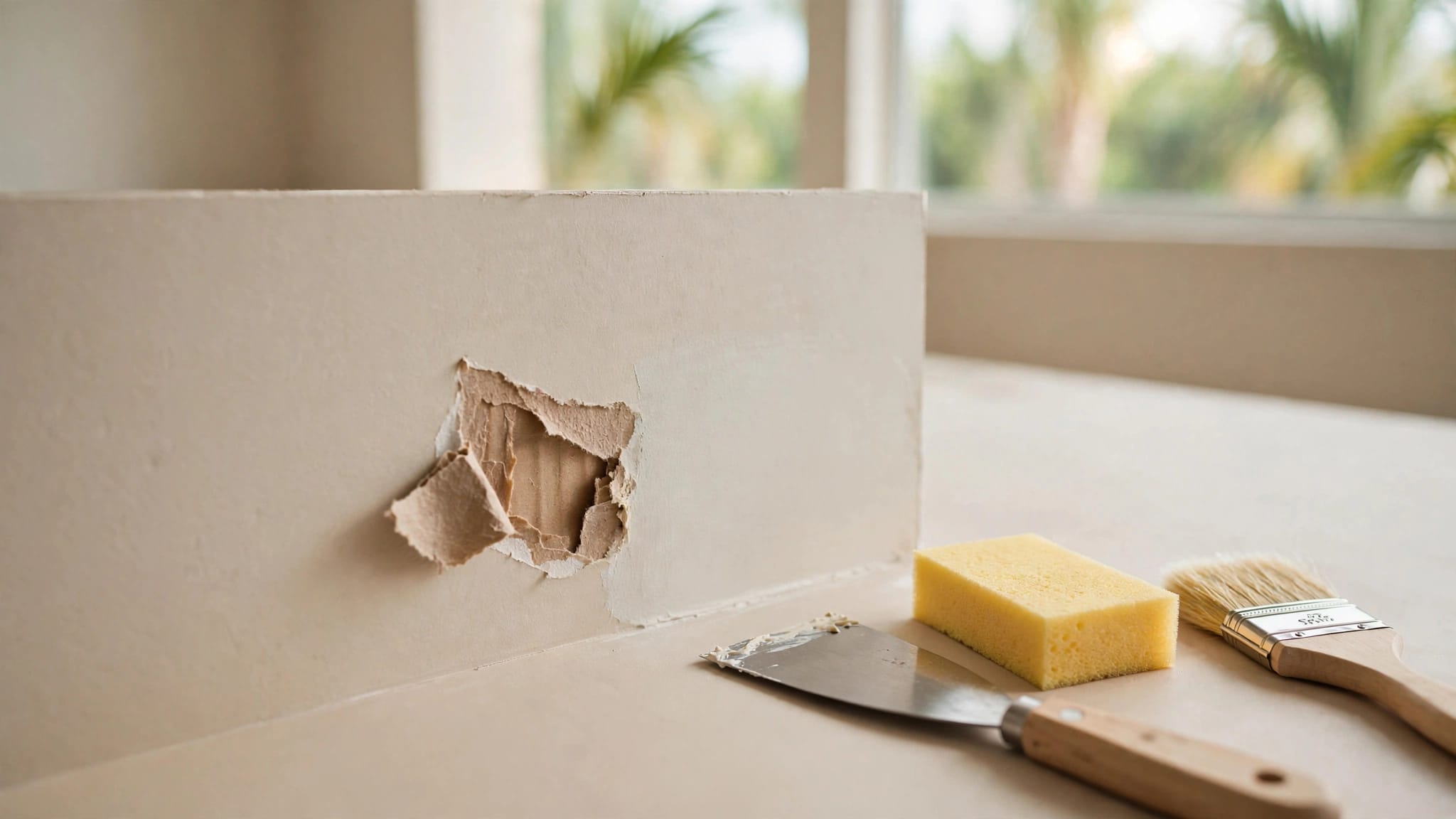
Look closely at corners near carts, walls behind merchandise racks, door edges, baseboards, and fitting-room entrances. Scuffs may need cleaning; dents need repair. Glossy existing finishes may need additional preparation so the new coating adheres.
Have the contractor identify stains that need a suitable primer rather than extra wall paint. Then check patched areas under the store's normal lighting. Bright display lights can reveal uneven repairs that looked fine in a dim, empty room.
Match coatings to traffic and Florida conditions
The color you see on a sample is only one part of the decision. The written scope should also identify the surface, primer where needed, product line, sheen, and planned coats.
Choose finishes for cleaning and appearance
Sales-floor walls need a finish that suits routine cleaning. Doors and trim take more hand contact, so ask about a finish made for that use rather than assuming the wall coating belongs everywhere. Higher sheen can make cleaning easier, but it may also draw attention to dents and patch marks.
Test color samples under the lights customers will see. A shade that looks neutral in daylight can shift beside warm display lighting or a strongly colored sign. If your store follows brand standards or a lease controls exterior colors, get approval before ordering materials.
Account for sun, rain, and moisture
Exposed storefront walls in Fort Myers or Naples face strong sun and frequent rain. Ask for exterior coatings appropriate to the substrate and exposure, including UV resistance where the sun hits hardest. Shaded or moisture-prone areas may need a different preparation plan.
Temperature, humidity, and surface moisture affect application and drying. Ask the contractor to follow the selected product's technical instructions rather than promise a universal recoat or reopening time. Dry to the touch does not necessarily mean ready for heavy cleaning or constant contact.
Schedule retail store painting around customers
The best work window depends on which areas must stay open. Decide what can close before committing to a start date.
Choose a workable sequence
These options suit different store layouts and operating hours:
| Schedule | Best fit | Confirm before work starts |
|---|---|---|
| After-hours | Busy sales floors and entrances | Access, lighting, alarms, and morning cleanup |
| Weekend | Stores with predictable closures | Time for prep, drying, inspection, and reopening |
| Phased work | Stores that must keep selling | Zone boundaries and daily customer routes |
| Contained daytime work | Back rooms or low-traffic spaces | Dust control, ventilation, and safe access |
For more on coordinating an occupied property, see how to plan commercial painting around business hours.
Leave room for cleanup and weather
Sanding, spraying, pressure washing, and moving ladders may be better suited to closed hours. Even an overnight shift needs time to remove coverings, clean floors, inspect the work, and make the entrance ready for customers.
Keep exterior dates flexible. Rain and wet surfaces can delay preparation or coating, while humidity may affect drying. Agree on who decides whether conditions are suitable and how a delayed shift changes the remaining schedule.
Protect merchandise, people, and access
Before the first shift, decide who moves inventory and who protects what remains. Relocate merchandise close to active work when possible. Cover nearby stock against dust and overspray, including displays that customers might otherwise touch.
Separate work zones with barriers or closed doors that suit the space. Customers and staff should not have to pass ladders, tools, sanding dust, or wet coatings to reach merchandise. Review exits, fire equipment, accessible routes, and delivery paths for every phase. If a route changes, communicate the replacement before the crew starts.
Ask how the contractor will manage odors and ventilation for the chosen products. Keep HVAC operation and re-entry guidance aligned with the coating manufacturer's instructions and the building's needs. Assign one store contact to approve access changes and receive a brief update after each shift. That update should cover completed areas, the next zone, and anything that could affect opening.
Compare bids using the same written scope
A lower price tells you little if one bid includes substantial repair and another assumes the walls are ready for paint. Give each contractor the same area list and ask them to identify exclusions.
Request clear materials and labor details
The proposal should name the surfaces, repair work, primer and coating product lines, colors, sheens, and number of coats. Ask who moves fixtures, protects stock, handles cleanup, and supplies lift equipment if the storefront needs it.
Include the hours when work may occur. A nighttime project can require a different access plan than a daytime repaint. Review the Florida commercial painting contract guide before signing so the scope and product details don't depend on a verbal conversation.
Set rules for changes and delays
Hidden damage may appear after a display comes down or loose paint is removed. Agree on a process for describing, pricing, and approving extra work before it begins.
The agreement should also address rain delays, unsuitable surface conditions, and missed coating windows. Request a completion plan that includes inspection and touch-ups, not only the last coat of paint. For budgeting, an onsite estimate is more useful than a generic square-foot figure because access, repairs, and protection vary by store.
Walk the store before signing off
Inspect the finished work with the contractor under normal store lighting. Check high-traffic walls, corners, trim, door edges, ceilings, and areas where signs or displays were removed. Record touch-ups by location and issue so the crew can find them.
Before reopening each zone, confirm that:
- Floors, fixtures, shelves, and merchandise are clean and back in place.
- Doors, hardware, signs, and wall-mounted equipment work as expected.
- Customer paths, accessible routes, exits, and fire equipment are clear.
- Exterior parking areas and landscaping are free of painting debris and overspray.
Keep the approved colors, product information, and painted-area list with your property records. Future touch-ups are easier when the next contractor can identify what went where.
Retail painting questions store owners often ask
Can a store stay open during painting?
Often, yes, if the work can be separated from customers and staff. Phased painting may keep part of the sales floor open. Dust-producing preparation, spraying, strong-smelling products, and work at the main entrance may require closed hours. The contractor and store manager should agree on access for each shift.
How soon can displays go back against painted walls?
Follow the chosen coating's product guidance and the contractor's instructions. Paint can feel dry while it is still vulnerable to scuffs or pressure marks. Heavy fixtures and frequent cleaning may need a longer wait than light foot traffic. Build that time into the reopening plan.
Should floors be included in the painting proposal?
List them separately if you want a concrete coating or epoxy floor. Floors require their own assessment, preparation, product selection, and access plan. A wall-painting price should not be assumed to include floor work.
A better finish starts before the first coat
The easiest store repaint to manage is one with clear work zones, surface-specific preparation, and a realistic reopening plan. Those decisions protect both the finish and the shopping experience.
For a Southwest Florida storefront, request a free onsite estimate from EFC Painting Contractors. Walk the space together and put the agreed scope in writing before work begins.
More featured articles...