Choosing Coatings for Pipe Racks in Coastal Florida
The right industrial pipe rack coatings combine corrosion protection with a finish suited to Florida's salt air, humidity, rain, and sun. The choice depends on the steel's condition, the rack's exposure, and how the coating will be applied and maintained.
A product that looks good on a data sheet can still fail if salt remains on the surface or rain reaches it before it cures. For facility owners, the best starting point is a written coating system that connects preparation, application, and inspection to the rack's actual conditions.
Start by identifying where the rack is most exposed.
How Coastal Florida Weather Affects Pipe Racks
Salt carried inland by sea air can settle on steel and collect around welds, bolts, and horizontal surfaces. When moisture reaches those deposits, corrosion can develop at damaged areas or beneath a coating with poor adhesion.
High humidity also affects application. Steel can collect condensation even when the air feels warm, and a surface that looks dry may not be ready for coating. Frequent rain adds another concern: freshly prepared steel can rust before the primer goes on, while a coating exposed too early can suffer damage.
Sunlight affects the finish differently. Many epoxy coatings provide corrosion protection but can chalk or lose color under UV exposure. A compatible UV-resistant topcoat can protect the epoxy and maintain the finish's appearance.
The most exposed areas aren't always the easiest to see. Water and salt can collect underneath pipe supports, on the tops of beams, and at connections where several pieces of steel meet. Those areas deserve attention when the coating scope is written.
Map the Rack's Materials and Exposure
A rack may need more than one repair approach, even when its beams appear to have the same finish. An initial survey helps separate coating work from structural or piping repairs.
Identify the substrate and existing finish
Carbon steel, galvanized steel, and previously painted surfaces don't all accept the same preparation or primer. Galvanized steel has a zinc surface that requires a compatible system and suitable preparation. Our guide to painting galvanized metal without peeling covers some of the adhesion concerns.
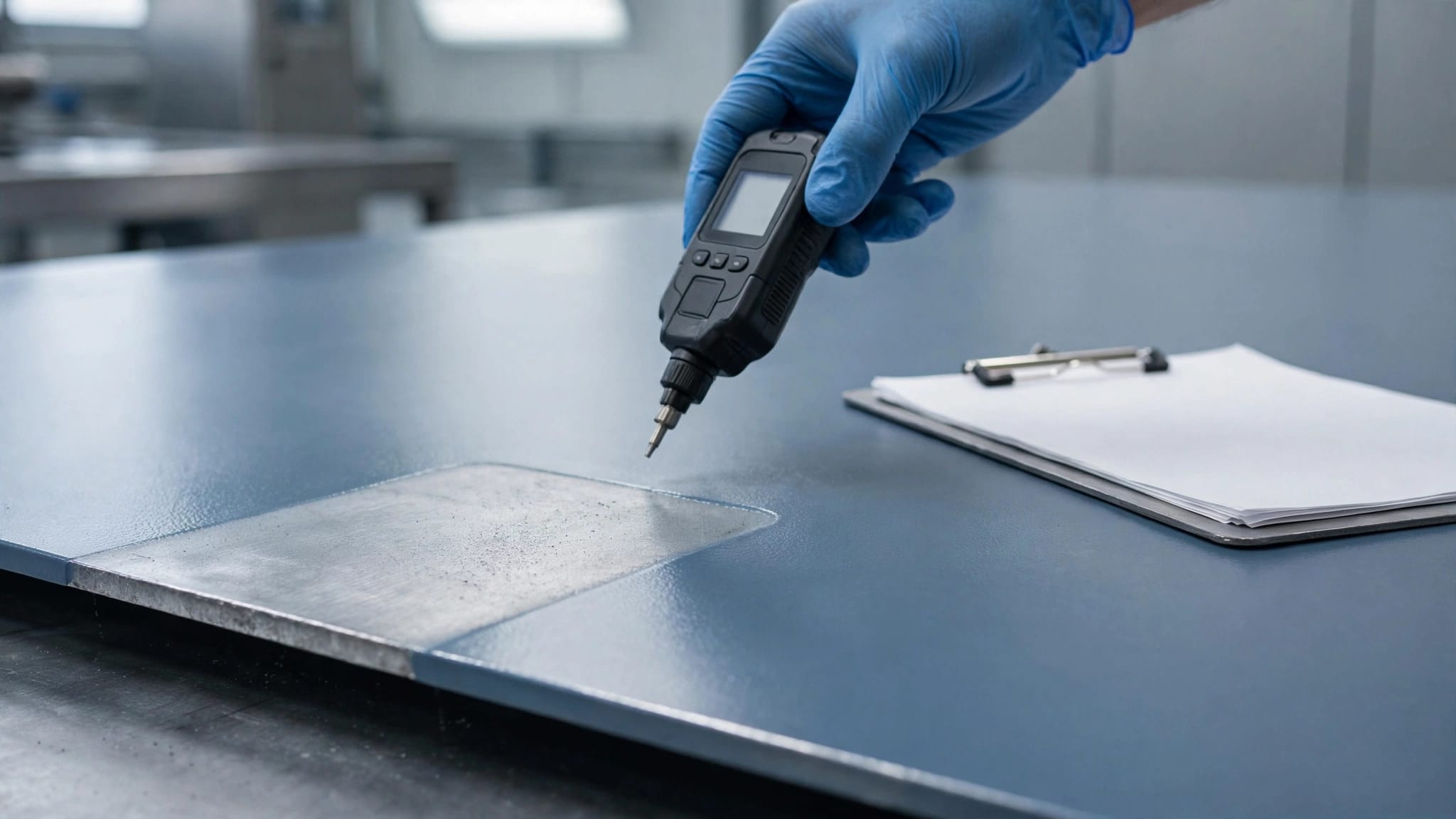
For an existing rack, identify loose coating, rust, and areas with sound paint. If the old coating will remain, the proposed repair system needs to bond to it. A test area can help assess compatibility and adhesion before the work expands.
Separate exposure zones
Mark areas exposed to direct salt spray, standing water, washdown, chemical contact, or heat. A beam near a loading area may also face abrasion that an elevated section doesn't.
Pipes and supports can have different operating temperatures. Insulated lines require separate attention because exterior coating condition doesn't establish what lies beneath the insulation. Our guide to identifying corrosion under pipe insulation explains warning signs and inspection limits.
Deep pitting or corrosion at a load-bearing connection calls for qualified structural evaluation. Coating cannot replace lost steel.
Compare Compatible Industrial Pipe Rack Coatings
A coating system is a set of compatible layers, not a finish selected by color alone. The right combination depends on preparation, exposure, access, and the condition of any coating left in place.
Zinc-rich primer, epoxy, and polyurethane
A common option for prepared carbon steel combines a zinc-rich primer, an epoxy intermediate coat, and a polyurethane topcoat. The zinc-rich primer can provide sacrificial protection where the coating is damaged, provided the steel and primer are prepared and applied as required.
The epoxy adds barrier protection, while the polyurethane helps the exposed finish resist sunlight and retain color. This approach can suit severely exposed racks when the surface preparation and application requirements are achievable.
Each layer must be compatible with the others. A proposal should name the products and describe the required preparation, coat thickness, and recoat conditions rather than promising a generic "three-coat system."
Epoxy primers and maintenance systems
An epoxy primer and compatible topcoat may be appropriate where the project doesn't call for a zinc-rich primer. Some maintenance coatings are formulated for prepared, sound existing finishes, which can make localized repairs practical.
That doesn't mean a coating will adhere to loose rust, oil, or failing paint. Preparation still has to meet the product's requirements, and retained coating needs to be sound.
Chemical exposure and elevated temperatures can narrow the options. Coatings on hot piping or near process equipment need service-temperature and chemical-resistance properties suited to those conditions. Don't assume the structural rack coating also belongs on every pipe it carries.
Specify Surface Preparation Before Painting
Preparation determines what the coating will bond to. It also affects cost and scheduling, so it should appear in the proposal as a defined part of the work.
Remove contamination before treating rust
Oil, grease, and other contaminants can interfere with adhesion. Salt is another concern near the coast because deposits can remain even when steel looks clean. Washing and, where specified, soluble salt testing help address contamination before coating begins.
The contractor should also identify hazards in an unknown existing coating before disturbing it. Scraping or blasting may require containment and appropriate controls to protect workers, equipment, and nearby operations.
Match the preparation method to the system
Depending on the project, preparation may include abrasive blasting, power-tool cleaning, or localized removal of failed coating. The specified method should describe how much existing material and corrosion will be removed, along with the required surface profile.
Edges, welds, and tight connections need attention because they are harder to coat evenly. At pipe supports, access may depend on approved operating procedures. Moving or lifting a line requires facility authorization and a plan that protects the piping and its supports.
Plan Application Around Weather and Operations
Coastal conditions can change during a workday. A schedule needs room for weather delays and enough protection for the coating to cure.
Control moisture and temperature
Crews should record air temperature, relative humidity, surface temperature, and dew point as required by the specification. A commonly used guideline is to keep the steel surface at least 5°F above the dew point, but the product requirements and project specification govern the work.
The surface also has to fall within the coating's application temperature range. Hot steel, high humidity, and rain can affect application or curing even on a day that looks suitable from the ground.
Protect the work through curing
Rain protection has to cover the coating's vulnerable curing period, not only the time spent applying it. Wind also matters because overspray can reach equipment, vehicles, or neighboring property.
Crews need to follow the product's mixing, application, and recoat instructions. Stripe coats at welds, edges, and bolts may be specified to improve coverage in difficult areas. The work plan should protect identification tags and allow for operating equipment, access restrictions, and required fall protection.
Inspect the Coating at Defined Stages
A finished surface can look uniform while hiding missed preparation or thin areas. Inspection should begin before the first coat, not after the crew has packed up.
Before application, the inspection scope can include surface cleanliness, profile, and environmental readings. During and after coating, it can include coverage, dry-film thickness, and recoat conditions. Too little coating can leave inadequate protection; excessive thickness can also cause problems with some products.
The final review should address missed areas, runs, damage, and difficult-to-reach connections. Adhesion or holiday testing may be included when the project calls for it, using a method suited to the coating and service. Holiday testing finds certain discontinuities; it doesn't establish adhesion or reveal all hidden corrosion.
A closeout record should include product names, batch details, application dates, inspection results, and repair locations. Our industrial coating inspection checklist offers a way to organize those records for later use.
Build a Maintenance Plan for the Rack
Coating selection should account for how the rack will be inspected and repaired after the project. Record its sections on a site plan so maintenance staff can locate recurring problems and compare photos over time.
Walkthroughs should focus on rust staining, peeling, blistering, damaged edges, and deposits around supports. Review exposed areas after storms or incidents that introduce debris, flooding, leaks, or chemical contact. Inspection frequency should reflect the site's exposure and operating conditions.
Clean salt and dirt using methods compatible with the coating and facility procedures. Where coating damage exposes steel, address the moisture source and prepare the affected area before applying a compatible repair system.
Widespread failure, recurring corrosion, or damage near structural connections needs professional evaluation. Routine maintenance observations don't replace the facility's piping or structural inspection program.
Compare Contractor Proposals on the Same Scope
The lowest price per gallon won't tell you which system costs less to install or maintain. Coverage, required thickness, preparation, access, and labor all affect the total. Downtime and the consequences of failure in a critical area matter too.
For a useful comparison, proposals should describe the same rack sections and identify what each price includes. Look for the preparation method, named coating products, number of coats, inspection stages, containment, access equipment, and cleanup. The scope should also explain how hidden deterioration and additional repairs will be handled.
Scheduling deserves the same attention. A lower bid may leave out protection from overspray, weather delays, or time needed before the rack returns to service. Those omissions can shift costs and operational risk to the facility.
We provide industrial painting and coating services in Southwest Florida. For pipe rack work, a clear scope gives owners and contractors a shared basis for application and acceptance.
Choose Protection You Can Maintain
For coastal Florida pipe racks, the strongest coating choice starts with the exposure and the condition of the steel. Salt removal, suitable preparation, compatible layers, and documented inspection all contribute to the finished result.
Choose a system your facility can also inspect and repair over time. That makes it easier to address small failures before corrosion reaches more of the rack.
More featured articles...