Epoxy Vs Polyaspartic Garage Floors In Southwest Florida
A garage floor in Southwest Florida takes a beating. Hot tires roll in, humidity hangs in the air, and wind can push salt mist right under the door. If your concrete is bare, it stains fast and starts to look tired.
That's why epoxy vs polyaspartic is such a common comparison for homeowners in Fort Myers, Naples, Cape Coral, and nearby areas. Both can look great, but they behave differently in our sun and moisture. The right pick depends on your slab, your schedule, and how picky you are about long-term color.
Why Southwest Florida garages are tougher than most
Concrete feels solid, but it's more like a sponge than a rock. It holds moisture, releases vapor, and reacts to weather swings. In Southwest Florida, those swings can happen in a single afternoon.
Humidity matters because coatings need a clean, dry surface to bond well. If moisture vapor is pushing up through the slab, it can create bubbles, peeling, or cloudy spots later. That risk goes up in rainy season, in older garages without a vapor barrier, and in homes where water sits near the foundation.
Sun is another local factor. Many garages get direct UV at the threshold, or across the whole floor if the door stays open. Some coatings amber or fade under UV, and the change is hard to unsee once it starts.
A garage coating is a lot like sunscreen. The product matters, but so does when you apply it, and what you're protecting it from.
Before choosing a system, a good installer looks at a few real-world details: surface profile from grinding, crack repairs, signs of past moisture, and how much sunlight hits the floor each day.
Epoxy garage floors: where they shine, and where they struggle
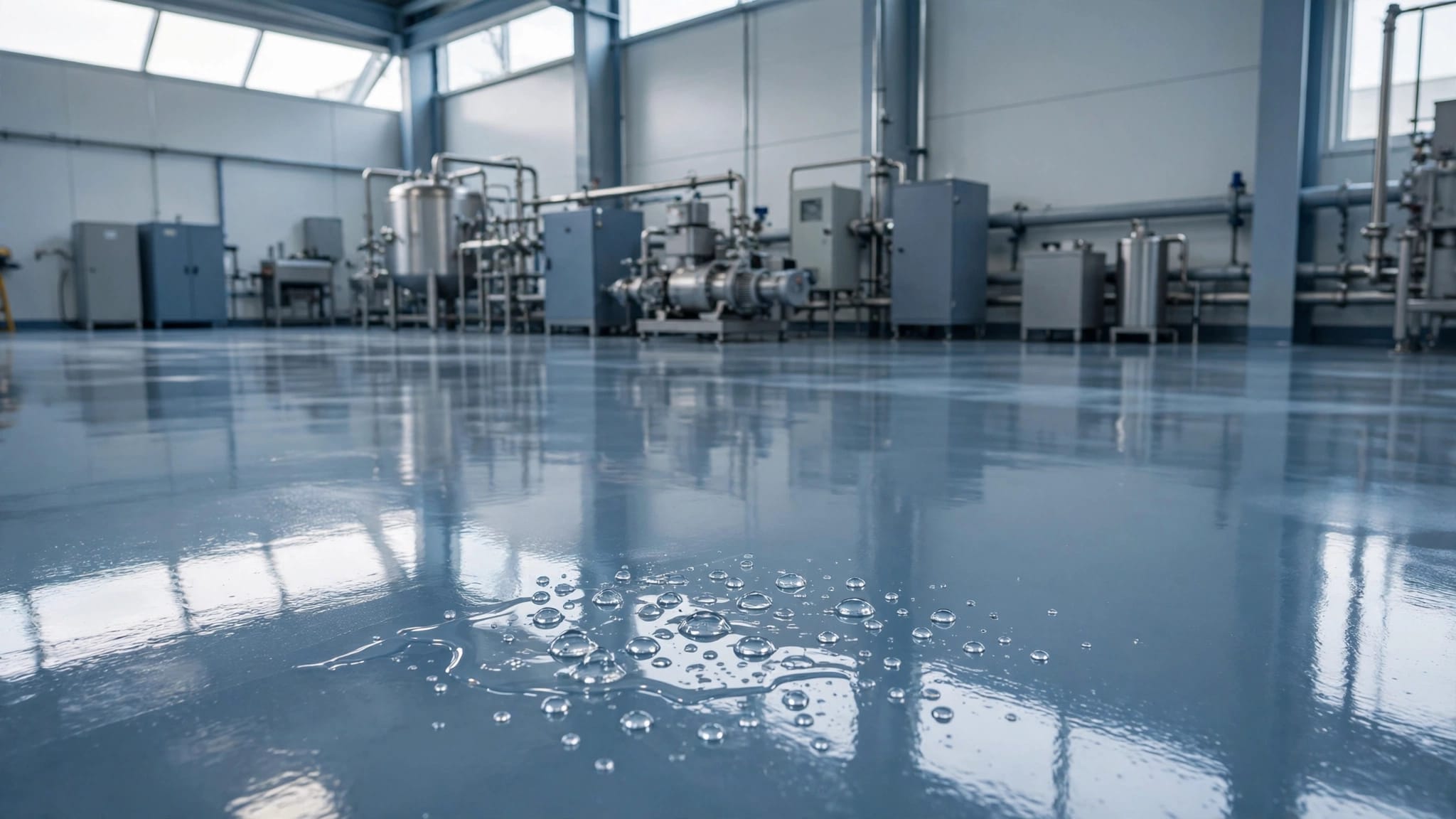
Epoxy has been the go-to garage floor coating for decades, and for good reason. It builds thickness, hides minor surface flaws, and can deliver a deep, glossy look. If you want decorative flakes or a metallic finish, epoxy often plays well as a base layer.
Epoxy also gives strong chemical resistance for typical garage spills, like motor oil, brake fluid, and cleaners. Once it cures, it's easy to mop and doesn't hold dust like bare concrete.
Where epoxy can get tricky in Southwest Florida is UV exposure and cure timing . Many epoxies can yellow over time in sun. Sometimes it's subtle; other times it's obvious near the door line. Epoxy also tends to cure slower than polyaspartic systems, which means a longer window where humidity, temperature shifts, or surprise rain can cause problems.
Another common issue is moisture. If a slab has high vapor emission and the system doesn't include the right primer or moisture-control step, epoxy may lose adhesion. It's not always immediate; peeling can start months later.
If you're exploring local options, start with a contractor who can explain surface prep and system choices, not just color chips. For service details, see EFC's epoxy garage floors Fort Myers page.
Polyaspartic garage floors: fast cure, strong UV stability, less downtime
Polyaspartic coatings are often chosen because they cure quickly and hold color better in sunlight. In garages where the door stays open, that UV stability can be the difference between "still looks new" and "why is it turning yellow?"
A typical polyaspartic system can also get you back in service faster. That matters if you don't have space to park outside, or you're trying to finish the project during a tight week. Fast cure has a second benefit: less time for windblown debris, bugs, or sudden humidity spikes to land in a wet coating.
That said, quick cure cuts both ways. Installers need tight timing, and surface prep has to be right the first time. If the crew rushes crack repair, grinding, or cleanup, the coating can telegraph defects or show bonding issues later. Also, polyaspartic products can vary a lot by formula, so "polyaspartic" on a quote doesn't guarantee the same performance across contractors.
In moisture-prone garages, the smartest approach is often a system that addresses vapor first, then uses a UV-stable topcoat. If you're comparing higher-performance systems, EFC's concrete floor coatings Fort Myers page is a useful starting point for what these builds can include.
Epoxy vs polyaspartic: side-by-side for Southwest Florida garages
Here's a quick way to compare the two for common SWFL conditions.
| Feature | Epoxy | Polyaspartic |
|---|---|---|
| UV stability near garage door | Often yellows over time | Typically better color stability |
| Cure window and downtime | Longer cure, more downtime | Faster cure, quicker return to service |
| Humidity sensitivity during install | Can be sensitive, longer exposure window | Shorter exposure window, but timing is less forgiving |
| Moisture in slab (vapor pressure) | Needs correct primer or mitigation | Still needs moisture planning, often paired with specialty primers |
| Long-term appearance | Can stay glossy, may amber in sun | Holds color well, strong wear look |
| Build and "body" | Often thicker build options | Can be thinner per coat, depends on system |
| Best fit | Low UV, flexible schedule, value focus | Sun exposure, fast turnaround, color hold matters |
The takeaway: epoxy can be a great base and a budget-friendly choice in the right garage, while polyaspartic tends to win when UV and downtime are big concerns.
What really decides success: prep, moisture, and the topcoat choice
Most coating failures don't happen because someone picked "the wrong product." They happen because the slab wasn't prepped for that product.
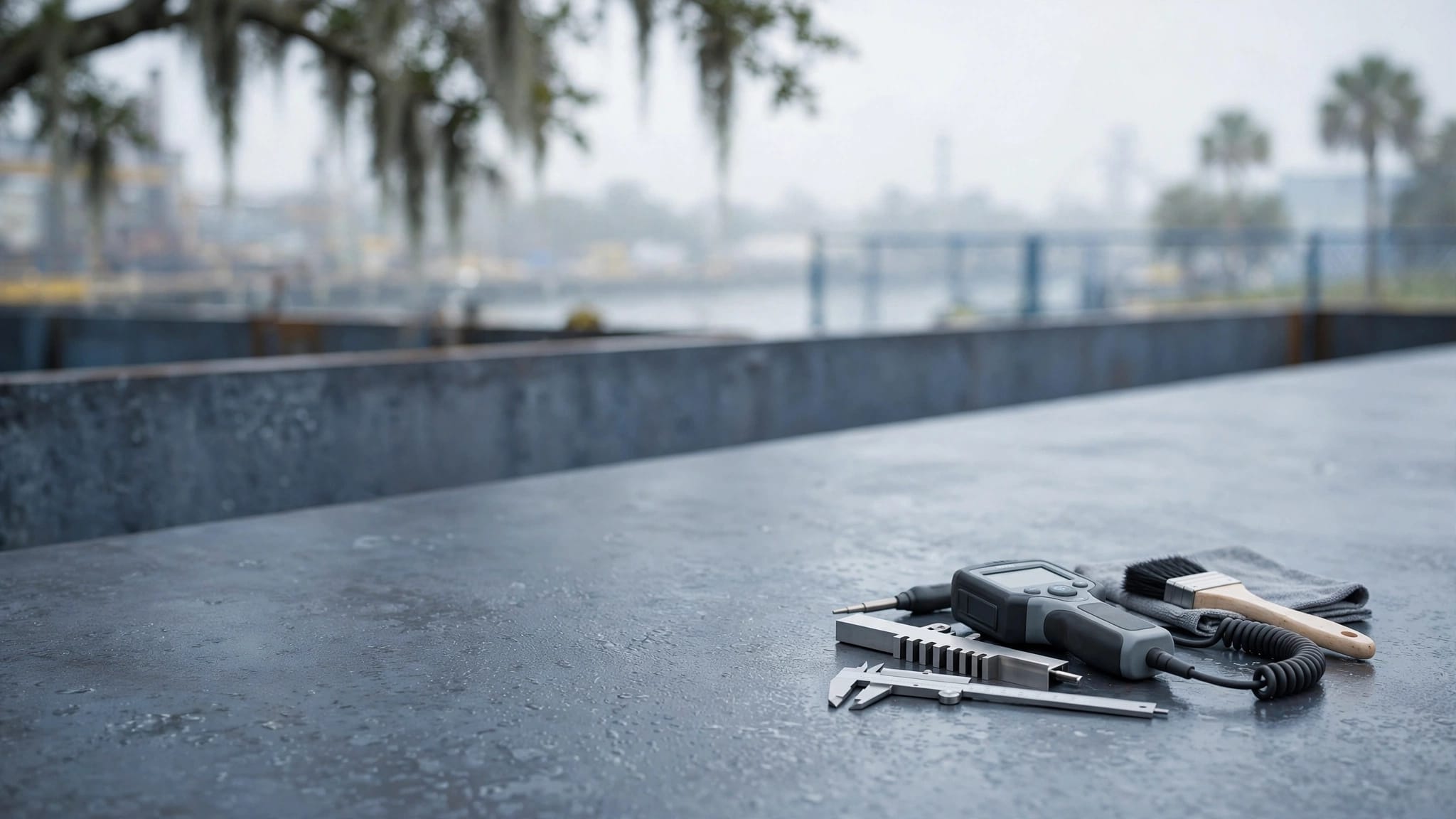
Moisture testing is a big one in Southwest Florida. If vapor pressure is high, a contractor may recommend a moisture-tolerant primer or a barrier step before the main coats. Skipping that step can be like painting over a damp wall, it might look fine today, then peel later.
Surface prep matters just as much. Mechanical grinding opens the pores of the concrete and creates a profile the coating can grab. Acid etching alone often isn't enough for a long-lasting garage system. Cracks also need the right repair method, because some fillers shrink or print through.
Finally, think about traction and cleaning. High gloss looks sharp, but it can get slick when wet. A light texture additive, or a flake broadcast with a clear topcoat, usually balances style and slip resistance. For maintenance, both systems clean best with gentle scrubbing and non-soap cleaners, since soaps can leave a haze.
If you want the floor to look good in five years, plan for sunlight and moisture on day one.
FAQ: quick answers for SW Florida homeowners
Does epoxy always turn yellow in Florida sun?
Not always, but many epoxies can amber with UV exposure. If sunlight hits the floor daily, ask about UV-stable topcoats.
Can I coat my garage floor during rainy season?
Yes, but scheduling and moisture control matter more. A contractor should monitor humidity, slab conditions, and cure windows.
What about hot tire pickup?
Both systems can resist it when installed correctly. Problems usually trace back to prep, cure time, or product selection.
How long will a coated garage floor last?
It depends on prep, moisture conditions, sun exposure, and use. A well-built system lasts much longer than paint, but no coating is maintenance-free.
Conclusion: choosing the right system for your garage
For most homes, the best answer to epoxy vs polyaspartic comes down to your garage conditions, not a one-size rule. Choose epoxy when your garage has limited sun exposure, you want strong build at a value price, and you can allow more cure time. Choose polyaspartic when UV exposure is real, you need a faster return to service, and long-term color matters. If your slab shows moisture risk, ask about a moisture-aware system with a UV-stable topcoat so your floor stays sharp, not just shiny on install day.
More featured articles...