How to Choose an Industrial Painting Contractor
Choose an industrial painting contractor by comparing relevant experience, preparation methods, coating specifications, safety planning, and documented quality control. A strong proposal connects those elements to your facility's operating conditions and explains how crews will protect production.
The lowest bid can leave expensive gaps when it excludes containment, repairs, inspection, or curing restrictions. Your best comparison starts with a shared written scope , so every contractor prices the same requirements.
Begin with the facility's needs, then evaluate how clearly each contractor addresses them.
Key Takeaways
- Prioritize experience with similar substrates, exposure conditions, and operating facilities over a general painting portfolio.
- Require a complete coating system, measurable preparation requirements, and documented inspection.
- Compare access restrictions, downtime, exclusions, and correction responsibilities alongside the quoted price.
A useful selection process produces more than a contractor ranking. It establishes what the finished work must accomplish and how you'll accept it.
Look for Industrial Experience That Matches Your Facility
Compare similar operating conditions
A warehouse floor, cooling tower, and exterior steel structure face different demands. Relevant experience means understanding those differences before recommending materials.
Ask, "Which completed projects involved our substrate, exposure, and access restrictions?" Look for experience with the surfaces in your scope, such as concrete floors, tanks, piping, or structural steel.
For Southwest Florida facilities, coastal salts, humidity, and rain also affect preparation and application planning. A contractor should explain how those conditions influence the work rather than offering the same approach everywhere.
Use references to assess execution
Request references for comparable industrial work, including projects that have experienced normal service after completion. Photographs show appearance, but facility contacts can describe production interruptions and how the contractor handled problems.
Ask whether the crew maintained containment, communicated access changes, and corrected deficiencies without repeated requests. Also establish who supervised the referenced work and who will supervise yours.
A strong company portfolio matters less if the proposed team lacks experience with the actual coating system or facility conditions.
Require a Defined Preparation and Coating System
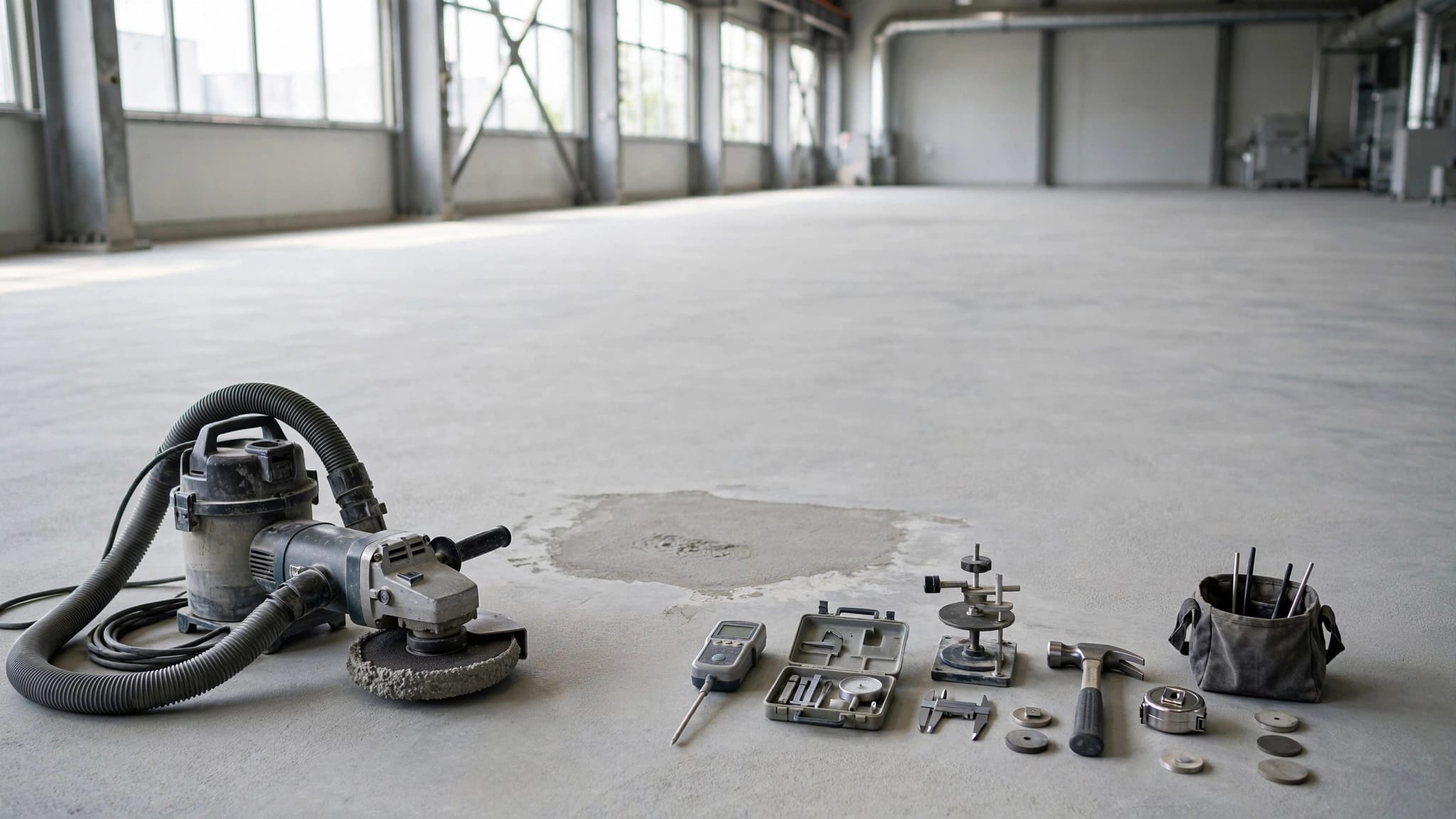
Make surface preparation measurable
"Clean and paint" isn't a sufficient industrial specification. The scope should identify the substrate, existing coating condition, contamination, preparation method, and acceptance criteria.
AMPP maintains surface-preparation standards covering different methods and cleanliness requirements. Name the applicable standard, preparation grade, and edition in the project documents. Our guidance on industrial surface preparation standards explains how those requirements connect to Florida facility conditions.
Ask, "How will you assess cleanliness, surface profile, soluble salts, and moisture where applicable?" Appearance alone can't establish all four.
Keep repairs separate. Deep pitting, damaged supports, or suspected metal loss may require professional assessment before coating work proceeds.
Specify products by service conditions
Require the manufacturer, exact product line, primer, intermediate coat where applicable, and finish coat. Include product data sheets, required coat counts, and applicable film-thickness criteria.
The selection must address chemical contact, immersion, sunlight, washdown, or traffic as the project requires. Epoxy can suit some industrial floors, while sunlight exposure and chemical service may call for a different complete system.
For floor projects, our comparison of warehouse concrete coating options explains differences among epoxy, polyurea, polyaspartic, and polyurethane systems.
Ask how the proposed layers will bond to existing coatings that remain. Require written approval for substitutions so a material change doesn't silently alter the specification.
Assess Safety Planning and Contractor Qualifications
Expect a site-specific safety approach
The contractor's safety plan should address the work being proposed. Abrasive blasting, elevated access, spraying, and enclosed work each introduce different hazards.
Ask, "How will you isolate our employees, control airborne material, and coordinate equipment shutdowns?" The response should address ventilation, respiratory protection, fall protection, emergency access, and applicable OSHA requirements.
Where confined-space entry or hazardous existing coatings are involved, qualified personnel must plan the necessary controls. Those activities need explicit scope and responsibility assignments.
Also identify who manages waste containment and disposal. Dust, spent abrasive, and coating debris shouldn't become an unassigned cleanup problem after production resumes.
Match qualifications and coverage to the work
Request documentation of applicable licensing, insurance coverage, relevant training, and any subcontractors assigned to the project. Treat these as selection documents, not substitutes for technical capability.
Insurance requirements should reflect the work and your facility's contract requirements. A policy document alone doesn't explain whether the proposal includes the right containment or work methods.
Similarly, distinguish application experience from inspection qualifications. Ask who selects the system, who supervises installation, and who accepts each stage. Defined responsibilities reduce the chance that everyone assumes someone else is handling quality.
Plan Around Production and Return to Service
A credible industrial painting contractor accounts for operations before promising completion. Preparation, repairs, application, inspection, and curing all occupy time, even when crews work outside production hours.
Ask for a phased work plan showing affected areas and access restrictions. It should account for forklift routes, deliveries, inventory movement, and emergency exits. Include protection for equipment, stored products, and nearby workstations.
Assign one facility contact and one contractor contact. Daily updates should identify completed areas, upcoming work zones, and restrictions that remain.
Weather also belongs in the plan. Florida humidity, dew, rain, and wind can affect application conditions and the protection of uncured coatings.
Dry-to-touch does not mean ready for forklifts, chemical exposure, washdown, or full production.
Require separate return-to-service criteria for the actual use. Faster-curing products can shorten some closures, but they don't eliminate preparation or inspection. The proposed sequence must also respect recoat windows and product-specific curing requirements.
Compare Bids Against the Same Scope
A total price tells you little when proposals cover different work. Give bidders the same surface inventory, exposure description, access constraints, and acceptance requirements.
Use these comparison points to identify omissions before award.
| Scope item | What the proposal should state |
|---|---|
| Included surfaces | Locations, quantities, and exclusions |
| Preparation | Methods, standards, repairs, and acceptance criteria |
| Coating system | Exact products, layers, and thickness requirements |
| Access and containment | Lifts, barriers, ventilation, and protection |
| Operating restrictions | Work zones, cure restrictions, and reopening criteria |
| Quality and closeout | Inspection records, corrections, and final documentation |
The strongest comparison reveals what each price buys. An omitted access lift, repair allowance, or containment requirement can change the apparent value of a bid.
Require written authorization before extra work proceeds. Also distinguish included repairs from conditions that trigger a separately priced change.
Ask, "Which assumptions would change this price?" A clear answer is more useful than an unexplained discount.
Compare payment milestones with defined progress and acceptance points. Avoid treating the amount of material delivered as proof that preparation or application meets the specification.
Establish Quality Control Before Work Begins
Inspect before defects become hidden
Ask for an inspection plan that identifies hold points, acceptance criteria, and responsible personnel. A hold point pauses work until the designated party accepts that stage.
Depending on the system, records may include surface cleanliness, profile, moisture results, environmental readings, and wet- or dry-film thickness.
Require attention to welds, edges, bolts, and connections. Our explanation of stripe coating for steel details describes why these areas need deliberate treatment.
Ask, "What happens if preparation fails inspection or a recoat window is missed?" The answer should identify the correction process before crews cover the affected surface.
Put correction responsibilities in writing
The contract should state how the contractor will document defects and complete corrective work. Define who accepts repairs and what records accompany final acceptance.
Written warranty terms should explain covered workmanship, exclusions, claim procedures, and the party responsible for the remedy. Separate manufacturer product obligations from the contractor's application obligations.
At closeout, require product identification, inspection records, repair documentation, and maintenance instructions appropriate to the system.
Those records give your maintenance team a usable starting point for future touch-ups. They also preserve the basis for deciding whether later damage relates to application, service exposure, or another cause.
Ask Direct Questions and Recognize Red Flags
Use these questions during the final contractor interview:
- Which comparable projects best demonstrate your ability to handle our exposure conditions?
- What preparation and coating requirements are included, and what remains excluded?
- How will you protect production areas and decide when each area can reopen?
- Who records inspections, approves corrections, and manages daily communication?
Look for answers tied to your facility rather than general statements about quality. A contractor should be able to explain the reasons behind the proposed preparation and products.
Common red flags include quoting without understanding substrate condition, describing materials only as "premium paint," and promising unrestricted use immediately after application. Other concerns include undocumented substitutions, vague exclusions, and no defined inspection responsibility.
Pressure to coat over unresolved moisture or unexplained failure deserves particular attention. Covering the symptom leaves the cause unaddressed.
Frequently Asked Questions
Can an occupied facility remain open during painting?
Some projects allow phased work while unaffected areas stay operational. However, dust, overspray, ventilation requirements, access restrictions, and curing conditions determine whether that approach is suitable. The work plan must separate employees and production from the coating activity.
Should the lowest bidder get the job?
Only when the bid meets the same technical and operational requirements as competing proposals. A lower price may reflect an efficient approach, but it may also exclude preparation, containment, inspection, or repairs.
Does new paint solve existing corrosion?
Coating work can protect a properly prepared surface, but it doesn't establish structural integrity. Deep pitting, distortion, damaged connections, or suspected metal loss require qualified assessment. Separate necessary repairs from the coating scope before application begins.
Choose the Contractor Who Defines the Work Clearly
The strongest proposal makes preparation, materials, operational restrictions, and acceptance requirements understandable. It gives you a practical basis for comparing price without accepting hidden gaps.
Prioritize documented requirements over broad promises about durability or speed. A clearly defined project gives both the facility team and contractor a shared standard for completion.
For facilities in Cape Coral, Fort Myers, and Naples, our industrial painting services can help match coatings and finishes to the project's needs.
More featured articles...