What Temperature Is Too Hot for Exterior Painting in Florida?
Florida heat can turn a fresh paint job into a sticky mess fast. For most homes, exterior painting gets too hot when the surface temperature climbs into the low to mid 90s, even if the air temperature still looks fine on your phone.
That gap matters because walls in direct sun can run far hotter than the forecast. Add humidity, afternoon storms, and salt air near the coast, and the safe painting window gets narrow in a hurry. Here's how to judge the real conditions before you start.
The direct answer: when Florida surfaces get too hot
For many standard exterior paints, a wall around 90°F to 95°F is already getting risky. Some products can handle more heat, and others can't. The label on the can is the final word.
That said, Florida homes often heat up unevenly. A shaded north wall may be fine while a west wall bakes in the sun. If one side of the house is much hotter than the air, it's smart to wait or move to a cooler section.
South and west-facing walls are the biggest trouble spots. They catch the strongest sun for the longest stretch of the day. Stucco, masonry, and dark colors hold that heat even longer.
A hot wall can make paint dry too fast on the outside while staying soft underneath. That leads to lap marks, poor leveling, and a finish that looks tired before it should.
Why surface temperature matters more than the weather app
Air temperature tells only part of the story. A weather app measures the air in the shade. Your wall, trim, or garage door sits in direct sun and soaks up heat all day.
That's why a surface can feel like a skillet when the forecast still looks workable. Florida UV is strong, and it heats darker colors fast. Metal railings, front doors, and garage doors can get especially hot.
Rough surfaces like stucco behave differently from smooth siding. They hold heat in uneven ways, so one patch may be ready while another is too hot to touch. If the wall feels hotter than the surrounding air by a wide margin, the clock is already ticking.
If the wall is far hotter than the air, the forecast is no longer the main number.
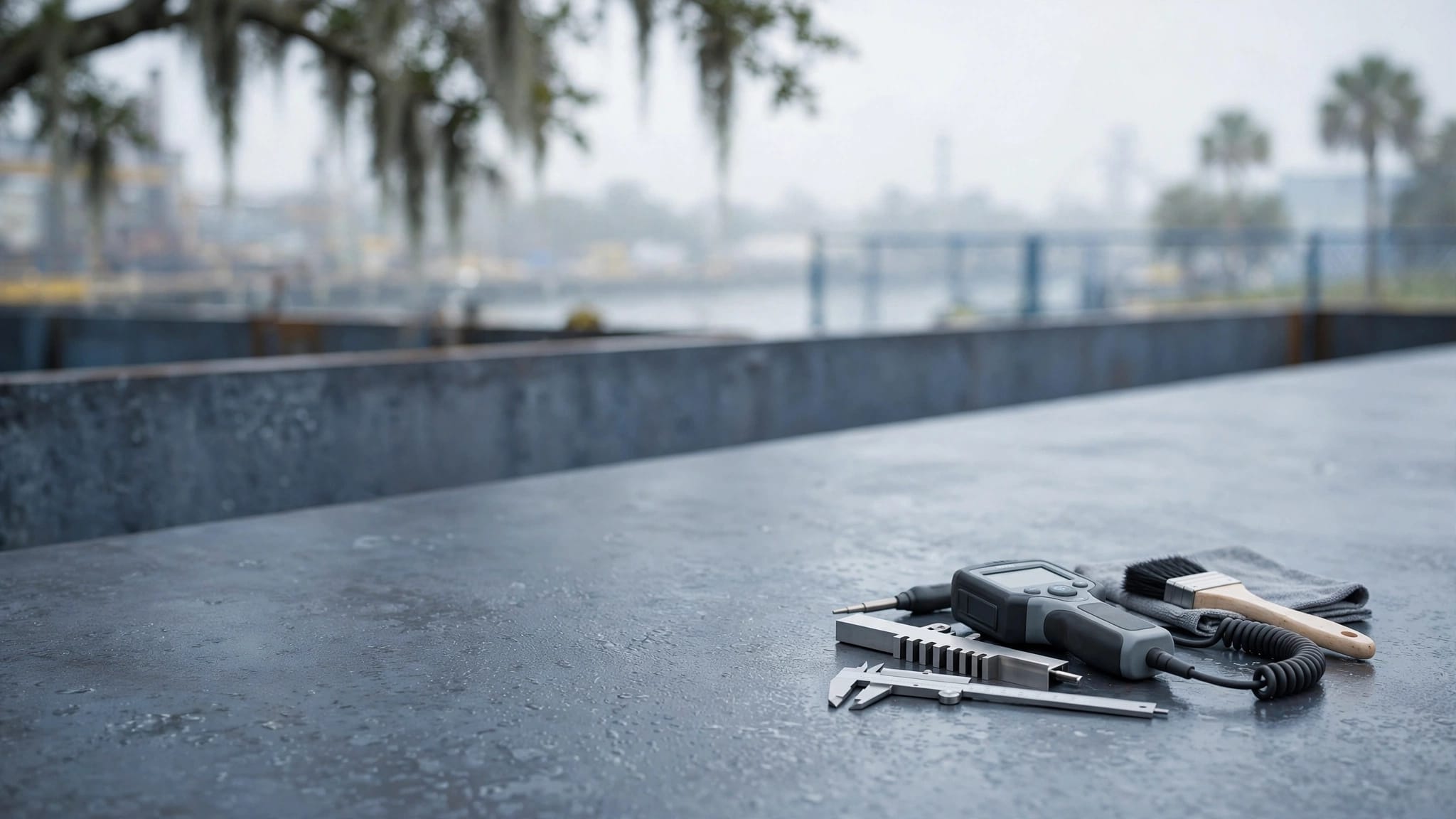
This is where an infrared thermometer earns its keep. It shows the actual surface temp, not a guess. That matters on large homes, multi-unit buildings, and any property with mixed sun and shade.
Humidity, morning dew, and rain risk narrow the window
Heat is only part of the problem in Florida. Humidity slows drying, and high moisture in the air can keep fresh paint soft longer than you expect. That matters even more when the wall is already hot.
Morning dew is another issue. Shaded siding, trim, and stucco can stay damp after sunrise, even when the day starts to warm up. If you begin too early, the paint may go on over a surface that still holds moisture. Planning exterior painting around Florida morning dew helps avoid that mistake.
Rain risk also changes the decision. In Florida, an afternoon storm can build fast and cut your working time short. A wall that looks fine at 10 a.m. may not have enough time to dry before the sky opens up at 2 or 3 p.m.
For a deeper look at cure times in muggy weather, see how humidity affects paint curing in Florida. The short version is simple, humidity stretches the cure time, so the coating stays vulnerable longer.
Salt air adds one more layer for coastal homes and buildings. It leaves residue on surfaces and can make prep work more important before any coating goes on. Hot, fast-drying paint and salty wind are a poor match.
How to check a wall before you paint
A quick temperature check saves a lot of guesswork. Use an infrared thermometer on the surface, then compare that reading with the air temp and the product label.
Here's a simple way to read the situation:
| What you see | What it means | Best move |
|---|---|---|
| Surface is close to air temp | Conditions are usually workable | Start with that area |
| Surface is 10°F to 15°F hotter than air | Heat is building fast | Switch to shade soon |
| Surface is much hotter than air | Paint may flash too fast | Wait for cooling |
| Humidity is high and storms are forecast | Dry time is limited | Shorten the job or stop |
The takeaway is easy, surface temp beats guesswork . If the wall is hot enough that you wouldn't want to hold your hand on it for long, that wall probably needs more shade or more time.
Check more than one spot. Stucco, trim, doors, and railings can all read differently. A front door in full sun can be hot while the shaded side of the same house is ready to paint.
Best times to paint in Florida heat
Early morning is usually the safest start, after dew has burned off and before the sun has baked the walls. Mid-morning can work on shaded sides, especially if the air is dry enough and the product label allows it.
Paint the shaded sides first . On many Florida properties, that means starting with the north or east side, then moving to the walls that catch the strongest afternoon sun. Large commercial buildings benefit from the same approach, since one elevation may stay cool while another turns hot fast.
On very sunny days, the west side often becomes the hardest wall to paint. By late morning, it may already be too hot for a clean finish. South-facing walls can be just as tough.
A practical order helps:
- Start with the coolest shaded areas.
- Move to surfaces that stay in partial shade.
- Save full-sun walls for the earliest or coolest window.
- Stop before afternoon storms build.
That sequence matters on homes and properties with mixed exposure. It also helps crews keep the finish even across the whole building.
Near the coast, salty breeze can leave film on trim, railings, and doors. Those spots need a clean, dry surface before paint goes on, so extra prep time is worth it.
Signs the surface is too hot already
Sometimes the wall tells you the answer before the thermometer does. Watch for these warning signs:
- Paint starts to tack up almost right away.
- Brush marks or roller lines stay visible.
- The coating doesn't level out.
- The surface flashes dry unevenly.
- Fresh paint feels soft, gummy, or patchy in spots.
If you see those problems, stop and move to a cooler side of the building. A hot wall can ruin a good product fast, even when the paint itself is a solid choice.
The same warning applies to doors and trim. They may seem like small areas, but they heat up fast and show flaws easily. If the coating begins to drag, the surface is too hot or too dry for a clean application.
Conclusion
Florida heat doesn't automatically rule out exterior painting, but it does change the rules. The safe answer is usually around the low to mid 90s on the surface , with the label on the paint can setting the final limit.
The smartest approach is simple. Check the wall temperature, paint the shaded sides first, watch humidity and dew, and leave enough room for afternoon rain. That's the difference between a smooth job and a finish that fights back.
If the wall is much hotter than the air, wait. That one habit saves more Florida paint jobs than any guess ever will.
More featured articles...