Prepare Hurricane Shutters Before Painting in Florida
A fresh exterior coat can improve a Florida property, but paint must never keep hurricane shutters from working. Poor preparation can seal tracks, stiffen hinges, cover locks, or trap corrosion beneath the new finish.
Salt air, humidity, intense sunlight, rain, and mildew all affect shutter surfaces in Southwest Florida. Proper hurricane shutter preparation protects the coating while keeping every panel, fastener, hinge, track, and motor functional. Before painting begins, inspect the shutters, clean them thoroughly, repair surface problems, and mask every part that needs to move.
Key Takeaways
- Inspect shutters for rust, bent components, loose fasteners, peeling coatings, and water damage before painting.
- Remove salt, dirt, mildew, oxidation, and chalky residue before sanding or priming.
- Use a primer and exterior coating made for the shutter's actual material, such as aluminum or steel.
- Keep tracks, hinges, rollers, locks, latches, and motorized components free of paint.
- Test each shutter after painting and before the next storm threatens the property.
Inspect the Shutters Before Exterior Painting
Start the project with the shutters open, extended, or removed according to the manufacturer's design. Never force a stuck panel. A shutter that already binds or fails to latch needs attention before anyone applies paint.
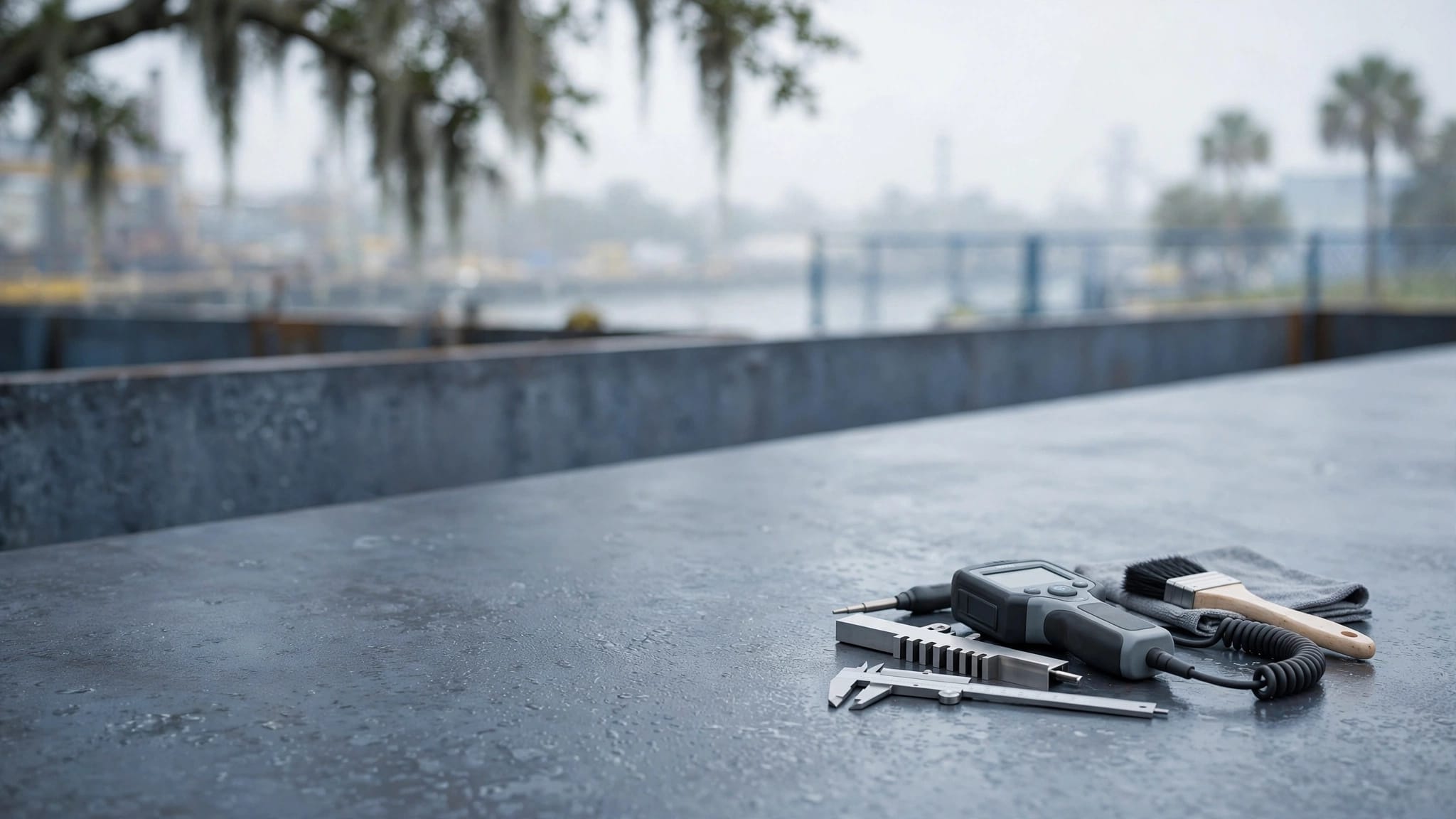
Walk around the property and examine each opening. Look for surface rust , bubbling paint, flaking coatings, dents, bent tracks, cracked components, and loose screws. Check the areas around anchors and fasteners because water often collects there. On coastal properties, salt deposits can hide early corrosion until the coating begins to blister.
Test the basic operation while the shutters are still unpainted. Accordion shutters should fold and close without dragging. Roll-down shutters should travel smoothly through their guides. Bahama and colonial shutters should swing on their hinges and hold in their open positions. Storm panels should slide into their channels without obstruction.
Motorized roll-down shutters require extra caution. Turn off power at the appropriate disconnect before cleaning, masking, or painting near the motor, switches, wiring, or housing. A licensed professional should handle electrical faults, damaged wiring, or motor repairs.
Take photographs of unusual hardware and label parts before removing them. This record helps the painting crew return brackets, stops, covers, and fasteners to their original positions. If a shutter has missing pieces or serious corrosion, pause the painting work until a qualified shutter or building professional evaluates it.
Older homes also deserve additional care. If the existing coating may contain lead, don't sand or scrape it casually. Have the coating tested and follow the required lead-safe procedures for the property and project.
Paint should follow a working shutter, not hide a defective one. Fix operation and structural problems before surface preparation begins.
Wash Away Florida Dirt, Salt, and Mildew
Cleaning is one of the most important steps in preparing hurricane shutters for paint. A coating cannot bond well to salt, grease, chalk, oxidation, or mildew. Even a clean-looking shutter may carry a thin film from coastal air and repeated storms.
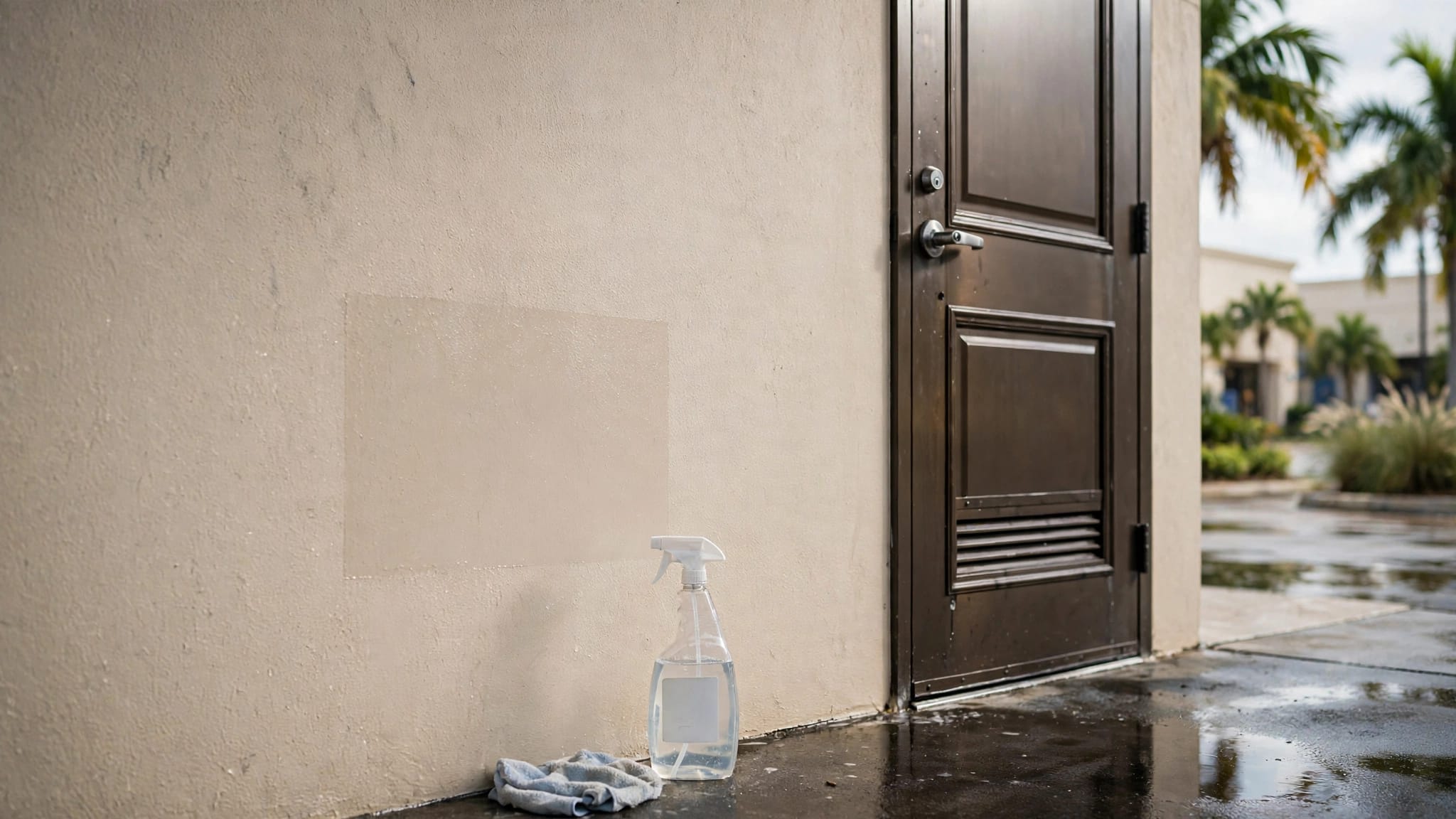
Use a mild exterior detergent, clean water, and a soft or medium-soft brush. Work from the top down, then rinse until the water runs clear. Pay close attention to folded sections, shutter guides, lower tracks, hinge areas, and the undersides of horizontal components. These spots collect debris and dry slowly.
Mildew needs careful treatment rather than a quick rinse. Use a cleaner labeled for exterior mildew removal and follow its directions. Protect nearby plants, metal fixtures, glass, and finished surfaces from cleaning solutions. Never mix household chemicals, especially bleach and ammonia-based products.
Pressure washing can remove dirt, but high pressure can bend thin aluminum, drive water into bearings, damage seals, or force debris behind tracks. If a pressure washer is necessary, use a lower setting, keep the nozzle away from motors and seals, and avoid spraying directly into hinges, locks, rollers, or electrical housings. A soft brush is often safer and gives better control.
After washing, let the shutters dry completely. Florida's warm air can dry exposed surfaces quickly, but shaded tracks and enclosed folds may remain damp. Painting over trapped moisture can cause early blistering, peeling, or corrosion.
Once dry, wipe the surface with a clean cloth. A white cloth that picks up gray or chalky residue indicates more cleaning is needed. Remove loose paint with a scraper suited to the surface, then sand the edges until the transition feels smooth. Avoid aggressive sanding that removes sound protective coatings or changes the fit of a track.
Repair Corrosion and Choose the Right Primer
Paint preparation cannot correct bent metal, broken hardware, or weakened attachment points. Separate cosmetic issues from safety concerns. Light oxidation or minor surface rust may respond to cleaning and sanding, while perforated metal, cracked welds, damaged anchors, or distorted tracks call for professional repair or replacement.
For small areas of loose coating, remove all unstable material. Feather the edges with suitable abrasive paper so the new primer doesn't leave a sharp ridge. Treat remaining corrosion only with a product compatible with the shutter material and the planned topcoat. Follow the product label for cleaning, drying, and recoating times.
The primer must match both the substrate and the coating system. Aluminum often needs a primer designed for nonferrous metal. Steel requires corrosion-resistant preparation, while previously painted surfaces may need a bonding primer after proper cleaning and scuffing. Galvanized metal, factory-finished aluminum, and powder-coated surfaces can require different products.
Don't rely on a universal primer without checking its label. Some products can react with existing finishes or fail under exterior exposure. The paint manufacturer may also specify a particular primer for adhesion and color coverage. A professional painting contractor should identify the substrate before selecting products.
Fillers and caulks require the same care. Use exterior-rated materials only where they won't block drainage or interfere with movement. Never fill a weep path, track channel, hinge gap, or opening designed to release water.
Painted fasteners can become difficult to remove later. Replace heavily corroded screws with compatible hardware when appropriate, but don't change shutter anchors or structural fasteners without confirming the correct size and type. The shutter's attachment system is part of its storm protection.
Mask Every Moving Part Before Painting
The most important rule is simple: shutters must never be painted shut . Paint belongs on approved exterior surfaces, not inside tracks, between moving slats, around rollers, or across hardware that must release or lock.
Before applying primer, mask the areas that need clearance. Use painter's tape, masking paper, and protective film around tracks, hinges, locks, latches, rollers, guide rails, handles, and motor housings. Remove tape while the coating is still at the stage recommended by the product instructions. Waiting until the paint fully hardens can pull up the finish or leave a difficult ridge.
Accordion shutters need free movement along their top and bottom tracks. Keep paint out of the interlocking hinges and folding joints. Roll-down shutters need clear guide rails, slat connections, end locks, inspection covers, and the bottom bar. Don't coat the opening where the curtain enters the housing.
Bahama and colonial shutters also need open hinge movement and clear holdback hardware. If a shutter uses removable pins or stays, protect those parts from paint buildup. Storm panels need clean edges and unobstructed channels so the panels can be installed when a storm approaches.
Avoid spraying near exposed motors, switches, sensors, and wiring. Overspray can enter small openings and create problems that remain hidden until the shutter is needed. Brush and roller application may offer better control around detailed hardware, while spraying can work on properly isolated fixed surfaces.
Apply thin, even coats rather than one heavy coat. Thick paint bridges small gaps and can crack when a shutter moves. It also adds buildup where the original clearance was narrow. Keep the manufacturer's recoat and curing times in mind, especially during humid weather.
Paint With the Weather and Shutter Material in Mind
Florida weather can change a painting schedule within hours. Check the forecast for rain, high humidity, strong wind, and direct afternoon sun. A coating may feel dry while remaining soft underneath, particularly in shaded areas or enclosed shutter sections.
Avoid painting a hot metal surface in direct sun if the product label warns against it. Rapid drying can produce lap marks, poor adhesion, or an uneven sheen. Start on a shaded elevation or work during a cooler part of the day when conditions fall within the manufacturer's temperature and humidity range.
Choose a high-quality exterior coating rated for the shutter's material and location. Coastal homes may face more salt exposure than inland properties, while commercial buildings can have different maintenance and durability needs. The selected color also affects heat absorption, so confirm that the product and color are approved for the surface.
Coordinate shutter painting with the rest of the exterior project. If the building exterior is being pressure washed, repaired, or painted, protect finished shutter surfaces from runoff and overspray. Shutters should receive their final inspection after surrounding work is complete.
A painting contractor should document the coating system, including the primer, topcoat, color, and application date. That information helps with future touch-ups and prevents incompatible products from being added later.
Test Operation After the Paint Cures
Don't test a shutter by pulling hard against fresh paint. Wait for the coating to cure according to the product label, then operate each unit slowly. Open and close accordion shutters, cycle roll-down systems, swing hinged shutters, and fit storm panels into their channels.
Watch for sticking, scraping, uneven travel, incomplete latching, or new resistance. Inspect the edges of moving parts for paint transfer. If two painted surfaces have bonded together, stop and address the problem rather than forcing them apart.
Check locks, handles, stops, holdbacks, and removable pins. Confirm that covers are seated correctly and that no tape, paper, or loose debris remains inside a track. Motorized shutters should receive a controlled test after power is restored. A qualified technician should evaluate unusual sounds, weak movement, or electrical issues.
Schedule a professional painting contractor when the property has multiple shutter styles, extensive corrosion, difficult access, or motorized systems. A contractor can also coordinate repairs, cleaning, masking, and exterior painting so the shutters remain available for storm protection.
Before the project closes, ask for a final walkthrough. The shutters should operate as they did before painting, and the finish should remain off all movement points and hardware clearances.
Conclusion
Florida shutters face more than ordinary exterior wear. Salt, mildew, sun, humidity, and storm debris can shorten the life of an improperly prepared coating. Careful inspection, thorough cleaning, compatible primer, and controlled application create a finish that protects the surface without limiting operation.
The final test matters as much as the first coat. When every track, hinge, latch, roller, and motorized component stays clear, your hurricane shutter preparation supports both the appearance of the property and its storm-readiness.
More featured articles...