Thermal Shock Flooring: Choosing Industrial Coatings
Choose thermal shock flooring around the speed and frequency of temperature changes, not just the highest operating temperature. Urethane cement often suits demanding wet-process areas, while high-performance epoxy can fit more controlled exposures.
The right choice also depends on chemicals, concrete moisture, traffic, and drainage. We approach this as a complete floor system , including preparation, thickness, joints, and curing. Start by documenting what reaches your floor during production and cleaning.
Key Takeaways
- Urethane cement is often a strong candidate for repeated washdowns and temperature changes, but suitability depends on the specific assembly.
- High-performance epoxy needs exposure-specific selection; chemical resistance alone doesn't establish resistance to thermal shock.
- Concrete preparation, installed thickness, joint details, and drainage deserve the same attention as coating chemistry.
Map the Temperature Changes Your Floor Experiences
Thermal shock occurs when a surface experiences a rapid temperature change. Repeated heating and cooling also create thermal cycling. A floor may experience both when hot wash water reaches a cooler slab, followed by a cold rinse.
Rapid heating or cooling creates temperature differences through the assembly. These differences can stress the coating, concrete, and bond between them. Therefore, a steady operating temperature doesn't describe the full exposure.
A continuous-temperature rating doesn't establish resistance to repeated hot-to-cold cycling.
Build the selection process around practical operating questions:
- What is the floor's normal temperature, and how quickly do hot or cold liquids change it?
- How often do washdowns occur, and how long do surfaces remain wet?
- Where do equipment discharges, cold rinses, or hot spills create concentrated exposure?
- Which areas also receive forklift turning, pallet impacts, or heavy cart traffic?
Record liquid temperatures where they reach the floor, rather than relying only on a water-heater setting. Also map drains, thresholds, equipment bases, and room transitions. These locations can face different conditions than the center of an aisle.
Compare Thermal Shock Flooring Systems by Exposure
Compare the entire installed assembly, including primer, repair materials, body coat, aggregate, and topcoat. Resin names alone don't describe performance.
Urethane cement for demanding wet-process areas
Urethane cement, also called polyurethane cement or cementitious urethane, is often considered for wet production areas with temperature changes. It deserves close consideration where sanitation combines hot water, frequent wetting, chemicals, and mechanical wear.
However, polyurethane cement isn't the same material as an ordinary polyurethane topcoat. The complete cementitious system, its thickness, and its installation details determine suitability.
This distinction matters in food-processing spaces. Our guidance on food processing floor coating options connects system selection with sanitation, wet service, and traffic.
High-performance epoxy for defined operating conditions
High-performance epoxy can provide a hard, cleanable surface with chemical resistance suited to the selected formulation. It remains an option where the slab is sound and temperature changes stay within the assembly's documented capabilities.
Epoxy systems also differ substantially. A thin-film coating and an aggregate-filled epoxy mortar don't have identical construction or service characteristics.
Still, greater build or a tougher topcoat doesn't automatically establish thermal-shock resistance. For epoxy proposals, the selection criteria should address rapid temperature changes, wet exposure, and the actual cleaning process. A general description such as "industrial-grade epoxy" leaves those questions unanswered.
Evaluate Chemicals, Traction, and Traffic Together
Temperature and chemical exposure often occur simultaneously. Hot cleaning solution creates a different demand than the same substance at room temperature.
Document detergents, sanitizers, acids, oils, and process ingredients, including their concentrations and contact times. Distinguish occasional splashes from repeated soaking or liquid that remains around a drain. A broad "chemical-resistant" label doesn't describe these differences.
The exposed topcoat also needs to tolerate the cleaning chemistry. A suitable body coat won't prevent deterioration of an incompatible finish layer.
Meanwhile, texture affects both footing and sanitation. A smoother surface may clean readily but become slippery when wet. A rougher profile may improve traction while making residue removal more difficult.
A physical sample of the specified aggregate and topcoat helps the facility team assess that balance. Pair the finish with suitable cleaning tools, drainage, and spill response.
Finally, map mechanical loads separately. Forklift turning, repeated braking, and steel-wheeled carts can create concentrated wear. The floor specification must accommodate those loads alongside thermal and chemical exposure.
Prepare the Concrete for Adhesion and Moisture
A coating cannot compensate for weak concrete, contamination, or an unresolved water problem. Preparation belongs in the selection process.
Remove weak material and create the required profile
Mechanical grinding or shot blasting can remove unsuitable surface material and create a profile for adhesion. However, the method and resulting profile must suit the specified assembly.
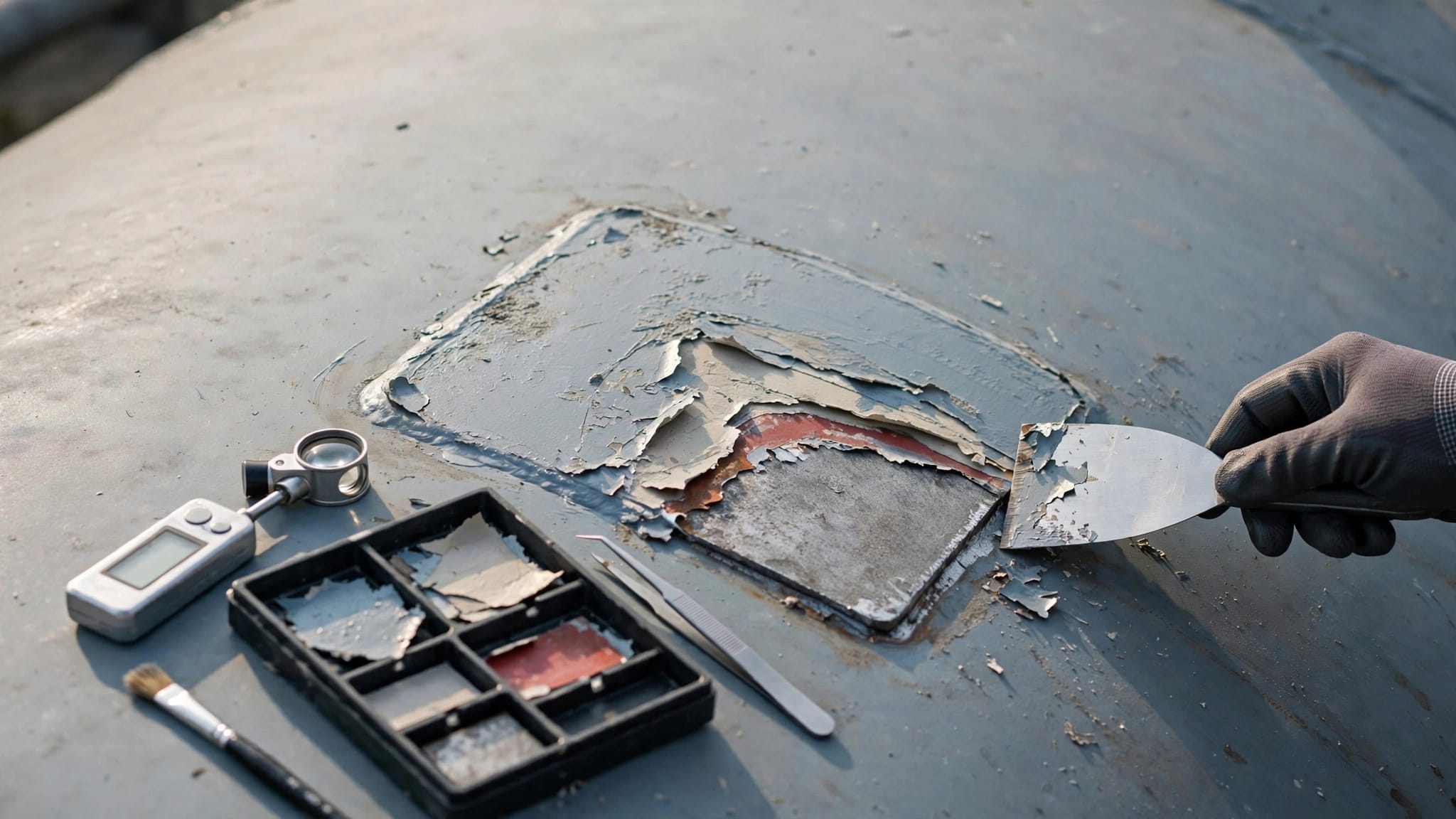
Oil, curing compounds, old coatings, and embedded contamination may require separate treatment. Simply washing the slab doesn't establish that it can accept an industrial floor system.
Repairs also need compatible materials and sufficient curing time. Our guidance on concrete surface preparation for floor coatings explains why cleaning, profiling, repairs, and moisture assessment are distinct tasks.
Separate internal moisture from surface condensation
Concrete can look dry while moisture moves through it. ASTM D4263, the plastic-sheet method, provides a qualitative indication of moisture; it doesn't supply every measurement a coating system may require.
Moisture acceptance criteria must come from the specified assembly. A moisture-control primer isn't a universal answer to leaks, drainage problems, or unsuitable slab conditions.
Surface condensation presents a separate risk. As our guidance on dew point and coating application explains, dew-point readings address condensation risk rather than moisture inside the slab. Southwest Florida humidity makes that distinction important during installation.
Specify Thickness, Joints, and Drainage Details
The proposal should describe how the assembly works at its edges and transitions, as well as across the open floor.
State thickness for the complete assembly
Specify the installed thickness of each relevant layer and the finished system. A description such as "two coats" doesn't establish the final build.
Thickness influences how the assembly handles service exposure, but adding material doesn't make unsuitable chemistry appropriate for thermal shock. Likewise, a thin protective topcoat doesn't convert a general-purpose floor into a heavy-duty thermal-cycling system.
Use industrial coating product data sheets to identify application thickness, service limitations, compatible layers, and curing requirements. Compare those details across proposals rather than comparing product names alone.
Preserve movement and give water an exit
Moving joints need details that accommodate movement. Simply coating across them can lead to cracking or separation. Cracks, damaged joint edges, and unstable concrete also need treatment appropriate to their cause.
Drains and terminations deserve explicit details, including any system-required anchor grooves and compatible edge treatments. These locations combine water exposure, temperature changes, and vulnerable coating edges.
Drainage depends on the floor's slope and drain arrangement. A finish coat won't correct standing water or an open joint. Where slope correction is necessary, include it as a separate part of the installed assembly.
Plan Installation and Maintenance Around Production
Separate traffic reopening from washdown readiness
Installation scheduling includes equipment relocation, containment, preparation, repairs, application, and curing. The coating's application time covers only part of the shutdown.
Foot traffic, carts, forklifts, chemical exposure, and hot washdown may have different reopening requirements. Dry to the touch doesn't mean ready for sanitation.
Our guidance on planning a plant floor coating project addresses these scheduling dependencies. The work plan should also protect fresh material from wash water, dust, and unsuitable environmental conditions. Phased work needs safe access routes and protected transitions between operating areas and fresh flooring.
Maintain the exposure conditions used for selection
Remove abrasive grit and spills promptly. Use cleaners, concentrations, tools, and water temperatures compatible with the installed system.
Inspect drain edges, joints, thresholds, and traffic lanes for cracks, blisters, lifting, or unusual wear. Recurring damage in one location may indicate a drainage, moisture, or exposure problem that a surface patch won't resolve.
Keep records of repairs and changes in sanitation procedures. A hotter wash cycle or stronger cleaner can change the floor's exposure even when production remains unchanged. Early attention can keep localized damage from requiring a larger repair area.
Frequently Asked Questions
Can a topcoat make an existing floor thermal-shock resistant?
A topcoat can change wear, cleanability, or chemical resistance, but it doesn't establish the capabilities of the underlying assembly. Existing adhesion, repairs, thickness, and substrate conditions still matter. If the floor already has blisters, cracks, or lifting edges, covering those defects leaves the underlying problem unresolved. The existing floor needs assessment before another layer becomes part of the proposed system.
Should every room receive the same flooring system?
Different rooms can justify different assemblies. A dry packaging area may have much less demanding thermal exposure than a wet processing room or equipment wash station. Using one system everywhere can create unnecessary expense or leave demanding areas under-specified. However, transitions between systems need compatible edge details, appropriate traction, and a cleaning approach that works across both surfaces.
Choose the System Around the Actual Exposure
Reliable thermal shock flooring starts with a clear exposure profile and a complete installation specification . Urethane cement and high-performance epoxy both require matching to the slab, temperature changes, chemicals, and maintenance routine.
When requesting an estimate from EFC Painting Contractors, include your washdown process, chemical list, traffic patterns, and available shutdown window. Those details give the coating discussion a practical starting point.
More featured articles...