How to Paint Wood Paneling in Florida Homes
Wood paneling can make a room feel dated, but painting it isn't as simple as rolling color over the old finish. In Florida, humidity, mildew, and hidden moisture can cause a new coating to peel. If you want to paint wood paneling successfully, start with moisture control and adhesion-focused preparation.
The surface must be clean, dry, sound, and dull enough for primer to grip. With the right bonding primer, longer dry times, and thin paint coats, paneling can take on a durable new finish. The work begins before you open the paint can.
Why Florida Paneling Can Peel
Many paneling products have a slick factory finish. Wax, furniture polish, kitchen grease, dust, and cleaning residue add another barrier between the surface and a new coating. Grooves and seams hold moisture, especially in bathrooms, laundry rooms, kitchens, and rooms that stay closed for part of the year.
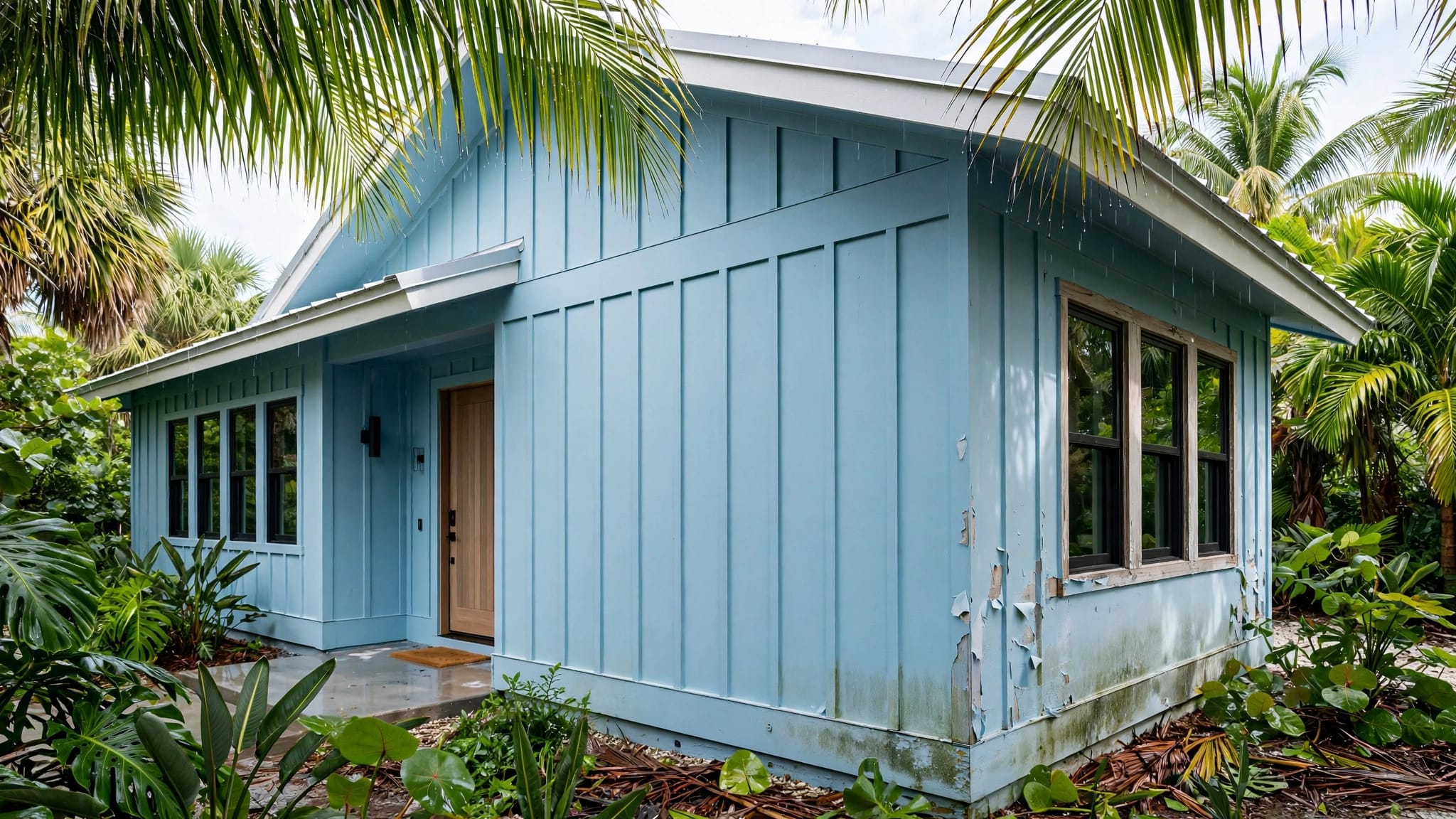
Peeling can also point to a leak, condensation, poor airflow, or damaged wood. Warped, swollen, soft, or delaminated paneling needs repair or replacement before painting.
Control Moisture Before Painting
Fix the water source first. Run exhaust fans, keep the air conditioner operating normally, and use a dehumidifier when the room stays damp. Leave space between furniture and exterior walls so air can circulate.
Treat mildew before applying primer. Use a cleaner labeled for mildew, follow the product directions, and let the paneling dry fully. Never seal active growth or a musty, damp surface under paint. This mold-resistant interior paint guide also explains why mildew-resistant paint helps the film but cannot correct moisture inside wood or walls.
Prepare the Paneling for a Strong Bond
Preparation determines whether the new finish stays attached. Protect floors and nearby furnishings, then work in small sections so cleaning, sanding, and priming don't get rushed.
Clean, Rinse, and Dry Every Groove
Vacuum the grooves with a brush attachment. Wash the paneling with mild detergent and water, or use a compatible degreaser where grease has built up. Scrub channels with a soft brush, then rinse well so soap residue doesn't remain.
Let the surface dry completely. Florida's humid air can extend the drying time, even when the paneling feels dry on top. Don't sand or prime a surface that feels cool, tacky, or damp.
Dull Glossy Areas and Repair Damage
Test the old finish with painter's tape. Press it down, pull it away, and inspect for loose paint. A detailed paint adhesion test can help locate weak sections before you prepare the whole wall.
Use 150- to 220-grit sandpaper to dull glossy finishes and improve grip. Sand grooves by hand, then remove dust with a vacuum and clean cloth. Fill nail holes and dents with compatible wood filler. Seal open seams with paintable acrylic latex caulk, then let repairs dry and sand them smooth. Paneling that flexes, bows, swells, or feels soft needs correction first.
Prime Before You Paint Wood Paneling
Bonding primer helps the topcoat attach to finished wood and slick paneling. Choose a product labeled for glossy wood, finished paneling, or other difficult interior surfaces. Check that it works with the existing coating and the paint you plan to use.
Spot-prime exposed wood, repairs, stains, and areas where sanding removed the old finish. Prime the entire wall when sheen is uneven or adhesion is uncertain. Use a stain-blocking primer for tannin bleed or water marks, but remember that primer won't stop a leak from returning.
Apply Primer Evenly
Brush primer into the grooves first, then roll the flat sections with a thin, even coat. Avoid heavy ridges in the channels because they will remain visible under the finish. Follow the label's dry time, which may take longer in humid conditions. Lightly sand rough spots after drying and remove the dust before painting.
Apply Paint in Thin, Controlled Coats
Choose a quality acrylic or latex interior paint that matches the room's moisture and cleaning needs. Satin works well for hallways and high-use rooms because it cleans more easily than flat paint. Bathrooms, kitchens, and laundry rooms generally need satin or semi-gloss paint labeled for moisture-prone areas. See this interior paint sheen guide before choosing the finish.
Brush Grooves, Then Roll the Faces
Cut in the paneling's edges and grooves with a brush. Roll the broad faces with a lightly loaded roller, working in small sections and keeping a wet edge. Pressing hard can leave thin coverage and pull at the primer. Smooth each section while the paint remains workable, then stop brushing or rolling.
Two thin coats usually perform better than one heavy coat. Thick paint holds moisture longer and can wrinkle, drag, or peel. Wait for the stated recoat time, and wait longer if the room feels sticky or the roller drags.
Allow Extra Cure Time in Florida Humidity
Humidity can make paint look dry while the film underneath remains soft. Run the air conditioner or dehumidifier and keep air moving without blowing dust onto the wall. Don't close the room up while the coats dry. Use this Florida paint curing guide for signs that the finish is ready for normal use.
Protect High-Use Areas
Keep furniture slightly away from the wall until the paint has hardened. Delay scrubbing, hanging abrasive items, or wiping seams aggressively. Clean cured paneling with a soft cloth and mild soap instead of abrasive pads or harsh chemicals.
If bubbling, recurring mildew, or broad peeling appears after painting, investigate the substrate and moisture source. Paint alone can't repair swollen wood or cover an active problem.
When to Hire a Painting Contractor
A painting contractor can help when paneling covers several rooms, the old coating peels across broad areas, or moisture damage is difficult to locate. Professional crews can test adhesion, prepare grooves and seams, repair damaged sections, and apply the primer and finish under suitable conditions.
Request a written scope that lists cleaning, mildew treatment, sanding, repairs, primer, coats, dry times, and protection for floors and furnishings. Clear preparation details make estimates easier to compare.
Conclusion
To paint wood paneling in a Florida home without peeling, correct moisture problems before you start. Clean every groove, dull glossy areas, repair damaged sections, test adhesion, and apply a compatible bonding primer.
Thin coats and longer drying times protect the bond. When paneling is soft, swollen, or failing across a large area, professional preparation is usually the sounder choice for a finish that lasts.
More featured articles...