Exterior Paint Samples: A Florida Testing Guide
Florida's intense sunlight can make one paint color look different on every side of your house. Testing exterior paint samples before hiring a painting contractor helps you avoid a color that looks perfect on a paper chip but too bright, dark, or washed out on the wall.
The right sample needs actual paint, more than one coat, and enough time to dry. You also need to view it in direct sun and shade while comparing it with your roof, stone, landscaping, and trim. Use this process to make a confident choice for your Fort Myers, Naples, or other Florida home.
Why exterior paint samples matter in Florida
Paint chips and digital color tools are useful for narrowing your choices, but they can't recreate your home's surface or changing light. Florida's strong UV exposure, humidity, and reflective surroundings can shift the way a color appears.
A sample also shows whether the color works with the existing architecture. A warm white may complement tan roof tiles, while a cool gray could clash with cream-colored stone or yellowed trim.
Sun changes color across your exterior
An exterior wall facing south or west often receives more direct sunlight than a shaded north-facing wall. As a result, the same color may appear warmer, lighter, or more intense depending on its location.
Paint colors can also look different in the morning than they do during the afternoon. Bright midday sun tends to wash out subtle tones, while lower-angle light can bring out blue, green, yellow, or red undertones.
Place a test area on a wall that receives the exposure you want to understand. If possible, test the same color on a sunny elevation and a shaded elevation.
Texture affects the final appearance
Florida homes often have stucco, concrete block, fiber cement, wood, or metal details. Each surface catches light differently. Rough stucco can make a color look softer, while a smooth door may show its depth more clearly.
Sheen changes the result, too. A low-luster wall finish won't reflect light in the same way as a semi-gloss finish on a door or trim. Test the color and sheen together whenever the finish will change between surfaces.
Read the house before selecting a color
The best exterior color is one that works with the features you aren't planning to repaint. Start by studying those fixed elements before you compare paint cards or sample pots.
This approach also helps property owners avoid choosing a color that looks attractive on its own but feels disconnected from the rest of the home.
Start with the roof and stone
Roofing usually covers a large portion of a Florida home, especially on houses with low-pitched or tile roofs. Look for the roof's main color and its secondary tones. A roof that mixes brown, cream, and terracotta may pair better with a warm neutral than a cool blue-gray.
Stone veneer, brick accents, pavers, and concrete also affect the color decision. Hold your sample near these materials, not across the yard. Small undertones become easier to see when the paint sits beside the feature it must complement.
Homeowners in coastal areas can also review coastal-ready paint colors for Florida homes before creating test areas.
Check trim and landscaping
Trim, shutters, garage doors, and front doors can either support the main wall color or compete with it. Keep their current colors in view while testing. If the trim will change, test the proposed combination together.
Landscaping matters because green palms, hedges, flowering plants, and dark mulch can reflect color onto nearby walls. A pale exterior may look greener beside dense vegetation. Pool water, screens, and outdoor furniture can also influence how the finished color feels.
Don't test only on the front facade. A side or rear wall may have different shade, plant coverage, and background colors.
How to apply exterior paint samples correctly
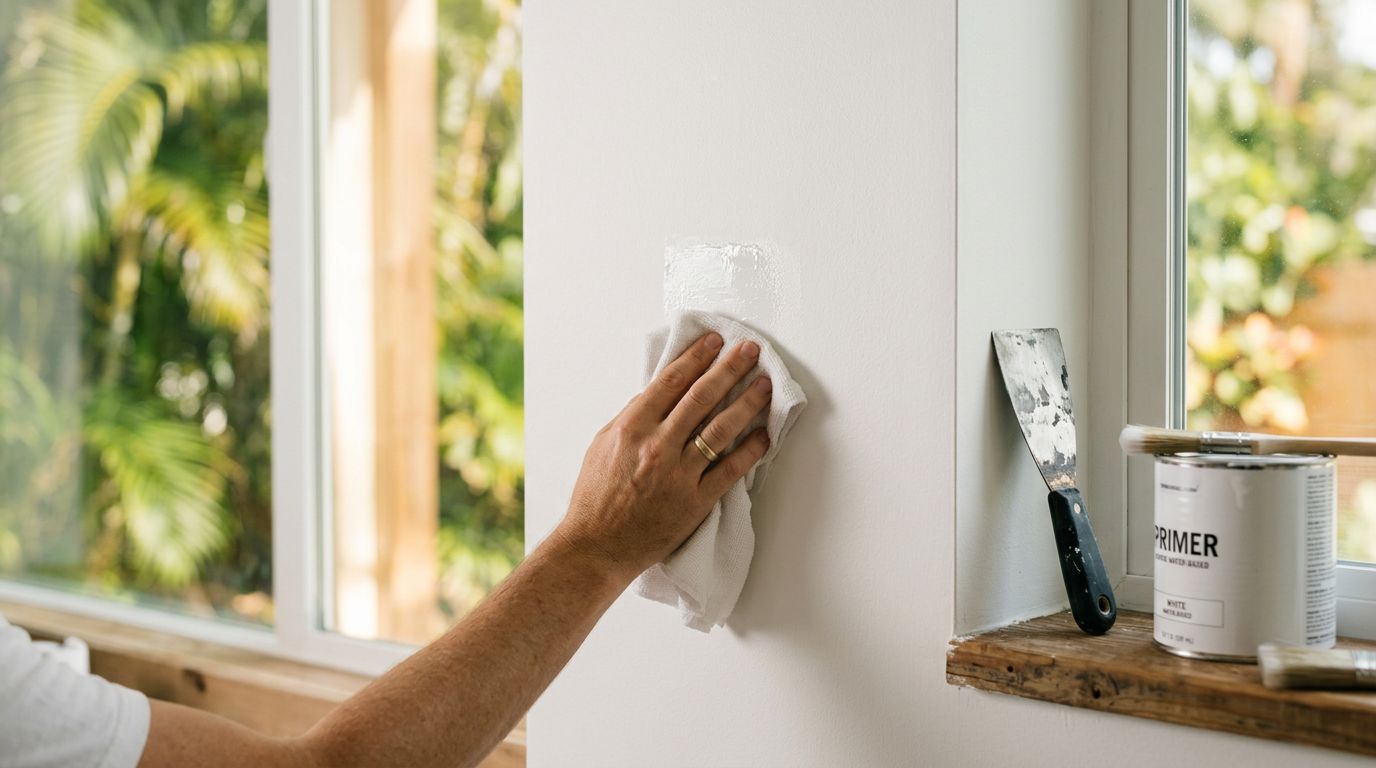
A reliable test starts with a clean, stable surface. Paint applied over chalking, peeling, mildew, or heavy dirt won't show the result accurately, and it may fail before the rest of the project begins.
For homes with damaged areas, review the steps for pre-paint preparation for Florida homes before judging a color.
Use actual paint on a representative area
Digital previews and paper swatches can narrow your choices, but they shouldn't be your final test. Actual paint shows how the color reacts to your wall texture, existing coating, light, and surrounding materials.
Choose a visible area with the same surface type and condition as the rest of the exterior. A stucco wall is a better test location for stucco walls than a smooth piece of cardboard. If you use a sample board, match its texture and primer as closely as possible.
Paint a generous block rather than a tiny patch. A larger area makes undertones and brightness easier to judge from several feet away.
Apply multiple coats
One thin coat may allow the old color to show through. That can make the new color appear lighter, duller, or less even than it will look after the project is complete.
Apply multiple coats according to the paint manufacturer's instructions. Keep the sample area large enough to cover properly, and use the same application method planned for the project when possible.
If you are comparing several colors, leave space between them. Overlapping edges can make neighboring colors appear more similar or more different than they really are.
Let samples dry before judging them
Fresh paint can look different while wet, as it dries, and after it has set. Florida humidity, cloud cover, wind, rain, surface temperature, and product formula all affect the process.
Allow adequate drying time
Follow the product label and your contractor's guidance instead of relying on a fixed number of hours. A wall that feels dry on the surface may still need more time before you can judge its final appearance or apply another coat.
Rain and high humidity can extend the wait. Shaded walls may dry more slowly than sunny walls, while a hot surface can change how quickly the coating sets. Keep sprinklers away from the sample and avoid touching it during this period.
Judge the color only after the sample has dried enough to show its intended sheen and coverage. If the finish still looks uneven, wait longer or apply the remaining coat before comparing it.
Check direct sun and shade
View the sample at different times of day. Check it in the morning, around midday, and later in the afternoon if possible. Also inspect it in both direct sun and shade.
Cloudy weather can reveal undertones that strong sunlight hides. Meanwhile, direct sun shows how bright the color may look during the hottest part of the day.
Stand near the wall and then step back toward the street. Look through windows and from the driveway, porch, or patio. A color that seems attractive up close may dominate the house when viewed from a distance.
Account for Florida exposure and finish
Color selection affects long-term appearance, but exposure and sheen also matter. A good sample test helps you see how a proposed finish will look before the entire exterior is coated.
Respect south and west elevations
South-facing walls often receive extended sun exposure, while west-facing walls get strong afternoon light. Dark, saturated colors can show fading more clearly on these elevations, especially when the wall receives little shade.
Review guidance on Florida sun exposure and paint fading when a full-sun wall is part of your project. You may decide to use a lighter body color, reserve a deeper color for the front door, or select a coating suited to the home's exposure.
The sample won't predict an exact service life. It will show how the color behaves in the light your house receives.
Plan for rain, salt, and mildew
Homes near the Gulf can receive salt-laden air, while houses under trees may deal with damp shade and organic growth. Frequent rain can also expose weak prep work or poor drainage around the walls.
Look at sample areas after a wet day and after they dry. Check whether the color still works against dark screens, wet paving, or damp landscaping. A finish with more sheen may be easier to clean, but it can also highlight surface imperfections.
For more detail on finish choices, compare this Florida paint sheen guide. The right sheen may differ between stucco walls, wood trim, doors, and metal features.
When a painting contractor should test with you
A contractor can spot problems that a homeowner may miss, especially when the current coating has faded or the house includes several surface types. Color testing works best when it connects to the full preparation and application plan.
Ask how the test surface will be prepared
A contractor should identify chalking, mildew, peeling areas, failed caulk, stains, and damaged substrate before applying a final sample. The test won't tell you much if the wall isn't clean and stable.
Ask whether the sample will use the proposed primer, number of finish coats, and application method. Those details can change the final color and texture. They also help you compare bids fairly when one contractor includes more preparation than another.
A professional site visit can also reveal whether the chosen color needs approval from an HOA or property manager.
Confirm the choice before work starts
Keep a record of each sample's location, color name, sheen, and surface. Take notes about how it looked in direct sun, shade, morning light, and afternoon light. Your memory may blend several similar neutrals together after a few days.
If your community has approval rules, submit the required color information before scheduling work. The HOA approval guide for exterior home painting explains why associations may request color codes, finish levels, physical samples, and a surface plan.
Before signing off, confirm:
- The sample has full coverage with multiple coats.
- You viewed it in direct sun and shade.
- You checked it at different times of day.
- The color works with the roof, stone, landscaping, doors, and trim.
- The planned sheen fits each surface.
- The contractor has included cleaning, repairs, caulking, priming, and touchups in the scope.
A clear written plan helps prevent a color decision from turning into a broader change during the project. You can also review the Southwest Florida exterior painting project timeline to understand how weather, preparation, and final color approval can affect scheduling.
Conclusion
Florida homeowners get the most useful answer from exterior paint samples that use real paint on a representative wall. Apply multiple coats, allow adequate drying time, and inspect each sample in direct sun and shade at different times of day.
The final choice should fit the whole property, including the roof, stone, landscaping, trim, and surface finishes. When exposure, repairs, or HOA requirements complicate the decision, an onsite evaluation from a qualified painting contractor can help you approve a color with fewer surprises.
More featured articles...