How to Do a Paint Adhesion Test Before Repainting in Florida
Florida paint fails for a few predictable reasons, and most of them start with moisture, heat, or salt in the air. Before you roll on a fresh coat, a paint adhesion test tells you whether the old finish can hold it.
That matters even more on exterior walls, stucco, trim, and soffits. If the old coating is weak, the new paint can peel fast, sometimes before the season changes.
Why Florida weather makes paint fail faster
Florida heat softens some old coatings. Humidity adds moisture behind the film. Salt air near the coast can speed up wear on exterior surfaces, especially on homes close to the water.
Frequent rain creates another problem. Water gets into tiny cracks, then dries and expands those weak spots again and again. Over time, the paint loses its grip.
Mildew also changes how a surface behaves. It can leave a slick film that paint will not bond to well. Chalking is another common issue in Florida. When you rub the wall and get a powdery residue, the coating is breaking down at the surface.
If the old paint feels dusty, soft, or flaky, a new coat will not fix it by itself.
The same basic problems show up indoors too. Bathrooms, laundry rooms, kitchens, and rooms with poor airflow often hold enough humidity to weaken old finishes.
Get the surface ready before you test
A paint adhesion test only gives useful results if the surface is clean and dry. Testing over dirt, mildew, or chalk can make sound paint look weak.
Start with a simple wash. Use mild soap and water on most painted surfaces, then rinse well. For mildew, use a cleaner made to remove it. Let the area dry fully before you test. In Florida, that may mean waiting longer than you expect, especially after a wet week.
You also need a few basic tools:
- Painter's tape
- A utility knife or sharp blade
- A putty knife or scraper
- A clean rag
- Mild soap and water
- A flashlight for checking edges and corners
Before you start, inspect the wall in a few spots. Look near trim, window frames, gutters, lower walls, and any place that gets direct sun or heavy rain. Those areas usually show failure first.
If the surface has widespread mildew, heavy peeling, or deep chalking, it may need more than a quick prep. In that case, comprehensive painting contractor services can help you sort out whether cleaning, priming, or removal is the right path.
Step-by-step: how to do the adhesion test
Use more than one test spot. A single spot can miss the real problem, especially on Florida exteriors where sun and water hit different sides of the home.
Pick two or three areas that look different. Test one spot in the shade, one in direct sun, and one near a trouble area like a window, corner, or lower wall.
-
Clean and dry the test area
Wipe away dust, chalk, and surface grime. If the wall feels damp, wait. The test should happen on a fully dry surface.
-
Try a simple peel or scrape check
Slide a putty knife under a loose edge or blister if you see one. If the paint lifts in large sheets or flakes with little effort, adhesion is weak. If only tiny chips come loose, the bond is better, but the area still needs attention.
-
Make a cross-hatch cut
Use a sharp utility knife to cut a small grid through the paint in a hidden spot. The cuts should reach through the coating and into the layer below. Keep the grid small, usually about an inch or two across.
-
Apply tape firmly over the cuts
Press clean painter's tape over the grid. Rub it down well so it grabs the paint surface. Wait a moment, then pull it off in one quick motion at a low angle.
-
Check what comes off
If the tape lifts little or no paint, the bond is strong. If it removes flakes, chips, or a wide section of the coating, the paint is not holding well enough for a new finish.
-
Repeat in another spot if needed
Different parts of a Florida home can age at different speeds. A wall that passes on one side may fail near a roofline or porch.
The goal is not to make the wall look perfect. The goal is to find weak spots before you repaint over them.
How to read the results without guessing
A clean test spot is a good sign, but the next step still depends on the surface condition. Here is a quick way to read the results.
| Test result | What it means | What to do next |
|---|---|---|
| Tape lifts little or no paint | The coating is holding well | Clean the surface, repair small flaws, and repaint |
| Small flakes come up at the edges | Adhesion is weak in spots | Scrape loose paint, sand the edges smooth, then spot-prime |
| Large sections release | The old coating is failing | Remove loose paint, repair the surface, and prime before repainting |
| Powder sticks to the tape or rag | Chalking is present | Wash thoroughly, then use the right primer if the film is still sound |
| Paint lifts with soft, wet, or stained areas | Moisture or mildew is likely involved | Fix the moisture source and clean before any repaint work |
One weak spot does not always mean the whole house needs stripping. Still, repeated failure across several areas is a clear warning.
Chalking deserves special attention in Florida. If you paint over it, the new coat may bond to the powder instead of the wall. That is a short route to peeling.
Mildew is different. It can stain and spread, but it also leaves behind residue that blocks adhesion. Clean it first, let the area dry, then check whether the coating itself is still sound.
What to do after the test fails
When the paint does not pass, your prep work needs to match the problem.
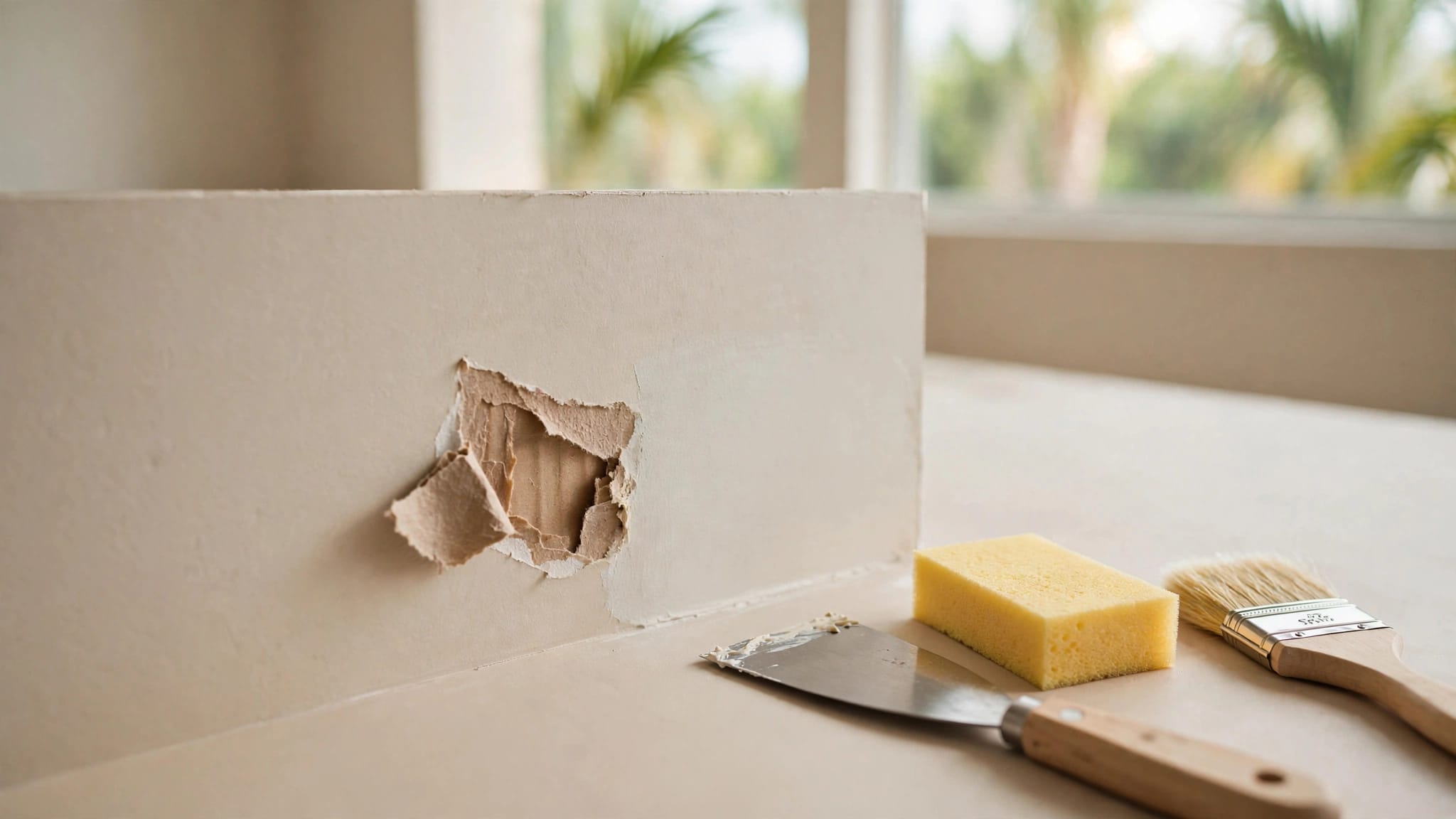
Loose paint should come off first. Use a scraper, sanding block, or other removal method suited to the surface. Then feather the edges so the new paint will not show a hard line.
If the surface is chalky, wash it until the rag comes away clean. A primer made for difficult or chalky surfaces may be needed after that, but only if the old coating is still stable enough to keep.
When peeling is widespread, stop and look at the bigger picture. The old paint may have lost its bond because of age, water intrusion, or a poor earlier prep job. A quick repaint will not solve that.
For homes with stucco, wood trim, fascia, or siding that keeps failing in the same places, local residential painting contractors can help decide whether the best fix is spot repair, full removal, or a fresh primer system.
The timing matters too. In Florida, avoid repainting after rain or during stretches of heavy afternoon storms. Give the surface time to dry out. A dry wall grips paint far better than one that still holds hidden moisture.
Interior walls in humid Florida homes need the same check
Exteriors get the most abuse, but inside walls can fail too. Bathrooms, laundry rooms, kitchens, and closets with poor airflow often show peeling near vents, windows, or ceilings.
The same test methods work indoors. Use a small hidden spot, check for peeling with a scraper, and try the tape test on a tiny grid. If the tape pulls off paint, the wall needs cleaning, patching, or priming before you repaint.
Humidity inside the house can be sneaky. A room may feel dry while the wall still holds moisture from past leaks, AC problems, or steam. If a ceiling or wall has recurring bubbles, the paint is telling you something. Do not paint over the symptom and hope it disappears.
Conclusion
A good repaint starts with a surface that can hold the new coat. In Florida, heat, humidity, salt air, mildew, chalking, and rain can all weaken old paint, so a quick check before you start saves time and money.
Use the scrape test and the cross-hatch tape test on clean, dry spots. If the paint stays put, you can move ahead with prep and repainting. If it lifts, flakes, or powders off, fix the surface first. Strong adhesion is what keeps a fresh paint job looking good after the weather turns.
More featured articles...