Garage Floor Coating Cure Time in Florida: When You Can Park
A new garage floor looks finished fast, but the garage floor coating cure time matters more than the shine. Can you park tomorrow, or do you need to wait a full week? The honest answer is that it depends on the coating system, Florida weather, airflow, and the installer's instructions.
For most homeowners, the safest plan is simple: walk on it only when the floor is approved for light foot traffic, then wait longer before putting a vehicle on it. Hot, humid Florida conditions can change how a coating dries and cures, so a floor that feels dry can still be too soft for tires.
What the wait time usually looks like
A conservative timeline helps protect the finish. Some coatings are ready for walking sooner, but parking is a different test. A person's shoes leave little pressure. A car tire can leave heat, weight, and turning force.
Here's a practical guide for Florida homeowners:
| Use | Conservative wait time | What to keep in mind |
|---|---|---|
| Light foot traffic | 24 to 48 hours | Wait for installer approval before stepping on it |
| Moving a few light items | 48 to 72 hours | Avoid dragging boxes, ladders, or tool carts |
| Parking a car | 3 to 7 days | Wait longer if the garage is humid or the coating is thick |
| Full cure for heavy use | Up to 14 days | Best for hot tires, frequent traffic, and sharper turns |
That table gives a cautious range, not a promise. Some systems cure faster, and some need more time. If the product sheet or contractor says to wait longer, follow that advice.
Dry to the touch does not mean ready for parking.
If you want a broader look at coating choices, concrete floor coatings can have different cure windows than a standard epoxy floor.
Why Florida weather changes the cure time
Florida weather is tough on timing. Heat can speed up drying, but humidity can slow down curing. In other words, the floor may look ready while the coating is still setting beneath the surface.
Ventilation matters too. A garage with open airflow usually cures more predictably than one that stays sealed up. Fans can help move air, but they do not replace the manufacturer's cure window. The coating still needs the right amount of time.
Different coating systems also behave differently. A thinner product may be ready sooner than a thicker one. A premium multi-layer system may need more patience before it can handle a vehicle. That's why the same answer does not fit every garage.
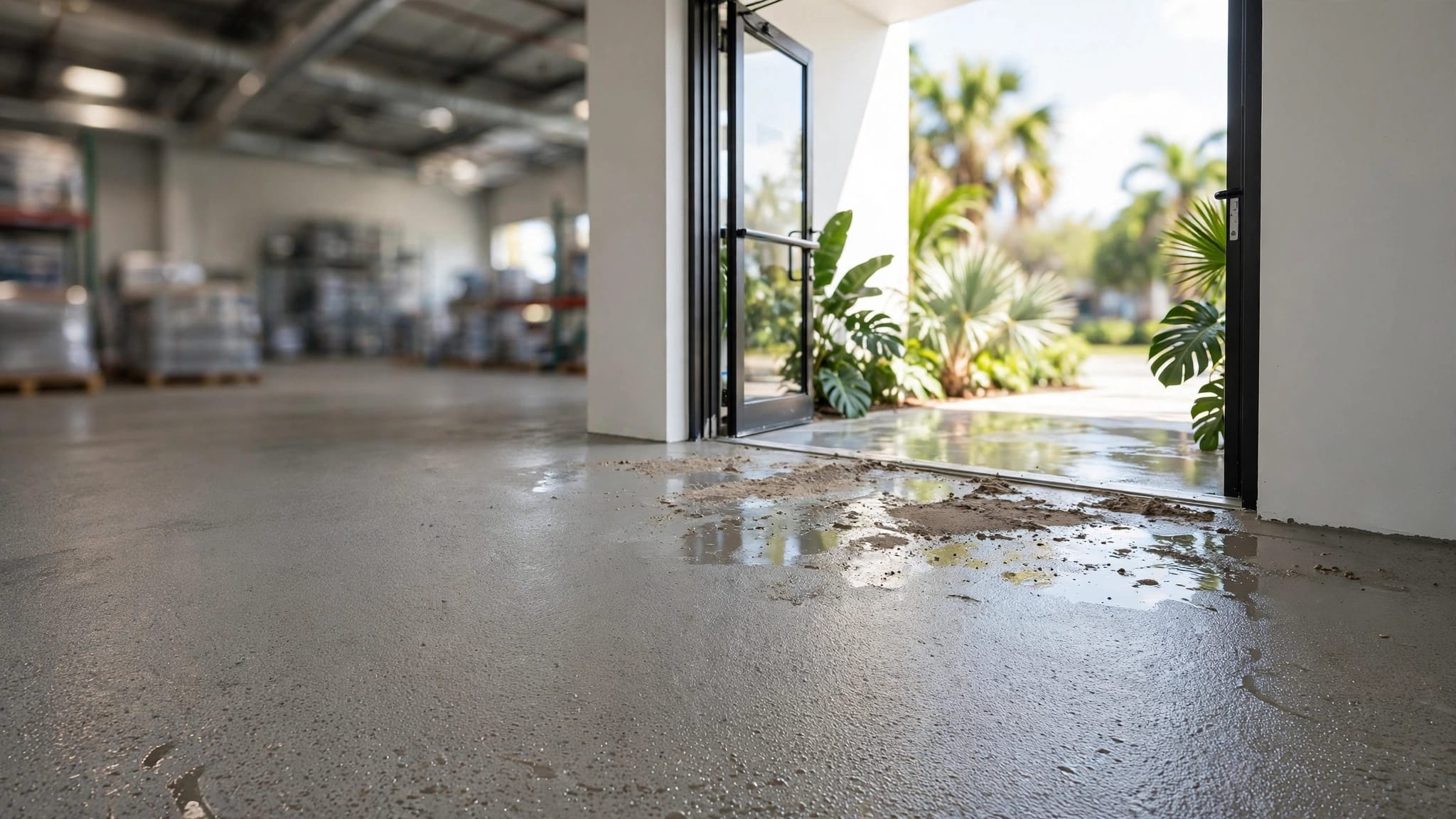
Florida homes also face heat buildup inside the garage. On a sunny day, the room can warm up fast. That heat can make the floor feel dry earlier than it really is. If the slab and coating are still releasing moisture, parking too soon can leave tire marks or dull spots.
The safest rule is to treat the garage like a room that needs time, not a surface that is done the moment it looks good. Ask the installer what they used, then follow that schedule closely.
Parking too soon can leave a lasting mark
A new coating is strongest after it cures, not before. Parking early can cause problems that are hard to fix later. One set of tires can do more damage than a week of foot traffic.
The most common issue is hot tire pickup . Tires that come off a drive in the Florida sun can press into a coating that is still soft. That may leave a footprint, sheen change, or even pull material from the surface. Turning the wheel while parked can add more stress.
Heavy storage is another issue. A loaded toolbox, motorcycle stand, or car jack can create small pressure points. Even if the floor seems firm, it may still be vulnerable at the edges and seams.
Here are a few safe habits during the first week:
- Keep cars out until the installer says parking is okay.
- Avoid washing the garage floor early.
- Don't drag metal legs, dollies, or ladders across the surface.
- Park straight in when you first return, then avoid sharp turns on the coating.
- Use extra caution after rain, because humidity often rises inside the garage.
These steps are simple, but they help preserve the finish. A little patience now is easier than repairing tire marks later.
Signs the floor is close, but not ready
A cured floor usually feels hard, smooth, and stable under light use. Even then, the surface may still be finishing below the top layer. That is why touch tests can mislead people.
A few signs may tell you the floor is getting close:
- The surface feels dry and no longer tacky.
- It does not leave dust or residue on your shoe.
- The finish looks even, without soft or shiny wet spots.
- The contractor says the floor is ready for the next step.
Still, these signs do not replace instructions. A coating can feel ready and still need more time for vehicle weight. That matters most in Florida, where heat and humidity can shift the cure schedule by a day or more.
If you're unsure, wait an extra day. That small delay is often the difference between a clean floor and a repair call. For homeowners and businesses alike, that's a much better trade.
Conclusion
If you're asking how long before you can park on a new garage floor coating in Florida, the safest answer is usually 3 to 7 days for vehicles , with light foot traffic often allowed sooner. Humid, hot weather can stretch that timeline, so the clock in your garage may run slower than you expect.
The best move is to trust the specific product or contractor instructions first. General advice helps, but the coating system, the room temperature, the humidity, and the airflow all affect cure time.
When the floor looks perfect, it's tempting to use it right away. Waiting a little longer keeps that new finish looking sharp, which is the whole point.
More featured articles...