Florida exterior paint colors for red tile roof homes
Red tile roofs give a Florida home instant character, but they also limit the color choices that look balanced. The roof may lean orange, brown, coral, burgundy, or muted purple depending on the tile blend and sunlight.
The best Florida exterior paint colors work with those undertones instead of fighting them. A soft neutral can make the tile look richer, while the wrong gray or white can make the roof appear brighter and more dated. Start with the roof, then build the wall, trim, and accent palette around it.
How Florida exterior paint colors work with red tile roofs
A red tile roof is usually the most visually dominant feature on the home. Because of that, the exterior wall color should support the roof rather than compete for attention. Large areas of stucco can make a color look stronger than it appeared on a small paint chip.
Warm tile usually pairs well with warm neutrals. Cream, sand, beige, taupe, and warm greige can connect the roof to the walls without creating a sharp break. Soft green can also work when the home has natural landscaping, wood accents, or stone details.
Cool colors require more care. A blue-gray may look attractive beside a darker red tile roof, but it can appear cold beside orange terracotta. Bright white can also create too much contrast, especially when the roof has a strong clay color.
The right wall color should make the roof look intentional, not isolated.
Look at the full exterior before choosing paint. Consider the driveway, pavers, stonework, shutters, landscaping, and neighboring homes. These fixed features often contain small colors that can guide your selection.
Match the palette to the tile's undertone
The phrase "red tile" covers several different roof appearances. Hold a tile sample beside paint cards if possible. If you don't have a loose tile, take photos in direct sun and shade, then compare them with large color samples.
Warm red tile
Warm red tile usually contains orange, rust, or brown tones. It has a classic Mediterranean or Spanish-inspired appearance and looks best with colors that share some warmth.
Good wall choices include:
- Soft ivory with a slightly creamy base.
- Light beige or sandy tan.
- Warm taupe with brown or mushroom undertones.
- Muted olive or sage for a more natural exterior.
- Warm gray that doesn't lean blue.
Warm red tile can make stark white walls look even brighter. Choose an off-white instead, especially for a large stucco facade. A warm gray can also work, but check it outdoors because strong Florida sunlight may reveal a blue undertone that wasn't visible indoors.
For trim, use cream, light taupe, or a slightly deeper version of the body color. Dark bronze or wood-toned accents can add definition around doors and windows without creating excessive contrast.
Terracotta tile
Terracotta tile has a distinct orange, clay, or coral quality. It often appears lighter in direct sun and more brown at dusk. This roof color needs a calm wall color because an equally strong orange or yellow can make the exterior feel busy.
Cream, putty, light camel, and pale tan are reliable starting points. Muted sage is another option when you want contrast without a cold color. A soft mushroom gray can balance terracotta if it contains enough brown to connect with the roof.
Avoid icy gray, blue-white, and intense yellow. Those colors can pull against the tile's warmth. Pure black accents may also look too heavy on a light stucco home, especially when used on shutters, columns, and garage doors at the same time.
Terracotta roofs often have natural variation between tiles. Sample the wall color beside several roof sections, not one tile, so you can judge how the paint works with the complete roof.
Darker red tile
Darker red tile may include burgundy, wine, brown-red, or plum undertones. It creates more visual weight and can support lighter wall colors with a clean, polished contrast.
Try light greige, pale taupe, soft white, or a subdued gray. If the tile leans toward burgundy or plum, a restrained blue-gray may complement it. If the roof has strong brown tones, stay with warmer neutrals.
Darker tile can handle deeper accents, such as charcoal, espresso brown, dark bronze, or forest green. Use those shades selectively on a front door, shutters, or metal details. Covering every trim element in a dark color may make the home look smaller.
When the roof is dark, a medium or light body color usually creates the clearest balance. The goal is a layered palette with enough contrast to define the architecture.
Exterior paint colors that pair well with red tile
Several color families work across Southwest Florida homes, but each creates a different impression. Use this table as a starting point, then test samples against your actual roof and stucco.
| Wall color family | Works best with | Watch for |
|---|---|---|
| Cream or ivory | Warm red and terracotta tile | Bright whites can look harsh |
| Sand or beige | Orange, clay, and brown-red tile | Yellow undertones may feel too strong |
| Taupe or mushroom | Warm red and darker red tile | Some taupes turn purple in shade |
| Warm greige | Brown-red and mixed tile roofs | Blue-gray versions may clash with terracotta |
| Muted sage | Terracotta and warm red tile | Strong greens can compete with the roof |
| Subdued blue-gray | Burgundy or cooler dark red tile | It may look cold beside orange tile |
The safest choice is often a light-to-medium neutral with a clear undertone. If you can't identify the undertone, compare the paint card with a clean section of roof in daylight. The color that looks slightly connected to the tile will usually feel more natural on the walls.
Many Florida homes use stucco, which has texture and shadow lines that affect color. A smooth sample may look lighter than the same color across a textured wall. Ask your contractor to test the actual coating system on the exterior surface, not only a paper swatch.
Use trim and accents to control contrast
Trim color can either organize the exterior or create too many competing edges. For most red tile homes, one main body color and one trim color are enough. A front door accent can add personality without changing the entire palette.
Choose trim that relates to both the roof and the wall. Cream trim suits terracotta and warm red roofs. Soft white can work with darker red tile when the wall color is pale. Taupe or bronze trim creates a quieter appearance on homes with brown-red roofs.
Columns, fascia, soffits, window surrounds, and garage doors don't always need the same treatment. A large garage door often looks less prominent when it matches the body color. White or cream trim can define windows and architectural details instead.
For a front door, consider a restrained accent such as deep green, muted blue-gray, dark bronze, or a wood tone. The best choice depends on the roof's undertone and the home's other fixed materials. Test the accent beside the wall and tile before committing.
Avoid choosing trim in isolation. A color that looks attractive around one window may feel too bright when repeated across the entire facade. Contractors who provide residential house painters can help assess how the color will behave across large elevations, textured stucco, and detailed trim.
Account for Florida sun, humidity, and neighborhood rules
Florida's sunlight changes how exterior colors appear throughout the day. West-facing walls receive strong afternoon sun, while shaded areas may make the same paint look darker or cooler. Coastal air, rain, humidity, and nearby vegetation can also affect how clean the finish looks over time.
Light reflectance value, or LRV, is one useful factor when comparing colors. Higher-LRV colors reflect more light, while darker colors absorb more solar energy. A light neutral can keep a broad stucco exterior looking crisp in full sun, while a very dark color may show fading or surface variation sooner.
Paint performance depends on more than color. Ask about a coating designed for the home's substrate, along with the recommended finish for stucco, wood, metal, or masonry. Proper washing, dry-out time, caulking, and surface repairs matter just as much as the final color.
Community rules may also affect your options. Before buying paint, check HOA requirements or other neighborhood guidelines for approved body, trim, and accent colors. Some communities require written approval before exterior changes begin.
A clear schedule helps when approvals, afternoon storms, and drying conditions affect the work. Review the expected exterior paint project timeline with your contractor before the start date.
Test colors before you commit
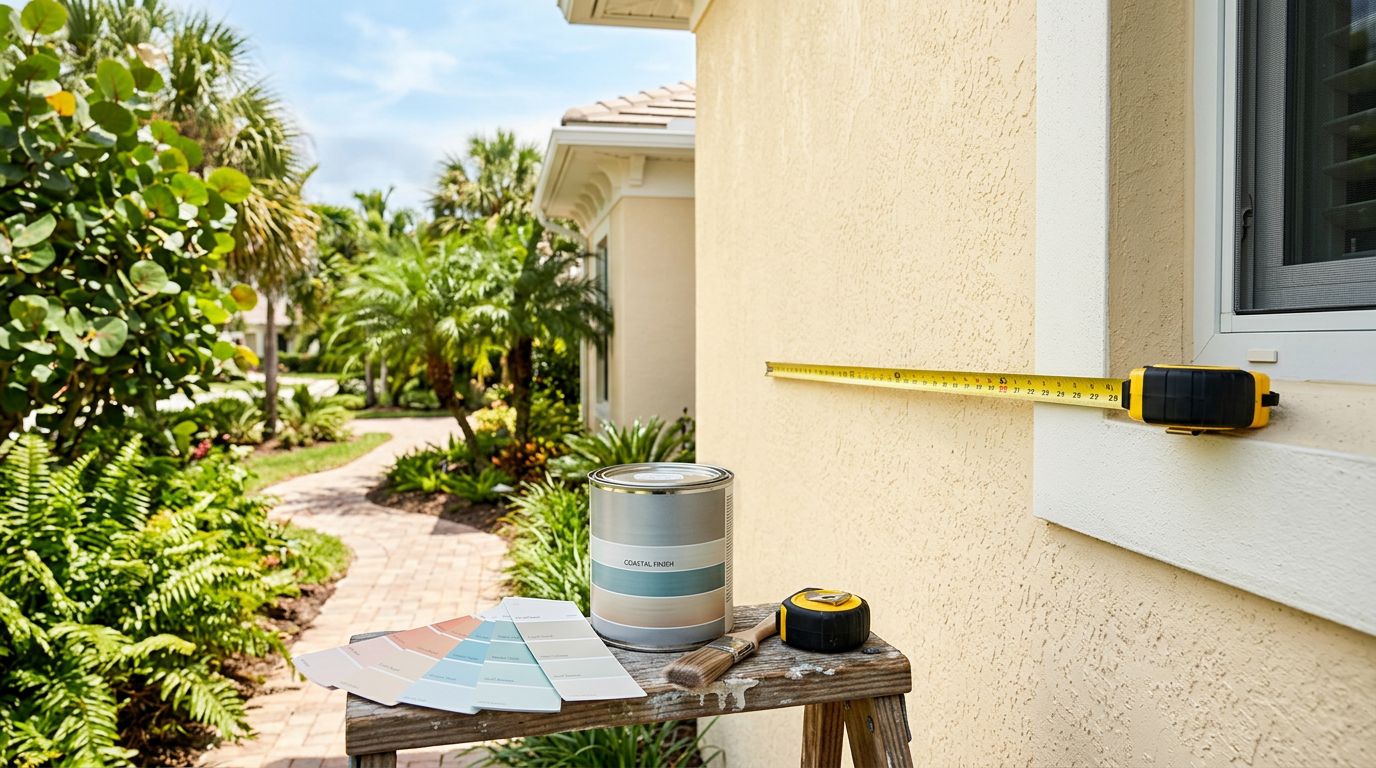
Paint samples are useful only when you view them in the right setting. Place large sample boards near the front, side, and rear elevations. Include a section that sits beside the roofline, since the roof can change how the paint appears.
Check the boards at several times:
- Morning light can make warm colors look softer.
- Midday sun may wash out pale colors.
- Afternoon light can intensify yellow, orange, and red undertones.
- Shade may reveal blue, green, or purple tones.
- Evening light can make beige and taupe look deeper.
Look at the samples for at least a full day before deciding. If possible, view them after the wall dries and after nearby surfaces are clean. Don't rely on a phone image or an indoor paint chip.
Test the trim color beside the body sample as well. A trim shade may seem subtle on its own but look stark when it borders a large wall. The same applies to a dark front door or shutter color.
Before signing a painting contract, confirm the brand, color name, sheen, and location for every selected finish. Keep the information for future touchups. If the home includes multiple surfaces, ask whether the same color will require different products for stucco, doors, metal, or wood.
Final color choices for a red tile home
Choosing Florida exterior paint colors starts with identifying whether the roof is warm red, terracotta, or a darker red with burgundy or brown undertones. Cream, beige, taupe, warm greige, and muted green are strong options for warm tile, while subdued blue-gray can suit select darker roofs.
Test every color outdoors against the actual roof, stucco texture, fixed materials, and changing Florida light. A careful sample process prevents expensive repainting and gives your contractor a clear finish plan.
The most successful exterior palette usually feels connected rather than matched. When the walls, trim, and red tile roof share a thoughtful undertone, the whole home looks more balanced.
More featured articles...