Metal Roof Painting Florida: A Coastal Home Guide
Salt air can make a good-looking metal roof develop rust around screws, seams, and cut edges before the broad panels look worn. If you're comparing metal roof painting Florida contractors, start with the roof's condition, not a color chart.
A coating can protect sound metal, improve the roof's appearance, and reduce damage from sun and moisture. It can't repair leaks, replace corroded fasteners, or restore panels with holes. Coastal homeowners should schedule a careful inspection first, complete repairs second, and paint only after the surface is ready.
Why Coastal Florida Metal Roofs Need a Different Painting Plan
Metal roofs along Florida's Gulf Coast face a demanding mix of salt, humidity, intense sunlight, wind-driven rain, and frequent temperature changes. Salt particles settle on panels and hardware, while moisture keeps the surface damp enough to speed up corrosion.
The most vulnerable areas are usually exposed fasteners, panel laps, flashing, penetrations, gutters, and damaged edges. A small scratch can expose steel beneath the finish. Over time, rust may spread under surrounding paint and lift the coating from the panel.
Sunlight creates another problem. Ultraviolet exposure can fade color, break down older finishes, and leave the surface chalky. Heavy rain then washes that residue onto walls, trim, and walkways. Wind-driven rain can also push water into weak seams or failed sealant, especially when the roof already has loose hardware.
Conditions vary between a beachfront property and a home farther inland. However, homes in Fort Myers, Naples, Bonita Springs, Cape Coral, and nearby coastal areas still need products and preparation suited to marine exposure.
For a related look at coastal corrosion, read about how salt air affects exterior paint. The same salt deposits that stain exterior metal can affect roof fasteners, flashing, and exposed panel edges.
Inspect the Roof Before Choosing Paint
Painting should follow inspection and repairs , not replace them. A roof that looks faded may also have hidden moisture problems, failing sealant, or corrosion beneath the existing finish.
A qualified contractor should review the roof from safe access points and inspect the attic or interior areas when leaks are suspected. The evaluation should cover the panels, seams, fasteners, flashing, vents, skylights, chimneys, gutters, and roof-to-wall transitions.
Look for these conditions before approving a painting proposal:
- Loose or backed-out screws can leave openings where water enters around the fastener.
- Rust stains may indicate surface oxidation, damaged protective coating, or corrosion beneath the paint.
- Open seams and failed sealant can allow water into the roof assembly.
- Pitted or perforated metal may need panel replacement instead of a cosmetic coating.
- Dents, lifted panels, and storm damage can affect drainage and panel alignment.
- Peeling, blistering, or chalking paint can point to poor adhesion or moisture trapped below the finish.
Ask the contractor to photograph problem areas and explain which items belong in the repair scope. A written proposal should separate roof repairs from cleaning, priming, and coating.
When painting isn't the right repair
Surface rust can often receive proper cleaning and corrosion treatment. Severe rust is different. If the metal has lost significant thickness, a coating may hide the damage without restoring the roof's strength.
Leaks around vents, skylights, chimneys, and wall transitions also need targeted repairs. Applying paint over a leaking joint won't stop the water. Likewise, a coating can't correct poor drainage or eliminate movement in a roof system.
Paint belongs after leaks, rust, loose fasteners, and failed sealants are addressed. It should never be the only response to a roof problem.
Check the roof's age and warranty before work begins. Some manufacturer warranties limit field-applied coatings or require approved preparation methods. A contractor should review the existing finish and recommend a compatible system rather than assume every metal roof can accept the same product.
Choose a Coating System for Florida Exposure
Regular exterior house paint isn't automatically suitable for a metal roof. Roofing products need to bond to the existing surface, tolerate expansion and contraction, and withstand prolonged sun and moisture exposure.
Many contractors use acrylic or elastomeric acrylic roof coatings for metal roofs because these products can provide UV resistance and reflect sunlight. However, acrylic systems may not suit areas with persistent ponding water. The roof must also have proper drainage before coating begins.
Silicone-based roof coatings can offer strong resistance to ponding water and weather exposure, but compatibility with the existing finish still matters. Silicone can also create surface conditions that affect future recoating, so the contractor should identify the full maintenance plan before application.
A roof with a factory-applied fluoropolymer or other specialized finish may need different preparation than bare galvanized steel. The coating manufacturer may require cleaning, abrasion, a bonding primer, or a test patch. Smooth metal and old glossy paint often need mechanical preparation for reliable adhesion.
Galvanized components require extra care because some primers and topcoats don't bond well to zinc-coated surfaces. Review this guide to painting galvanized metal without peeling when the roof includes galvanized flashing, trim, vents, or accessories.
A dependable coating specification should identify:
- The cleaner and preparation method approved for the existing finish.
- The primer required for exposed steel, galvanized metal, aluminum, or old paint.
- The topcoat type, color, sheen, and expected application thickness.
- The temperature, humidity, surface moisture, and recoat requirements.
- The areas that need sealant, reinforcement, or separate repair work.
Color also affects performance and appearance. Light-colored coatings generally absorb less solar heat than dark colors, but the final choice should fit the home's design, neighborhood rules, and product specifications.
How Metal Roof Painting Florida Projects Should Be Planned
A professional metal roof painting Florida contractor should treat the job as a coating system, not a quick spray-over. The work usually follows this sequence:
- Review the roof and define the scope. The contractor documents the existing finish, corrosion, leaks, repairs, access requirements, and areas that won't receive coating.
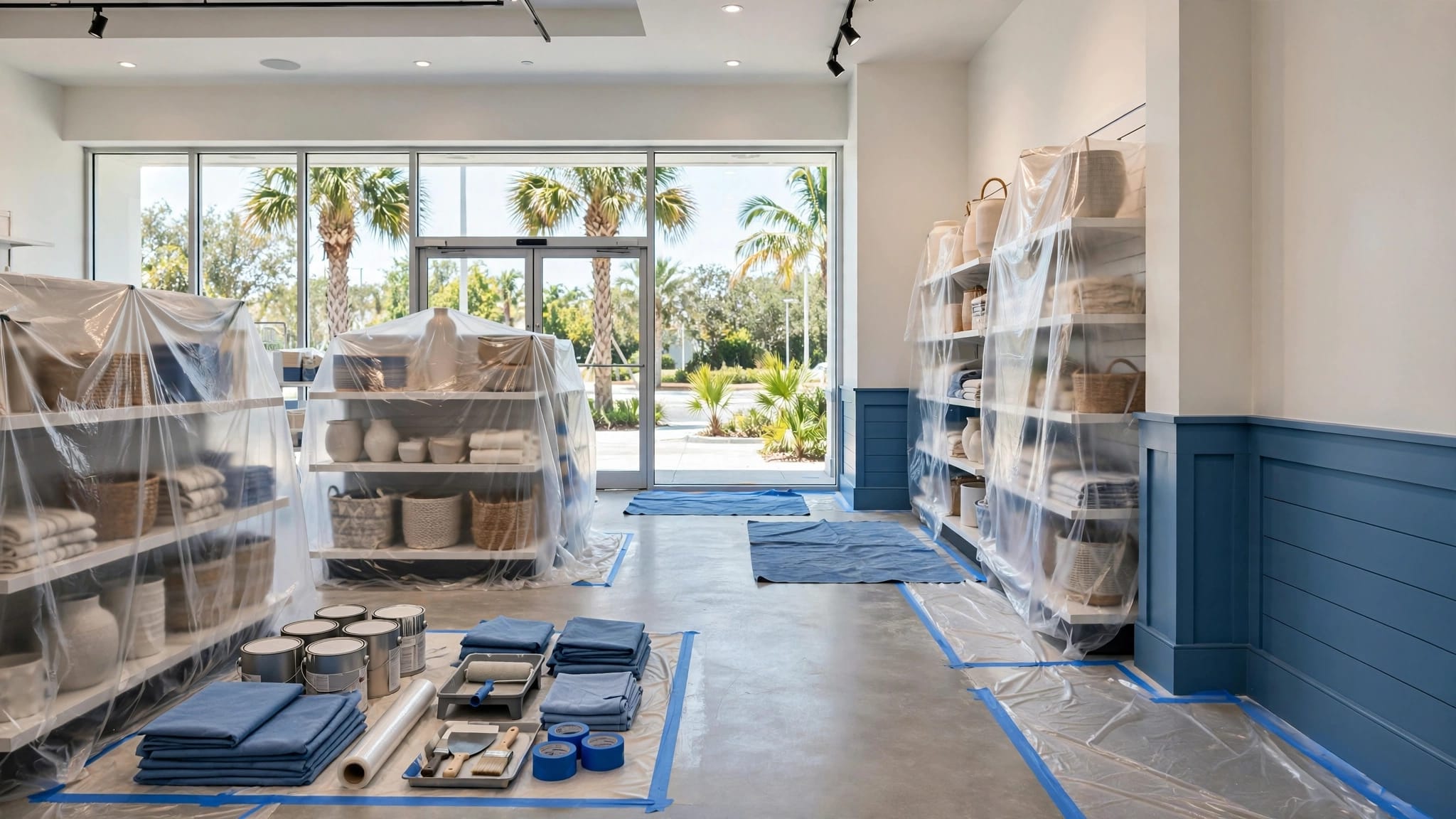
- Protect the property. Crews cover windows, walls, landscaping, vehicles, pool equipment, and outdoor furniture. They also plan for overspray, runoff, and safe movement around the roof.
- Clean the metal thoroughly. Salt, dirt, mildew, chalk, grease, and loose residue must be removed. Pressure washing may be appropriate in some cases, but excessive pressure can damage the finish or force water under panel laps.
- Remove loose coating and corrosion. Peeling paint needs scraping and feathering. Rust requires cleaning back to a sound surface, followed by the corrosion treatment or primer specified for the system.
- Complete repairs before priming. Crews replace damaged fasteners, repair or replace deteriorated sealant, correct flashing problems, and address loose or damaged panels. Any repair material must work with the existing metal and coating.
- Prime exposed or difficult surfaces. Bare steel, galvanized metal, aluminum, and glossy factory finishes may each require different primers. A small test area can reveal adhesion problems before the full application.
- Apply the finish under suitable conditions. The roof should be clean and dry. Florida's heat, humidity, afternoon storms, and dew can affect curing and recoat times. The crew should follow the product data sheet instead of relying on a calendar schedule.
- Check coverage and cleanup. The finished roof should have consistent coverage at edges, fasteners, seams, and repaired areas. The contractor should remove masking, collect debris, clear gutters, and inspect the property before leaving.
Application methods vary by roof profile and product. Spraying can provide even coverage over broad panels, while rollers or brushes may help with edges, fasteners, and detailed areas. The right method depends on wind conditions, access, roof geometry, and the coating manufacturer's instructions.
A contractor should also account for roof temperature. A panel may feel dry while holding enough heat or moisture to affect adhesion. Coating too close to rain can create wash-off, streaking, or uneven curing.
Timing, Maintenance, and Contractor Selection
Florida's drier months often make exterior work easier to schedule, but the weather on the actual project days matters more than the season. Crews need a reliable window without rain, heavy dew, or surface moisture. Afternoon storms can interrupt work during the wet season, so the schedule should include enough flexibility for proper curing.
When comparing estimates, look beyond the total price. Costs depend on roof size, pitch, stories, access, existing coating, corrosion, repairs, primer requirements, safety equipment, and the number of applications. A low bid that skips rust removal or uses no primer may fail sooner than a properly prepared system.
Request a written scope that includes:
- The inspection findings and repairs required before painting.
- The cleaning and surface preparation steps.
- The exact primer and coating system.
- Application thickness and number of coats, when specified by the product.
- Weather limitations and curing expectations.
- Warranty terms, exclusions, and maintenance requirements.
- Proof of insurance and details about cleanup and property protection.
After the coating cures, keep gutters clear and watch for new rust at fasteners, seams, and penetrations. Have the roof checked after major storms or when you notice interior staining, bubbling paint, or unexplained ceiling damage. Avoid walking on the roof unless a qualified professional determines that access is safe and necessary.
Good maintenance also means controlling nearby sources of contamination. Sprinklers that spray onto metal, overhanging branches, trapped leaves, and debris around gutters can keep sections wet longer than the rest of the roof.
Conclusion
A successful coastal roof coating begins with a sound roof and careful preparation. Salt, sun, humidity, and storm exposure make Florida metal roofs less forgiving of skipped repairs or incompatible products.
The strongest metal roof painting Florida results come from inspecting the substrate, correcting leaks and corrosion, selecting a compatible primer and topcoat, and applying the system during suitable weather. When the work follows that order, paint supports the roof instead of hiding problems that still need attention.
More featured articles...