What Is Pull-Off Adhesion Testing for Coatings?
Pull-off adhesion testing measures how strongly an industrial coating system resists separation under a pulling force. It gives facility owners evidence about bond performance that appearance alone can't provide.
The result can help a contractor assess a new coating or investigate an existing one. Its meaning depends on where the separation occurs and what the project specification requires.
What Pull-Off Adhesion Testing Measures
An industrial coating needs to stay attached to its substrate, whether that's steel, concrete, or another surface. In a multi-coat system, each layer also needs to bond properly to the layer beneath it.
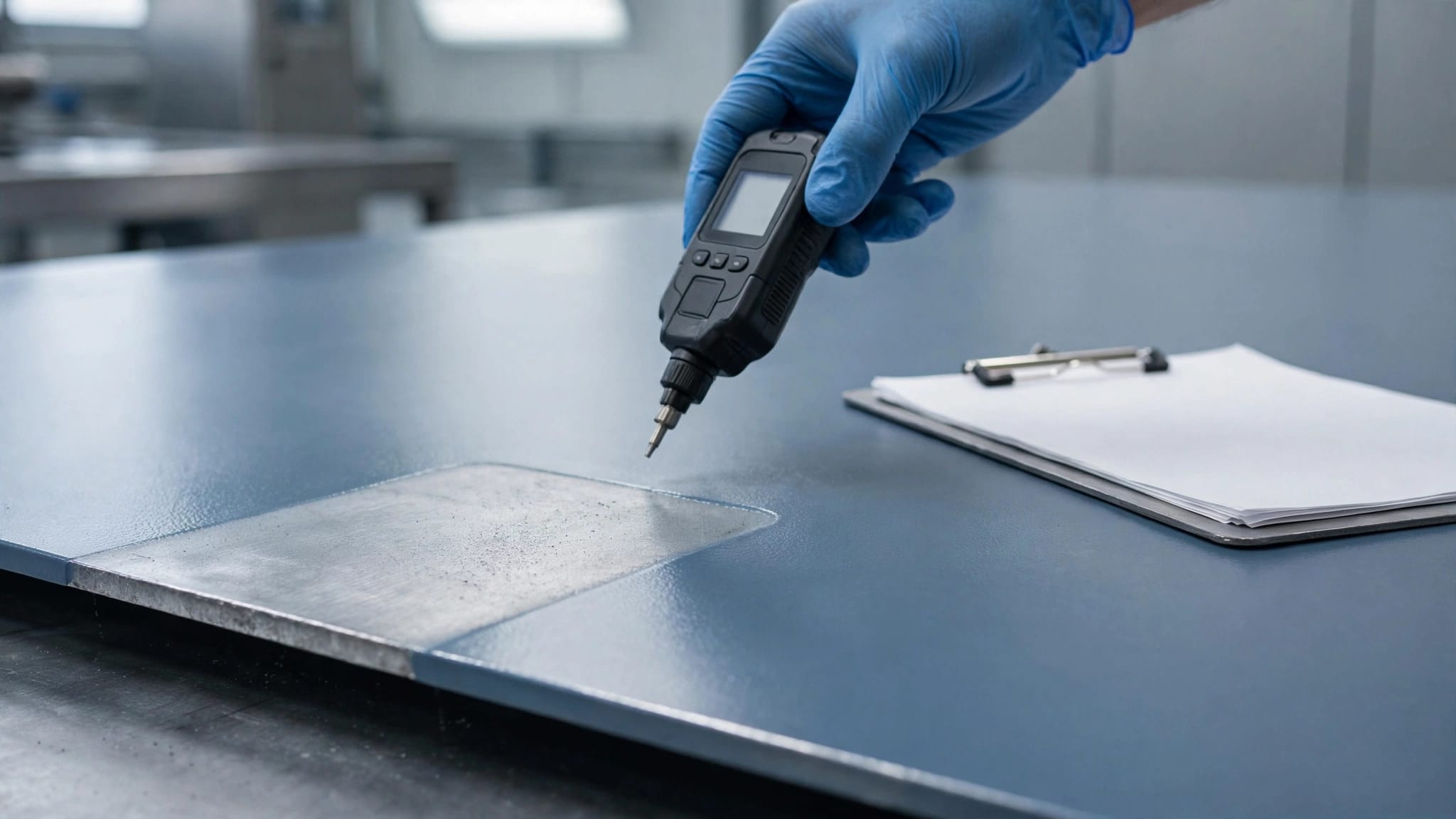
Pull-off adhesion testing evaluates the coating system's resistance to separation at a tested location. The result can expose a weak bond between coats, a weak area within a coating layer, or a problem at the substrate surface.
The finding applies to the tested spot. It doesn't automatically describe every part of a tank, floor, or structural member. Coating condition can vary with surface preparation, exposure, moisture, and application conditions.
When Industrial Facilities Use Adhesion Testing
Testing is useful when a project needs documented evidence of adhesion or when a coating's condition raises questions. The inspection plan should match the coating, substrate, and intended service.
Inspecting a new coating
A project specification may require adhesion testing before a coating is accepted or placed in service. This can matter for tank linings, industrial floors, and other surfaces where coating failure would disrupt operations or expose the substrate.
Timing matters because a coating that feels dry may not have reached its required cure. The project team should account for the product's cure requirements when planning inspection.
Investigating an existing coating
Peeling, widespread blistering, and corrosion beneath a seemingly sound finish can justify a closer look at adhesion. Testing can add evidence when a facility is deciding whether an existing coating may remain in place or needs removal.
A poor result doesn't identify the cause on its own. Contamination, moisture, inadequate preparation, and coating compatibility are among the conditions a qualified professional may need to investigate.
How to Interpret Adhesion Results
A useful report describes both the measured result and the failure mode , meaning where the separation occurred. Those details help the project team distinguish a coating problem from a substrate or test-related issue.
Separation between surfaces or within a layer
Adhesive failure occurs at a boundary. For example, a coating may separate from prepared steel, or one coat may separate from the coat beneath it. The location points the investigation toward that interface, but it doesn't establish why the bond was weak.
Cohesive failure occurs within a material rather than between two layers. It can appear within the coating itself or within the substrate, such as concrete. A substrate failure may indicate that the coating bond exceeded the strength of the material that separated, but acceptance still depends on the project requirements.
Test-related separation and mixed failures
Separation can also occur in the adhesive used for the test. That doesn't necessarily reveal the coating's bond strength. The applicable requirements determine how the inspector treats that result.
A tested area can show more than one failure mode. Recording the visible pattern helps preserve information that a single number can't convey. If findings conflict with the specification, document the location before deciding whether further evaluation or repair is needed.
What a Test Result Can and Can't Tell You
A stronger result indicates greater resistance to separation at the tested location under the selected method. A weaker one can identify an area that needs attention. Neither result alone proves how long the coating will last in service.
Use the project's written acceptance criteria to interpret findings. Avoid averaging away an unfavorable location unless the governing requirements allow it. An isolated result and a widespread pattern can call for different responses.
The surrounding evidence matters too. Surface preparation records, coating products, application dates, and cure conditions can help a qualified inspector investigate an unexpected finding. Where corrosion is extensive or structural members show deterioration, coating evaluation may need to be paired with an engineering assessment.
How Adhesion Fits Into a Coating Inspection
Adhesion is one part of coating quality control. Other measurements answer different questions, so they shouldn't be treated as substitutes for a bond assessment.
Dry-film-thickness readings show coating build and consistency. Surface-profile measurements describe the texture of prepared steel. Environmental records document conditions such as humidity and surface temperature during application.
For suitable tank linings, holiday testing for tank linings can identify pinholes and other discontinuities. It doesn't establish whether the lining is firmly bonded. A lining can have an adhesion concern without an obvious opening through its surface.
Visual inspection adds another useful record. Photographs and notes about rust staining, cracks, peeling, or blistering help connect measurements to the condition of the asset.
What Facility Owners Should Request
Before work starts, a coating proposal should identify the inspection scope, responsibilities, and acceptance requirements. It should also describe the substrate preparation, coating system, and application conditions. These details make it easier to compare bids that include different levels of inspection.
Keep findings tied to the asset and test location rather than relying on a general statement that the coating passed inspection. The record can include the result, failure mode, photographs, coating products, application dates, and any repairs. Our industrial coating inspection checklist provides a framework for organizing those records.
At EFC Painting, we provide industrial coatings and coatings inspections in Southwest Florida. A defined scope helps owners understand what work and documentation are included.
Put Adhesion Findings in Context
Pull-off adhesion testing gives you evidence about how a coating resists separation at a particular location. The failure mode adds context to the result.
Use those findings alongside the project requirements and the rest of the inspection record. Together, they provide a clearer basis for coating acceptance, maintenance, or further investigation.
More featured articles...