How to Protect Industrial Coatings During Installation
To protect industrial coatings during equipment installation, identify vulnerable surfaces, assign responsibility for protection, and inspect for damage before the equipment enters service. Scratches and contamination can compromise a coating that looked sound when it arrived.
A useful plan also gives the painting contractor time to repair damage and document the result. Start by identifying where installation work puts the coating at risk.
Identify Coating Risks Before Work Begins
Installation can expose finished equipment to contact that wasn't part of the coating's intended service. A forklift, hand tool, rigging component, or adjacent piece of equipment can damage a finish before the asset ever operates.
Look beyond visible scratches
Scrapes can remove the topcoat or expose the underlying metal. An impact can chip the coating and dent the substrate. Repeated rubbing may wear away a finish along an edge, support, or contact point.
The location matters as much as the appearance. Damage at a weld, fastener, pipe support, or low point that collects water can be harder to inspect and repair after surrounding work is complete. Note these areas on the equipment record before installation begins.
Include contamination in the assessment
Oil, grease, metal dust, and other residues can interfere with coating repairs or hide damage. Moisture and salt deposits also matter, especially for equipment exposed to outdoor conditions in Southwest Florida.
Identify nearby activities that could leave residue on finished surfaces. Tell the installation and coating teams which areas need attention, including surfaces that may become difficult to access. A clean-looking surface alone doesn't establish that it's ready for touch-up.
Assign Protection and Repair Responsibilities
A coating protection plan works best when the owner, installation contractor, and painting contractor understand their separate responsibilities. Put those responsibilities in the project scope rather than relying on a verbal agreement.
Define who owns each task
Name the people responsible for inspecting the equipment, reporting damage, and deciding whether work can continue in an affected area. The scope should also identify who arranges access, performs repairs, and accepts the finished coating.
For lifting and rigging, identify the coated areas that may be exposed to contact and include them in the lift planning discussion. The qualified personnel responsible for the lift must make safety decisions. Coating protection must never compromise the approved lifting plan.
Make costs and exclusions visible
A painting proposal may exclude access equipment, protection, primer, or repair work. An installation contract may also leave coating touch-ups outside its price. If neither scope includes them, a small repair can delay turnover while the parties settle responsibility.
Our guide to industrial painting contract requirements covers the details that help owners compare proposals. For installation work, ask for a clear description of inspection, damage reporting, repair labor, materials, and final documentation.
Document the Coating Before Installation
A baseline inspection gives everyone a shared record of the equipment's condition. Without one, it's harder to distinguish new damage from defects that existed before the installation crew received the asset.
Photograph surfaces and identify locations
Record the asset name or equipment number, inspection date, coating system, and accessible areas. Take an overall photo of the equipment and close photos of existing defects. Include a scale in close images when practical.
Use references another person can find, such as a nozzle number, weld, support, or location on an equipment drawing. Note scratches, chips, rust staining, blistering, and exposed substrate. Describe their approximate size and location rather than writing only "paint damage."
Keep the coating information with the record
Attach the product data sheets, coating specification, color information, and earlier inspection reports to the asset file. The record should identify the primer and finish coats when that information is available.
Also record areas that couldn't be inspected. A photo of an accessible exterior doesn't establish the condition of a concealed surface. Our industrial coating inspection checklist offers a framework for keeping observations and repair history together.
Respect the Coating's Cure Requirements
A finish that feels dry isn't necessarily ready for handling or service. Industrial coating products have different requirements for drying, recoating, and curing. Temperature and humidity can also affect how a system develops its properties.
Keep unnecessary contact away from fresh coating, and protect it from contamination during the required curing period. The coating manufacturer's instructions and project specification should establish the applicable conditions for that system. A general rule for household paint isn't a substitute for an industrial product's requirements.
The same distinction applies after touch-ups. A repaired spot may look complete while the coating still needs time to reach the required condition. Include the repair and its cure requirements in the project schedule so commissioning doesn't put the fresh work at risk.
Inspect During Installation, Not Only at the End
Intermediate inspections make damage easier to locate and document. They also give the coating contractor an opportunity to address affected surfaces while access is available.
The project team can use scheduled walk-throughs to review surfaces exposed to active work. Pay attention to lifting contact areas, edges, supports, connection points, and places where equipment or tools may have rubbed against the finish. Also look for contamination that could affect a later repair.
If a new defect appears, report it before cleaning or coating changes its appearance. Stop work in the affected area when continuing could worsen the damage or create a safety concern. The designated project contact can then coordinate the next step with the installation and coating teams.
Don't judge every mark by color alone. A scuff in the topcoat and a gouge exposing steel may look similar in a quick walk-through. The repair decision depends on the condition of the coating layers and substrate.
Record Damage So the Repair Is Traceable
A useful damage report tells the repair crew what happened, where to find it, and what was observed before work began. It also gives the owner a record for final acceptance.
Describe the defect
Photograph the affected equipment as a whole, then capture a close view of the damage. Record the date, equipment number, location reference, approximate dimensions, and visible condition.
Describe whether the area shows a scrape, chip, dent, loose coating, rust, or exposed substrate. Note nearby oil, water, or other contamination without assuming it caused the defect. If the damage appears to affect the metal itself, record that separately from the coating condition.
Escalate damage that may affect the asset
A coating repair can't restore lost metal or establish structural integrity. Deep pitting, a damaged support, distortion, or suspected damage near a load-bearing connection needs qualified evaluation before it receives a cosmetic touch-up.
Widespread blistering, poor adhesion, corrosion beneath an apparently sound coating, or repeated repair failure also warrants review by a qualified coating professional. The goal is to identify the cause and the repair scope before covering the area.
Plan Touch-Ups Around the Existing Coating System
Touch-up work should restore the specified protection, not merely hide a mark. The appropriate repair depends on the existing system, substrate, defect, and expected exposure.
Prepare and coat the damaged area
The coating contractor should remove contamination and prepare the damaged area using a method suited to the specification and existing coating. Loose or damaged material needs attention, and the edges of the remaining coating may require preparation for the repair.
If the original system is unknown, compatibility needs to be part of the repair scope. A convenient paint color doesn't establish that a product will bond properly or withstand the equipment's service conditions. Where bare metal is exposed, the repair may require primer as well as the specified finish coats.
Older coatings may contain hazardous materials. Evaluate that possibility before scraping, sanding, or otherwise disturbing an unknown finish.
Record the conditions and repair products
Application conditions matter alongside surface preparation. The contractor's records can identify the air and surface temperatures, humidity, coating products, batch numbers, application dates, and preparation method.
The specification should also state the required coating thickness and inspection method. Too little coating can leave inadequate protection, while excessive buildup can cause product-specific curing or performance problems. Keep the repair locations and results with the equipment's coating history.
Complete Inspection Before Commissioning
Final acceptance should cover the original coating and any repaired areas. Inspect for missed spots, chips, runs, pinholes, exposed substrate, and damage around fittings or access points. Include areas identified during the baseline and intermediate inspections.
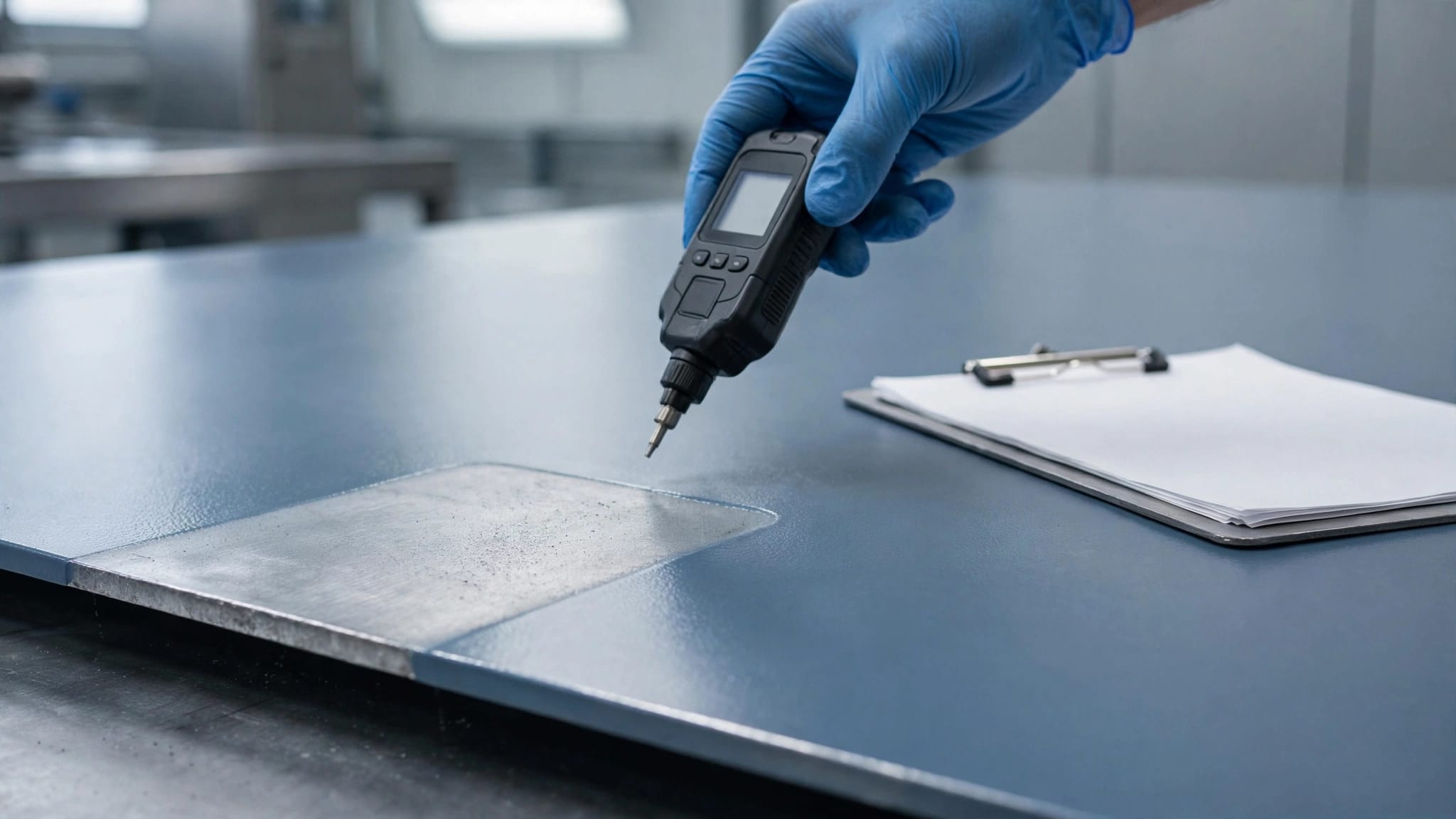
Where the project requires dry-film-thickness readings, use the specified procedure and calibrated equipment. Record the locations and results rather than relying on a general statement that the coating passed.
Some tank linings also require discontinuity testing under the project specification. Holiday testing for tank linings can find openings in the coating, but it doesn't establish adhesion or rule out hidden corrosion. Those concerns need separate evaluation.
Resolve deficient areas, complete required inspections, and document acceptance before commissioning. The closeout file should connect each repair location to its preparation record, coating products, and final findings. If an area remains inaccessible, identify that limit in the handover rather than treating it as inspected.
Protect the Finish Through Handover
A coating protection plan gives every contractor a clear way to report and resolve damage. The strongest record starts with the equipment's condition before installation and ends with documented repairs and acceptance.
At Everlast Finishes & Coatings, our industrial coating and painting services support Southwest Florida facilities with coating selection and inspection. A defined scope helps us coordinate that work with the rest of your project.
More featured articles...