Why White Haze Appears After Paver Sealing in Florida
White haze on freshly sealed pavers is frustrating, especially when you expected a deeper color and a clean finish. In Florida, humidity, rain, and heat can turn a good sealing job cloudy fast if moisture gets trapped.
The good news is that haze doesn't always mean the job failed. Sometimes it clears as the sealer cures. Sometimes it points to efflorescence, which comes from the pavers themselves. Knowing which one you're seeing helps you avoid the wrong fix.
Sealer whitening and efflorescence are not the same
The two problems can look similar at first, but they behave differently.
| Clue | More likely cause | What it looks like |
|---|---|---|
| Milky film after sealing | Sealer whitening, also called blushing | Cloudy patches or a foggy look on the surface |
| White powder or crust that wipes off | Efflorescence | Chalky residue that comes back after wiping |
| Haze after rain, dew, or high humidity | Trapped moisture | Uneven cloudy spots, often in shaded or low areas |
Sealer whitening happens when moisture gets under the coating or the sealer cures too fast on top while water stays below. Efflorescence happens when salts move through the paver and reach the surface. In other words, one problem sits in the sealer, and the other comes from inside the paver.
That difference matters because the fix is not the same. A cloudy sealer film may clear on its own if it's still curing. Efflorescence usually needs cleaning and drying before the next coat goes on.
Why Florida makes the haze show up more often
Florida gives pavers very little breathing room. Afternoon showers, sticky air, and morning dew keep moisture around longer than most homeowners expect. Strong sun can dry the top layer quickly while moisture stays in the paver, the joint sand, or the base below.
That's why paver sealer dry time expectations matter so much here. A surface can feel dry and still hold enough moisture to cloud the finish later.
Heat creates another problem. It can make the sealer skin over too fast, which traps moisture underneath. Then a cloudy patch shows up hours later, or even the next day. If the pavers were cleaned recently, sealed after a rain, or sealed during a damp stretch, the risk goes up again.
Low spots, shaded patios, and areas near sprinklers are common trouble spots. So are pool decks and driveways that hold water after storms. If moisture has nowhere to go, white haze usually finds a way to show itself.
If the haze gets worse after rain or overnight humidity, moisture is probably part of the problem.
What to do when the haze appears
Start with the simplest checks before you assume the sealer failed.
- Give the surface time if the seal is fresh. Some haze clears as the product cures. Keep people, furniture, and cars off the area for now.
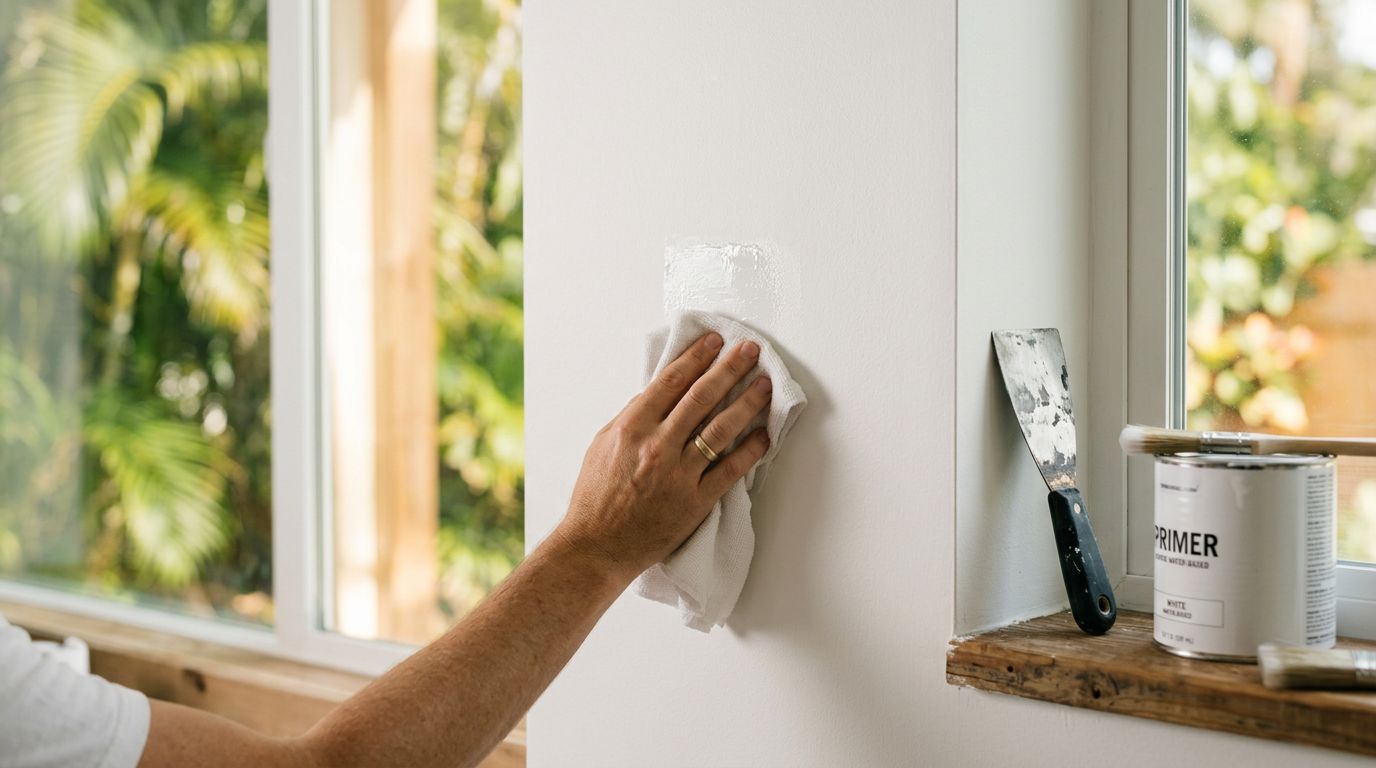
- Look at the residue. Wipe a small spot with a dry cloth. If you get white dust, efflorescence is more likely. If the cloud stays in the finish, the sealer itself is probably the issue.
- Stop extra moisture. Turn off sprinklers that hit the pavers. Clear standing water. Check whether runoff is pooling in one area.
- Avoid heavy washing right away. A strong rinse can make a curing problem worse. It can also spread loose residue across the surface.
- Get a closer look if the haze stays put. If the pavers still look cloudy after the normal cure time, the finish may need repair instead of patience.
A haze that shows up right after a rain shower usually points to moisture, not dirt.
When stripping and resealing make sense
If the haze is trapped under the coating, waiting won't fix it. The same goes for sealer that went on too thick, a surface sealed too soon, or an old coating that didn't bond well with the new one. In those cases, the existing sealer may need to come off before anything new goes down.
Resealing only makes sense when the pavers are dry, clean, and free of leftover salts or cloudy film. If the problem is still active, a new coat can lock it in and make the surface look worse.
Efflorescence can also fool people into resealing too soon. If the salts are still moving through the paver, the haze may come back under the new finish. That's why a small test area helps before anyone commits to the whole patio or driveway.
Prevention matters just as much as repair. Seal during a dry weather window. Use thin, even coats. Keep sprinklers away from the area. Most importantly, follow a realistic schedule for your climate, because when to reseal your pavers depends on sun, traffic, drainage, and how much moisture the surface holds.
What the white haze is telling you
White haze after paver sealing usually points to one of two things, trapped moisture in the sealer or efflorescence coming through the pavers. Florida's heat, humidity, and rain make both problems more likely, especially when the surface wasn't fully dry.
If the haze is new and still curing, it may clear on its own. If it stays cloudy, feels chalky, or keeps coming back after cleaning, the finish may need stripping or resealing. The right fix starts with knowing whether the problem sits on the surface or comes from below it.
More featured articles...