Theoretical Coating Coverage for Industrial Projects
Theoretical coating coverage estimates how much surface a coating can cover at a specified dry-film thickness under ideal conditions. It's a useful starting point for comparing products and planning material quantities.
Your project's practical coverage will usually be lower. Overspray, surface texture, extra coats, and material left in equipment all affect how much coating a contractor needs. Understanding those differences can help you compare industrial painting proposals with confidence.
What Theoretical Coating Coverage Tells You
Theoretical coverage describes the area a given amount of coating could cover if every bit of material reached a smooth surface at an even thickness. It assumes there are no application losses.
Manufacturers base the figure on the coating's volume solids and the target dry-film thickness. The figure is tied to a particular thickness: a coverage estimate without a thickness doesn't give you enough information to compare coating systems.
For a facility owner, the number is most useful as a baseline , not a purchase quantity. A contractor must still account for the surface, the application method, and the complete coating schedule.
A low material quantity can make a proposal look attractive, but it won't tell you whether the coating can be applied at the thickness required by the specification. The coating system and scope of work matter as much as the starting quantity.
Understand Volume Solids and Dry-Film Thickness
Two coating properties determine theoretical coverage: how much of the liquid remains as dry film and how thick that film needs to be.
Volume solids
Volume solids is the proportion of a liquid coating that remains as dry coating after the volatile portion has left the film. It is expressed as a percentage of volume.
At the same dry-film thickness, a coating with higher volume solids generally provides more theoretical coverage per gallon. That's because more of the liquid contributes to the dry film.
Don't substitute solids by weight for volume solids. They measure different properties, so using the weight figure for a coverage estimate can produce the wrong result. If thinning is permitted, added thinner also affects the wet mixture and its application.
Dry-film thickness
Dry-film thickness, often called DFT, is the thickness of the coating after it has dried. Industrial coating specifications commonly use mils in the United States. One mil equals one-thousandth of an inch, or 25.4 microns.
A thicker dry film requires more coating over the same area. For the same product, doubling the target thickness doubles the theoretical amount needed.
The specified thickness isn't a place to cut material costs. Too little film can leave a surface underprotected, while excessive buildup can cause curing or performance problems with some products.
Measure the Area That Needs Coating
Before estimating gallons, establish the actual paintable area. Floor area, building footprint, and equipment dimensions aren't automatically the same as coating area.
Include each surface called for in the scope. A steel structure may have columns, beams, rails, and connections with multiple exposed faces. Tanks may have roofs, supports, and fittings in addition to their main walls.
Work through a square-foot example
A rectangular wall measuring 40 feet wide by 20 feet high has an area of 800 square feet. If it has a 10-foot by 8-foot opening that won't be coated, subtract the opening's 80 square feet.
The remaining area is 720 square feet for one coat . If the same area receives two coats, the coating schedule covers 1,440 square feet of surface across those two applications. Each coat still needs its own material estimate.
Work through a metric example
A wall measuring 12 meters by 5 meters has an area of 60 square meters. Subtract a 3-meter by 2-meter opening, and the remaining paintable area is 54 square meters.
For tanks and irregular equipment, surface geometry takes more work than multiplying length by width. Curved walls, ends, supports, and attachments may need separate measurements. Keep the units consistent with the product information used for the estimate.
Turn the Surface Area Into a Material Estimate
Once you know the area and coating schedule, use the manufacturer's theoretical coverage information for the specified dry-film thickness. Divide the area for that coat by the applicable coverage figure to find the theoretical quantity.
That result assumes ideal application. It gives you a starting quantity for the coat, before allowances for loss and surface conditions.
Estimate each coat separately
A primer, intermediate coat, and finish coat can have different volume solids and required thicknesses. Calculate the theoretical quantity for each product instead of applying one figure to the whole system.
Carboline's published D102-24 examples include a three-coat epoxy system with a reported total thickness of 12 mils. That example doesn't establish the individual coat thicknesses for another project. Our guide to potable water tank lining systems explains why the complete system matters.
Separate the baseline from the allowance
A useful proposal distinguishes the theoretical material quantity from the additional amount planned for job-site conditions. That makes it easier to understand why two estimates differ.
The contractor may also need to account for package sizes and material reserved for specified repairs or touch-ups. Those quantities belong in the purchasing plan, even though they don't increase the coating's theoretical coverage.
Allow for Application Losses
Practical coverage describes what the crew can achieve on the job. It is lower than theoretical coverage when some material doesn't become part of the finished film.
The amount of loss depends on the work. A single allowance won't accurately describe every project, particularly when access, equipment, and surface geometry differ.
Overspray and equipment
Spraying can be efficient on broad surfaces, but some coating may miss the target. Wind can carry overspray toward operating equipment, vehicles, or neighboring property. In those conditions, containment or a different application method may be necessary.
Material can also remain in hoses, pumps, mixing containers, and spray equipment. Brushes and rollers hold coating as well, although their loss patterns differ from spraying.
Mixing and working time
Two-component coatings must be mixed in the specified ratio. Once combined, the material has a limited pot life. Coating that thickens beyond its usable working time may need to be discarded.
The project schedule should account for the amount a crew can apply during that period. Required induction time, access interruptions, and cleaning between batches can affect the amount of usable material.
Account for Surface Conditions and Detail Work
A coating estimate based on a smooth, flat panel can understate the material needed for an industrial surface. Roughness, pitting, joints, and complex shapes all change how coating is applied.
Rough or porous surfaces
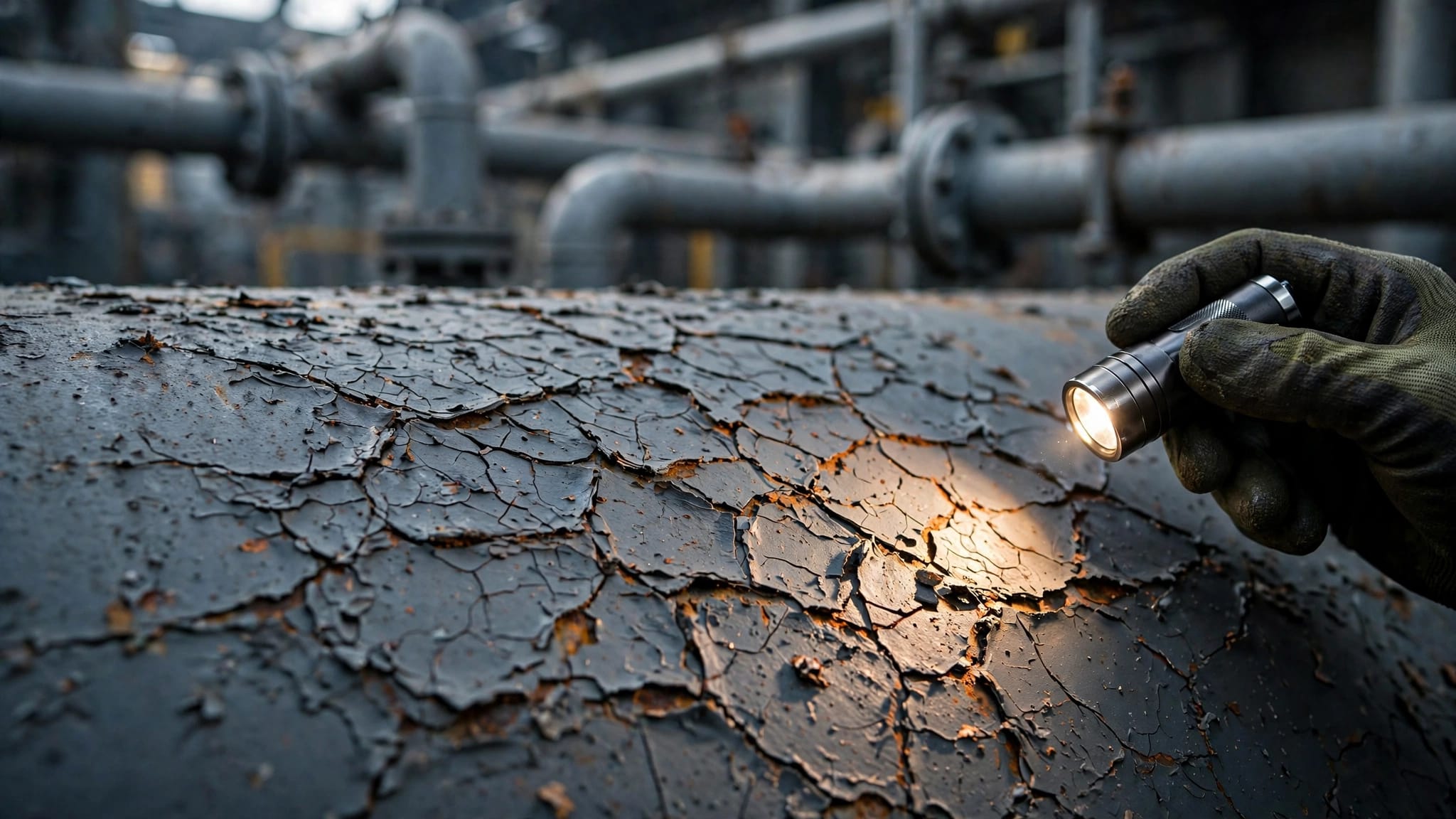
Abrasive-blasted steel has a surface profile, while concrete may have pores and texture. These features can increase coating demand compared with a smooth surface. Pitted steel may need additional material to cover the irregularities.
Preparation remains a separate requirement. Extra coating won't correct contamination, loose existing paint, or an unsuitable surface profile. The scope should identify the required cleaning and preparation before application begins.
Edges, welds, and fasteners
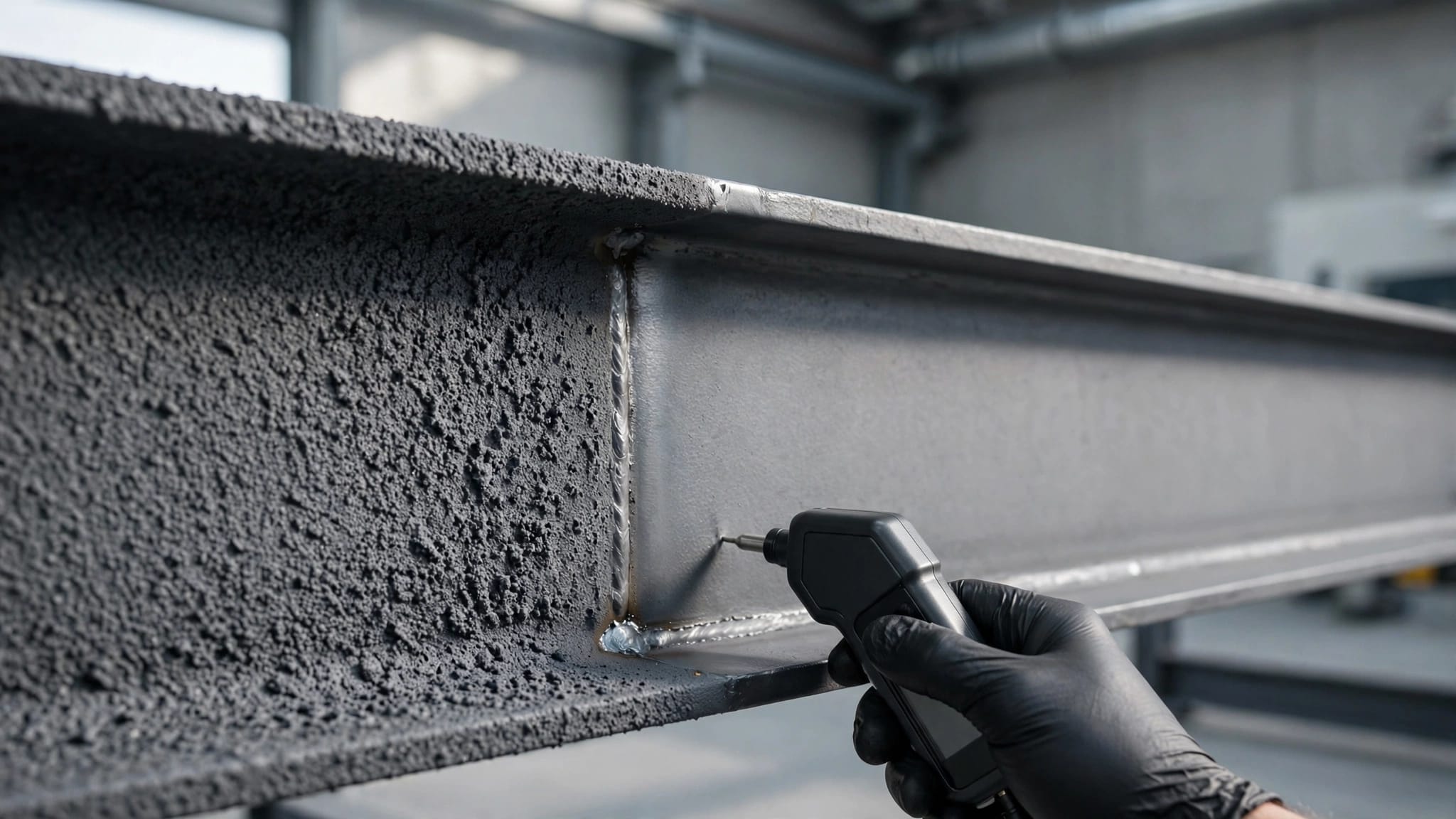
Welds, bolts, sharp edges, and other tight details can be harder to coat evenly than open panels. A specification may require a stripe coat on these areas before or between full coats.
That extra application uses material and labor beyond the broad-area estimate. It also needs to be identified in the proposal rather than assumed to be included in a single wall-area calculation.
Control Thickness During and After Application
A material estimate only helps if the finished coating meets the specification. Contractors use thickness measurements during and after application to assess the work.
Wet-film measurements
A wet-film gauge gives the crew an immediate reading while the coating is still wet. It helps applicators adjust their technique before covering a large area.
The relationship between wet and dry thickness depends on the coating's volume solids and any permitted thinning. Wet-film readings are useful controls, but they don't replace final dry-film inspection.
Dry-film inspection
After the coating reaches the appropriate stage, dry-film measurements show whether the applied film meets the specified range. Readings should follow the project procedure and use suitable, calibrated equipment.
A surface can look uniform and still have thin or excessively thick areas. Our guide to measuring dry-film thickness covers how inspection helps identify those problems.
Compare Contractor Proposals on the Same Scope
When you review estimates, look beyond the number of gallons. Two contractors may price different work even when both describe it as an industrial coating project.
A clear proposal identifies the surfaces, preparation, products, coat sequence, and required thickness. It should also describe access, protection, inspection, and any stripe coats or repairs included in the price.
Application conditions matter in Southwest Florida. Surface temperature, humidity, dew point, and rain protection can affect when a crew can apply a coating and how long it needs protection afterward. Our industrial coating dew point guide explains how those conditions affect the work.
At EFC Painting Contractors, we provide industrial coating services in Southwest Florida. A defined scope gives owners a better basis for comparing bids and planning around facility operations.
Plan With Practical Coverage in Mind
Theoretical coating coverage gives you a baseline tied to volume solids and dry-film thickness. Your purchase estimate also needs room for the losses and surface conditions that come with the actual job.
Start with measured surfaces and a defined coating schedule. Then compare proposals using the same preparation, application, and inspection requirements. That puts the material quantity in the context of the finished protection you're paying for.
More featured articles...