Should You Paint Before Solar Panels in Florida?
A panel array turns ordinary touch-up work into an access and scheduling issue. If exterior paint reaches fascia, soffits, gutters, or the roof edge, it usually makes sense to paint before solar panels go up.
But a new paint job can't solve a failing roof. First decide whether the roof, rather than siding or trim, needs repair or replacement. Then build the schedule around paint curing, permits, inspections, and panel clearances.
When to Paint Before Solar Panels in Florida
The scope of the paint work determines the answer. Lower stucco walls, doors, and ground-level trim generally remain accessible after a solar installation. However, array placement, roof conduit, and safety clearances can make upper elevations slower and more expensive to coat later.
If the work is limited to lower walls, doors, or detached structures, solar may go first without creating a paint-access problem.
Paint hard-to-reach exterior areas first
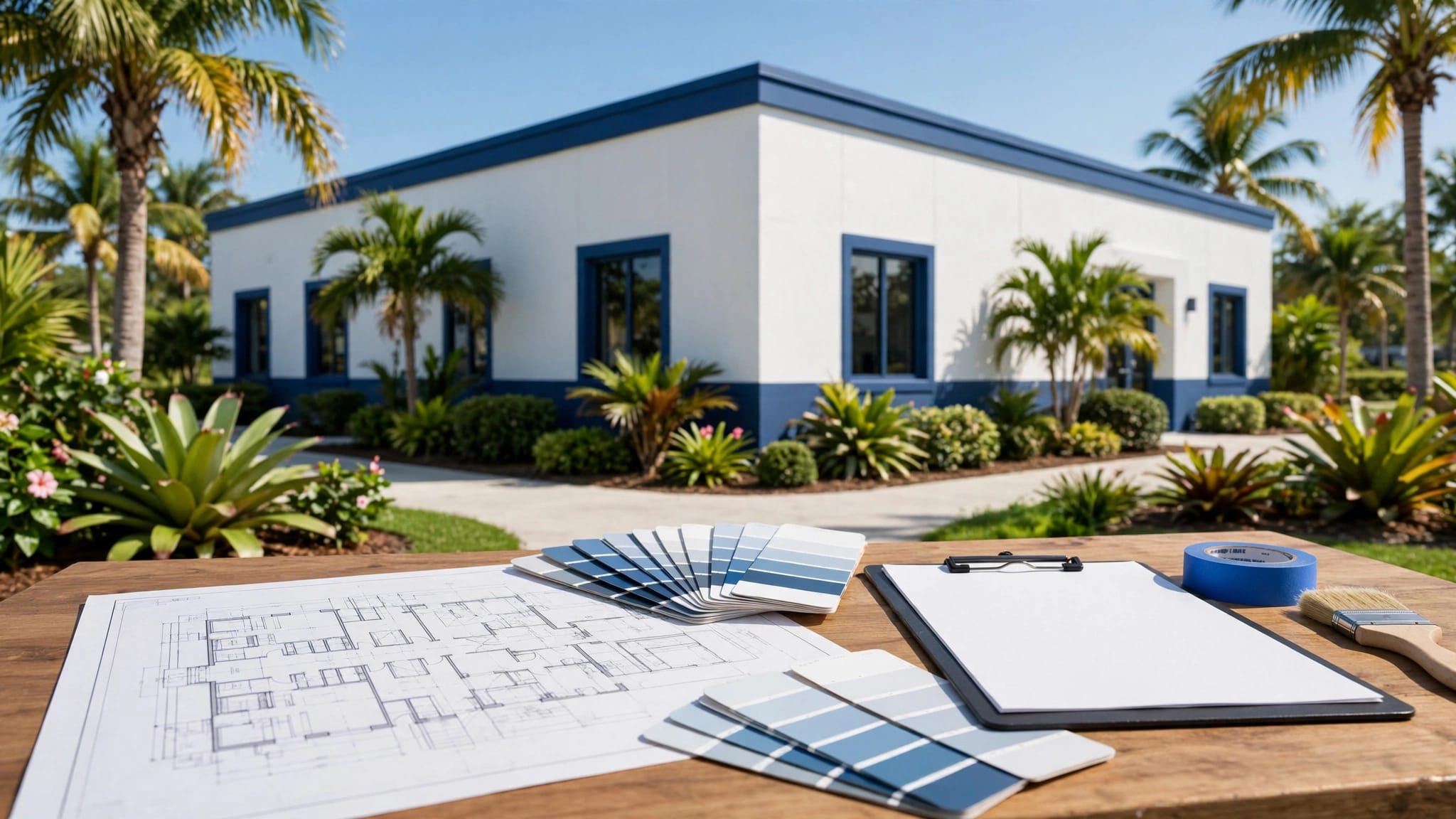
Fascia, soffits, eaves, upper gables, and gutters are easier to wash, repair, prime, and coat before panels are installed. Ask the solar contractor for the proposed array layout, setbacks, and conduit route. Give that drawing to the painting contractor, particularly if the work includes a two-story elevation or a screened lanai.
Full repaints are the clearest reason to paint before solar panels. Wet paint and uncured coatings should also stay clear of ladders, tools, and foot traffic. Follow the coating manufacturer's cure-time directions, since Florida heat doesn't make a damp surface ready for work.
Complete roof coatings before panel installation
If the job includes a roof coating or paint for concrete tile or metal, finish roof repairs, cleaning, primer, and coating before solar hardware goes on. The installer can then flash and seal each penetration against the finished roof surface.
Cracked tiles, corrosion, failed seams, and peeling coatings require correction first. In addition, keep solar hardware off a wet or uncured coating. The product data sheet controls cure time, and dew or recent rain can extend it.
Roof Condition Sets the Project Schedule
Solar panels often carry equipment coverage measured in decades. A roof with leaks, storm damage, failed underlayment, or a near-term replacement plan needs attention before the array goes on.
Check age alongside roof condition
No Florida code creates a single replacement age for every roof. Still, some Florida solar companies advise against installation when a roof has fewer than about 10 years of useful life left. Public Service Solar, for example, generally recommends reroofing at 15 years and advises caution below that remaining-life mark.
Calendar age is only a starting point. Ask a qualified Florida roofer to inspect the underlayment, flashing, fasteners, roof decking, drainage, and any active leak. Tile, shingles, and metal respond differently to heat, salt air, wind, and prior repairs.
Finish roofing before paint and solar
If reroofing is likely, complete it before exterior painting and solar. Roofing crews work above fascia, soffits, trim, and gutters, so ladders, debris, and flashing work can damage a fresh finish.
After cleanup and dry-out, paint the exterior, then schedule solar installation. Review the recommended roof replacement and exterior painting order before finalizing contractor dates. Select exterior colors after the final roof material and flashing colors are set.
Florida Permits, Weather, and Warranties Need Space in the Plan
Hiring dates alone do not control a solar schedule. Roof-mounted systems need local permit approval, structural details, and inspections. Those steps can affect when the roof is available to painters and installers.
Confirm permits and warranty boundaries
Orange County's solar checklist cites the 2023 Florida Building Code and lists electrical rough and final inspections. Miramar's package requires a final building inspection and roof-anchorage compliance documentation. Requirements differ by jurisdiction, so confirm who submits plans, provides product approvals, and schedules inspections before locking in paint dates.
Keep painters away from mounts, flashing, junction boxes, and conduit unless the solar company authorizes the work. A painter should never relocate equipment or seal an unapproved roof penetration.
Warranty terms also vary by company and contract. Tesla's Solar Roof limited warranty lists 25 years of product and weatherization coverage. Published SunPower installation materials describe a separate 10-year warranty for waterproof roof penetrations. Keep each contractor's written responsibilities with the project records.
Build in weather margin
Atlantic hurricane season runs June 1 through November 30. The usual peak falls between mid-August and mid-October. Humidity, afternoon storms, and overnight dew can delay washing, priming, and cure time.
Check short-range forecasts before crews start cleaning or coating the roofline. Leave time between coating completion, inspection, and solar work instead of rushing crews onto damp surfaces.
Put the Work Plan in Writing
Whether you own a Naples home or manage a Fort Myers commercial property, a site walk with the roofer, painter, and solar installer prevents crossed signals. A written plan to paint before solar panels helps every crew protect the same surfaces and schedule around the same access needs.
Before signing contracts, ask for:
- A roof assessment that identifies repairs, remaining service life, and material restrictions.
- A solar layout that shows panel areas, setbacks, conduits, and equipment locations.
- A paint scope that names the walls, fascia, soffits, trim, gutters, and roof coatings included.
- A schedule that allows for roof work, paint cure time, permits, inspections, and weather delays.
Property managers should also set tenant notices, parking controls, and access rules before lifts or material deliveries arrive. Detailed Southwest Florida exterior paint preparation helps identify cleaning, repair, and protection needs before crews begin.
A Sound Roof Makes the Decision Easier
Painting at the roofline before installation keeps access open and protects a finished exterior. Yet roof condition comes first, because a later reroof can require panel removal and reinstallation.
Have qualified roofing, solar, and painting professionals review the same plan before work starts. Paint before solar panels when the roof is sound and the scope includes hard-to-reach exterior or roof surfaces.
More featured articles...