How to Paint Stair Railings in Florida Homes
Handrails collect skin oils, dust, cleaning residue, and daily wear faster than most interior surfaces. When you paint stair railings , careful preparation matters more than adding a thicker coat at the end.
Florida homes add a few extra concerns. Humidity can slow drying, coastal air can leave salt residue near open doors and windows, and air-conditioning can keep surfaces cool while the coating dries. A clean surface, compatible primer, and realistic recoat schedule will help create a smoother, harder-wearing finish.
Assess the Railing Before Choosing Paint
Start by identifying the railing material and checking its current condition. Wood, painted wood, stained wood, and metal each need a slightly different preparation plan.
Check wood for damage
Look closely at the handrail, balusters, newel posts, and joints. Pay attention to cracks, loose sections, nail holes, water stains, and areas that feel soft when pressed. Interior railings usually stay protected from direct weather, but leaks, wet shoes, open windows, or past cleaning can still damage wood.
Small dents and nail holes can receive a compatible wood filler. Soft or crumbling wood needs repair before painting. Paint won't restore structural strength, and a loose railing needs attention before cosmetic work begins.
Sand rough areas until they feel smooth to the touch. For a sound surface, medium-fine sandpaper can remove minor imperfections without unnecessarily cutting into the wood.
Identify old paint, stain, or clear finish
Previously painted railings may have several layers with different adhesion levels. Look for peeling edges, bubbles, cracking, glossy patches, and areas where the old coating has worn through.
Stained or clear-coated wood needs extra attention because oils, wax, and slick finishes can prevent new paint from bonding. You usually don't need to strip a sound finish completely, but you do need to clean it, dull the sheen, remove failing material, and use a primer that matches the surface.
If the old coating flakes when scraped lightly, remove the loose areas and feather the edges with sandpaper. Painting over unstable material only hides the problem for a short time.
Choose a Finish That Fits a High-Touch Surface
Stair railings need a coating that can handle frequent contact and routine cleaning. Wall paint may look attractive at first, but it isn't always the right choice for a handrail that receives daily use.
Select the sheen and coating type
Satin is a common choice for interior stair railings because it offers a softer reflection while providing a washable surface. Semi-gloss gives more shine and can be easier to wipe, although it also highlights dents, sanding marks, and uneven repairs.
Review this Southwest Florida interior paint sheen guide when you want the railing finish to coordinate with nearby walls, trim, and stairway surfaces.
Many homeowners compare water-based acrylic urethane enamels with other trim coatings for this type of work. A product labeled for interior doors, trim, or high-contact woodwork is a better starting point than ordinary flat wall paint. This guide to interior doors and trim coatings covers similar decisions for other frequently touched surfaces.
Account for Florida's indoor conditions
High humidity can lengthen the time a water-based coating needs to dry and harden. Moisture also increases the chance of applying paint over a surface that feels dry but still holds condensation.
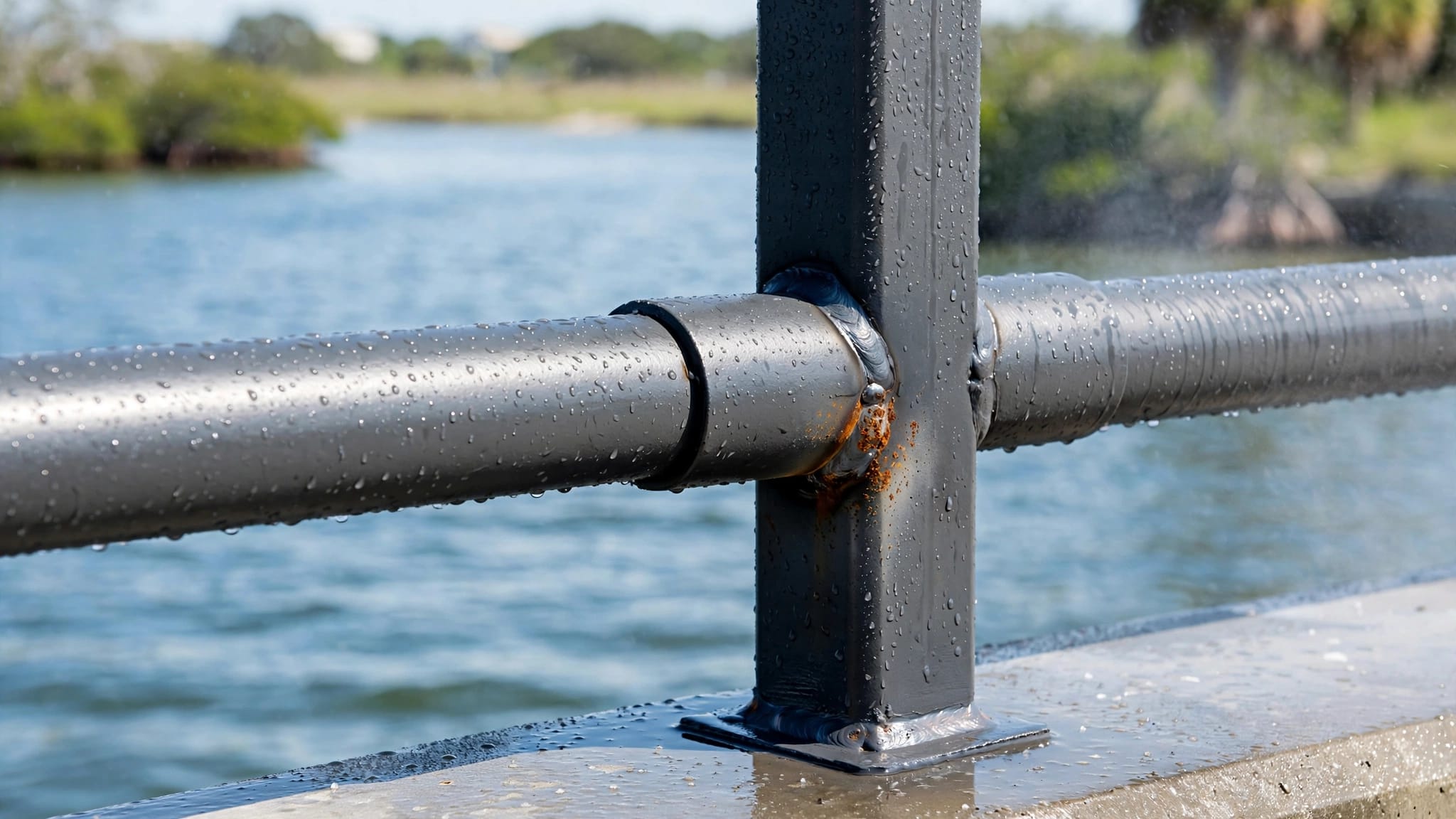
Coastal homes may have another issue. Salt-bearing air can enter through open doors and windows, especially near the Gulf, and residue can interfere with adhesion if it remains on the railing. If the railing is metal, review guidance on painting metal railings in Florida salt air.
Keep the room within the temperature and humidity range listed on the paint label. Normal air-conditioning can improve indoor conditions, but it doesn't replace surface cleaning or proper drying time.
Prepare the Railing Before Opening the Paint
Preparation takes time because a stair railing has many edges, curves, spindles, and contact points. Protect the surrounding stairs before you begin.
Clean, sand, and remove loose material
Follow this order for a dependable surface:
- Remove nearby decor, runners, and loose objects so you can reach every side of the railing.
- Vacuum dust from the rail, balusters, joints, stair edges, and nearby trim.
- Wash the railing with a cleaner suitable for the existing finish, then remove any residue with a clean damp cloth if the product instructions call for it.
- Allow the surface to dry completely before sanding.
- Scuff-sand glossy areas, worn patches, and previously stained sections until the surface has a consistent dull appearance.
- Vacuum again and wipe away sanding dust with a clean, lint-free cloth.
Don't saturate wood with cleaning solution. Excess water can raise the grain or soak into joints. Also, avoid sanding unknown old coatings aggressively until you understand what material you're disturbing.
Repair defects and prime where needed
Fill small holes and shallow dents, then sand the repairs flush after the filler dries. Reattach loose trim or balusters before painting. Caulk may help with small gaps between trim pieces, but it won't correct a loose handrail or damaged joint.
Prime bare wood, repaired areas, and surfaces where the old coating has been removed. Stain-blocking primer can help with tannin marks, knots, or water stains, while a bonding primer may be suitable for a hard, glossy finish. The primer label should state that it works with your substrate and intended topcoat.
Allow primer to dry according to its label. If the primed surface feels rough, lightly sand it and remove the dust before applying paint.
Paint adhesion starts with a clean, dull, dry surface. A premium topcoat cannot compensate for oil, dust, or loose old paint underneath it.
Apply the Paint in Manageable Sections
A methodical sequence helps prevent fingerprints, missed edges, and accidental contact with wet paint.
Start with difficult areas
Use a quality angled brush for corners, joints, baluster profiles, and the underside of the handrail. Work from the upper parts of the staircase toward the lower sections so falling dust or drips don't land on finished areas.
Apply a thin, even coat rather than trying to cover everything in one heavy pass. Thick paint can sag on vertical spindles and may stay soft longer in humid conditions. Keep a wet edge where practical, but don't overwork paint after it begins to set.
If the railing includes removable hardware, take it off before painting when possible. Otherwise, mask it carefully and press the tape edge down firmly.
Build coverage with light coats
Let the first coat dry for the time listed on the label. Then inspect the surface under the same lighting people use in the stairway. Lightly sand dust nibs or raised fibers only when the coating instructions allow it.
Apply the second coat in the same order. Some colors and surfaces may need additional coverage, especially when painting a light color over dark stain or a contrasting old finish. Avoid thickening the paint to force coverage.
Remove painter's tape while the final coat is still workable if the product instructions support that approach. Pull it back slowly to reduce the chance of lifting fresh paint.
Allow Extra Drying Time in Florida
Drying and curing are different stages. A coating can feel dry on top while remaining soft underneath, particularly when humidity is high or air movement is limited.
Manage humidity and air-conditioning
Keep doors and windows closed when outdoor air is damp, rainy, or heavy with salt. Use the home's normal air-conditioning or dehumidification instead of introducing a strong draft across the wet railing.
A cool interior surface may dry more slowly. If condensation appears, stop and allow the railing and room to dry before continuing. Avoid painting immediately after a major cleaning, shower, or other activity that adds moisture to the home.
Follow the product's recoat window
Read the label for dry-to-touch, recoat, and full-cure instructions. Those times vary by product, temperature, humidity, film thickness, and ventilation. A longer wait is sensible when the room feels damp or the coating remains tacky.
Don't judge readiness by touching the handrail repeatedly. Instead, check the recommended recoat window and look for an even, non-tacky surface. Keep heavy cleaning, sliding objects, and regular hand contact away until the coating reaches its stated cure time.
Keep the Stairway Safe During the Project
Stairs create a practical safety issue because people rely on the handrail for balance. Plan the work around the home's traffic instead of treating access as an afterthought.
Create a traffic plan
Schedule railing work when residents can use another staircase or remain away from the work area. If the home has only one stairway, divide the project into sections only when a secure, usable handhold can remain available. Never ask someone to grip a wet or soft coating.
Close the stairs with a physical barrier when the rail is unavailable. Tell family members, guests, workers, and delivery personnel that the area is closed. Keep children and pets away until the paint has cured.
Use painter's paper or canvas protection that lies flat and stays secured. Loose plastic, rugs, and drop cloths can slide on stair treads.
Keep tools and equipment controlled
Set brushes, trays, and containers where they can't fall down the stairs. Clean spills immediately, following the coating's cleanup instructions.
Never balance a ladder on stair treads or stretch sideways from an unsafe position. High foyers, tall walls, and difficult stair angles are good reasons to hire a contractor with suitable access equipment. Wear the protective gear listed on the product label, and provide ventilation without allowing wet paint to collect dust.
Know When to Hire a Painting Contractor
Professional help makes sense when the railing has heavy stain, multiple failing coats, damaged wood, ornate balusters, or difficult access. It also helps when the staircase must stay available in an occupied home.
A contractor should explain the preparation plan, repairs, primer, number of finish coats, products being considered, drying expectations, and how the crew will control foot traffic. Ask whether the estimate includes masking, sanding dust removal, cleanup, and protection for treads and nearby walls.
For homes in Fort Myers, Naples, and nearby Southwest Florida communities, a local contractor can assess the actual indoor conditions and surface instead of relying on a generic schedule. A written scope makes it easier to compare estimates and avoid surprises.
Conclusion
When you paint stair railings , the finish depends on more than color. Clean the surface, remove unstable coatings, repair damage, select a product made for high-touch trim, and give every coat enough time to dry and cure.
Florida humidity, coastal residue, and cool air-conditioned rooms can change the schedule. With careful preparation and a safe traffic plan, your stairway can receive a clean, durable finish without turning the project into a household hazard.
More featured articles...