How to Fix Surfactant Leaching on Florida Exterior Paint
Fresh exterior paint can look fine one day, then show white or tan streaks after a humid night or a light rain. In Florida, that can make a new paint job look damaged even when the coating is still sound.
That problem is usually surfactant leaching , and it shows up more often here because paint cures slowly in heat, humidity, and repeated moisture. The good news is that most cases clean up well once you know what you're looking at.
What surfactant leaching looks like on a Florida exterior
Surfactant leaching happens when water pulls water-soluble ingredients out of fresh paint and leaves them on the surface. Those ingredients often look like a faint sticky film, white streaks, or a dull patch that feels a little tacky.
On Florida homes, the marks often show up on the sides that get dew, wind-driven rain, or sprinkler mist. You may notice them on stucco, block, fiber cement, or trim that was painted recently. Dark colors can make the residue easier to see, but light colors get it too.
The timing is the big clue. Leaching usually appears soon after painting, often during the first few weeks. It can show up after a wet night, then fade once the wall dries. That is why many homeowners think the paint failed when it has not.
If the paint film is intact and the mark wipes away with mild cleaning, you're likely dealing with residue, not a ruined coating.
Why Florida weather makes it show up more often
Florida gives paint plenty of help and plenty of trouble. Heat speeds the surface dry, but humidity slows the cure underneath. Then evening dew or a quick storm re-wets the wall before the coating has fully set.
That wet-dry cycle is the perfect setup for surfactant leaching Florida homeowners see again and again. Fresh paint needs time to form a stable film. If moisture keeps moving across it, the soluble parts can rise to the top before the coating finishes curing. If you want a deeper look at timing, how humidity impacts paint drying explains why cure time stretches so much here.
Surface prep matters too. Stucco and masonry can hold moisture long after a rain. If paint goes on before that moisture leaves, the wall can keep feeding the problem from the inside out. That is why testing stucco moisture before painting is such an important step on Florida exteriors.
Poor weather timing makes the issue worse, but it does not always mean the painter did a bad job. Sometimes the coat was fine, then the weather pushed the residue to the surface. In other cases, the wall never had a fair chance to dry before painting started.
How to clean surfactant leaching without harming paint
The safest fix is gentle cleaning after the coating has had enough time to dry. Harsh scrubbing, bleach, and pressure washing can damage the finish or spread the residue around.
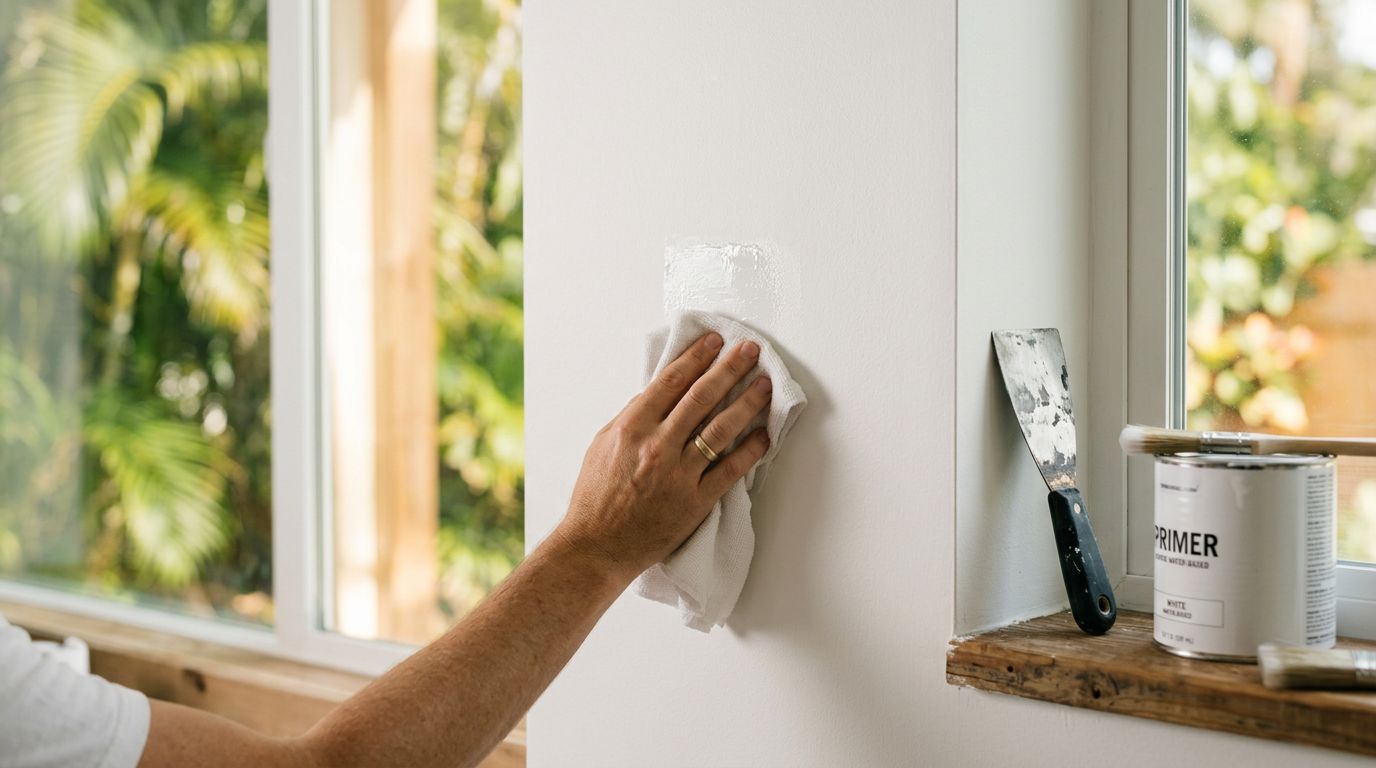
Start with a simple test spot. Pick a small area out of sight, then clean it with clean water and a soft sponge or microfiber cloth. If the film lifts, work slowly across the wall. If it does not, give the paint more drying time before trying again.
- Let the surface dry fully before you clean it.
- Rinse the wall with low-pressure water.
- Wash with a mild soap and water mix.
- Wipe the surface with a soft cloth or sponge.
- Rinse well so no soap is left behind.
- Let the wall dry, then check the result in daylight.
A little patience goes a long way here. If the residue comes back after the next wet night, the paint may still be curing. Clean it again only after more dry weather has passed.
Avoid power washing fresh paint. A strong spray can drive water into tiny openings and make the surface look worse. It can also leave swirl marks on softer coatings. For most homes, a gentle rinse and light hand washing are enough.
What if the marks still stay after careful cleaning? Then the issue may be older dirt, mildew, or a coating problem that needs a closer look.
Surfactant leaching, mildew, dirt, and paint failure are not the same thing
A quick comparison helps when the wall looks blotchy and the cause is not obvious.
| Problem | What it looks like | Common cause | Best first step |
|---|---|---|---|
| Surfactant leaching | White, tan, or glossy residue, often after rain on new paint | Water-soluble ingredients reaching the surface during cure | Gentle washing after the paint has had time to dry |
| Mildew | Dark spots, patches, or streaks, often in shaded areas | Fungal growth on damp surfaces | Clean with a mildew-safe solution and address moisture |
| Dirt or pollution | Gray film, runoff marks, or a dusty look | Airborne grime, dust, or soot | Wash with mild detergent and rinse well |
| Paint failure | Peeling, blistering, cracking, or flaking | Poor prep, trapped moisture, or worn coating | Inspect for deeper repair before repainting |
The timing still gives the strongest clue. If the marks appeared soon after painting and improve with a light wash, surfactant leaching is the likely cause. If the wall is peeling, bubbling, or cracking, the problem runs deeper than surface residue.
How to prevent it on the next paint job
Prevention starts before the first brush stroke. Florida weather can turn a decent paint schedule into a sloppy one if the timing is off.
Choose a dry window with enough daylight for the coating to set. Morning dew, afternoon storms, and long humid nights all slow the process. A good painting crew watches the forecast, the wall temperature, and the overnight moisture level before work begins.
The prep stage matters just as much. If the surface is stucco or masonry, make sure it is dry before primer or finish coats go on. Freshly cleaned walls need drying time too. Rushing that step is one of the fastest ways to invite residue problems later.
Keep irrigation in mind as well. New paint does not like daily spray from sprinklers, especially on the first few weeks after the job. If a wall gets hit every morning, it stays damp longer and the finish stays under stress. For more on that issue, sprinkler overspray and exterior paint wear shows why water control matters on Florida homes.
A few habits help a lot:
- Paint when the wall is dry, not just when the sky looks clear.
- Use quality exterior products made for humid climates.
- Let each coat cure for the full recommended time.
- Keep sprinklers, hose spray, and pressure washing away from new paint.
- Check shaded sides of the home more often, since they dry slower.
If a homeowner or property manager takes those steps, the chance of surfactant leaching drops fast. The finish lasts longer, and the wall keeps its color instead of wearing a chalky film.
Conclusion
Surfactant leaching is frustrating, but it usually has a simple answer. If the paint is still sound, gentle washing and a little more cure time often solve the problem.
The key is knowing what you are seeing. Florida humidity, rain, and dew can make fresh paint act up, yet residue is not the same as mildew, dirt, or true paint failure. Watch the timing, clean it the right way, and focus on dry prep before the next paint job. That is what keeps a new exterior looking clean long after the weather turns wet.
More featured articles...