How Long Exterior House Painting Takes in Southwest Florida
In Southwest Florida, exterior painting rarely follows a neat, one-size-fits-all schedule. Most homes take about 4 to 8 calendar days , but prep work, humidity, stucco repairs, and afternoon rain can push that longer.
That's why the exterior house painting timeline matters as much as the color choice. If your home has mildew, chalky paint, or HOA approval steps, the project can move in stages instead of one straight run. The good news is that a realistic schedule is easy to plan once you know what slows the job down.
What really controls the schedule
Three things shape the schedule more than anything else: the home's size, the condition of the current finish, and the weather. A small single-story house with solid paint moves faster than a two-story stucco home with peeling trim and patchwork repairs.
Southwest Florida adds its own layer. Heat, salt air, and daily humidity affect drying times. Afternoon thunderstorms do too. Even when the paint is ready, crews may pause to avoid trapping moisture under a fresh coat.
The amount of prep also changes the pace. If the house needs scraping, caulking, stucco patching, or mildew treatment, the job starts slower. A clean, well-kept exterior can move quickly. A tired one needs more time before the first brush stroke.
If you are comparing contractors, look for clear scheduling and site care. A good estimate should separate prep, painting, and drying time. That makes it easier to compare bids without guessing what is included.
A realistic exterior painting timeline by home size
The easiest way to think about timing is in phases. Prep time, active painting time, and drying or curing time are not the same thing. A crew can finish the visible work in a few days, while the total calendar time stretches because of weather or dry windows.
| Home type | Prep time | Painting time | Drying and curing | Typical calendar range |
|---|---|---|---|---|
| Small single-story home with light prep | 1 to 2 days | 1 to 2 days | 1 to 2 days | 3 to 5 days |
| Average stucco home with normal repairs | 2 to 3 days | 1 to 2 days | 2 to 4 days | 4 to 7 days |
| Larger home or heavy repair work | 3 to 5 days | 2 to 3 days | 3 to 5 days | 6 to 10 days |
These ranges assume normal weather and no long approval delays. They also assume the old paint is not failing badly.
The key point is simple. A job can take a week on the calendar even if the crew only works on it for part of that time. Dry time, rain delays, and repair work all add up.
Why prep takes longer than painting
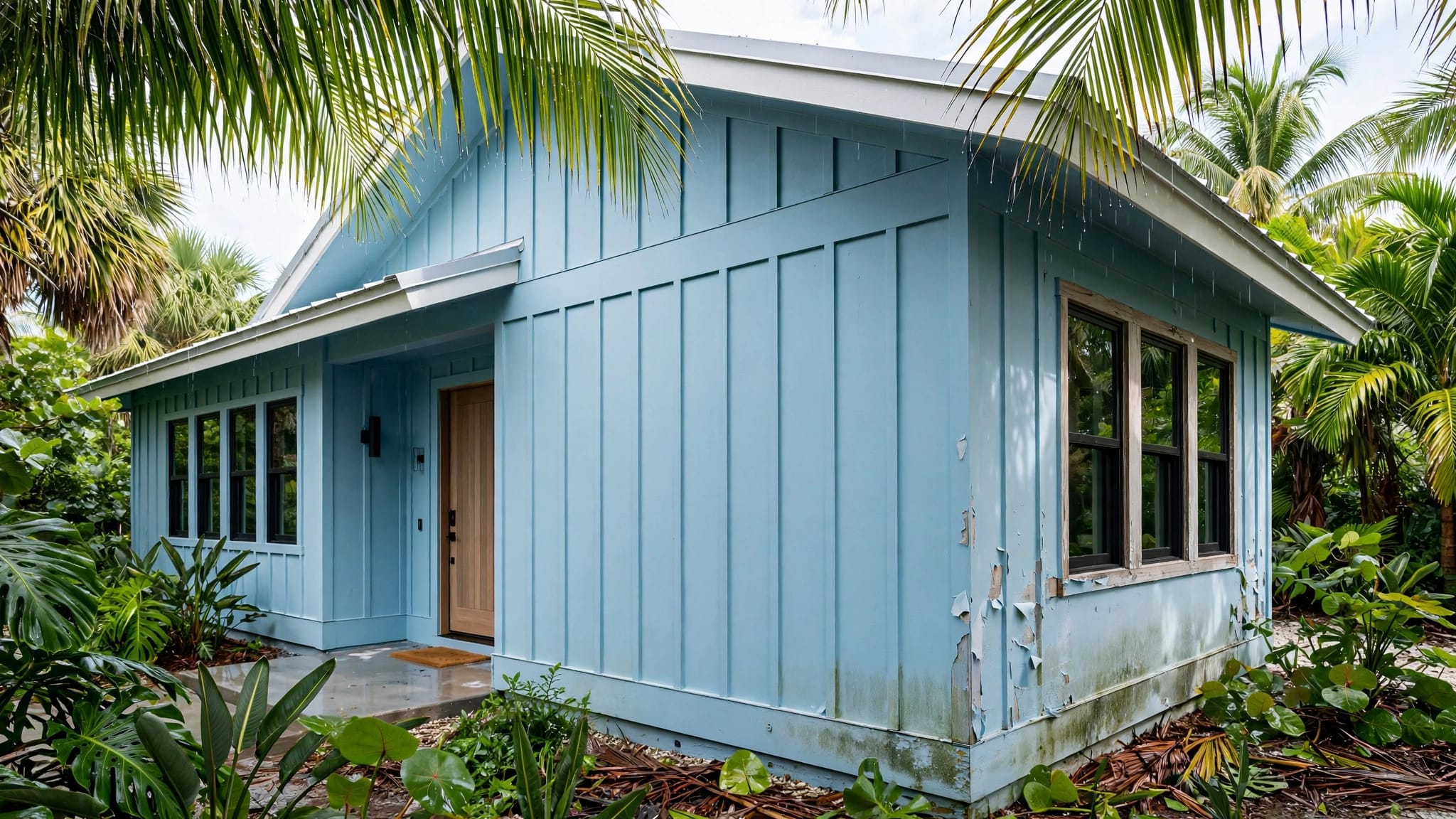
Prep usually takes the most patience. In Southwest Florida, pressure washing is only the start. Homes collect mildew on shaded walls, and old paint often turns chalky after years in the sun. That powder has to come off, or the new coating won't bond well.
Crews may also patch stucco, re-caulk joints around windows and doors, sand rough spots, and scrape loose trim paint. Metal railings, light fixtures, and fasteners can show rust too. Each of those issues adds time, but each one also matters.
Most delays happen before the first coat. Once the surface is sound, the rest of the job moves faster.
If the house has been neglected for a while, prep can take longer than painting itself. That sounds slow, but it protects the finish. A careful prep day often saves a repaint later.
How stucco and humid air slow the pace
Stucco is common across Fort Myers, Naples, and much of Southwest Florida. It looks simple from the street, but it behaves differently than wood siding. Stucco is porous, so it can soak up primer and paint unevenly. That means the crew has to watch coverage closely.
Cracks around windows, doors, and control joints also need attention. If the home has both stucco and wood trim, the schedule can stretch a bit more. Those surfaces dry at different speeds, and they often need different prep.
Humidity matters just as much. Paint may feel dry on the surface while staying soft underneath. Crews have to watch the forecast and stop before afternoon storms build. A pause is better than forcing a coat onto a damp wall.
That is why exterior painting in Southwest Florida often starts early in the day. Morning hours are cooler, drier, and easier on the finish. By late afternoon, the weather can turn fast.
Drying and curing are not the same thing
Drying means the paint is ready for the next step. Curing means the coating has hardened enough to handle weather and regular wear. Those are different stages, and humid weather stretches the gap between them.
A wall may be dry enough for a second coat in a few hours. Full cure can take days, sometimes longer if the air stays wet. Rain, dew, and sea air all slow the process.
Dry enough for the next coat and fully cured are not the same thing. In Southwest Florida, humidity can widen that gap.
This matters when windows need to stay closed, when trim needs touch-up time, and when homeowners want to move furniture back against fresh areas. It also matters when you compare warranties. If that part matters to you, understanding Florida exterior painting warranties can help you see how touch-ups and weather-related issues are handled.
The best time of year to paint in Southwest Florida
Late fall through early spring is usually the best window. November through April often brings lower humidity, fewer storm interruptions, and better drying conditions. That does not guarantee perfect weather, but it gives painters more usable hours.
Summer jobs are still possible. They just need more padding in the schedule. June through September brings higher humidity, more afternoon rain, and the start of hurricane season. That means more weather checks and more backup time.
If you want the most predictable schedule, book ahead for the cooler months. Early starts help too. Crews can often get more done before the heat and rain build.
HOA rules can add days before work begins
HOA approval can slow the project before anyone picks up a brush. Some neighborhoods require color samples, written approval, or notice before the start date. Others limit work hours, control parking, or require a final walk-through.
A few common delays look like this:
- Color approval from the board or management company
- Written notice before ladders or lifts arrive
- Work-hour limits that shorten the day
- Final inspection or signoff after the last coat
A week of delay is common when an HOA meets on a fixed schedule. In some communities, it can take longer. If you live in a gated neighborhood, access lists can also delay the first day if the crew's names are not submitted early.
The safest move is to get approval before the start date is locked in. That keeps the painting date from sitting idle while paperwork catches up.
How to keep the project on track
A smoother schedule starts before the crew arrives. Small planning steps can save real time once the job begins.
- Pick your colors early, especially if your HOA needs samples.
- Clear patio furniture, vehicles, and fragile decor before day one.
- Trim shrubs and trees that block walls or soak up overspray.
- Handle known repairs before the start date, not during the job.
- Ask how rain delays are handled, and how much buffer is built into the plan.
Choosing professional residential house painters who explain prep, masking, and cleanup clearly also helps. A crew that keeps the site orderly usually keeps the schedule tighter too.
A good estimate should tell you what happens if weather interrupts the work. It should also say whether the crew will return for touch-ups after curing. That kind of detail is a better sign than a vague promise of speed.
Conclusion
Most exterior house painting jobs in Southwest Florida take 4 to 8 calendar days , but that number only makes sense when you split the work into prep, painting, and curing. Stucco repairs, mildew, chalky paint, and afternoon storms can all change the pace.
The best schedule is the one that fits local weather instead of fighting it. If you plan for HOA approval, give the surface proper prep, and leave room for drying time, the finished job holds up better and looks cleaner longer.
More featured articles...