Cabinet Painting or Countertops First in Florida Kitchen Remodels
If you're updating both cabinets and countertops, the usual answer is simple, paint the cabinets first, then install the countertops . That order protects the new surface, gives the countertop crew a final layout to work from, and cuts down on touch-ups later.
In Florida, the timeline matters even more. Heat and humidity slow drying and curing, so a rushed schedule can leave you with soft paint, scuffed doors, or a countertop install that comes too soon.
The order that works best in most Florida kitchens
For most remodels, the cleanest sequence is cabinet prep, cabinet painting, drying time, countertop templating, countertop installation, then backsplash work. That keeps the cabinet footprint final before anyone measures stone or solid-surface tops.
If the cabinets stay in place, painting first is usually the safer move. If the cabinets are being replaced, the new boxes need to be set and leveled before the countertop team templates them.
If stone is being templated, the cabinets need to be final, level, and free of fresh tackiness.
That one detail saves a lot of frustration. A countertop installer can measure only what already exists, not what you hope to change later.
Why cabinets usually get painted before new countertops
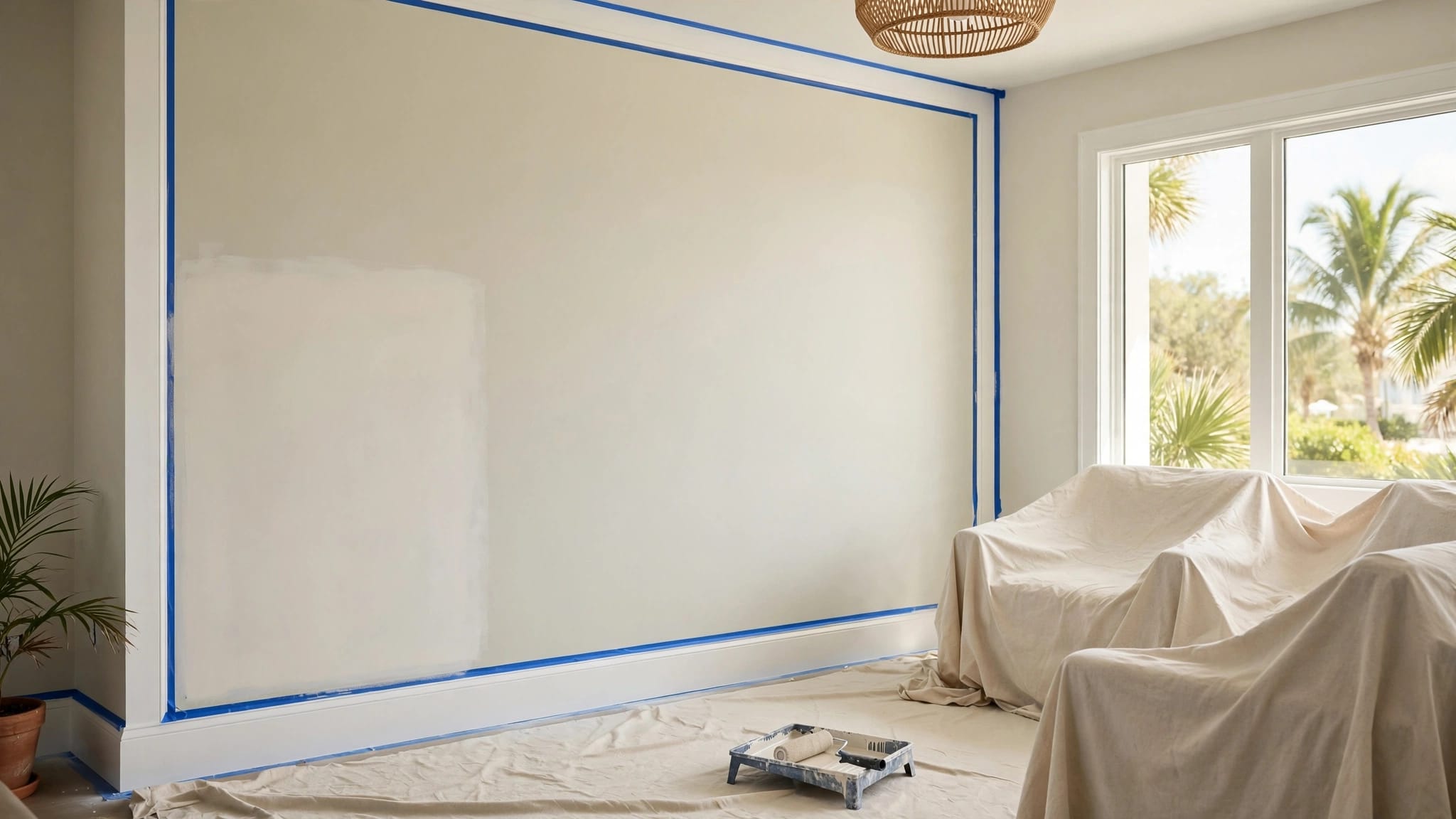
Cabinet painting is messy work. Sanding dust, masking tape, primer, and trim work can all damage a brand-new countertop if it goes in too early. Even a careful crew still needs room to move around.
Fresh countertops are also harder to protect than many homeowners expect. Quartz, granite, and other stone surfaces can chip at the edge during nearby prep work. A painted cabinet job creates less risk when the countertop is still out of the way.
There's another reason the order matters. Cabinet doors, drawer fronts, and exposed edges often get adjusted during prep. Those small changes can affect how the countertop sits and how the backsplash lines up.
If you're choosing finishes for a humid kitchen, the paint itself matters too. A cabinet-grade coating holds up better than standard wall paint, especially in rooms that see steam, spills, and daily cleaning. For more on that, see moisture-resistant cabinet coatings.
A good rule is this: if the work creates dust or requires sanding, do it before the countertop goes in. If the work depends on final measurements, wait until the cabinets are finished.
Florida heat and humidity change the schedule
Florida weather does not forgive a rushed paint job. Cabinets may feel dry to the touch long before the coating has hardened enough for normal use. That difference matters when you're trying to coordinate countertop templating and install dates.
Humidity slows curing, even in an air-conditioned kitchen. Doors can pick up fingerprints. Drawer fronts can stick. Edges can mar if they get handled too soon. If the countertop crew arrives while the finish is still soft, the project gets riskier.
A steady indoor temperature helps. So does gentle air movement and plenty of time between coats. Strong fans aimed at one spot can cause uneven drying, which is a problem on smooth cabinet faces.
For a closer look at timing in local conditions, Florida cabinet paint curing guide explains how long different stages can take in humid weather.
The takeaway is simple. A paint schedule in Southwest Florida should leave breathing room. If the cabinets need a week to handle safely, the countertop templating should wait until that window makes sense. Rushing the handoff between trades usually creates the delays homeowners were trying to avoid.
When the order changes
Not every kitchen follows the same path. The right order depends on what's staying, what's being replaced, and how the countertop is being made.
Here's a quick comparison:
| Project scenario | Better order | Why it changes |
|---|---|---|
| Existing cabinets stay, new counters go in | Paint cabinets first, then template and install countertops | The cabinet finish needs time to dry, and the counter should be measured after final paint work |
| Full cabinet replacement | Install cabinets first, then template countertops, then paint only if site finishing is needed | The new boxes set the final layout and height |
| Major carpentry repairs | Finish repairs first, then paint, then template countertops | Countertop measurements need a stable cabinet structure |
| Stone slabs with tight templates | Finish cabinet painting, allow proper dry time, then template | Stone is cut to the final cabinet footprint |
| Backsplash is part of the plan | Paint cabinets first, install countertops next, backsplash last | The backsplash often keys off the finished counter edge |
The table shows the same theme again and again. Final structural work comes first, then painting, then countertop measurement and install.
A few real-world cases help make it clearer:
- Full cabinet replacement means the new boxes are the priority. Painting old cabinets does not make sense if they're coming out.
- Extensive carpentry can change wall lines, filler pieces, and end panels. Those changes should happen before countertop templating.
- Stone countertop templating needs the cabinets to be set, level, and complete. Even small shifts can affect the fit.
- Backsplash timing usually waits until the countertop is installed, since the counter gives the bottom edge a clean reference line.
If you want a better sense of how long the cabinet side of the job takes, the typical cabinet painting timeline shows why careful scheduling matters in Southwest Florida homes.
How to keep the remodel moving without rework
A smooth kitchen project starts with one clear plan. First, decide whether the cabinets are staying, being repaired, or being replaced. That answer shapes everything else.
Next, ask when the countertop templater will visit. If you're using stone, templating should happen only after cabinet painting is done and the finish has had enough time to settle. That keeps the measurements accurate and protects the paint.
After that, build in a cushion for Florida weather. Even a good paint system needs time in warm, humid conditions. A schedule that looks fine on paper can turn tight fast if the kitchen is too damp or the paint needs extra cure time.
Finally, leave room for touch-ups after the countertop and backsplash work. Small dings happen. A smart contractor plans for them instead of pretending they won't happen.
A simple sequence works best:
- Finish cabinet repairs and prep.
- Paint the cabinets and let them dry properly.
- Template the countertops after the cabinet layout is final.
- Install the countertops.
- Add the backsplash and complete touch-ups.
That order reduces conflict between trades. It also gives each step a clean surface to work from.
Conclusion
For most Florida kitchen remodels, cabinet painting comes before countertop installation . That sequence protects the finish, gives the countertop team final measurements, and leaves less room for damage during the messy parts of the job.
Florida heat and humidity make the timing even more important. Paint that looks dry can still be soft underneath, so the schedule should account for cure time, not just drying time. When the cabinets are final, level, and fully ready, the countertop and backsplash work goes much smoother.
A good remodel timeline is like a clean paint line, it works because each step lands in the right order.
More featured articles...