Cabinet Paint Cure Time in Florida Humidity
A cabinet door can feel dry in a day and still stay soft for weeks in Florida. That gap is where most finish problems start, especially when summer moisture hangs in the air after sunset.
If you open drawers too soon, stack dishes early, or wipe the finish with the wrong cleaner, the surface can dull, mark, or stick. The good news is that you can plan around cabinet paint cure time and avoid the usual mistakes.
Dry to the touch is not the same as cured
Paint dries first, then it cures. Drying is when water or solvent leaves the coating. Curing is when the film hardens all the way through.
That difference matters on cabinets because they get touched, rubbed, and cleaned every day. A finish can feel fine at lunch and still dent when a plate hits it that night.
A cabinet can feel ready long before it is ready for normal use.
In Florida humidity, the outside of the paint often sets before the layers below it harden. That is why a cabinet can look finished and still leave a fingerprint. It may also feel slightly tacky around edges, panel grooves, and hardware holes.
The touch test helps a little, but it does not tell the full story. If the paint feels cool, soft, or gummy, it still needs time. If doors stick to bumpers or close with a faint drag, the cure is not done yet.
Realistic cabinet paint cure times in Florida humidity
Most cabinet coatings have three time frames that matter: dry to the touch, light handling, and full cure. Florida humidity stretches all three, especially in kitchens with weak airflow.
The chart below gives practical ranges for many cabinet paints in humid homes. It is a guide, not a promise. The product label always comes first.
| Stage | What it usually means | Typical timeline in humid Florida |
|---|---|---|
| Dry to the touch | The surface feels dry, but it can still mark | 4 to 12 hours |
| Light handling | You can open doors carefully and avoid pressure | 3 to 7 days |
| Normal use | Routine kitchen activity is safer | 2 to 4 weeks |
| Full cure | The finish is much harder and more resistant | 3 to 6 weeks |
For many water-based cabinet enamels, full cure lands near the one-month mark in Florida homes. In a room with steady AC and good airflow, the shorter end of that range is realistic. In a damp kitchen with lots of cooking steam, expect the longer end.
Some specialty coatings take even longer. Oil-based products, heavy build finishes, and slower-drying enamel systems can need extra time in muggy weather. If the label says 30 days, follow that. If it says 45 days, plan for 45 days.
The safest habit is simple. Count the cure window from the final coat, not from the first day the doors looked dry.
What slows cabinet curing in Southwest Florida
Humidity is the biggest reason cabinet paint cures slowly here. Moist air keeps evaporation down, and overnight dampness can reset the process each evening. That is why a finish may feel better at noon and stickier by the next morning.
Temperature matters too, but only to a point. Warm air helps paint release moisture, yet heat without airflow can trap damp air near the surface. A closed-up kitchen in May or June can slow the finish more than a cooler room with better ventilation.
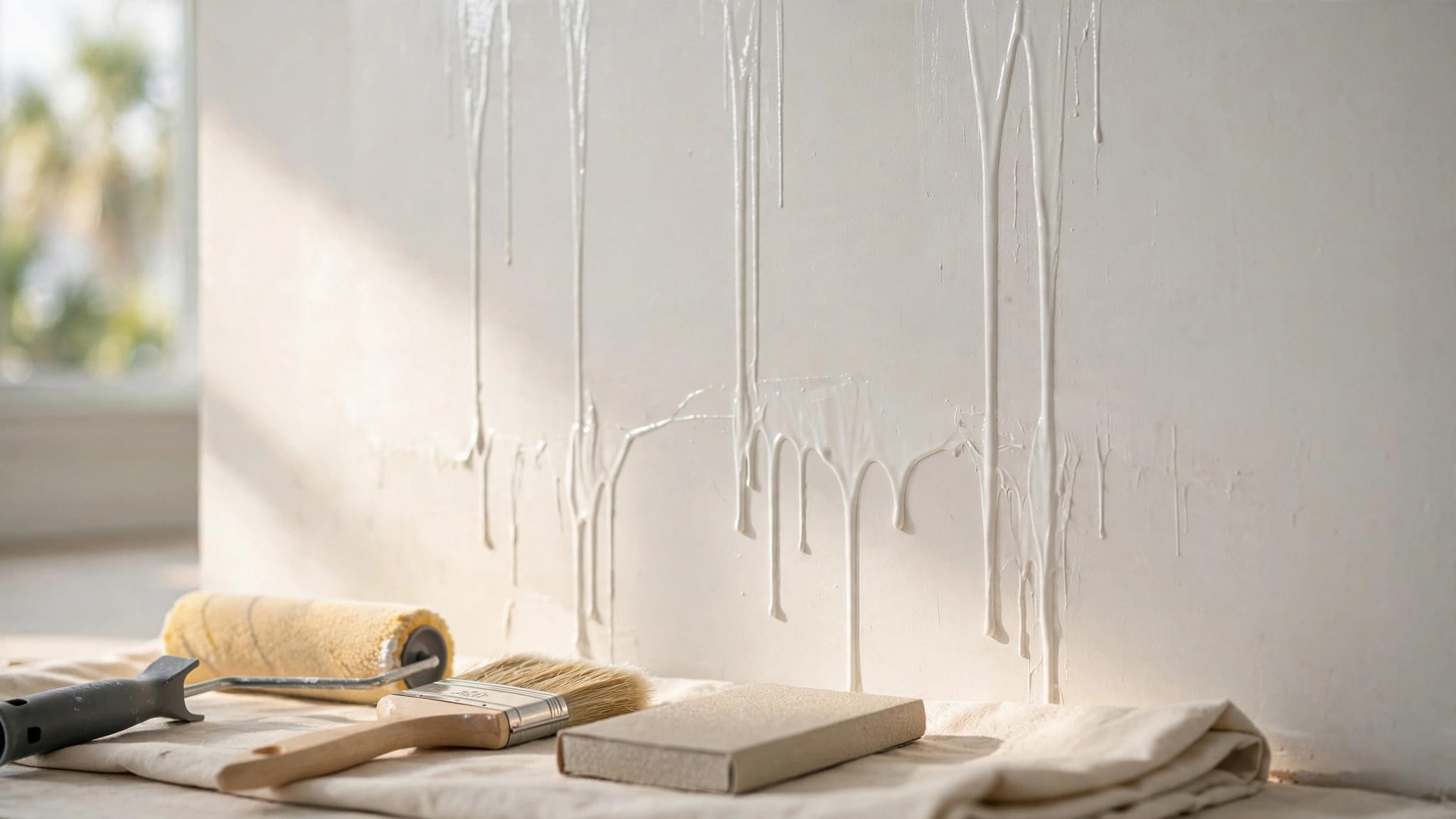
Coat thickness plays a role as well. Thick coats look rich, but they hold moisture longer. The top layer can skin over while the lower layer stays soft. That is where dents, print marks, and cloudy spots often start.
Prep and product choice matter just as much. Grease, dust, and old wax can weaken the bond. So can a wall paint that was never made for cabinets. If you are still choosing a product, best cabinet paint for humid Florida kitchens is more important than a fast marketing claim.
A good contractor should also explain the cure plan before the job starts. Ask how many coats they use, how they handle humidity, and when they want the kitchen back in normal service.
Safe ways to speed the process without damaging the finish
You can help cabinet paint cure faster, but the goal is controlled drying, not a rush job. Too much heat can harden the top layer too fast and leave the film below it soft.
- Keep indoor humidity down. Run the AC, and use a dehumidifier if the room stays damp. A target near 40 to 50 percent relative humidity is helpful.
- Move air gently. Ceiling fans, box fans, or HVAC airflow help the coating release moisture. Keep the air moving, but do not blast one spot with a strong fan.
- Leave doors and drawers open when you can. Fresh air around the panels helps curing, especially during the first few days. Keep the space clean so dust does not settle on soft paint.
- Skip wet cleaning too soon. Use a dry microfiber cloth for light dust. Wait for full cure before using sprays, harsh cleaners, or scrubbing pads.
- Follow the recoat and reuse times on the label. The manufacturer's instructions should always take priority. If the paint maker says to wait longer, wait longer.
If you are also repainting nearby walls, the interior paint sheen guide for Southwest Florida homes can help you choose a finish that handles kitchen moisture and cleanup better.
A few habits make a real difference, too. Avoid slamming doors. Do not hang heavy organizers right away. Keep small appliances from pressing against painted faces. Those little impacts can leave a mark before the film hardens.
When cabinets are ready for normal use
The first few days are the most delicate. You can usually handle cabinets gently after they dry, but normal kitchen traffic should wait longer. In many Florida homes, light use feels safe after about a week, while everyday use is better after two to four weeks.
Even then, the finish may still be curing under the surface. That means you should still avoid heavy scrubbing, sticky shelf liners, and rough contact with pans or dishes. If a thumbnail leaves a mark, the paint needs more time.
For a freshly painted kitchen, patience saves the finish. A cabinet that looks fine on day three can still be vulnerable on day twenty. The calendar matters more than the look.
Conclusion
Florida humidity makes cabinet paint cure slower than most homeowners expect. A finish may feel dry fast, yet still need weeks to harden fully. That is why cabinet paint cure time matters as much as the paint color itself.
The best results come from the right product, steady airflow, low indoor humidity, and enough time. Follow the manufacturer's directions first, then give the cabinets the full cure window before you put the kitchen back to work.
A little patience now keeps the finish looking clean long after the paint stops feeling tacky.
More featured articles...