How to Paint Over Old Elastomeric Coating in Florida
Old elastomeric coating can hold up well in Florida, until it doesn't. Strong UV, heavy humidity, salt air near the coast, and sudden afternoon rain all punish weak prep fast.
If you want to paint over elastomeric coating and get a finish that lasts, the old coating has to be sound, clean, and compatible with the new system. That matters even more on stucco and masonry, where heat and moisture move through the surface every day.
Start by judging the existing coating, because the new paint is only as good as what sits under it.
Check the old coating before you buy paint
Elastomeric coating is flexible, which helps bridge fine cracks on stucco and masonry. That same flexibility can hide problems, though, so you need a close look before any repaint starts.
Look for peeling, blistering, chalking, water stains, and cracks that keep opening. Also check the south and west walls, since those take the hardest sun. In coastal areas, salt can build up on the surface and weaken adhesion.
This quick comparison helps sort a repaintable surface from one that needs more work:
| Surface condition | What it means | Best next step |
|---|---|---|
| Tight, clean, lightly chalky | Recoat may work with prep | Wash, test adhesion, prime if needed |
| Peeling or flaking spots | Bond failure is already starting | Scrape back to sound material |
| Blisters or soft areas | Moisture may be trapped | Find and fix the moisture source first |
| Wide cracking or patchy wear | The old system is breaking down | Repair, then re-evaluate the coating |
If the surface still looks strong after cleaning, you may have a good repaint candidate. If it feels weak or keeps shedding powder, the job needs more than a new color.
If the old coating is failing, new paint won't hide it for long.
If you're trying to judge timing, when to repaint stucco in Florida is a useful place to compare wear patterns with local weather exposure.
Run a simple adhesion test
A painted wall can look fine and still fail under tape. That is why an adhesion test matters before you commit to a full repaint.
Use a few test spots on different sides of the building. Pick areas that get sun, shade, and splashback, because Florida walls don't age the same way.
- Clean a small test area and let it dry fully.
- Score a tiny crosshatch with a sharp blade in a hidden spot.
- Press quality tape over the cuts and smooth it down.
- Pull the tape off with one clean motion.
- Check for flakes, lifting, or powder on the tape.
If the coating lifts easily, the bond is weak. If it stays put, the surface may be a candidate for repainting after the right prep. Still, don't stop there. Rub the area with your hand. Heavy chalk on your palm means the surface needs more cleaning or a primer made for the job.
Test more than one spot if the wall has different exposures. A shaded wall may hold up better than a sun-baked one. A coastal wall may show more wear than an inland side.
Prep the surface for Florida weather
Prep is where most repaint jobs succeed or fail. Florida makes that work harder, because humidity slows drying, mildew comes back fast, and afternoon storms can ruin a half-done wall.
Follow a clear prep sequence:
- Wash the surface to remove dirt, chalk, salt, and mildew.
- Let the wall dry fully before scraping or patching.
- Scrape away loose or hollow-sounding coating.
- Patch cracks, voids, and small damaged spots with a compatible repair product.
- Recheck the repairs after they dry, then sand or feather the edges if needed.
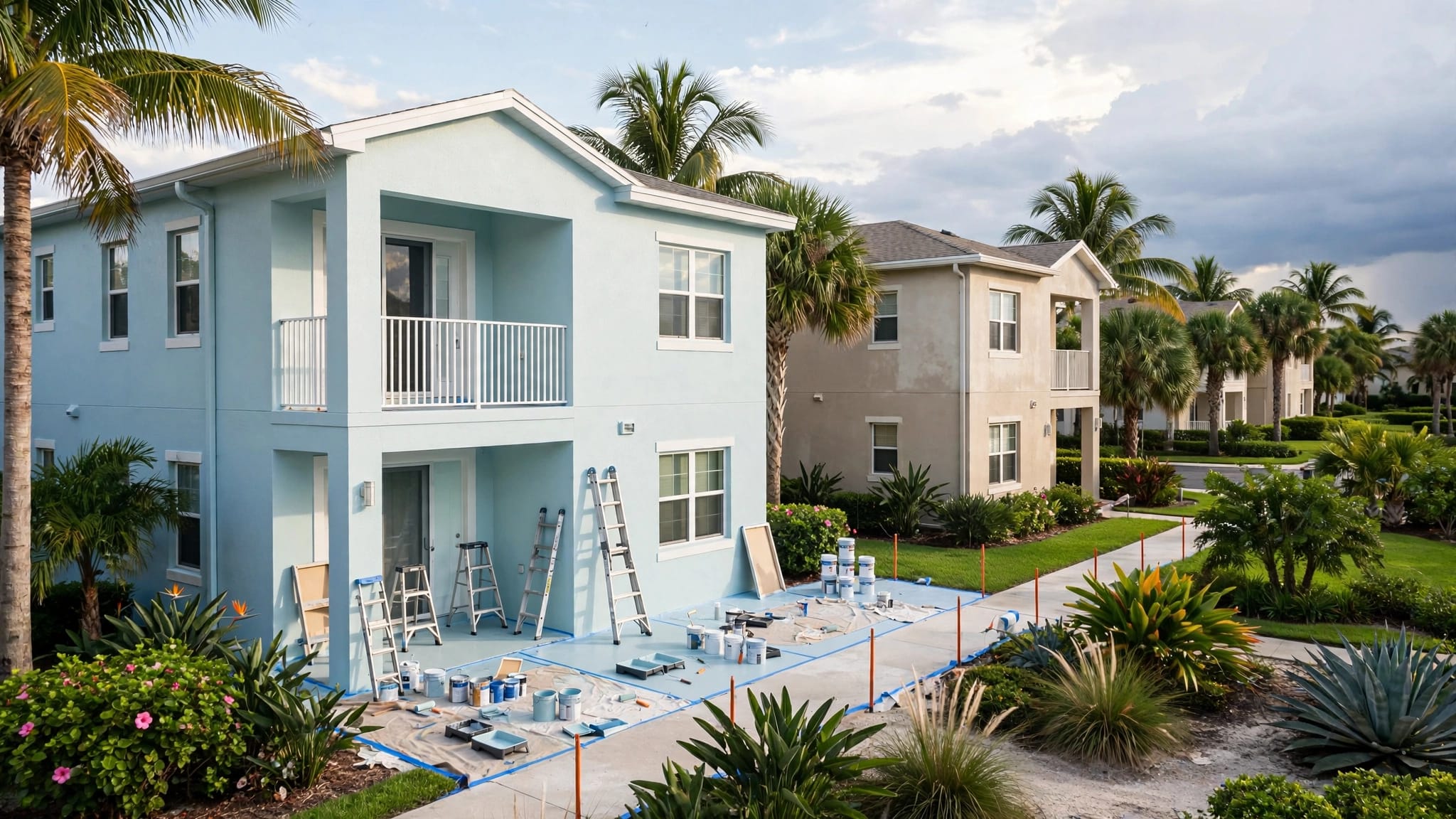
- Mask nearby trim, windows, plants, and walkways.
Use enough pressure to clean, not enough to damage stucco. On Florida homes, surface damage from aggressive washing can create more work than the original coating problem.
Mildew needs attention too. A quick rinse won't solve it. Clean the affected areas with the right wash, then let the surface dry before coating. If the wall still feels damp, wait. Humid air can keep moisture trapped longer than the clock suggests.
Substrate temperature matters as much as air temperature. A wall in direct sun can be far hotter than the forecast says. If the surface is too hot, paint can flash too fast and leave lap marks or poor film build. Early morning often gives the best working window, especially on west-facing walls.
Choose a primer and topcoat that match the old coating
Compatibility is the difference between a repaint that holds and one that peels early. Some old elastomeric surfaces are stable enough for a direct topcoat. Others need a primer or bonding coat first.
The right choice depends on what you found during cleaning and testing. If the coating is sound, dry, and lightly weathered, a good exterior acrylic system may work. If the surface is chalky, uneven, or patchy, primer usually gives you a safer base.
"If the label doesn't allow it, don't force it."
Read the product label for the old surface type, the required dry times, and the temperature range. That is not busywork. It is the rulebook for the job. Manufacturer-label compliance matters because products cure differently, and Florida heat can change that schedule fast.
Use the finish coat that matches the wall's needs. On stucco and masonry, a breathable exterior system often performs better than a random wall paint. You want a coating that can handle movement, sun, and moisture without trapping more problems underneath.
A patchy wall can also need spot priming. Fresh patch material and old coating rarely absorb paint the same way. Prime those repairs so they don't telegraph through the finish.
Paint in the right Florida weather window
Painting in Florida is as much about timing as it is about product choice. Afternoon rain can roll in fast, and a coat that looks dry on top may still be soft underneath.
Plan your work around the wall, not the calendar alone. A cool, shaded wall is often better than a hot one. South and west sides usually need the earliest start times. Also watch the substrate temperature, because it can push the paint out of range even when the air feels fine.
Apply thin, even coats. Heavy coats may look like better coverage, but they can skin over and trap moisture. On textured stucco, backrolling helps push paint into the surface and improve bond. Keep a wet edge so lap marks don't set up on large walls.
Check the forecast before each coat. Give yourself enough dry time before the afternoon storm cycle. If rain threatens, stop early and let the wall cure. Rushing the second coat is how a good-looking job turns into a repair call.
For coastal properties, salt air can keep surfaces damp longer than expected. That means you may need a wider drying window between prep, primer, and finish. Humidity does not stop the work, but it does slow it down.
When the job needs a contractor
Some repaint jobs are simple. Others need more than paint, especially when the old elastomeric coating is peeling in big sections, the stucco has movement cracks, or moisture keeps coming back.
That is when a contractor with the right prep gear and local experience helps. A crew that handles professional home exterior painters can test the surface, repair problem areas, and match the coating system to the wall instead of guessing.
This matters for larger homes, multi-story exteriors, and commercial buildings too. The more wall area you have, the more the prep and timing matter. A missed patch or a bad weather window can spread the failure across the whole facade.
If the old coating is still sound, a repaint can work well. If it is failing, the smarter move is to fix the surface first and paint second.
Conclusion
Florida weather is hard on exterior coatings, so the old elastomeric layer has to earn its repaint. Strong adhesion, proper cleaning, solid repairs, and the right primer-topcoat match matter more than the brand name on the bucket.
Once you add heat, humidity, salt air, mildew, and afternoon rain, shortcuts disappear fast. The best repaint jobs start with a honest surface check and end with a coating system that fits the wall.
When the base is right, new paint can hold up well over old elastomeric coating . When the base is weak, no finish coat can make up for it.
More featured articles...