Best Paint for Florida Garage Walls and Ceilings
A Florida garage can punish paint fast. Humidity hangs in the air, salty moisture sneaks inland, and concrete block drinks up weak coatings like a sponge.
That's why the best Florida garage wall paint isn't simply the cheapest white can on the shelf. You want a paint system that fights mildew, cleans up easily, and sticks to block, drywall, or old paint without peeling a year later.
Why Florida garages are harder on paint
Florida garages sit in a strange middle ground. They're not fully indoors, yet they still trap heat and moisture. Open the door on a July morning, and warm wet air rushes in. Close it later, and that moisture lingers on walls, ceilings, tools, and storage bins.
Because of that, garages need tougher coatings than a spare bedroom. A low-grade flat paint may look fine on day one, but it often stains, softens, or grows mildew spots over time. Near the coast, salt air adds another headache. It can lead to chalking, rust stains, and early paint failure, especially around metal doors and hardware.
Surface type matters too. In Southwest Florida, many garages have concrete block walls, heavy texture, patched drywall, or a mix of all three. Those surfaces don't behave the same way. Block is porous and rough. Drywall is smoother but dents more easily. Old paint may have grease, dust, or weak adhesion hiding under it.
In Florida, the paint system matters as much as the paint itself. Good prep and the right primer often decide how long the finish lasts.
So think of your garage like a boat dock in disguise. It may not touch the Gulf, but it still deals with moisture, grime, and wear every week.
The best paint types and sheens for walls and ceilings
For most Florida garages, premium 100% acrylic paint is the safest bet. Acrylic holds color well, resists humidity better than cheaper vinyl-heavy paint, and stays easier to wash. As of March 2026, mildew-resistant lines from Florida Paints stand out for local conditions, and similar top-tier acrylic products from Sherwin-Williams and Benjamin Moore also fit well when they're labeled for mildew resistance and high-moisture spaces.
Here's the quick breakdown:
| Surface | Best paint type | Best sheen | Why it works |
|---|---|---|---|
| Drywall garage walls | Premium 100% acrylic latex, mildew-resistant | Eggshell or satin | Wipes clean, resists scuffs, handles damp air |
| Concrete block or textured walls | Acrylic masonry paint, or acrylic latex over block primer | Eggshell or low-sheen satin | Bonds better to porous surfaces and hides texture |
| Garage ceilings | Mildew-resistant ceiling paint, 100% acrylic | Flat or matte | Reduces glare, hides flaws, still fights moisture |
The short version is simple: walls need scrub resistance, ceilings need low glare and mildew control .
For garage walls, eggshell or satin usually works best. Eggshell hides surface flaws a bit better. Satin cleans more easily. On rough block, a soft eggshell or low-sheen satin often looks better than a shiny finish because gloss highlights every bump.
For ceilings, stick with flat or matte in most cases. Florida sunlight bounces hard off glossy paint, especially in a white garage. A flatter finish keeps the ceiling calm and bright instead of harsh and patchy.
If your garage also needs floor work, wall color choices look better when they coordinate with durable floor coatings for garages. Clean light grays, warm whites, and greige tones often work well because they brighten the space and still hide dust.
One more note on waterproofing paints: they have their place, but they're not for every garage. Use them when moisture is pushing through masonry, not as a default for every wall.
How to prep garage walls and ceilings so the paint lasts
Paint sticks to clean, sound surfaces. It does not stick well to dust, oil, chalk, mildew, or damp block. That sounds obvious, yet this is where most garage paint jobs go wrong.
Start with cleaning. Garages collect car exhaust film, lawn chemical residue, cobwebs, and oily handprints. Wash the walls, rinse well, and let everything dry fully. If you see mildew, treat it first. If you see white powder on block, that's often efflorescence, and it needs to come off before primer goes on.
Concrete block needs the most care. Fill cracks, scrape loose material, and patch deep voids. If the block is bare or uneven, use a masonry primer or block filler first. That step helps the topcoat cover better and look less blotchy. In coastal areas, an alkali-resistant primer is a smart choice because it helps with salt-related staining and masonry salts.
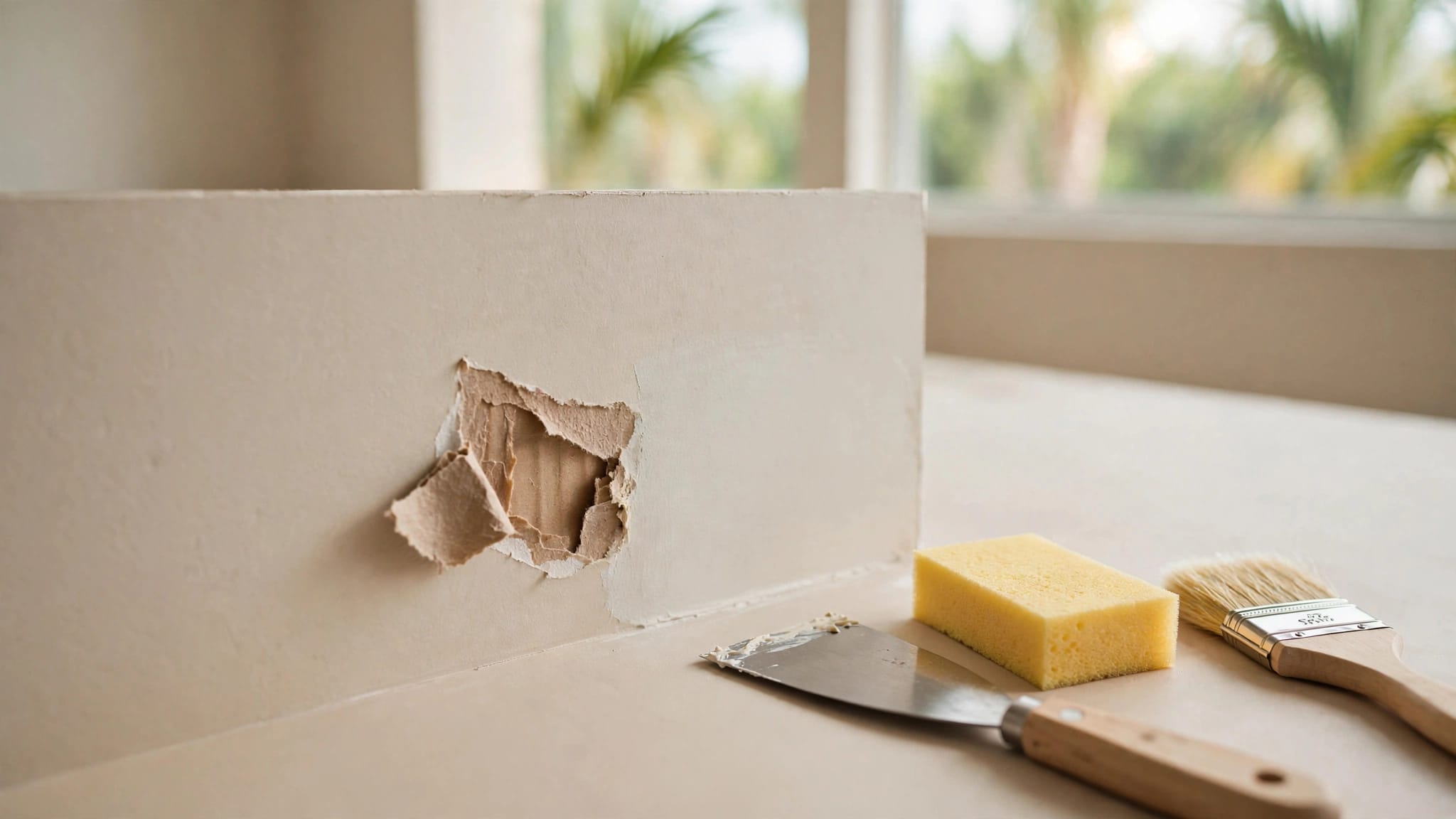
Drywall is simpler, but it still needs prep. Patch dings, sand repairs smooth, and spot-prime all patched spots. If the ceiling has water marks, smoke stains, or old yellowing, use a stain-blocking primer before finish paint.
Primer is usually necessary when you have:
- Bare concrete block or masonry
- Fresh drywall patches
- Glossy or slick old paint
- Water, rust, or smoke stains
- Past mildew or chalky surfaces
- A big color change , such as dark gray to white
Previously painted walls need an adhesion check. Rub the surface, then press painter's tape onto it and pull it off. If paint comes up, don't paint over it and hope for the best. Sand, scrape, prime, and stabilize the surface first.
Buying paint gets easier once you know what to look for. Choose products labeled 100% acrylic , mildew-resistant , and washable . For block, confirm the paint is suitable for masonry or use the right primer under it. Also, buy more than the label's smooth-wall coverage suggests. Textured block can eat paint quickly.
The most common mistakes are easy to avoid. People skip primer on bare block, use cheap flat paint on walls, paint over damp surfaces, or pick semi-gloss because they think shinier means tougher. In a Florida garage, too much shine often backfires. It shows every repair, every bump, and every roller mark.
If the garage has mixed surfaces, heavy patching, or old peeling paint, hiring professional residential garage painting can save a lot of time and rework.
A garage doesn't need fancy paint. It needs the right paint, on the right surface, with the right primer underneath.
For most Florida homes, that means premium 100% acrylic on the walls, a mildew-resistant flat paint on the ceiling, and careful prep before the first coat goes up.
If your garage walls are rough, damp, or already failing, fix the surface first. That one step often makes the difference between paint that lasts a season and paint that holds up for years.
More featured articles...