Thermofoil Cabinet Repair for Florida Kitchens
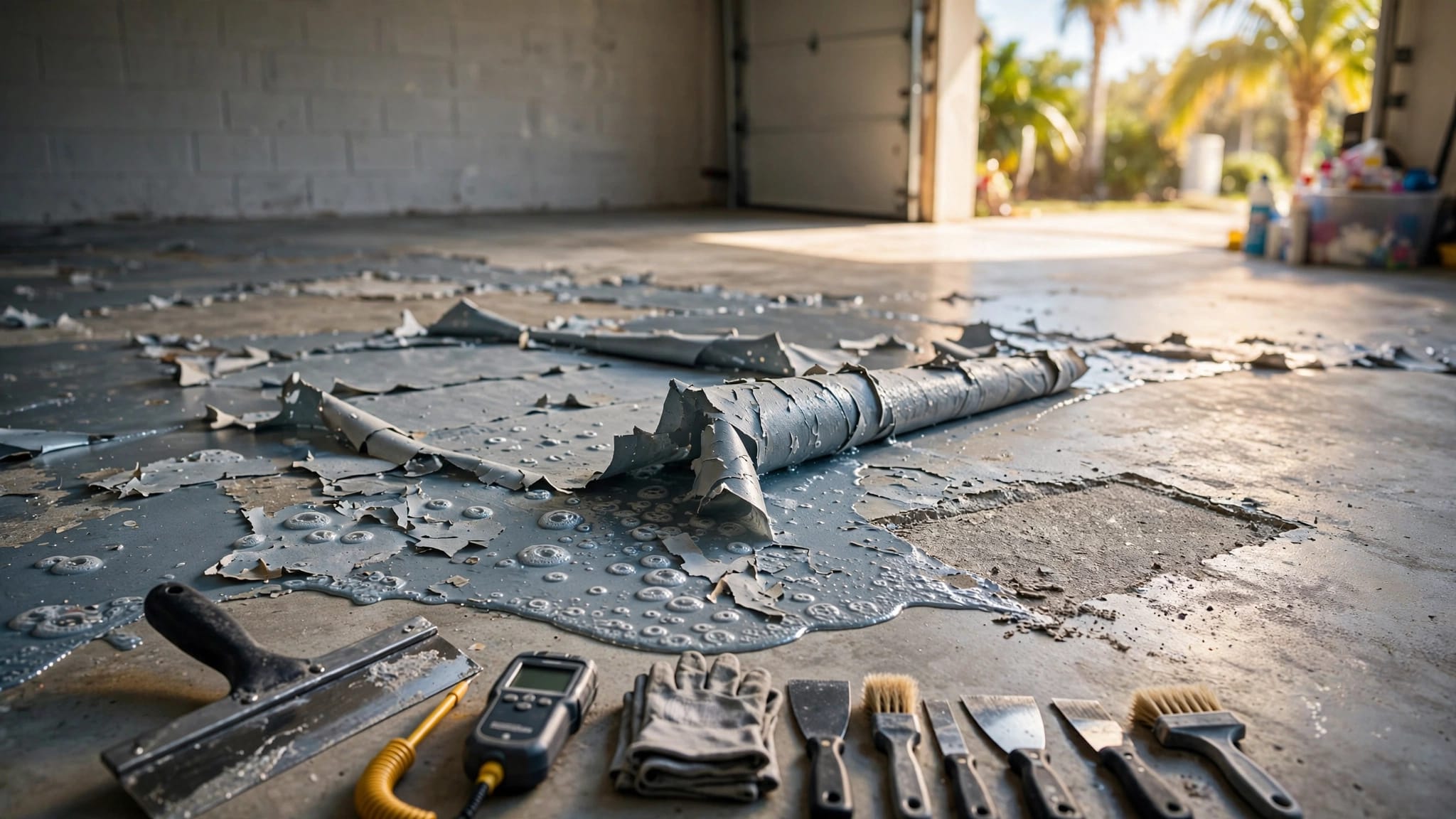
A lifted corner on a cabinet door can make an entire kitchen look worn. Before starting thermofoil cabinet repair , identify whether the vinyl film has separated or the MDF underneath has absorbed moisture and expanded.
Florida kitchens face extra stress from humidity, heat, cooking steam, and damp areas near sinks and dishwashers. A small, clean separation may respond well to careful repair. Swollen edges, brittle film, or widespread peeling usually call for a replacement door or professional cabinet service.
Why Thermofoil Peels in Florida Kitchens
Thermofoil cabinets have a thin vinyl film that is heat- and vacuum-formed over a medium-density fiberboard, or MDF, core. The surface has a smooth finish and no exposed wood grain, which makes it easy to clean. However, the film depends on adhesive and a stable substrate to stay in place.
Heat can weaken the bond over time. Cabinet doors beside ovens, ranges, toaster ovens, and dishwashers often show damage first because repeated heat and steam affect the adhesive. Sink-base cabinets can also suffer when water reaches an unsealed edge or sits inside the cabinet.
High humidity adds another problem. MDF can swell when moisture reaches the edges, screw holes, or unfinished areas. Once the board expands, the thermofoil may buckle or pull away. Reattaching the film won't correct a substrate that has changed shape.
Look for the source before touching the damaged door. Check for a leaking supply line, a dishwasher vent aimed at the cabinets, poor ventilation, or steam that stays trapped under the upper cabinets. Repairing the moisture problem first gives the cabinet a better chance of staying sound.
A repair can restore the appearance of a stable door, but adhesive cannot reverse swollen MDF.
Clean the surface with a soft cloth and inspect the door in good light. Bubbling, yellowing, cracks, loose edges, and darkened MDF each point to a different level of damage.
When Thermofoil Cabinet Repair Makes Sense
A repair is a reasonable choice when the film is still flexible and most of it remains firmly attached. The exposed board should be flat, dry, and free from crumbling fibers. A small lifted corner or short section along an edge is easier to stabilize than a large bubble across the center of a door.
Use this comparison before buying supplies:
| Condition | Practical choice |
|---|---|
| One small lifted edge with firm MDF | Reattach the film and touch up the edge |
| A few inches of peeling near a handle or corner | Repair if the film remains flexible |
| Large bubbles across the door face | Replace the door or ask a cabinet professional |
| Soft, swollen, or crumbly MDF | Replace the door |
| Peeling on many doors in the same area | Investigate heat or moisture, then consider professional work |
| Cracked, brittle, or discolored thermofoil | Replacement usually produces a better result |
A thermofoil cabinet repair may hold when the failure is limited to the adhesive bond. The loose section must have a clean edge, and the cabinet core must still have its original shape. If the film has stretched, shrunk, or torn, forcing it back into place can leave wrinkles and visible ridges.
Inspect the damage before removing anything
Open and close the door several times. Check whether the door sits square and whether the hinges still hold their screws. Look at the back and all four edges, since peeling on one side can indicate moisture inside the panel.
If the damage sits beside an oven or dishwasher, inspect neighboring doors as well. Similar peeling across several doors suggests an environmental or manufacturing issue rather than one isolated accident. A professional can help determine whether repair, replacement, or a broader cabinet refinishing project makes financial sense.
How to Perform Thermofoil Cabinet Repair
Small repairs require patience more than force. Work in a dry, air-conditioned room, and remove the door so you can keep the panel flat. Avoid working over an active sink or while the kitchen has heavy steam.
- Remove the door and hardware. Label each hinge and door position with painter's tape. Place screws in a small container so the hardware returns to its original location.
- Mark the stable edge. Lift only the loose film. If the material has a clean tear or damaged flap, trim it with a sharp utility knife. Stop where the film becomes firmly bonded. Pulling farther can enlarge the repair.
- Clean the surfaces. Remove grease, dust, and loose adhesive with a cabinet-safe cleaner and a lint-free cloth. Follow the adhesive manufacturer's directions for preparing vinyl and MDF. Don't soak the exposed board, because water can make the fiber core swell.
- Apply a compatible adhesive. Choose an adhesive labeled for the materials involved, and follow its application and ventilation instructions. Contact cement is sometimes used for this type of repair, but the product must match the surface and the repair conditions. Apply an even coat instead of creating thick ridges under the film.
- Press the film into place. Start at the attached edge and work outward to push out air. Use a soft roller or a clean, flat block covered with a protective cloth. Clamps can help on an edge, but use light, even pressure so you don't dent the film.
- Allow the bond to cure. Keep the door flat and undisturbed for the time listed on the adhesive label. Florida humidity can slow curing, so don't reinstall the door because the surface feels dry. Early use can pull the film loose again.
- Seal exposed MDF and touch up carefully. If the repair leaves a narrow bare edge, seal it with a compatible coating after the adhesive cures. Test any paint or finish on an unseen area first. Thermofoil can be difficult to color-match, especially when the original surface has aged.
Don't use a heat gun to force the film flat. Heat may soften the vinyl, but it can also distort the surface, damage nearby adhesive, or make the problem worse. Avoid ordinary household glue and heavy construction adhesive unless the product specifically supports the materials and conditions.
After the repair, keep water off the edge and wipe spills promptly. Use the range hood during cooking, run the dishwasher's ventilation cycle if available, and keep the room comfortable with air conditioning or a dehumidifier.
When Painting or Replacing the Door Is Better
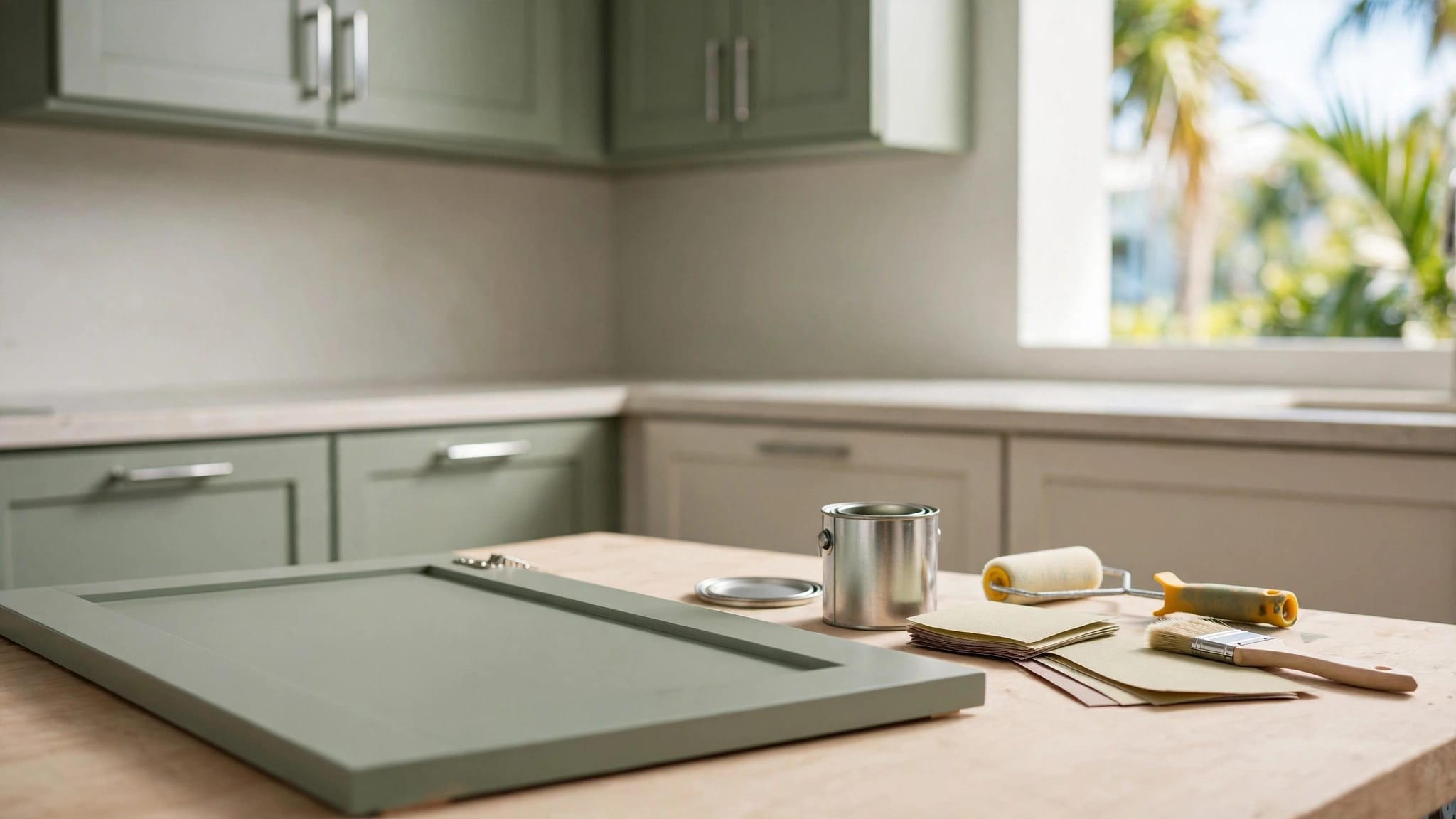
Painting can update thermofoil doors when the film is intact and the panels are structurally sound. It isn't a substitute for repairing active peeling. Coating over a loose film usually hides the problem for a short time, then the paint and film separate together.
A professional refinishing process may include degreasing, removing hardware, lightly abrading the slick surface, applying a bonding primer made for vinyl or laminate, and adding a cabinet-grade finish. The exact coating system depends on the existing surface and the desired sheen. For Florida kitchens, cabinet coatings for Florida homes need enough cure time in a controlled indoor environment.
Replacement is usually the better option when the MDF has swollen, the vinyl has cracked, or peeling covers a large section. It also makes sense when several doors have failed and matching repairs would leave noticeable differences in texture or color.
A replacement door can preserve the existing cabinet boxes while giving the kitchen a more consistent appearance. Measure carefully, match the hinge boring and door thickness, and bring an existing door or hinge to the supplier when ordering. A cabinet professional can also check whether the boxes are worth keeping.
Repair Costs, Project Time, and Professional Help
A small corner repair may take a few hours of hands-on work, followed by adhesive curing time. A full set of doors requires more planning because each door needs removal, labeling, preparation, finishing, and reinstallation. Humidity can lengthen drying and curing periods, so a rushed one-day project often creates avoidable problems.
For a cost comparison, cabinet painting cost in Fort Myers is often estimated at about $50 to $100 per door and $20 to $30 per drawer. A standard kitchen may fall between $2,500 and $5,000 for professional painting, depending on condition, preparation, and finish level. Those figures describe painting, not thermofoil door replacement or structural repair.
Ask for an onsite estimate when the damage affects multiple doors, sits near a heat source, or includes swollen board. The scope should state whether the contractor will repair, replace, prime, paint, or refinish the doors. It should also identify moisture corrections and the expected cure time before normal kitchen use.
Conclusion
The right thermofoil cabinet repair starts with a close inspection. Stable film over flat, dry MDF can often be reattached, while swollen cores, brittle vinyl, and widespread peeling point toward door replacement or professional refinishing.
Florida's heat and humidity make preparation and curing just as important as the adhesive or paint. Fix the moisture source, avoid painting over loose film, and choose the repair that matches the cabinet's actual condition. A small repair can restore one door, but a professional assessment can prevent a repeating problem across the kitchen.
More featured articles...