How to Remove Wallpaper Before Painting Florida Walls
Wallpaper can hide a lot, until the day you try to paint over it. In Florida, that layer can also trap moisture, soften adhesive, and create a perfect spot for mildew if the wall has been damp for a while.
If you want a paint finish that lasts, remove wallpaper Florida homes have been living with first , then prep the wall the right way. That matters even more in Southwest Florida, where humidity can turn rushed prep into peeling paint and stubborn stains. If the project also needs drywall repair, residential house painting services often make more sense than trying to patch everything in pieces.
Check the wall before you start peeling
Before you grab a scraper, look at the wall closely. Not every wallpaper job comes off the same way, and Florida homes often have their own problems baked in.
Start with the seams. If the paper is already lifting, that can make removal easier. If it feels tight and smooth, expect more work. Look for bubbles, dark corners, soft spots, and any musty smell. Those are warning signs that moisture may have been hiding behind the paper.
Pay close attention in bathrooms, laundry rooms, kitchens, and rooms that stay closed up. Humidity gives wallpaper glue a longer life than you want, and it can also hide mildew near the edges. If you see black spotting, treat that as a cleaning and moisture issue, not only a paint prep issue.
It also helps to know what kind of paper you have. Some wallpaper has a vinyl face that blocks water. Some older paper comes off in layers. Others were installed with strong adhesive that refuses to budge without patience. A small test area tells you a lot before you spend a full afternoon on one wall.
If the paper is over damaged drywall, stop and inspect that spot before you pull hard. Wallpaper can hold weak areas together until removal exposes the real condition underneath. That is normal, but it means the wall may need more than a quick repaint.
Gather the right tools and protect the room
Good prep saves time later. It also keeps paste, water, and torn paper off your floors and trim.
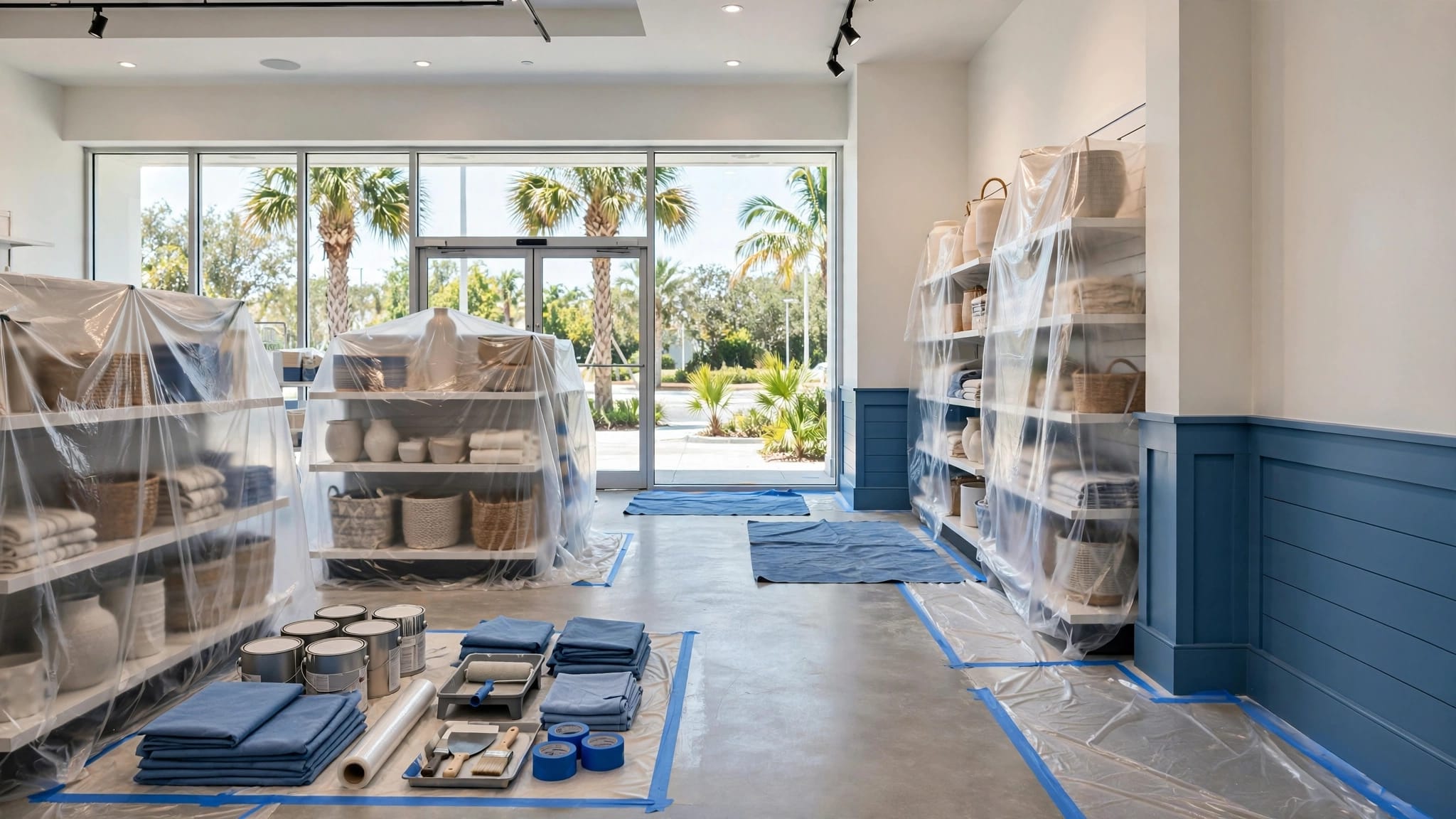
You do not need a giant supply list, but you do need the basics. A scoring tool helps water reach the adhesive. A spray bottle or pump sprayer lets you wet the surface in controlled sections. A broad putty knife or wallpaper scraper helps lift the paper without gouging drywall. Keep drop cloths, painter's tape, trash bags, and a sponge nearby.
Ventilation matters in Florida. Open what you can, run the AC if the room can handle it, and use a fan to keep air moving. Wet wallpaper paste stays sticky longer in humid rooms, and that makes cleanup harder. If the wall has mildew, wear gloves and a mask so you don't spread residue around the room.
Protect nearby outlets, switches, baseboards, and flooring before you begin. Turn off power to the room if you're working around outlets or switch plates. Remove cover plates, then tape over openings so water doesn't reach them.
In Florida, wallpaper paste can stay tacky longer than you expect. If the wall still feels damp, wait before you scrape harder.
If you're planning a full repaint after the removal, the interior painting cost guide can help you understand how prep work affects the final budget.
Remove wallpaper without damaging the drywall
Once the room is protected, work in small sections. Big wet areas dry too fast, especially if the AC is running or the room gets direct sun.
- Score the wallpaper lightly if it has a vinyl or glossy face.
That gives the water a path through the surface. Do not press so hard that you cut the drywall paper underneath. - Wet one section at a time.
Spray the wall until it is damp, not dripping. Let it sit for several minutes so the adhesive softens. - Start at a loose seam or corner.
Slide your scraper under the edge and lift slowly. Keep the blade shallow so you don't tear the wall behind it. - Pull at a steady pace.
If the paper comes off in sheets, keep going. If it tears, stop and re-wet the area. Forcing it usually makes the drywall repair larger. - Re-wet stubborn spots.
Older glue often needs a second pass. Patience beats pressure here. - Watch for hidden damage.
If the wall paper tears off with the wallpaper, or if you see brown backing paper, slow down. The goal is a clean wall, not a fast one.
Some rooms have more than one layer of wallpaper. In those cases, remove the top layer first, then test the layer underneath. If the lower layer still holds tight, keep working in sections instead of trying to rip the whole wall clean at once.
For rough jobs, a steamer can help, but use it carefully. Too much heat or moisture can loosen drywall paper and create more work than you started with. That risk goes up in Florida, where heat and humidity already push the wall in the wrong direction.
Clean the glue, repair the surface, and stop moisture problems
After the paper is gone, the wall is not ready for paint yet. Glue residue can ruin adhesion, and leftover paste often shows through fresh paint as rough, shiny patches.
Wash the wall with warm water and a clean sponge, then wipe again with fresh water if needed. The surface should feel smooth, not slick. If a section still feels sticky, clean it again. Even small patches of adhesive can make paint peel early.
Check the wall under good light. Scrapes, torn drywall paper, pinholes, and seams all need attention before primer. Fill small damage with joint compound, let it dry, then sand it smooth. After that, wipe away dust so it does not get locked into the primer.
Mildew deserves special attention in Florida homes. If you see dark spots, clean them before priming and look for the source of the moisture. A wall can keep staining again if the room has poor airflow, a plumbing leak, or a damp exterior wall. Paint is not a fix for that problem.
Use a primer that seals repaired areas and helps create a uniform surface for paint. This step matters more after wallpaper removal than after a normal repaint, because the wall often absorbs paint unevenly. Once the surface is clean and dry, primer gives the new finish a better base.
Know when the job is bigger than a weekend
Some wallpaper jobs are straightforward. Others turn into full wall repair projects.
If the paper is glued to damaged drywall, if mildew keeps coming back, or if several layers refuse to release, the job may be better left to a pro. That is also true for homes and offices where the room has to go back in service fast. A clean, orderly removal matters when people need to use the space again.
Professional help makes sense when the wall needs texture repair, stain blocking, or large patch work after the paper comes off. It also helps when the project is part of a full repaint and the prep time is already stretching out. A wall that looks fine at a glance can still hide weak seams, soft spots, or old moisture damage.
If you're weighing the work against the repaint itself, think about the finish you want. A good paint job starts with a wall that is dry, flat, and fully cleaned. Anything less can show through the new color.
A Smooth Wall Is the Real Goal
Wallpaper removal is less about speed and more about control. In Florida, that control matters because humidity, moisture, and mildew can turn a simple wall into a problem wall fast.
Take the paper off in sections, clean the adhesive well, repair every blemish, and let the wall dry fully before primer. If you do those things, the paint has a fair shot at looking clean and lasting longer. That is the real payoff, a wall that is ready for finish work, not one that needs another fix a few months later.
More featured articles...