How Often To Repaint Stucco Exteriors In Southwest Florida
Southwest Florida sun can make a fresh paint job look tired faster than you'd expect. Add salt air, summer rain, and surprise storms, and your stucco has a full-time job.
So how often should you repaint? For most homes, stucco repainting southwest florida usually lands in a predictable window, but your exact timeline depends on where you live and how your walls take the weather.
Below is a practical repaint range, the factors that move it up or down, and what to watch for before small issues turn into expensive repairs.
A realistic repaint schedule for stucco in Southwest Florida
For many stucco homes in Fort Myers, Naples, and Cape Coral, a solid exterior paint system often needs repainting about every 5 to 8 years . That assumes decent prep, quality materials, and normal exposure.
Homes closer to the coast typically repaint sooner because salt, wind, and intense UV work together like sandpaper on your finish. On the other hand, a more sheltered home (good overhangs, less salt, less direct sun) can sometimes stretch longer.
Here's a simple way to think about timing. Use it as a starting point, then adjust based on the conditions in the next section.
| Stucco exposure in SWFL | Typical repaint window | Why it changes |
|---|---|---|
| Coastal, windy, high sun | 4 to 6 years | Salt spray, stronger UV, more weathering |
| Inland, average exposure | 5 to 8 years | Normal fading and mildew pressure |
| Shaded, well-protected elevations | 7 to 10 years | Less UV, slower drying, fewer heat cycles |
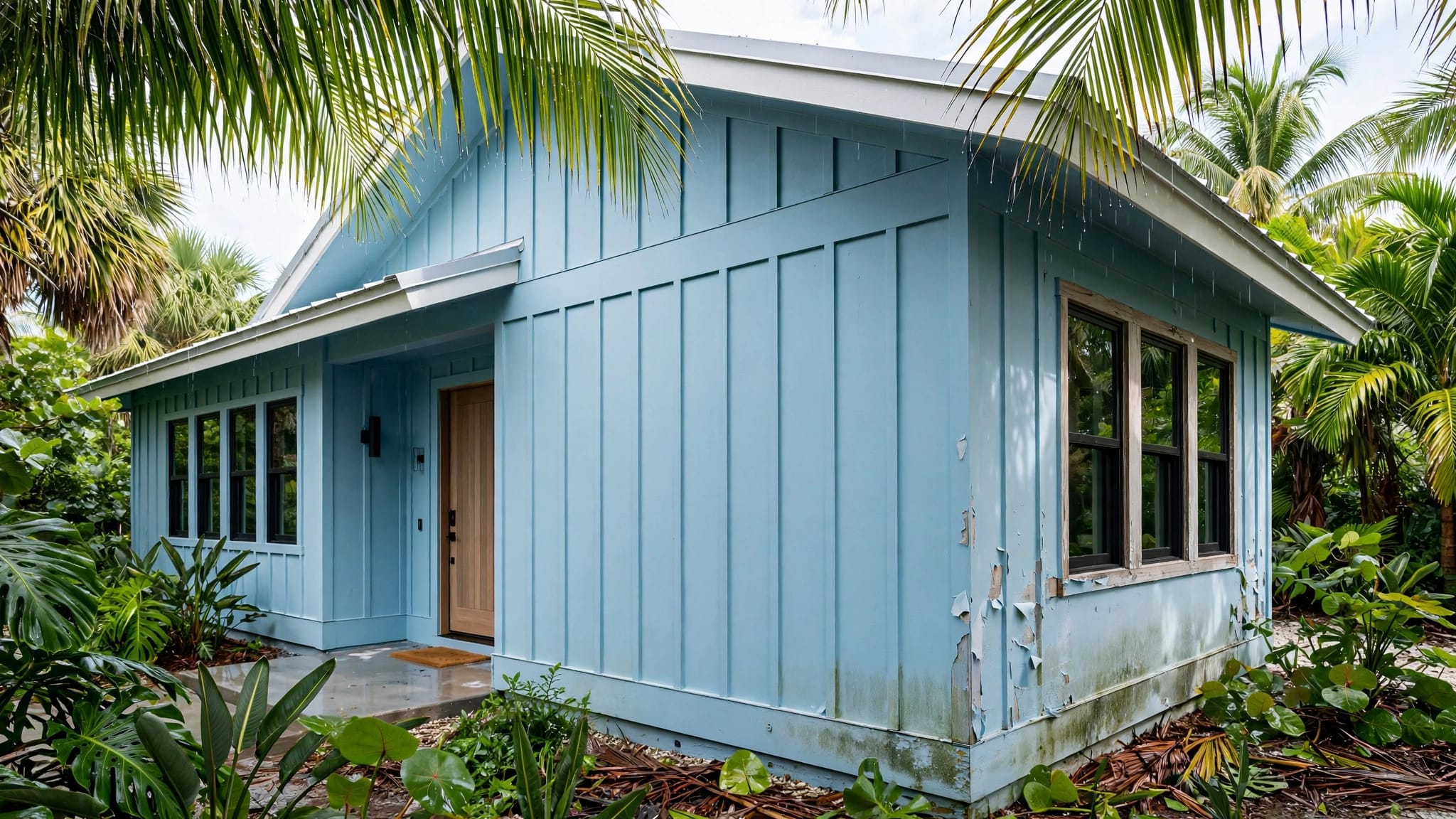
The calendar matters, but the wall tells the truth. If you see chalky residue when you rub the surface, fading that looks uneven, hairline cracking that's multiplying, or paint that stays damp after rain, it's time to plan.
For a broader Florida benchmark, this overview of repaint timing can help you compare notes with other regions: how often to paint a house in Florida.
What makes stucco paint fail faster in Fort Myers and Naples
In Southwest Florida, repaint timing isn't just "years since last paint." It's exposure, moisture, and how well the last job was prepped. Think of exterior paint like sunscreen. If it's applied thin, missed in spots, or the skin wasn't clean, it won't last long.
Proximity to the coast (salt and wind)
Salt settles into pores and tiny cracks, then pulls in moisture. Even when paint doesn't peel, it can fade and chalk faster. Coastal wind also drives rain into stucco, especially on upper walls and corners.
Sun exposure and heat cycling
South and west walls often fade first. They take the hardest UV and the most daily expansion and contraction. As a result, you might see cracking near openings or trim long before the rest of the home looks "old."
Prior prep quality (this is the make-or-break factor)
A good repaint is more than rolling on color. If the last painter skipped proper washing, left chalking behind, or didn't address cracks, the new coating can lose grip early. That's when you see peeling around windows, flaking at edges, or "map" cracking across flatter areas.
If your paint is failing in sheets or bubbling in spots, don't rush to repaint. First find the moisture source, or the new coat can fail the same way.
Irrigation overspray and constant damp zones
Sprinklers hitting stucco every morning keep the wall damp and dirty. Besides staining, this raises the odds of mildew and can weaken caulk lines. Check the base of walls and around landscaping beds first.
Trees, shade, and slow drying
Shade protects from UV, but it also slows drying after rain. That can lead to algae or mildew, especially on north-facing walls. If you regularly see green or black staining, you may need to repaint sooner, and adjust cleaning and drainage.
Storms and wind-driven rain
Hurricanes and tropical storms can force water into small cracks and around penetrations. After major weather, walk the house. Look at stucco edges, around windows, and any areas where sealant looks split.
For another Florida-focused discussion of repaint frequency and weather wear, see how often to repaint in South Florida.
Choosing the right paint or coating for hot-humid stucco (and keeping it looking good)
When you repaint stucco in a coastal, humid climate, your goal is simple: shed rain, resist sun, and still let the wall breathe. Stucco can hold moisture, so the wrong coating can trap water and cause bubbling, blistering, or recurring stains.
What to use on stucco in Southwest Florida
Most homeowners do well with a high-quality acrylic masonry exterior paint . It tends to handle UV well and stays flexible enough for minor movement.
Elastomeric coatings can be a good fit when you have many hairline cracks and you need extra bridging. Still, they aren't a magic fix. If moisture is coming from behind the stucco (leaks, failed flashing, saturated walls), a thicker coating can hide symptoms while the wall gets worse.
A good contractor will match the system to the wall condition, not just the color you like. If you want a general exterior painting guide with climate considerations, this is helpful background reading: exterior painting guidance for Florida weather.
A simple maintenance plan that can add years
You don't need to baby your exterior, but small habits keep paint from failing early:
- Rinse gently once or twice a year to remove salt and grime, especially near the coast.
- Redirect sprinklers so water doesn't hit stucco or window trim.
- Trim plants back so walls can dry after rain.
- Check caulk lines yearly , around windows, doors, hose bibs, and vents.
- Clean mildew early , then address shade, drainage, or overspray that caused it.
If you're planning a repaint soon, it helps to talk through prep steps and product choices with a local crew that works on these surfaces every day. Start here: Southwest Florida home exterior painters.
When it's time to call a pro (not just repaint)
Some problems look like "paint issues" but are really building envelope issues. Bring in a professional when you notice:
- Moisture intrusion signs , such as bubbling paint, soft spots, or repeated staining after rain
- Widespread cracking , especially diagonal cracks from window corners
- Recurring efflorescence (white, salty deposits) that comes back after cleaning
- Persistent mold or mildew that returns quickly, even after washing
In these cases, repainting without repairs is like putting a new label on a leaky bottle.
Conclusion
Most homeowners should plan on repainting stucco exteriors in Southwest Florida about every 5 to 8 years , then adjust for salt, sun, shade, sprinklers, and storm exposure. The best results come from smart prep, breathable coatings, and simple yearly upkeep. If you're seeing repeated moisture signs or cracking, bring in a pro before you commit to a new color. A well-timed stucco repainting southwest florida plan protects your home and keeps curb appeal strong year after year.
More featured articles...