How Florida Businesses Can Choose Slip Resistant Concrete Coatings
A wet entryway, oily service area, or gritty warehouse floor can turn a normal workday into a fall risk. Choosing slip resistant concrete coatings requires more than picking a color or asking for the roughest texture.
Florida businesses must account for humidity, rain, tracked-in sand, salt air, sunlight, vehicle traffic, cleaning routines, and the condition of the concrete. The right recommendation depends on an onsite assessment, documented product requirements, and careful preparation. Start by evaluating how the floor is used and what conditions affect it.
Start With the Floor's Real Risks
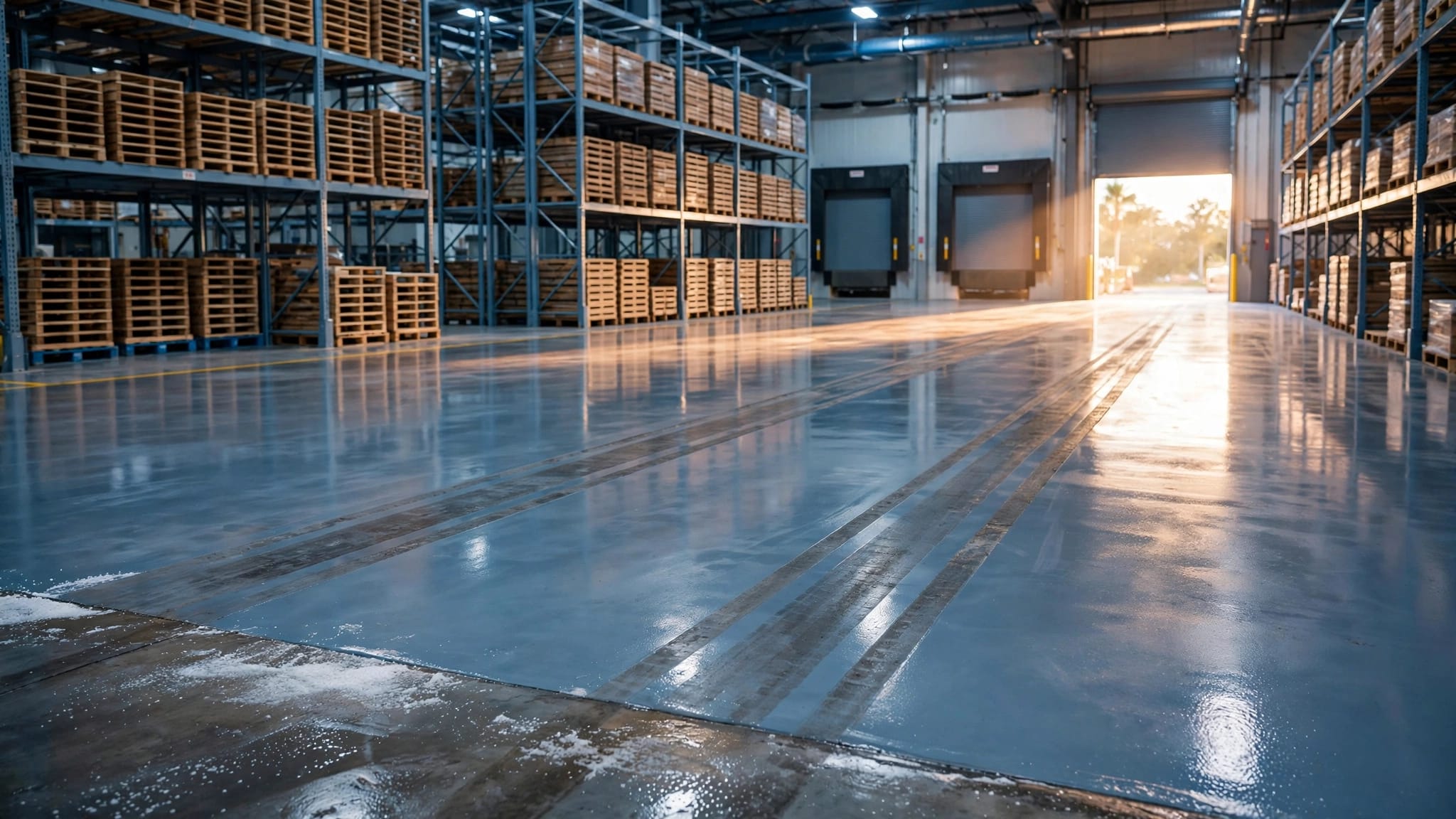
Every commercial floor has a different exposure profile. A restaurant back-of-house area deals with grease and frequent washing. A warehouse may see forklifts, pallet jacks, and abrasive grit. A retail entrance may receive rainwater and constant foot traffic.
Identify where slips could happen
Walk the space during normal operating hours. Look for entrances where rain collects, areas near ice machines or sinks, washdown zones, ramps, loading docks, and transitions between indoor and outdoor surfaces.
Also inspect places where tires turn sharply. Vehicles can track in water, sand, fertilizer, and oil. Those materials may reduce traction even when the coating itself remains intact.
A coating cannot correct poor drainage, standing water, leaking equipment, or an unstable slab. Those conditions need attention before installation.
Match the coating to daily use
Consider how the floor will be used throughout the week. Ask whether it must handle:
- Frequent pedestrian traffic
- Carts, pallet jacks, or forklifts
- Hot tires and vehicle turning
- Oils, cleaners, food residue, or chemicals
- Repeated mopping or pressure washing
- Direct sunlight through open doors or windows
A small office hallway and a busy service bay shouldn't receive the same specification. The coating system, texture, thickness, and topcoat should match the loads placed on the surface.
Compare Concrete Coating System Families
The word "coating" covers several different approaches. Each option involves tradeoffs among build, cure time, appearance, texture, and installation conditions.
Traditional thick-build resin systems
A thick-build resin system can create a dense, finished surface with strong visual depth. Decorative flakes or colored aggregate may help hide minor variations in the slab while creating a more consistent appearance.
These systems may require a longer cure period than fast-cure alternatives. That matters when a business has limited space for relocation or cannot close a work area for several days. Some formulas also need careful consideration near open doors and windows because prolonged ultraviolet exposure can affect color and gloss.
Ask for the complete build, not only the name of the base product. The quote should identify the primer, base layer, aggregate or texture, topcoat, and expected cure schedule.
Fast-cure and UV-focused systems
Fast-cure systems can reduce downtime, which helps businesses working within a narrow service window. UV-focused formulations may also be considered where sunlight reaches the floor through open garage doors, storefront windows, or loading areas.
Speed creates a tradeoff. Installers have less time to place, spread, and broadcast the material. Sudden humidity changes, windblown debris, bugs, or rushed cleanup can affect the finished result.
Product names also don't tell the whole story. Formulas vary between manufacturers and applications. A professional should confirm the product's moisture limits, working time, texture compatibility, and exposure requirements before recommending it.
Choose Aggregate and Texture for Actual Traction
Texture affects how a floor feels, cleans, and performs when wet. More texture does not automatically create a safer floor. It can also collect dirt, increase cleaning effort, and become uncomfortable underfoot.
Fine texture for entrances and walkways
A fine, consistent aggregate may provide a practical balance for offices, retail areas, hospitality spaces, and interior walkways. It can add surface profile without creating deep pockets that trap sand and grime.
Ask to see a sample with the exact texture blend proposed for the project. A sample gives staff a better sense of how it feels under shoes and how it looks under the facility's lighting.
The final surface should support cleaning equipment and routine maintenance. A texture that feels excessively sharp or uneven may create problems for bare hands, knees, wheeled carts, or mop heads.
Heavier texture for wet or industrial areas
Wet processing rooms, pool service areas, exterior walkways, and industrial spaces may require a more pronounced texture. However, the appropriate level depends on drainage, footwear, cleaning methods, and the type of traffic.
Heavy texture can make sweeping and mopping slower. It may also wear differently in turning lanes or other high-use paths. Ask the contractor how the proposed profile will affect cleaning, replacement, and future repairs.
No texture eliminates every slip hazard. Water, oil, algae, loose debris, poor lighting, and unsuitable footwear can still create unsafe conditions. A coating is one part of a broader floor safety plan.
Treat Preparation and Moisture as Part of the System
The visible coating receives most of the attention, but preparation often determines whether the finished floor bonds properly. A professional assessment should happen before the final recommendation or schedule is set.
Profile the concrete and repair defects
Concrete normally needs mechanical preparation, such as grinding or shot blasting, to remove weak surface material and create a suitable profile. Oil, grease, residue, and old sealers can interfere with adhesion.
The crew should also identify cracks, spalls, low spots, hollow areas, and unstable repairs. Coating over damaged concrete does not solve movement or structural problems. Cracks may need repair, and large failures may require concrete work before coating begins.
Ask what preparation method will be used and what surface profile the installer expects to achieve. A vague promise to "clean and coat" does not provide enough detail for a commercial project.
Test for slab moisture
Concrete can appear dry while vapor moves through the slab. High moisture levels may contribute to blistering, peeling, or loss of adhesion if the selected system does not address the condition.
Moisture testing should happen before installation. If readings exceed the product manufacturer's limits, the contractor may need a moisture-control primer, a barrier step, additional drying time, or a different specification.
Florida humidity adds another planning concern. The slab, air, and surface temperature must fit the product requirements during installation and curing. Ask how the contractor will respond if conditions change between preparation and application.
A coating recommendation is incomplete until it addresses the concrete below the surface, not only the finish above it.
Balance Durability, Appearance, Downtime, and Cost
Price matters, but the lowest initial bid may not offer the lowest long-term cost. A coating that fails early can require removal, repairs, business interruption, and another installation.
Evaluate the full service window
Ask when the floor can accept foot traffic, carts, furniture, vehicles, washing, and chemicals. These times may differ. Parking a vehicle or moving heavy equipment onto a partially cured floor can leave marks or weaken the finish.
Fast return to service can be valuable for restaurants, medical offices, retail stores, warehouses, and property managers. Still, a short installation window should not encourage rushed preparation. The schedule must leave enough time for repairs, testing, application, and curing.
Plan the work around deliveries, tenant access, weekends, and weather exposure. If a doorway must remain open, discuss how the crew will limit dust, humidity shifts, insects, and debris during application.
Compare value beyond the first quote
A useful quote should describe the complete system and the work required. Compare:
- Preparation method and repair allowance
- Moisture testing and mitigation plan
- Number of coats and expected thickness
- Aggregate or texture type
- UV and chemical exposure considerations
- Cure times for each stage
- Warranty terms and exclusions
- Maintenance instructions
- Future repair or recoating expectations
Appearance also affects value. Solid colors offer a clean, uniform look. Flakes or decorative aggregate can add visual variation and make ordinary dirt less noticeable. Gloss level, color stability, and texture should fit the building's lighting and cleaning program.
Plan Maintenance Before Installation
A coated floor still needs routine care. Sweeping or dust-mopping removes sand and grit before it creates abrasive wear under shoes, carts, and tires. Promptly clean oil, fertilizer, food residue, and chemical spills according to the product instructions.
Use cleaning products approved for the installed system. Harsh chemicals, abrasive pads, and aggressive scrubbing can dull or damage some finishes. Mats near entrances can reduce the amount of rainwater and grit reaching the coated area.
Inspect the floor after severe weather, equipment leaks, and unusual traffic. Early attention to chips, peeling, bubbling, or soft areas may limit the affected section. If water repeatedly collects in one location, correct the drainage issue rather than applying more coating over it.
Key Takeaways for Florida Facility Managers
- Begin with the floor's actual traffic, moisture, sunlight, and cleaning conditions.
- Select the texture for the environment, not simply for maximum roughness.
- Require mechanical preparation, crack repairs, and moisture testing.
- Compare complete coating systems instead of comparing product names alone.
- Confirm cure times for people, carts, vehicles, washing, and equipment.
- Treat installation timing as a serious concern for fast-cure products.
- Include maintenance, repairs, and future recoating in the cost discussion.
- Remember that no coating can remove every slip hazard from a wet or contaminated surface.
FAQ About Slip Resistant Concrete Coatings
Are slip resistant concrete coatings completely slip-proof?
No. They can be specified with texture or aggregate intended to improve traction under certain conditions, but no coating can eliminate every slip hazard.
Water, oil, loose sand, algae, poor drainage, inadequate lighting, and unsuitable footwear can still cause falls. Businesses should combine the coating with housekeeping, spill response, drainage control, warning signs, and appropriate footwear policies.
Which texture should a Florida business choose?
The answer depends on the floor's exposure and use. Interior offices may need a finer texture that remains comfortable and easy to clean. Wet processing areas, ramps, and exterior walkways may need a more pronounced profile.
Request a physical sample with the proposed aggregate and topcoat. Review how it feels underfoot, how it looks when wet, and how easily staff can clean it.
How long will a business need to close the area?
There is no single schedule for every project. Cure time depends on the coating system, slab condition, temperature, humidity, airflow, and the manufacturer's requirements.
Ask for separate timelines for foot traffic, carts, furniture, vehicles, washing, and chemical exposure. A narrow service window may influence the system choice, but it shouldn't replace proper preparation.
What should a contractor inspect before recommending a system?
The inspection should cover concrete strength and condition, existing coatings, cracks, spalls, oil contamination, joints, slope, drainage, slab moisture, sunlight, and traffic patterns.
The contractor should also ask how the area operates. Daily vehicle traffic requires different planning than occasional pedestrian use. Final recommendations should follow the site assessment and the selected product's documented requirements.
Conclusion
Choosing slip resistant concrete coatings for a Florida business starts with the slab and the way people use it. Texture, moisture control, UV exposure, traffic, cleaning, cure time, and appearance all affect the decision.
A professional assessment can identify conditions that a product label cannot. When preparation and system selection match the facility's real demands, the coating has a better chance of providing a durable, maintainable surface without creating false confidence about slip safety.
More featured articles...