How to paint oak cabinets without grain in Florida
Oak cabinets can look smooth from across the room, then the open pores appear as soon as paint dries. If you want to paint oak cabinets without grain , sanding alone won't solve the problem. The pores must be filled, sealed, and sanded flat before the finish coat goes on.
Florida's heat and humidity add another concern. A coating may feel dry while remaining soft underneath, so rushed recoating can leave prints, sticking doors, or visible texture. The right preparation, compatible products, and longer drying windows create a cleaner result.
Why oak grain shows through painted cabinets
Oak has a naturally open-pored structure. Its pores create small depressions across the surface, while the distinctive cathedral pattern changes direction along many doors and drawer fronts. Paint covers the wood color, but a thin paint film can still follow those depressions.
Sanding removes raised fibers and rough spots. However, it doesn't fill the recessed pores. Heavy sanding can also damage oak veneer, soften routed edges, or create uneven areas that become more noticeable after painting.
A smooth painted finish requires grain filler , usually followed by primer and careful sanding. The filler sits in the pores, while the primer creates a consistent surface for the cabinet coating. Depending on the oak's texture, one filling pass may not be enough.
Brushing on extra paint isn't a substitute for filling. Thick paint can bridge some pores temporarily, but it may shrink as it dries and reveal the grain again. The result often looks acceptable at first and textured a few weeks later.
Decide whether the cabinets are worth painting
Paint works best when the cabinet boxes, doors, and drawer fronts are structurally sound. Check for loose joints, swollen particleboard, peeling laminate, water damage, and broken hinges before planning the finish.
Solid oak doors with dated stain are usually strong candidates for repainting. Cabinets with severe water damage or badly warped panels may need replacement parts before painting. A contractor can also identify veneer areas that require lighter sanding.
Consider how much texture you can accept. Filling oak grain can produce a nearly smooth finish, but it requires more labor than a standard cabinet repaint. Deep pores may need multiple applications, and decorative profiles still contain edges that require hand work.
If you're comparing the cost of a new kitchen with a professional repaint, review this guide on whether to paint or replace kitchen cabinets in Southwest Florida. The condition of the existing cabinets should guide that decision, not color alone.
How to paint oak cabinets without grain
A careful process matters more than the brand on the paint can. Use products that are compatible with one another, and follow each product's label for sanding and recoat times.
- Remove and label every door, drawer, and hinge. Number each opening with painter's tape or a removable marker. Keep hardware in labeled bags so doors return to their original positions.
- Clean away grease and residue. Use a cabinet-safe degreaser or TSP substitute. Scrub areas around handles, cooktops, and drawer edges, then rinse with clean water. Let the wood dry fully before sanding.
- Scuff-sand the existing finish. Use approximately 120- to 150-grit paper to dull the old coating and remove loose finish. Follow with a finer pass where needed. On veneer, use light pressure and stop before sanding through the thin wood layer.
- Apply grain filler across the pores. Spread a compatible wood grain filler with a plastic spreader or flexible squeegee. Work across the grain so the filler presses into the openings instead of simply following them. Remove excess material from the surface.
- Let the filler dry, then sand it flat. Use the time listed on the product label. In humid Florida conditions, an overnight wait is often safer than sanding too soon. Sand with a fine abrasive, remove all dust, and inspect the surface under strong side lighting. Repeat the filling step if pores remain visible.
- Prime the prepared wood. Use a bonding primer or high-build surfacer approved for cabinet work and compatible with the filler. Apply a thin, even coat. After it dries, sand lightly with a fine sanding sponge and clean the surface again.
- Apply two thin finish coats. A quality cabinet enamel or urethane coating usually gives better hardness than ordinary wall paint. A sprayer can produce the smoothest appearance, while a fine microfiber roller and quality brush can work well when the painter controls the film thickness.
- Allow the coating to cure before reassembly. Dry doors should remain on a clean, supported surface while the finish hardens. Reinstalling them too soon can cause contact marks where doors touch the frame.
The best way to paint oak cabinets without grain is to inspect the surface after every sanding stage. A bright work light held at a low angle makes remaining pores easier to see than normal room lighting.
Use a cabinet coating suited to Florida humidity
Kitchen cabinets face steam, condensation, cleaning products, and frequent handling. Florida kitchens also stay humid for long periods, especially when air conditioning runs intermittently or doors are painted in a garage.
Choose a coating made for cabinets, millwork, or high-contact interior surfaces. Waterborne urethane and urethane-modified enamels are common choices because they provide a hard finish with lower odor than many solvent-based products. Professional applicators may also use waterborne 2K urethane or catalyzed lacquer when the project and equipment support that system.
You can compare durable cabinet paint options for Florida humidity before selecting a product. The important point is compatibility. A grain filler, primer, and topcoat should form one tested system rather than a collection of unrelated products.
Avoid painting over damp wood or a surface that still feels cool and tacky. Moisture trapped beneath primer or paint can interfere with adhesion. It can also extend the time needed before doors are safe to handle.
Spraying often gives a more uniform finish on oak because it avoids roller stipple and brush marks. Still, spraying requires a clean area, proper masking, ventilation, and protection for nearby surfaces. A brush-and-roller application can look excellent when the painter applies thin coats and maintains a wet edge.
Allow extra drying time in Florida
Temperature and humidity affect drying in different ways. Heat can speed surface drying, while high humidity slows the evaporation of water from water-based products. That combination can leave a coating dry on top but soft below the surface.
Paint cabinet doors in a climate-controlled space whenever possible. Keep the area clean, use air conditioning or dehumidification, and avoid placing wet doors in direct sun. Air movement helps, but strong fans aimed directly at wet paint can create dust or uneven drying.
Follow the product's printed recoat time as the minimum. When humidity is high, plan for overnight drying between primer and finish coats, and allow 24 hours when the surface still feels soft or cool. A longer wait is safer than sanding or recoating a layer that hasn't hardened.
A door that feels dry to the touch can still stick to the cabinet frame. Drying removes moisture from the film, while curing builds the hardness needed for repeated use.
Grain filler may need additional time before sanding, especially in a humid room. Primer and finish coats also need their own recoat windows. Keep a simple schedule for each product instead of assuming every layer will dry at the same speed.
After the final coat, leave doors flat or supported vertically without touching adjacent surfaces. Wait several days before reinstalling them, then handle them gently. Full cure can take two to four weeks, depending on the coating, temperature, humidity, and film thickness. During that period, avoid aggressive cleaners and don't force tight doors or drawers closed.
Know when professional cabinet painting makes sense
Painting oak cabinets without visible grain is labor-intensive because the smooth finish comes from preparation. A contractor must clean every surface, fill the pores, sand without damaging veneer, control dust, and apply consistent coats.
Professional work can also help when your home doesn't have a suitable drying area. A climate-controlled workspace gives the coating a more stable environment than an open garage or screened porch. Contractors with spraying equipment can create a factory-style finish while protecting counters, floors, appliances, and occupied rooms.
Ask how the contractor handles grain filling, what primer and topcoat system they use, and how long doors stay off the cabinets. Confirm whether the estimate includes both sides of the doors, drawer boxes, cabinet frames, hardware removal, repairs, and final reinstallation.
For local budgeting, this cabinet painting cost guide for Fort Myers and Naples can help you compare project pricing. The final amount depends on door count, cabinet condition, grain depth, finish level, and the amount of repair required.
A written estimate should also state the expected schedule. Florida weather can change drying times, so a realistic contractor leaves room for additional curing when indoor humidity rises.
Common mistakes that bring the grain back
The most common mistake is skipping grain filler because the cabinets look smooth after sanding. Oak pores remain visible under a fresh coat, especially on broad door centers.
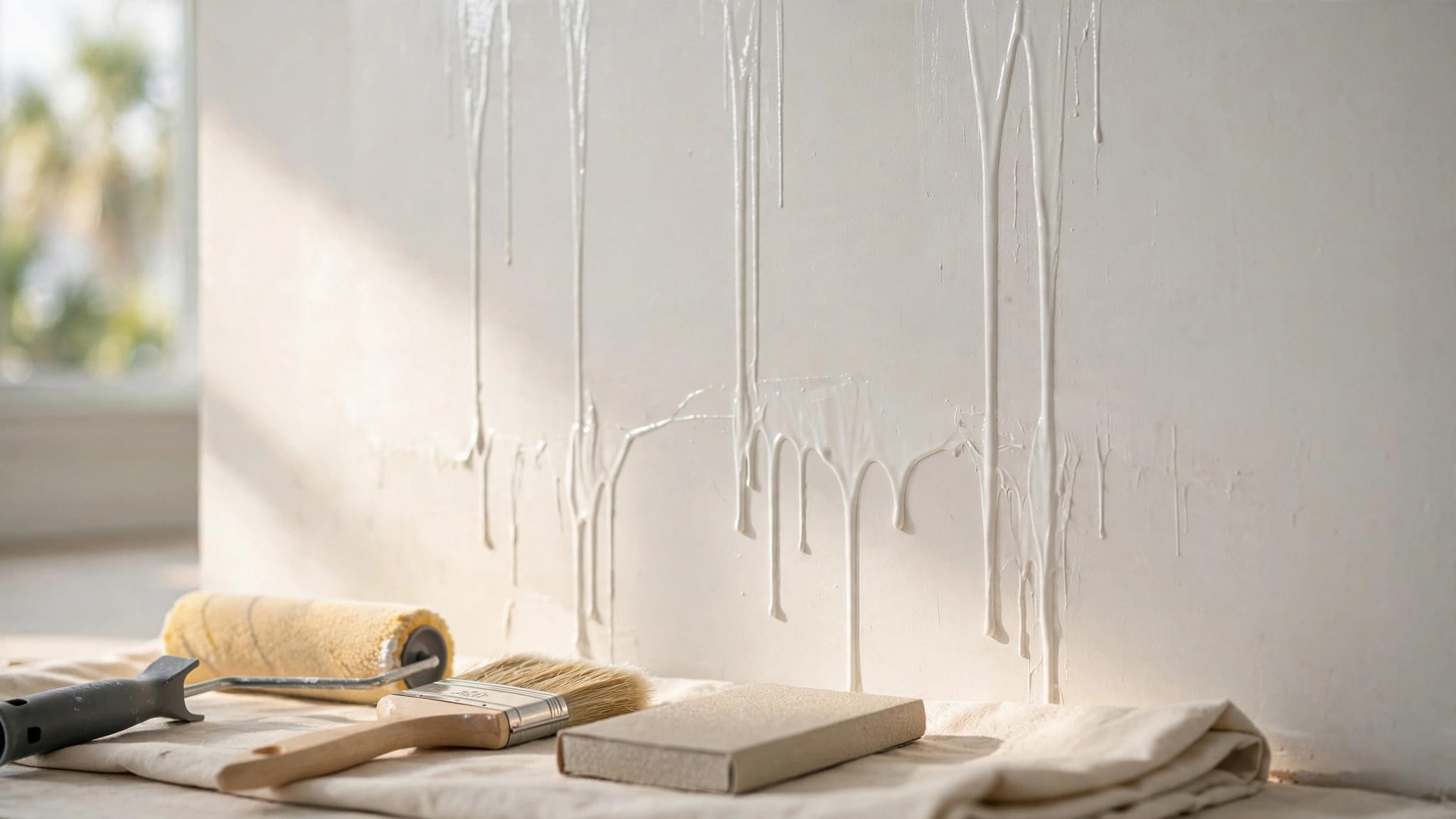
Another problem is applying filler, primer, or paint too heavily. Thick layers can sag, shrink, or stay soft. Thin, even coats take longer to build but produce better control.
Sanding between coats also requires restraint. Use fine paper or a fine sanding sponge only after the surface has hardened enough. Aggressive sanding can cut through primer and expose dark oak beneath it.
Dust creates a rough finish that people sometimes mistake for grain. Vacuum the work area, wipe surfaces with a clean lint-free cloth, and keep wet doors away from household traffic. Before the last coat, inspect under strong lighting and remove every visible particle.
Finally, don't close or stack doors before the coating has cured. Pressure between freshly painted surfaces can leave permanent imprints, even when the finish appears dry.
Conclusion
To paint oak cabinets without grain , fill the open pores before primer and finish coats. Sanding, high-build primer, controlled application, and careful inspection each have a role, but none can replace proper grain filling.
Florida humidity makes patience part of the process. Give every layer its labeled drying time, extend the wait when conditions are damp, and allow the final coating to cure before daily use. When you want a smooth, durable result without managing the prep and drying space yourself, a qualified local cabinet painting contractor can handle the work from surface repair through reinstallation.
More featured articles...