How to Choose Wastewater Plant Coatings for Each Service Area
A coating that performs well inside a covered tank may fail quickly on a sun-exposed wall or an abrasion-prone channel. The right wastewater plant coatings depend on the structure's exposure, substrate, and operating conditions, so one product rarely fits every area.
For facility managers comparing contractors, the most useful proposal explains the full system: preparation, primer and topcoat, application limits, inspection, and maintenance. Start by mapping where each surface sits in the treatment process and what it encounters.
Start with the exposure zone and substrate
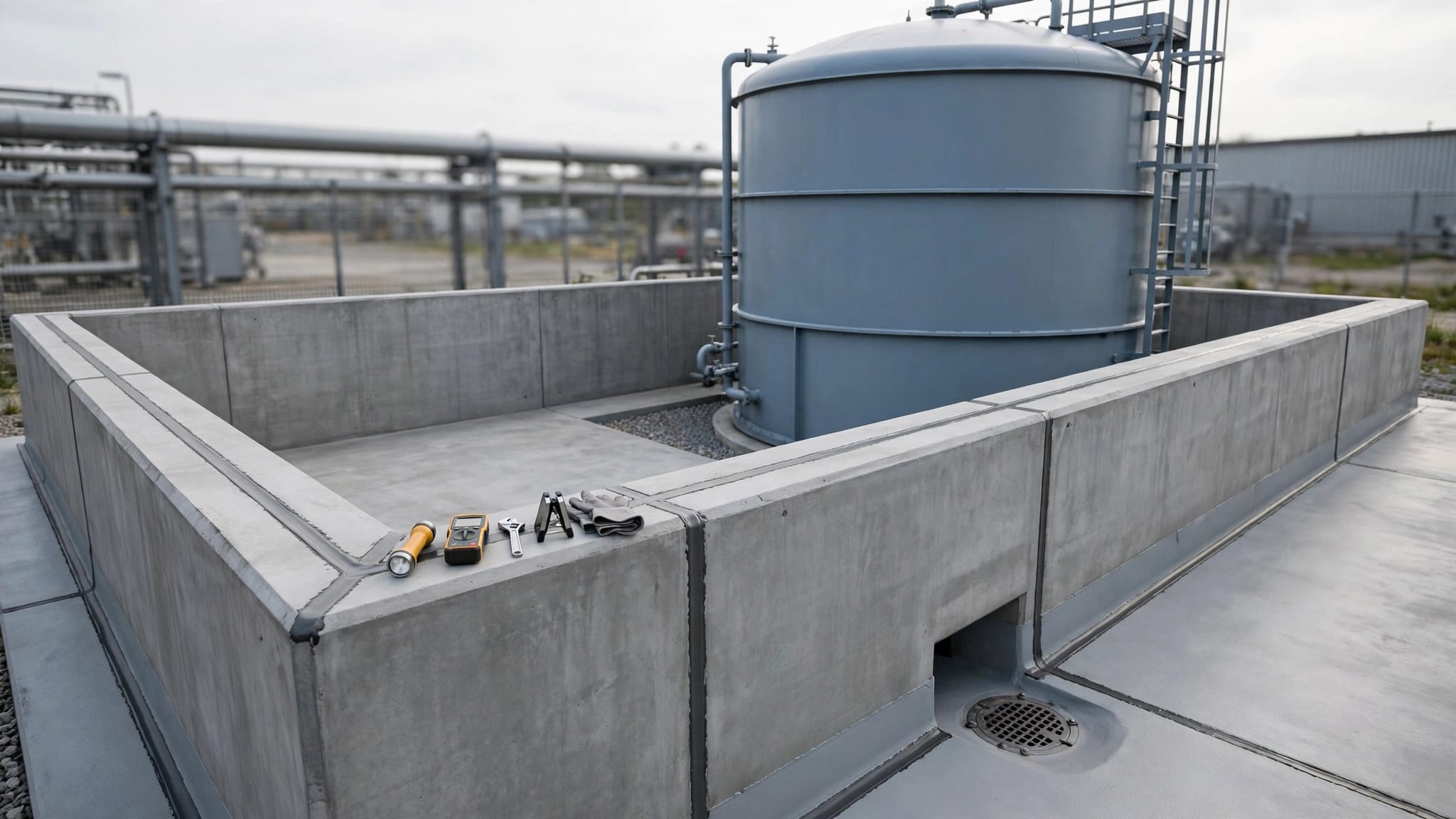
A plant contains several coating environments, even within one structure. Identify whether each surface faces continuous immersion, splash, condensation, chemical contact, outdoor weather, traffic, or washdown. That exposure map gives the contractor a practical basis for selecting a system.
Separate immersion, splash, and atmospheric areas
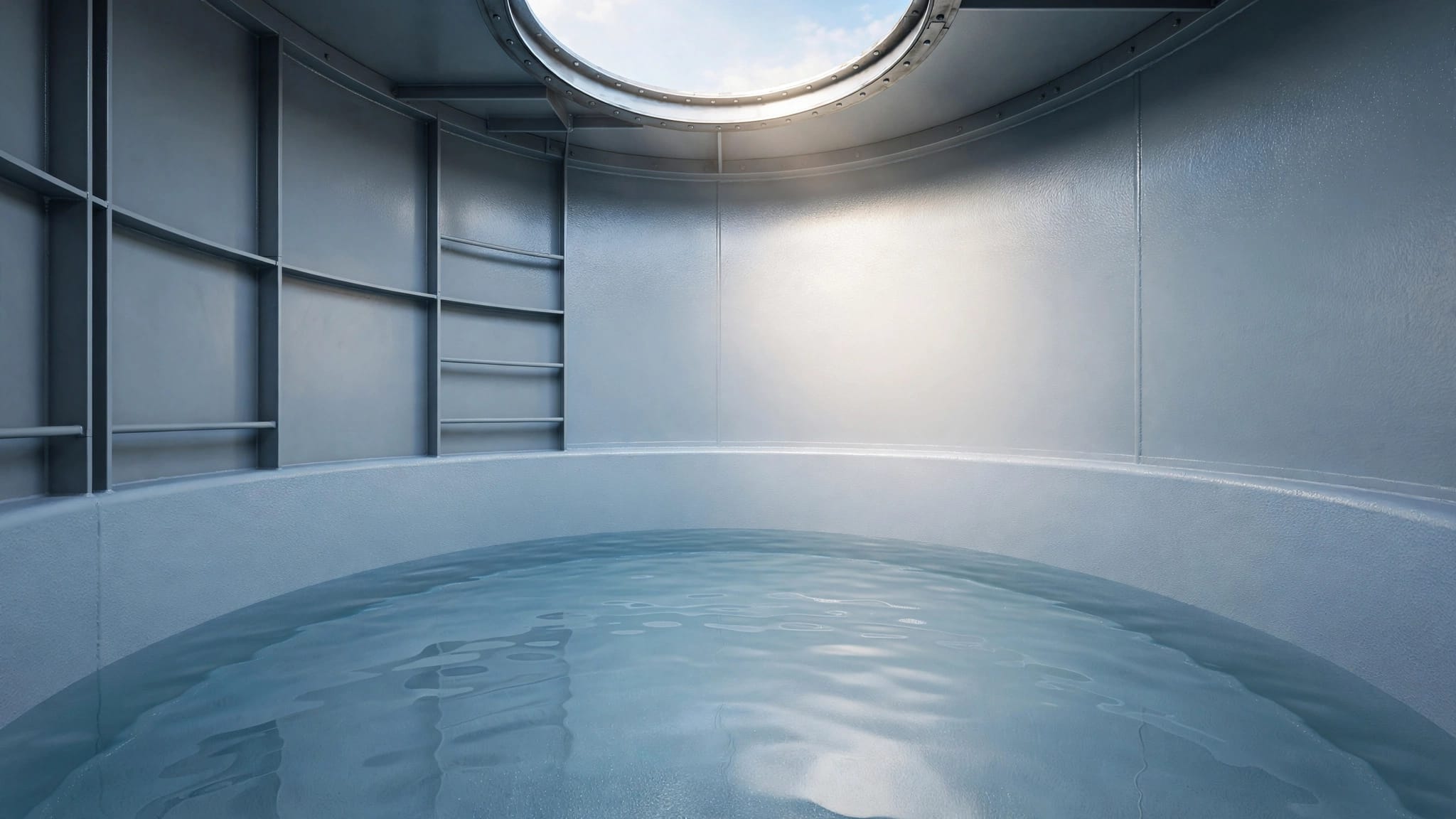
An immersed concrete basin faces different demands from its headspace, where condensation and corrosive gases may attack the surface. Splash zones cycle between wet and dry conditions, while channels and floors may also face grit, flow, or equipment abrasion. Exterior walls and exposed steel add sunlight, rain, and, in coastal locations, salt air.
Record operating details alongside the zone: chemical names and concentrations, contact frequency, temperature, cleaning method, and whether the surface stays wet. "Wastewater exposure" alone is too broad to guide a product choice.
Headspace deserves its own specification. A coating chosen for submerged concrete may not be suitable for the humid, corrosive area above the liquid line.
Identify concrete, steel, and existing coatings
Concrete needs a sound surface with preparation suited to its condition and the specified coating. Cracks, spalls, laitance, dampness, previous sealers, and old coatings can affect adhesion or signal a repair issue. Steel requires attention to corrosion, welds, edges, seams, and the condition of any existing coating.
The AMPP water and wastewater corrosion guidance describes coating needs across treatment stages and substrates. Its performance-based standard for liquid-applied organic polymeric coatings applies to sound concrete in municipal wastewater facilities. That scope is useful, but it doesn't replace a site-specific assessment of damaged concrete or steel.
Match the coating system to the service
Selection should begin with the required performance, then narrow to compatible products. Epoxies, polyurethanes, and other lining materials have different formulation and service limits. The product label alone doesn't establish that a system suits a particular plant area.
Compare product examples by their stated use
Sherwin-Williams describes Dura-Plate 6000 as a 100%-solids reinforced epoxy lining for concrete and steel, with a stated 10-hour return-to-service time. Dura-Plate 6100 is also described as a 100%-solids epoxy for concrete and steel in municipal and industrial wastewater settings. That return time applies to Dura-Plate 6000 under its specified conditions, not to epoxy coatings generally.
Other examples include Tank Clad HS, an 80%-volume-solids amine-cure epoxy for equipment, piping, tanks, and vessels exposed to corrosive immersion, including wastewater and salt water. Poly-Cote 115 is described as a 100%-solids aromatic polyurethane for corrosion protection on concrete and steel in wastewater environments. These product descriptions help frame a discussion, but they aren't a universal selection chart.
Read standards within their actual scope
Standards can help define materials, preparation, and inspection, but each has boundaries. AMPP has more than 20 standards relevant to water and wastewater corrosion control. AWWA C210 addresses epoxy lining and coating of buried pipe, while C222 addresses urethane pipe lining. AWWA's tank-coating standard applies to steel water-storage tanks, not every wastewater structure.
The AWWA standards catalog and product data sheets can help establish which requirements apply to a specified asset. The project specification should name the standard where relevant and describe the service conditions that standard does not cover.
Account for chemical, abrasion, and operating demands
Chemical resistance depends on the exact substance, its concentration, temperature, and contact pattern. Cleaning chemicals may be more aggressive than the process water. A chemical that contacts a surface only during a spill creates a different duty from one that remains against a lining continuously.
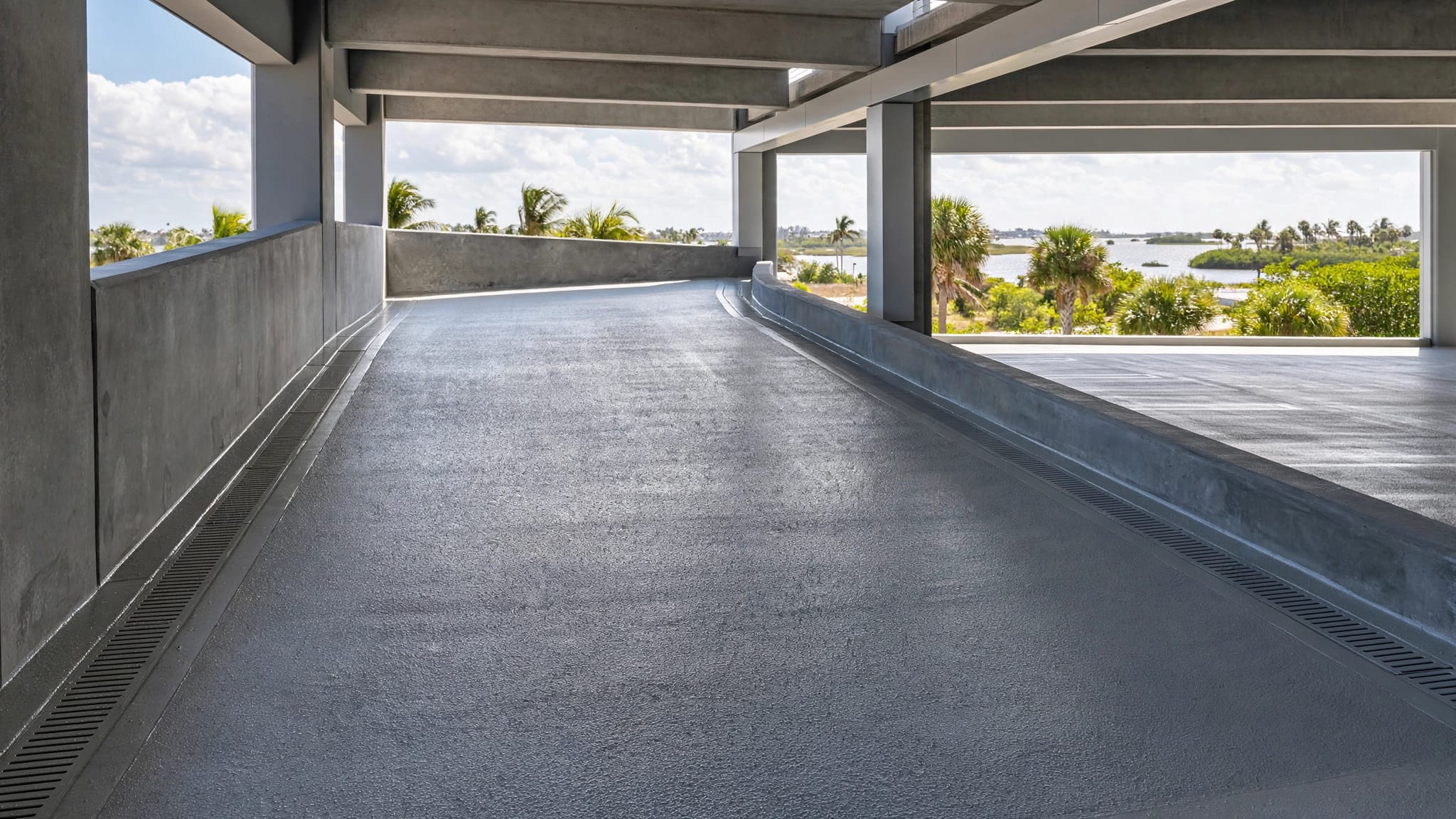
Abrasion also varies across the plant. Grit channels, screenings areas, solids handling zones, and floors near vehicle traffic may wear faster than smooth tank walls. Flow velocity, impact, scraping, and cleaning tools can all affect coating performance. Where erosion or physical damage is likely, include it in the service description rather than treating the area as ordinary immersion.
Operating schedules affect the choice, too. Shutdown windows, access limits, ventilation, odor control, and the need to keep equipment running can shape application sequencing and cure requirements. A coating's advertised cure time only applies under its stated conditions. Plan for actual substrate and air temperatures, humidity, ventilation, and the manufacturer's recoat and return-to-service instructions.
Plan surface preparation, application, and curing
A high-performance coating can fail early if the substrate is contaminated, weak, or incompatible with the specified system. The proposal should describe preparation by substrate and condition, not simply promise to "clean and coat" the area.
Specify preparation before selecting the finish
Concrete may need mechanical preparation, repairs, and removal of contaminants or unsound material. Steel preparation may include removal of corrosion and existing coating, followed by a specified surface profile. AMPP lists NACE No. 6/SSPC guidance for concrete preparation and SSPC-SP 10/NACE No. 2 for near-white blast cleaning of steel.
Those are defined preparation references, not automatic requirements for every job. The appropriate method depends on the coating system, surface condition, containment limits, and facility operations. Include repairs, edge treatment, joints, and transitions in the scope where they affect coating continuity.
Set conditions for application and cure
The project documents should state the acceptable environmental conditions, recoat windows, film thickness, and cure or return-to-service criteria. Ambient temperature alone may not describe the surface condition. Moisture, condensation, ventilation, and substrate temperature can affect application and curing.
Application planning also covers containment, overspray or debris control, access, and coordination around active equipment. If a shutdown is short, compare systems based on documented cure requirements and the plant's actual operating window, not a general product category.
Build inspection and quality control into the scope
Quality control should connect each requirement to a method of measurement and a record. Before coating begins, document the condition of the substrate, completed repairs, preparation results, and environmental readings where the specification requires them.
During application, dry-film-thickness readings can show whether the coating meets the specified build. For conductive substrates, holiday testing can find discontinuities in a lining. The appropriate test and acceptance criteria depend on the coating, thickness, substrate, and service. AMPP SP0188 covers holiday testing, and SSPC-PA 2 addresses dry-film-thickness measurement.
A complete report can record the area inspected, instrument and calibration status, readings, product and batch details, application dates, and repairs. Keep photographs and results with the asset history. The industrial coating inspection checklist offers a practical way to organize observations and maintenance records.
Compare lifecycle cost and contractor scope
The lowest initial bid may omit preparation, repairs, containment, access equipment, inspection, or return-to-service planning. Compare proposals by the same surfaces and work requirements. A useful scope identifies the coating system, substrate preparation, repair limits, number of coats or specified thickness, environmental requirements, cleanup, and acceptance criteria.
Lifecycle cost also includes downtime, future maintenance, and the consequences of a failure in a critical area. A system with a higher installation cost may be the better fit when its specified performance and repair plan suit the exposure. Avoid comparing products by price per gallon alone, since coverage, thickness, preparation, and labor differ.
Contractor experience should match the work. Industrial tanks, pipelines, concrete structures, and corrosion control require more than a general painting portfolio. Our industrial coating application services include facility coating work in Southwest Florida. We are one of the few NACE Certified Corrosion Inspectors in Lee County.
For a clear scope, the coating specifications for industrial facilities should be written so the owner and contractor can identify what is included, how it will be applied, and how the finished work will be assessed.
Key takeaways
- Divide structures into exposure zones, including immersion, headspace, splash, exterior, and high-abrasion areas.
- Identify the substrate and its condition before matching a coating system.
- Document chemical exposure, temperature, cleaning practices, operating schedules, and access limits.
- Specify preparation, application conditions, cure requirements, and inspection methods.
- Compare the full project scope and expected maintenance, not only the coating material price.
Frequently asked questions
Can one coating system protect an entire wastewater plant?
Usually, different structures and zones have different substrates and exposure conditions. A system suited to an immersed tank may not fit exterior steel, a concrete floor, or a channel subject to abrasion. The specification should assign systems by area and service.
Does an epoxy coating work for every wastewater chemical?
No single coating category should be assumed to resist every chemical exposure. Selection depends on the chemical, concentration, temperature, and contact duration, along with the substrate and application conditions. The product's documented service limits should match the intended use.
What should a coating proposal include?
It should identify the surfaces and service conditions, preparation method, repairs, coating products, application requirements, cure criteria, inspection steps, and project exclusions. These details make bids easier to compare and clarify how the finished work will be evaluated.
When should a qualified coating professional evaluate a structure?
Professional evaluation is appropriate when corrosion appears beneath an apparently sound coating, damage is widespread, adhesion is poor, moisture remains active, or structural members show significant deterioration. Coating work does not replace engineering assessment or structural repairs.
Choose for the structure's actual service
A successful coating project starts with an accurate exposure map and a sound understanding of each substrate. From there, the owner and contractor can define preparation, coating, cure, inspection, and maintenance requirements for each zone. The right system is the one specified for the plant's real conditions, not a one-size-fits-all product.
More featured articles...